

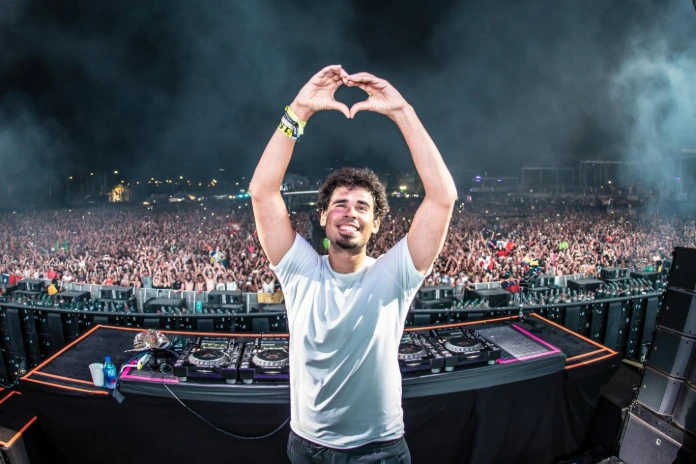
Few artists have influenced modern electronic music as consistently as Afrojack. Over the last fifteen years, the Dutch producer has moved effortlessly between underground clubs, global festivals and mainstream pop, becoming one of the defining faces of the EDM generation.
While many DJs found success through a single hit or a brief festival boom, Afrojack built something far more durable. He became a producer respected by dance music fans, a trusted collaborator for some of the world's biggest pop artists and a festival headliner capable of filling main stages year after year.
His career reflects the evolution of electronic music itself. As dance music expanded from clubs into stadiums and radio playlists, Afrojack was one of the producers helping to shape that transformation, without ever completely losing sight of the dancefloor where everything began.
In this post
- The beginning of Afrojack's career
- The breakthrough with Take Over Control
- From festivals to global pop
- Why producers respect Afrojack
- His influence on modern EDM
- Final thoughts
From Rotterdam clubs to international recognition
Born Nick van de Wall in Spijkenisse, near Rotterdam, Afrojack developed an interest in music at a very young age. Like many producers of his generation, he started experimenting with software long before electronic music became part of mainstream culture, spending countless hours learning production techniques instead of following formal musical training.
Those early years were spent playing in local clubs, refining his productions and trying to develop a sound that felt bigger than traditional house music. Even then, his records already carried the characteristics that would later define his style: powerful synths, energetic rhythms and melodies designed to create an immediate reaction on the dancefloor.
Rather than chasing every new trend, Afrojack focused on building a recognisable identity. That decision would soon separate him from many other young producers emerging at the end of the 2000s.

The song that changed everything
Every artist has a defining moment, and for Afrojack that moment arrived in 2010 with Take Over Control, featuring Eva Simons.
More than simply becoming an international hit, the record represented a turning point for electronic music itself. At a time when dance music was beginning to move beyond clubs and into mainstream radio, Take Over Control showed that electronic production could maintain festival energy while remaining accessible to a global audience.
The combination of Eva Simons' powerful vocals and Afrojack's production created one of the signature dance records of the decade. Even today, more than fifteen years later, the track continues to appear in festival sets and nostalgic EDM playlists, proving how well it has aged.
For Afrojack, however, it was only the beginning.

Becoming one of EDM's biggest names
Following the success of Take Over Control, Afrojack quickly established himself as one of the central figures of the global EDM explosion.
Throughout the early 2010s he became a regular headliner at virtually every major electronic music festival, including Tomorrowland, Ultra Music Festival, Creamfields, Electric Daisy Carnival, Parookaville and countless other international events.
What made Afrojack particularly interesting was his ability to appeal to different audiences at the same time.
Festival fans appreciated the explosive energy of his sets, while mainstream listeners discovered him through radio-friendly collaborations and crossover productions. Instead of choosing one direction, he managed to build a career that comfortably existed in both worlds.
That versatility became one of his greatest strengths.
A producer behind some of the biggest pop records
Although Afrojack is best known as a DJ, his contribution to popular music extends far beyond his own releases.
Over the years he has worked with artists including David Guetta, Beyoncé, Pitbull, Chris Brown, Ne-Yo, Mike Posner, Black Eyed Peas, Martin Garrix, Steve Aoki and R3HAB, demonstrating an ability to adapt his production style without losing his musical identity.
Perhaps the clearest example is Give Me Everything, the worldwide hit by Pitbull featuring Ne-Yo, Nayer and Afrojack. The single reached the top of charts across multiple continents and introduced his production style to millions of listeners who had never attended an electronic music festival.
For many producers, crossing into pop can mean sacrificing individuality. Afrojack managed to avoid that. Even within commercial productions, his sound remained immediately recognisable through its clean arrangements, powerful low end and melodic intensity.
More than the sound of Big Room
Afrojack is often associated with the golden age of big room EDM, and for good reason. His productions helped define one of the most successful periods in festival music history.
Yet reducing his career to that genre alone would overlook much of what makes him such an interesting producer.
Across the years he has explored electro house, progressive house, future house and heavier club-oriented productions, while side projects such as NLW have allowed him to experiment with darker, more underground sounds.
Rather than remaining tied to one formula, Afrojack has consistently adapted to changes within electronic music. As melodic house, techno and Afro House gained popularity, his productions evolved without abandoning the powerful energy that first made him famous.
This willingness to evolve has played a major role in the longevity of his career.
A festival performer first
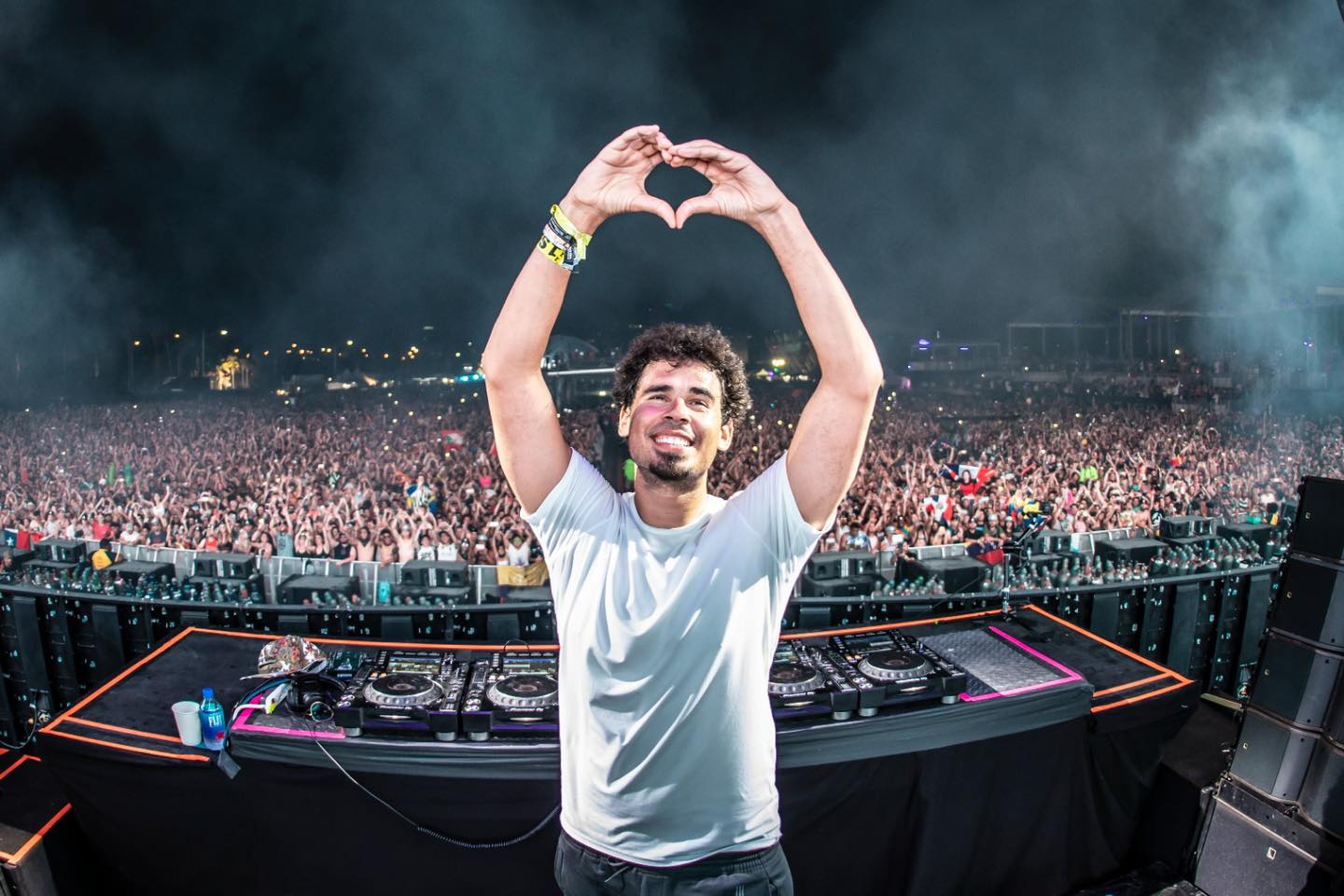
If Afrojack's productions introduced him to the world, his live performances confirmed his status as one of EDM's most reliable headliners.
His sets are built around momentum. Instead of relying only on nostalgic classics or constant unreleased IDs, he combines both, creating performances that feel familiar while still offering something new.
Whether performing at Tomorrowland's Mainstage, Ultra Miami or UNTOLD, Afrojack understands how to control the energy of a crowd. His transitions remain fast, his selections dynamic and his ability to move between commercial anthems and heavier festival tracks continues to make his performances accessible without becoming predictable.
That balance explains why promoters continue placing him among the biggest names on festival posters year after year.

An influence that extends beyond his own music
Afrojack's legacy cannot be measured only through awards, streams or festival appearances.
His greatest contribution lies in the influence he has had on an entire generation of electronic music producers.
Many artists who emerged during the EDM boom have cited him as an important inspiration, not only because of his productions but because of his approach to music itself. He demonstrated that it was possible to remain credible within dance music while collaborating with the biggest names in mainstream pop, opening new possibilities for electronic producers worldwide.
His fingerprints can still be heard today in countless festival records built around melodic breakdowns, powerful synths and emotionally driven drops.
Final thoughts
Afrojack's career represents one of the most complete success stories in modern electronic music.
Few artists have managed to remain relevant across multiple generations of dance music while balancing festival culture, underground credibility and mainstream popularity as naturally as he has.
From Take Over Control to worldwide pop collaborations and headline performances on the biggest festival stages, Afrojack has consistently demonstrated an ability to evolve without losing the energetic identity that made him famous.
His story is not simply about commercial success.
It is about understanding how electronic music could grow beyond clubs while continuing to put the dancefloor at the centre of everything.
More than fifteen years after his breakthrough, Afrojack remains one of the defining figures of global EDM, and one of the producers who helped shape the sound of an entire generation.
If you made it this far, thank you for reading.
Have a good music day.