Few artists can claim to have experienced almost every major transformation in electronic music from behind the decks. Carl Cox can. From disco and rare groove to acid house, the illegal rave explosion, techno, Ibiza superclubs and today's global festival circuit, his career has stretched across more than four decades without ever becoming a nostalgic celebration of what came before. At 64, Cox is still touring, producing and experimenting with new ways of performing electronic music, while generations of DJs who emerged long after him continue to treat him as one of the defining figures of the culture.
What makes his story remarkable is not simply its length. Electronic music has changed repeatedly since Cox first started DJing as a teenager, and many of the scenes, clubs, technologies and trends that surrounded his early career have disappeared. Cox survived those changes because he never built his identity around one moment. He moved from disco into house, from rave into techno, from vinyl into digital technology and eventually from conventional DJ sets towards live electronic performance, while maintaining the enthusiasm and connection with audiences that made him famous in the first place.
His story is therefore not just the story of one successful DJ. It is also the story of how electronic music itself grew from underground parties into a global culture.
In this post:
- Before Techno: The Teenage DJ Who Fell in Love With Disco
- Acid House Changes Everything
- Three Turntables and the Birth of a Rave Legend
- From the Rave to the Record Charts
- Choosing Techno Over Pop Stardom
- F.A.C.T., Intec and Building Something Beyond Carl Cox
- Space Ibiza: Fifteen Years That Became Club History
- From Ultra to Burning Man: Taking Carl Cox Around the World
- Why Carl Cox Never Became a Nostalgia Act
- From DJ Booth to Live Electronic Performance
- The Man Behind the Legend
- More Than Four Decades Later, the Dancefloor Still Comes First
Before Techno: The Teenage DJ Who Fell in Love With Disco
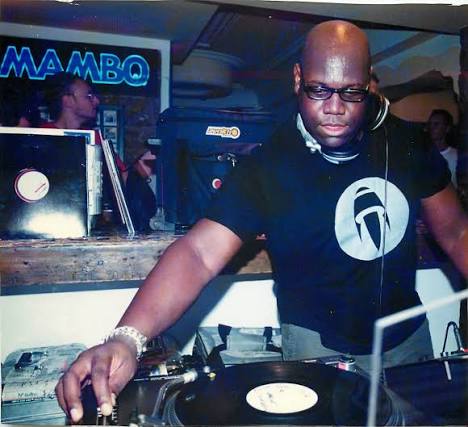
Long before techno became inseparable from his name, Carl Cox was simply fascinated by records. He bought his first set of turntables at 15 years old and began working as a mobile DJ, with disco providing his first major musical obsession. As the early 1980s developed, however, his record collection expanded alongside London's rapidly changing musical culture. Rare groove, soul, New York hip-hop and electro entered his sets, giving Cox an unusually broad foundation before house music had even established itself in Britain.
That early diversity would become one of the most important characteristics of his career. Cox never learned DJing as a process of staying within one tightly defined genre. His education came from moving between styles and understanding what different records could do to a room, something he still considers fundamental decades later. In a recent interview, he recalled playing everything from funk and soul to disco, drum & bass, ravecore and gabber, arguing that keeping his ears open has allowed him to continue evolving without simply following whatever happens to be fashionable.
By the middle of the decade, however, a new sound was beginning to arrive from Chicago. For Cox, one record in particular changed the direction of everything that followed: Phuture's “Acid Trax.”
When he heard it in 1987, he immediately recognized something different. Cox began introducing the track into parties otherwise filled with rare groove, hip-hop and soul, sometimes watching audiences stop because they had never heard anything quite like it. House music was still developing its identity in Britain, but Cox had found the sound that would pull him directly into the next chapter of UK club culture.
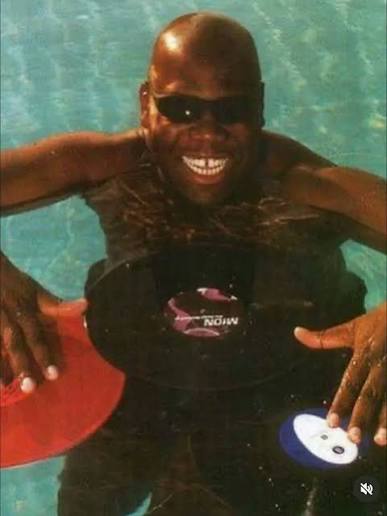
Acid House Changes Everything
The arrival of acid house in Britain did more than introduce Cox to a new genre. It placed him at the centre of one of the most important cultural shifts in the history of electronic music.
As the scene exploded during the late 1980s, Cox became involved with events that would later become part of British rave mythology. He played the opening night of Danny Rampling's Shoom, co-promoted The Project with Paul Oakenfold, worked at Brighton's Zap Club and became increasingly connected with the enormous parties emerging outside traditional nightclub structures.
The scale was changing rapidly. What had once been relatively small communities of DJs and dancers was becoming a youth movement capable of filling warehouses, fields and increasingly ambitious rave spaces. Cox was not observing that transformation from the outside; he was one of the DJs providing its soundtrack.
This period also shaped the philosophy he would carry through the rest of his career. The DJ was not supposed to stand above the crowd as an untouchable celebrity. The job was to understand the room, introduce people to music they might not already know and create enough trust that an audience would follow wherever the set went next.
More than forty years later, Cox still describes that relationship in almost exactly those terms. Whether he is playing Tomorrowland, Burning Man or Ibiza, he believes every environment demands a different approach. The crowd trusts him to understand where they are and take them somewhere from there.
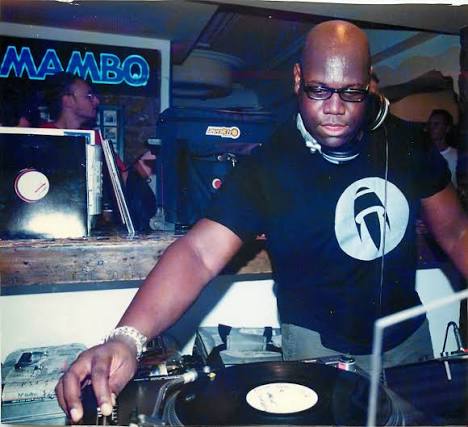
Three Turntables and the Birth of a Rave Legend
One performance in particular helped transform Cox from an emerging rave DJ into something approaching a legend.
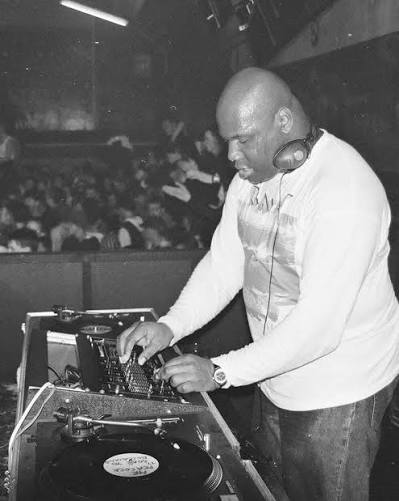
At the Sunrise rave in 1988, Cox was faced with thousands of people as dawn arrived. Instead of simply continuing with a conventional two-turntable setup, he connected a third turntable and began mixing across all three decks. According to his official biography, the performance helped bring around 15,000 ravers back onto their feet and established the three-deck technique that would become closely associated with him.
Today, with digital DJ systems allowing artists to manipulate multiple tracks simultaneously, the idea may not sound revolutionary. In the late 1980s, doing it with vinyl was something else entirely. Every record had to be physically selected, cued and beatmatched, and introducing another turntable created another layer of complexity at a time when none of the technological assistance available to modern DJs existed.
Cox turned that difficulty into part of his identity.
The three-deck approach allowed him to manipulate percussion, rhythms and records with greater freedom, but more importantly it reinforced something that would follow him throughout his career: Carl Cox was a performer, not simply someone selecting music.
Technical ability mattered, but it was always connected to what happened on the other side of the booth.
From the Rave to the Record Charts
As Britain's rave culture became increasingly visible, Cox's career moved beyond the DJ booth.
His debut single “I Want You,” released in 1991 through Paul Oakenfold's Perfecto label, reached No. 23 on the UK national chart and brought Cox to Top of the Pops. Two further singles also entered the charts, suddenly placing a DJ who had developed his reputation at underground parties inside the machinery of mainstream British pop.
It could easily have changed the direction of his career.
Instead, Cox discovered that becoming a conventional pop star was not particularly interesting to him. As parts of house music moved towards increasingly commercial territory and harder rave sounds evolved towards jungle, he chose to move deeper into the club world and embraced techno.
That decision became fundamental to everything that followed. Cox had experienced mainstream chart success and understood what pursuing it could offer, but chose a musical identity that gave him greater freedom instead. Techno offered unpredictability, intensity and the possibility of taking a crowd somewhere without needing to structure every moment around a recognizable vocal or commercial hook.
The decision established a pattern that Cox would repeat throughout his career: when given the choice between following a successful formula and exploring something that genuinely excited him, he usually chose the second option.
Choosing Techno Over Pop Stardom
By the mid-1990s, Cox had become one of the artists helping techno establish itself on an increasingly international scale.
His 1995 mix album F.A.C.T. became a benchmark release, selling more than 250,000 copies, while the following year's Two Paintings and a Drum EP reached the British Top 30. These achievements demonstrated that Cox could remain connected to underground club music while reaching an audience far larger than the scene from which he had emerged.
Yet his relationship with success remained unusual. Rather than constantly trying to reproduce whatever had worked before, Cox increasingly built a career around musical independence. He has continued to describe himself as fundamentally underground, even as his name has appeared on the largest festival lineups in the world.
That distinction remains important to him today. Cox has said that he is not interested in making music simply because a particular sound is currently popular, and that his own productions have to represent what he genuinely believes in. His philosophy is less about fitting neatly into a genre than maintaining enough freedom to push somewhere unexpected.
For an artist whose career began before social media, streaming and modern festival culture existed, that independence has proved remarkably useful.
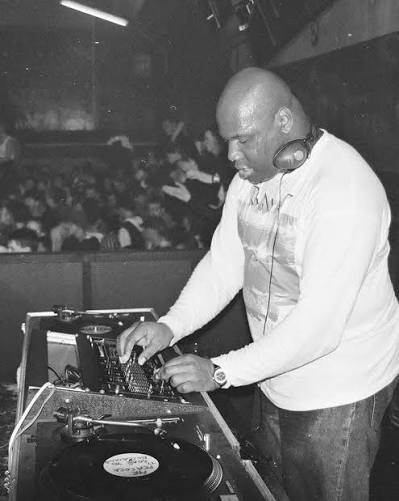
F.A.C.T., Intec and Building Something Beyond Carl Cox
Cox's influence eventually extended far beyond his own records and DJ sets.
In 1999, he founded Intec Records, creating a platform through which he could release and support underground electronic music. The label remained active at the forefront of techno for eight years before closing in 2006, only to return as Intec Digital in 2010 after Cox continued receiving music he felt deserved a platform.
Supporting other artists became increasingly central to his role within electronic music. His Ultimate Music Management company at one point represented 27 artists, including Josh Wink and Laurent Garnier, while later projects such as the Pure Intec series continued his emphasis on discovering and promoting new music.
In 2018, Cox and Christopher Coe also launched Awesome Soundwave, a label focused specifically on artists capable of creating and performing electronic music live. The idea reflected Cox's growing fascination with moving beyond conventional DJing and giving electronic performers the freedom to present their music without being constrained by established formulas.
This is an important part of why Cox's influence has lasted. His career was never built exclusively around protecting his own position. Labels, stages, radio programs and curated events gave other artists access to the audiences he had spent decades building.
And nowhere was that philosophy more visible than Ibiza.
Space Ibiza: Fifteen Years That Became Club History
It is almost impossible to tell the story of Carl Cox without telling the story of Space Ibiza.
Cox began his residency there in 2001, initially with only six nights. What followed became one of the most celebrated residencies in Ibiza history, expanding and evolving across 15 consecutive years as Space itself became one of the defining clubs of global electronic music.
The importance of the residency was not simply that Carl Cox played every week. He helped shape the entire musical identity of the night, constructing lineups that placed emerging talent alongside established names and treating the club as somewhere audiences could discover music rather than merely watch superstar DJs.
Over time, the words “Carl Cox at Space” became almost inseparable.
When Space finally closed in 2016, Cox chose to end his residency with it. His final season lasted 15 weeks, and every single night sold out. It was not simply the end of another Ibiza party but the conclusion of a relationship between an artist, a club and an audience that had lasted for a decade and a half.
Space also demonstrated one of Cox's greatest strengths: consistency without repetition. Maintaining a residency for fifteen years required more than a famous name. Audiences had to believe that returning would still offer something worth discovering.
That trust became one of the foundations of his entire career.
From Ultra to Burning Man: Taking Carl Cox Around the World
While Ibiza became his spiritual home, Cox's influence was never confined to the island.
His relationship with Ultra Music Festival developed across years of Carl Cox & Friends stages before he became an ambassador for RESISTANCE, Ultra's house and techno concept. His presence helped give the festival's underground programming an identity capable of existing alongside the enormous EDM spectacle of the Main Stage.
Elsewhere, his Pure concept attempted to strip techno events back to their essential ingredients: strong sound systems, carefully selected artists and music placed above unnecessary spectacle. What began in Australia expanded internationally, including events in Ibiza and the UK.
Then there is Burning Man, where Cox has performed since 2008 and developed his own Playground camp. What began as a relatively small space gradually grew organically as people passing through were pulled towards the music and atmosphere.
These environments could hardly be more different from one another. A superclub in Ibiza, an enormous Miami festival and a temporary city in the Nevada desert require completely different approaches.
Cox's ability to understand that difference is part of what has kept him relevant.
Why Carl Cox Never Became a Nostalgia Act
Longevity in electronic music can easily become a trap. Once an artist is associated strongly enough with a particular period, audiences may continue buying tickets primarily because they want to hear the past repeated.
Cox has consistently resisted that possibility.
Even after more than four decades, he continues to argue that artists should make music because they believe in it rather than because it fits an algorithm, generates likes or follows whatever trend currently dominates the scene. He has watched the industry move from vinyl to CDs, digital files, social media and now artificial intelligence, adapting to each technological change without allowing the technology itself to become his identity.
His approach to DJing follows the same principle. A Carl Cox set is not supposed to be identical everywhere. He has explained that Tomorrowland should sound different from Burning Man, and both should feel different from Ibiza, because each crowd and environment has its own character.
That ability to adapt without simply chasing trends may be the most important reason his career has lasted.
Carl Cox does not pretend electronic music is still in 1988.
But he has never forgotten what he learned there.
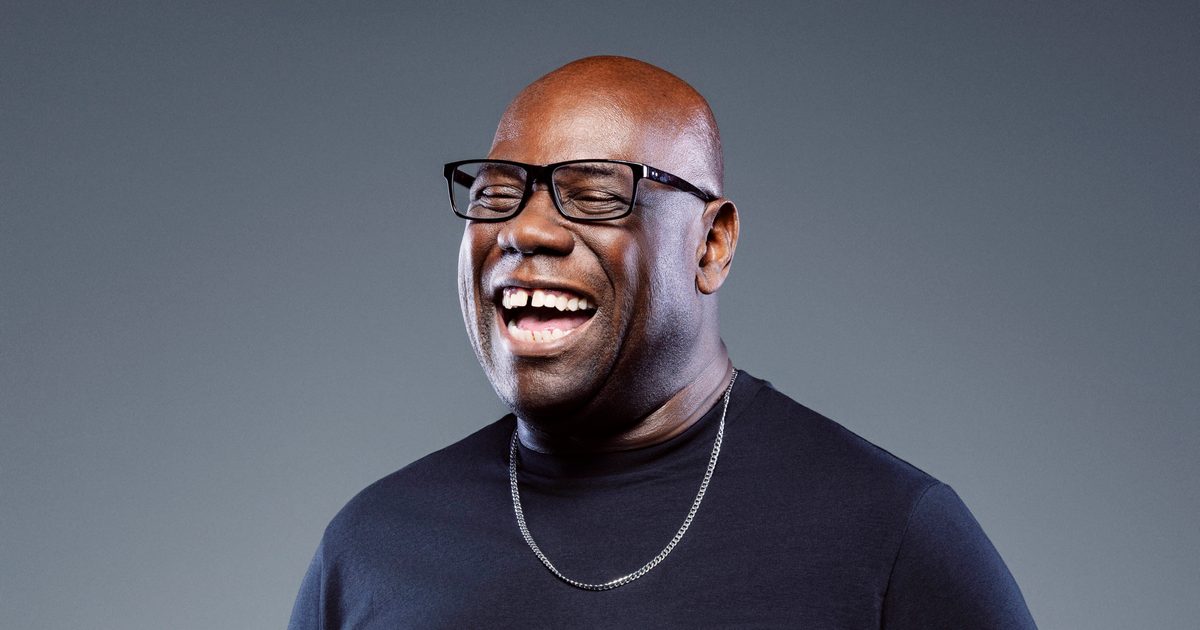
From DJ Booth to Live Electronic Performance
Perhaps the clearest evidence that Cox still refuses to stand still is the direction he is taking now.
After decades behind turntables and DJ equipment, he has increasingly moved towards hybrid and fully live electronic performances, combining analogue synthesizers and machines with modern digital tools such as Ableton. His full live setup removes conventional DJ equipment altogether, forcing Cox to build and manipulate his own music in real time.
For someone who could comfortably spend the rest of his career arriving at festivals and playing familiar two-hour DJ sets, it represents an unnecessary risk — which is precisely why he finds it exciting.
In a DJ set, Cox has thousands of tracks available and can change direction instantly if something does not work. A live electronic performance removes much of that safety. Rhythms, chords and arrangements have to be manipulated as the performance unfolds, leaving considerably more room for uncertainty.
Cox has even admitted that he is beginning to enjoy the live format more because it gives him a new challenge. His inspiration reaches back to artists such as Jean-Michel Jarre, whose relationship with machines demonstrated that one person could create an entire electronic performance without relying on a conventional band.
After more than forty years of DJing, Cox has somehow found another way to become a beginner.
The Man Behind the Legend
Carl Cox's reputation has always involved more than technical ability.
Metal Magazine describes him as a self-made artist whose longevity comes not only from precision behind the decks but from charisma, humanity and humility. Even after decades of headlining clubs and festivals around the world, Cox still talks about audiences less as numbers and more as people who have chosen to trust him with part of their night.
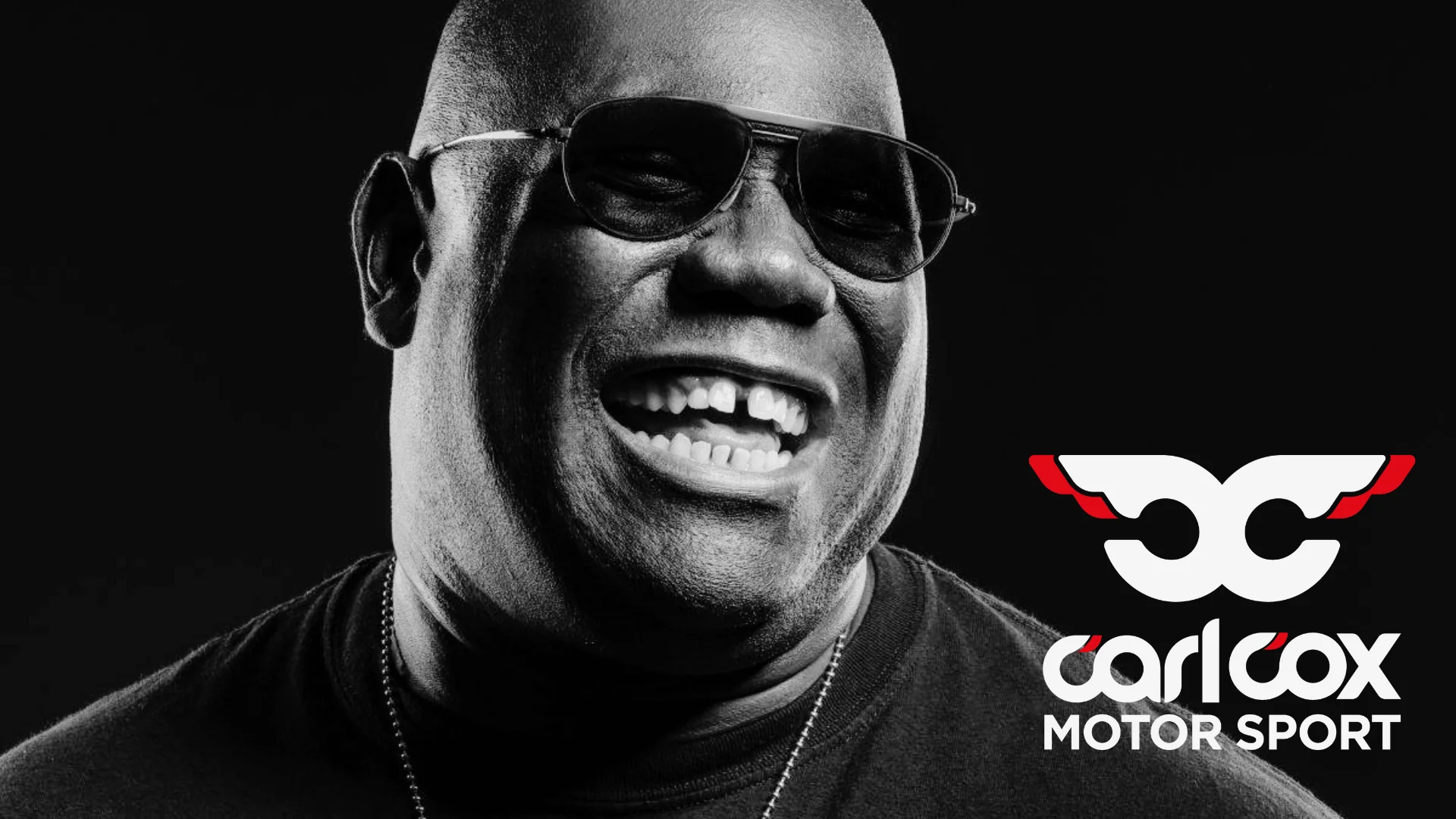
His interests outside music also reveal a personality built around enthusiasm rather than moderation. Cox has been passionate about cars and motorcycles since childhood and created Carl Cox Motorsport in 2013, eventually becoming involved across multiple forms of racing. His collection has included more than 100 cars and motorcycles, while the motorsport operation has expanded internationally.
Music, machines, racing and technology may appear to be separate worlds, but Cox seems to approach all of them similarly. He wants to understand how things work, push them harder and remain directly involved rather than simply attach his name to the result.
More Than Four Decades Later, the Dancefloor Still Comes First
Electronic music has transformed almost beyond recognition since Carl Cox first began DJing. The records became digital, illegal raves became billion-dollar festival businesses, DJs became global celebrities and audiences gained instant access to almost every piece of music ever recorded.
Carl Cox survived every version of that industry.
Not because he discovered a formula and repeated it for forty years, but because he understood that the tools surrounding DJing were always secondary to what happened when music met a crowd. From introducing London dancers to acid house and mixing across three turntables at Sunrise to building one of Ibiza's defining residencies, championing techno through Intec, taking underground music onto Ultra's enormous stages and now rebuilding his own performances around live machines, Cox has repeatedly changed the method without abandoning the purpose.
That may ultimately be what separates longevity from legacy.
Plenty of DJs have survived long enough to become symbols of another era. Carl Cox remains interested in whatever comes next. Even now, he talks about his live electronic performances as another chapter rather than a conclusion, while younger audiences continue discovering an artist whose career began before many of their parents had ever heard the word techno.
His equipment has changed. The clubs have changed. Ibiza has changed. Electronic music itself has changed.
But after more than four decades, the principle behind Carl Cox remains remarkably simple:
find the music, understand the crowd and keep the dancefloor moving.