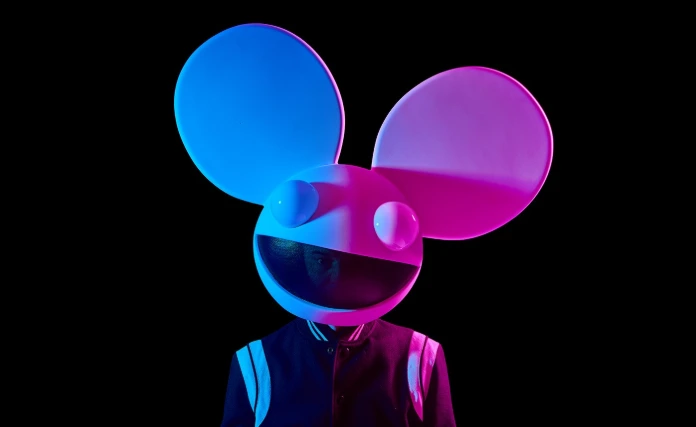

Few electronic artists have created an identity as instantly recognizable as deadmau5. The enormous mouse helmet, the illuminated ears and the futuristic stage productions have become symbols that can be recognized even by people who may not know the name Joel Zimmerman. Yet reducing deadmau5 to the mau5head would miss the most interesting part of his story.
Long before festival mainstages, Grammy nominations and elaborate Cube productions, Zimmerman was a teenager in Canada fascinated by computers, synthesizers and the possibilities of digital music. He approached electronic music less like someone dreaming of becoming a superstar DJ and more like someone determined to understand how machines could be used to build sound. That fascination would remain at the centre of his career even after the scale around him changed completely.
From the progressive atmosphere of “Faxing Berlin” and the emotional patience of “Strobe” to the enormous crossover success of “Ghosts ’n’ Stuff,” deadmau5 gradually developed a sound that was technically precise but immediately identifiable. At the same time, he transformed a bizarre internet nickname into one of dance music's strongest visual identities, created mau5trap as a platform for his own independence and for other producers, and pushed electronic live production towards increasingly ambitious territory.
His career has never followed a perfectly straight line. There have been controversies, experiments, different aliases and periods in which Zimmerman appeared more interested in building technology than playing the role expected of an international DJ. That unpredictability is part of what has kept deadmau5 relevant through several different eras of electronic music.
And remarkably, the name behind all of it began with something found inside a computer.
In this post:
- Before deadmau5: Joel Zimmerman and His Obsession With Technology
- The Strange Story Behind the deadmau5 Name
- Finding His Sound
- “Faxing Berlin” and the First Major Breakthrough
- Random Album Title and the Rise of deadmau5
- “I Remember”: The Beginning of a Long Relationship With Kaskade
- “Ghosts ’n’ Stuff” and the Move Towards a Global Audience
- Why “Strobe” Became a deadmau5 Masterpiece
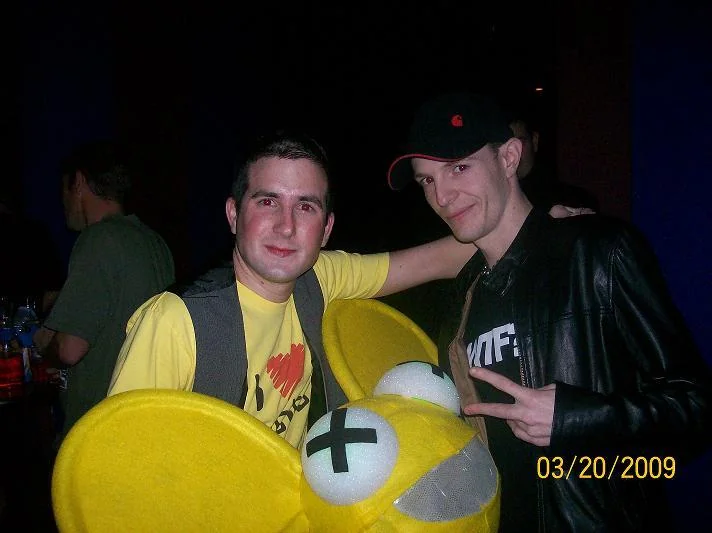
- The Mau5head and the Creation of an Electronic Music Icon
- How the Cube Changed the deadmau5 Live Experience
- mau5trap and the Importance of Independence
- From Skrillex to REZZ
- The Complicated Personality Behind the Mouse
- Testpilot and Joel Zimmerman's Underground Side
- Kx5: Reuniting With Kaskade
- Why deadmau5 Still Matters
- Final Thoughts
Before deadmau5: Joel Zimmerman and His Obsession With Technology
Joel Zimmerman grew up in Niagara Falls, Ontario, during a period when making electronic music on a computer required considerably more patience than it does today. Modern producers can open a laptop and immediately access thousands of synthesizers, effects and samples, but Zimmerman's first experiences belonged to a very different technological world.
During the 1990s, he became fascinated by computers and began experimenting with the relationship between software, MIDI and electronic equipment. Looking back on those years during Canadian Music Week in 2024, Zimmerman remembered working with systems such as Ataris and Commodores and trying to understand how different pieces of technology could communicate with one another. At that point, the objective was not necessarily to build a professional music career. He was fascinated by the process itself.
That distinction helps explain much of what came later. deadmau5 was never simply a DJ who happened to learn production. Zimmerman's relationship with electronic music developed through programming, sound design and an almost obsessive interest in the technology behind the music. Synthesizers and computers were not just tools needed to reach a finished track; learning what they could do was part of the creative experience.
As his experiments gradually became more musical, Zimmerman started developing his own productions. The polished progressive sound that would eventually make him famous was still some distance away, but the foundation of the deadmau5 philosophy was already there: technology and music would never really exist separately.
The Strange Story Behind the deadmau5 Name
The origin of the name is one of the most famous stories surrounding Zimmerman, partly because it sounds almost too convenient to be true.
According to the story he has told over the years, Zimmerman once noticed a strange smell coming from his computer. After opening the machine, he discovered that a mouse had died inside it. People he communicated with online began referring to him as the “dead mouse guy,” and the incident eventually inspired the username that would become deadmau5, with the number 5 replacing the final “s” in the kind of internet shorthand that was common at the time.
It was hardly the beginning of a carefully planned global brand. It was an online nickname born from an absurd accident.
Yet it turned out to be extraordinarily effective. The name looked different, sounded different and was difficult to confuse with anyone else. As Zimmerman's music became more successful, that strange digital identity provided the foundation for an entire visual universe.
The mouse would eventually move from inside his computer to the top of his head.
Finding His Sound
The earliest deadmau5 material reveals an artist who had not yet settled into the musical identity most listeners now associate with him. His 2005 debut album, Get Scraped, moved through different electronic ideas and textures, showing a producer who was still experimenting rather than following a clearly established formula.
That period was important precisely because it gave Zimmerman room to explore. Over time, certain characteristics began appearing more consistently in his productions: carefully designed synthesizers, clean and spacious mixes, long arrangements and melodic ideas that could gradually develop instead of being forced towards an immediate drop.
This became particularly important as progressive house evolved during the 2000s. Zimmerman's tracks often allowed repetition to create anticipation, with small changes accumulating over several minutes until relatively simple melodic ideas began to feel enormous.
The sound that would define deadmau5 was beginning to emerge, but it still needed the record capable of introducing it to a much larger audience.
That record arrived in 2007.
“Faxing Berlin” and the First Major Breakthrough
“Faxing Berlin” was the moment when deadmau5 began moving from promising internet producer towards international recognition.
The track is remarkably patient compared with the increasingly explosive EDM structures that would dominate electronic music only a few years later. Rather than relying on constant drops or dramatic changes, Zimmerman allows its progressive melody to develop gradually, building an atmosphere through repetition and subtle movement.
A crucial moment came when Pete Tong supported the record on BBC Radio 1. At a time when radio tastemakers still had enormous influence over international club culture, that kind of support could expose an emerging producer to audiences far beyond his local scene. “Faxing Berlin” quickly became one of the records that established deadmau5 as a serious new presence in progressive electronic music.
The track also represented the beginning of something else that would become central to Zimmerman's career. It was one of the first major releases connected with mau5trap, the label he was developing as a way to retain greater control over his music.
At almost the same time that deadmau5 was finding his sound, Zimmerman was beginning to build the infrastructure around it.
Random Album Title and the Rise of deadmau5
The arrival of Random Album Title in 2008 transformed that momentum into something much larger.
The album brought together tracks including “Faxing Berlin,” “Not Exactly” and “I Remember,” consolidating the progressive style that had gradually become Zimmerman's signature. Long arrangements, restrained builds and meticulously designed synths created records that could work on a dancefloor without sacrificing the detail that made them interesting outside the club.
What distinguished deadmau5 during this period was his willingness to give his music time. A melodic idea did not have to arrive immediately, disappear after thirty seconds and be replaced by another. Zimmerman could spend several minutes developing the same musical concept, changing the surrounding rhythm, opening filters and gradually increasing tension.
That patience gave his productions an emotional quality that was unusual precisely because it rarely depended on obvious sentimentality. The music could feel melancholic, euphoric or introspective while remaining unmistakably electronic.
One track from this period demonstrated that balance particularly well.
“I Remember”: The Beginning of a Long Relationship With Kaskade
Created with Kaskade and featuring vocals from Haley Gibby, “I Remember” brought a human voice into the spacious progressive environment deadmau5 had been developing.
The collaboration worked because neither artist seemed to overwhelm the other. Zimmerman's production remained controlled and atmospheric, while Gibby's vocal introduced warmth and emotional immediacy. The result could reach listeners who might never have considered themselves progressive-house fans without losing the characteristics that made the production recognizably deadmau5.
“I Remember” became one of the most enduring tracks associated with both artists and, with hindsight, also marked the beginning of a relationship that would eventually return in a completely different form through Kx5.
At the time, however, deadmau5's career was still accelerating. The next phase would take the project beyond progressive-house circles and towards the much larger audience gathering around electronic music at the end of the 2000s.
“Ghosts ’n’ Stuff” and the Move Towards a Global Audience
By 2009, dance music was approaching a major transformation. Electronic festivals were growing rapidly in North America, producers were beginning to reach mainstream audiences on an unprecedented scale, and the foundations of the EDM explosion of the early 2010s were already visible.
deadmau5 was perfectly positioned for that moment.
Released during the For Lack of a Better Name era, “Ghosts ’n’ Stuff” featuring Rob Swire had a more immediate energy than much of Zimmerman's earlier progressive material. The central synth hook was enormous, the production had a darker electro edge, and Swire's vocal gave the record a structure that could travel far beyond specialist dance audiences.
It became one of deadmau5's defining tracks and eventually achieved multi-platinum success, helping transform Zimmerman from a respected electronic producer into one of the most visible figures in international dance music.
But the same album contained another record that moved in almost the opposite direction. Where “Ghosts ’n’ Stuff” demonstrated how immediate deadmau5 could be, “Strobe” demonstrated the power of taking his time.
Why “Strobe” Became a deadmau5 Masterpiece
“Strobe” is difficult to understand if approached using the expectations of a conventional pop single.
The full version lasts around ten minutes and spends a significant portion of that time gradually developing. Its opening is atmospheric and restrained, built around an emotional melodic progression that initially feels closer to an electronic soundscape than a club track. The rhythm eventually emerges, but Zimmerman refuses to rush the transition.
That patience is exactly what makes the eventual payoff so effective.
By the time the track reaches its most energetic section, the listener has already spent several minutes becoming familiar with its central melodic language. The progression therefore feels earned rather than simply delivered.
Over time, “Strobe” became one of the tracks most frequently cited by deadmau5 fans and fellow producers when discussing his finest work. It captures many of the characteristics that made Zimmerman distinctive during his rise: technical precision, melodic restraint, gradual tension and the confidence to allow an electronic record to breathe.
If “Ghosts ’n’ Stuff” explains how deadmau5 became a global electronic star, “Strobe” helps explain why he developed such a loyal following among producers and dedicated dance listeners.
And while the music was becoming unmistakable, Zimmerman was simultaneously creating a visual identity capable of becoming just as famous.
The Mau5head and the Creation of an Electronic Music Icon
The mau5head transformed deadmau5 from an unusual artist name into something that could be recognized instantly from the other side of a festival field.
The idea was simple: an oversized mouse head with enormous circular ears. Over time, however, the helmets became increasingly sophisticated, incorporating lighting and programmable visual elements that allowed them to change appearance during performances.
The effectiveness of the mau5head went beyond branding. Electronic performance has always faced an unusual visual problem: a producer operating equipment behind a console can create an incredible musical experience without necessarily giving an audience much to watch. Zimmerman's mouse character gave the performance an immediate focal point while simultaneously extending the digital identity he had created online into the physical world.
As electronic music became increasingly visual during the EDM boom, the mau5head seemed almost prophetic. Years before masks and carefully designed anonymous identities became common across dance music, Zimmerman had already demonstrated how a producer could create a character capable of existing beyond the music itself.
But he was not satisfied with putting technology only on his head. Gradually, the entire stage became part of the deadmau5 project.

How the Cube Changed the deadmau5 Live Experience
Zimmerman's fascination with technology eventually led to one of the most recognizable stage concepts in electronic music: the Cube.
Rather than treating visual production as decoration behind a conventional DJ booth, the Cube placed Zimmerman inside an enormous geometric structure capable of displaying synchronized animations and visual sequences. The mau5head became part of a much larger digital environment in which music, lighting, video and stage architecture operated together.
Successive versions became increasingly ambitious, culminating in productions such as Cube v3, which turned the concept into a technologically complex touring show. The resulting 2019–2020 tour ranked among Pollstar's major global tours, demonstrating that an electronic artist could build a live production whose visual identity was almost as important as the individual tracks being performed.
What makes this chapter particularly consistent with Zimmerman's story is how closely involved he remained with the technology itself. The Cube was not simply an expensive stage commissioned after he became famous; it reflected the same curiosity that had originally led him to experiment with computers and MIDI years earlier.
The scale had changed dramatically.
The fascination behind it had not.
mau5trap and the Importance of Independence
While deadmau5 was becoming increasingly visible onstage, mau5trap was quietly becoming another important part of Zimmerman's influence.
The label grew from his desire to maintain greater control over his own work. Zimmerman has spoken repeatedly about the importance of artists retaining ownership wherever possible, particularly their masters, and mau5trap provided a structure through which he could release music without completely surrendering that independence.
Over time, however, the label became much more than a home for deadmau5 records.
Its catalogue expanded to include producers with very different identities, helping establish mau5trap as a recognizable electronic label in its own right. Artists including Feed Me, Moguai and Wolfgang Gartner became associated with its catalogue, while the platform also played a role in the early careers or development of names that would eventually become enormous.
Among them were Skrillex and REZZ.
That matters because Zimmerman's legacy cannot be measured exclusively through his own discography. Successful artists create records; influential figures can also create the environments that allow other artists to develop.
mau5trap gave deadmau5 that second kind of influence.

From Skrillex to REZZ: Influence Beyond His Own Music
The artists who passed through the mau5trap ecosystem demonstrate just how far that influence extended.
Skrillex would go on to become one of the defining producers of his generation, helping reshape the international perception of dubstep and bass music before continuing to reinvent his sound repeatedly. REZZ, meanwhile, developed an unmistakable dark and hypnotic electronic identity while becoming one of the most recognizable artists associated with the later mau5trap generation.
Neither artist simply sounded like deadmau5, and that is precisely why their association with the label is interesting.
The value of mau5trap was not that it created copies of Zimmerman. It provided a platform for producers whose music had strong identities of its own. Insomniac has highlighted the label's role in supporting names including REZZ, Feed Me and Skrillex across different periods of its history.
Through the label, Zimmerman's influence therefore began travelling in directions his own records never necessarily would.

The Complicated Personality Behind the Mouse
For someone whose visual identity depends on hiding his face, Joel Zimmerman has never been particularly interested in hiding his opinions.
Throughout his career, he has become known for a direct, sarcastic and sometimes confrontational public personality. He has criticized aspects of DJ culture, argued publicly with other artists and fans, and repeatedly resisted the carefully controlled communication style normally expected from celebrities operating at his level.
That openness has also generated controversy. There have been public disputes and comments Zimmerman later apologized for, and his relationship with social media has sometimes become almost as discussed as his music.
Yet this contradiction has always been part of the deadmau5 identity.
The mau5head creates a fictional character, but Zimmerman himself has rarely behaved like one. He can be technical, opinionated, funny, provocative and occasionally self-destructive in public, which makes it difficult to separate the producer from the personality behind the project.
The result is one of electronic music's strangest paradoxes: one of its most carefully recognizable visual characters belongs to one of its least carefully filtered personalities.

Testpilot and Joel Zimmerman's Underground Side
The scale of deadmau5 can also obscure how broad Zimmerman's relationship with electronic music actually is.
Under the alias Testpilot, he explores a much darker techno direction that feels deliberately removed from the melodic progressive sound and enormous audiovisual spectacle associated with deadmau5.
The project emerged publicly in the 2010s and eventually brought Zimmerman into respected techno environments including Movement Detroit, allowing him to perform without many of the musical expectations attached to the mouse identity.
Testpilot is important because it reveals that the curiosity present at the beginning of Zimmerman's career never completely disappeared. Even after developing one of the strongest brands in electronic music, he still wanted an environment where he could move away from that brand and explore another side of club culture.
In that sense, Testpilot feels less like a side project and more like a reminder of who Zimmerman was before everything became enormous: a producer interested in electronic music because there was always another sound, machine or idea worth exploring.
Kx5: Reuniting With Kaskade
More than a decade after “I Remember”, Zimmerman returned to his creative relationship with Kaskade on a much larger scale.
The two artists officially introduced Kx5 in 2022, turning years of occasional collaboration into a dedicated project. Their single “Escape,” featuring Hayla, became one of the project's defining records and reached No. 1 at dance radio, while Kx5 eventually expanded into major live performances including a huge show at the Los Angeles Memorial Coliseum.
The collaboration carried an unusual sense of continuity.
“I Remember” belonged to the period when both artists were helping shape the rise of North American electronic music. Kx5 arrived after they had already spent more than a decade building independent careers and no longer needed the collaboration to establish themselves.
Instead, it became a way of revisiting an old creative connection through the perspective of two artists who had changed enormously since they first worked together.
Why deadmau5 Still Matters
Electronic music today looks very different from the scene in which “Faxing Berlin” first appeared.
The EDM explosion arrived, transformed global festival culture and eventually faded into something more fragmented. Techno returned to enormous stages, melodic house and techno developed into a global movement, streaming changed how artists release music, and social media completely altered the relationship between producers and their audiences.
deadmau5 somehow survived all of those transitions without needing to chase each new movement.
Part of that longevity comes from the catalogue. “Faxing Berlin,” “I Remember,” “Ghosts ’n’ Stuff” and particularly “Strobe” remain closely connected with an important period in electronic music history. Part comes from the strength of the deadmau5 identity, while another part comes from Zimmerman's constant interest in technology and experimentation.
His career also contains several milestones that demonstrate how unusual his crossover became. Resident Advisor notes his participation in the first Grammy telecast segment dedicated specifically to electronic music in 2012, while he also became the first electronic artist to appear on the cover of Rolling Stone.
Yet those achievements are only part of why his career matters.
Many things that now seem normal in electronic music were much less established when deadmau5 began doing them: a producer building an instantly recognizable visual identity, developing an artist-owned label, treating stage technology as an integral part of the music and maintaining a direct, sometimes excessively direct, relationship with fans online.
Zimmerman did not invent all of those ideas, but he helped demonstrate how powerful they could become when combined around one artist.
Final Thoughts
The deadmau5 story begins with technology and, more than two decades later, that remains the thread connecting almost everything Joel Zimmerman has done.
Before the festivals and the mouse helmet, he was experimenting with computers and trying to understand how electronic equipment communicated. That curiosity eventually became music, and the music gradually developed into a distinctive progressive sound capable of producing records such as “Faxing Berlin,” “I Remember,” “Ghosts ’n’ Stuff” and “Strobe”.
As the audience grew, Zimmerman expanded the world around those records without abandoning the technical curiosity behind them. A strange online username became the mau5head. The mau5head became part of the Cube. The Cube became an increasingly sophisticated live production. Meanwhile, mau5trap developed from a way of maintaining artistic independence into a label capable of supporting another generation of electronic producers.
His career has never been completely smooth, nor has Zimmerman ever seemed particularly interested in making it appear that way. His outspoken personality and public controversies have sometimes complicated the image behind the mouse, while projects such as Testpilot and Kx5 have repeatedly demonstrated that he is unwilling to remain inside one version of himself forever.
That may ultimately explain his longevity better than any sales figure or award.
deadmau5 emerged before the modern EDM boom, became one of its biggest electronic figures without ever fitting comfortably inside it, survived its decline and continued working through entirely different generations of dance music.
The technology changed. The stages became larger. The software became more sophisticated and the strange username created after finding a dead mouse inside a computer became one of electronic music's most recognizable names.
But the person behind it remained fascinated by essentially the same question:
What else can these machines do?
More than twenty years into the deadmau5 story, Joel Zimmerman still seems interested in finding out.