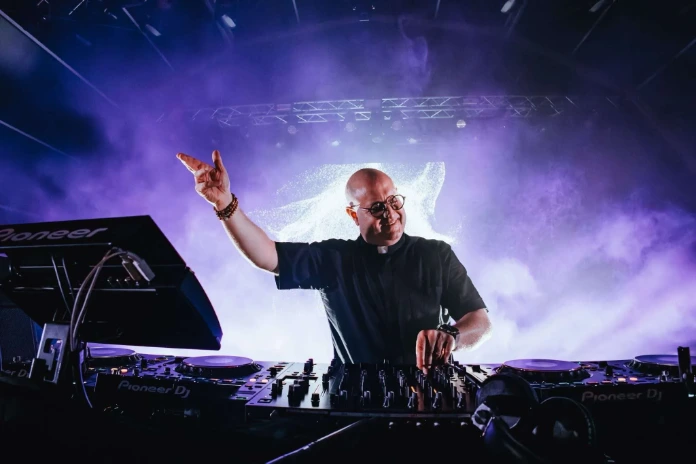
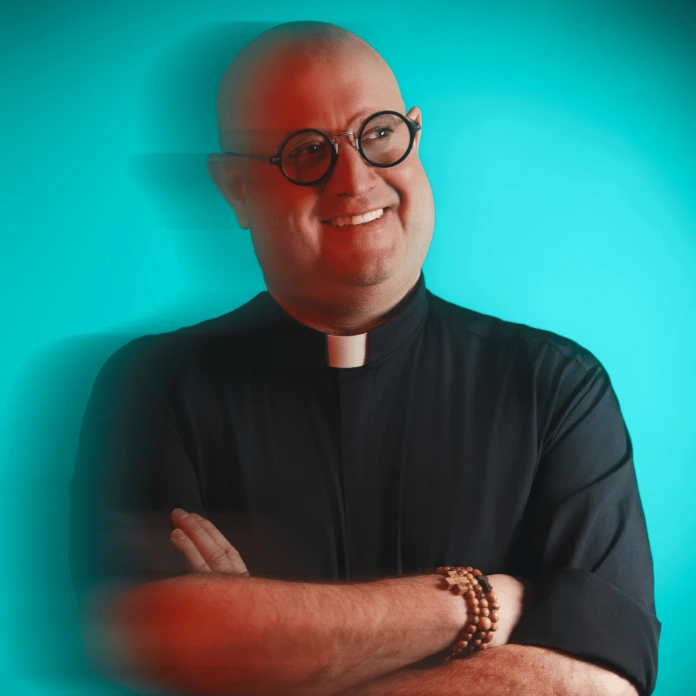
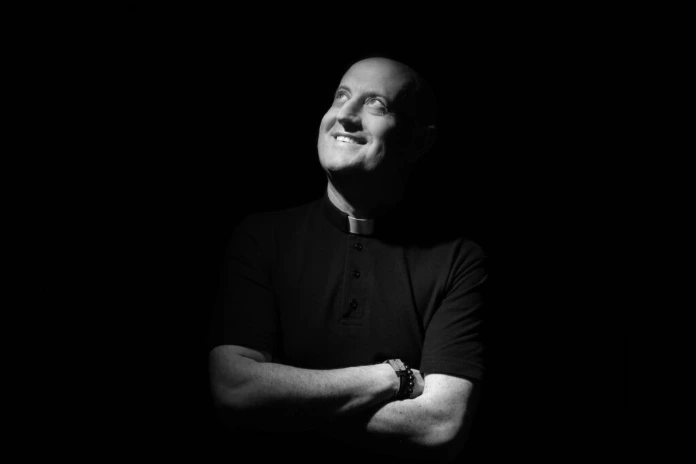
Few figures in contemporary electronic music create an image as immediately striking as Padre Guilherme. Behind the decks, surrounded by LED screens, smoke and the hypnotic pulse of techno, he performs wearing the black shirt and white clerical collar of a Catholic priest, moving between melodic electronic music, sacred vocals, cinematic atmospheres and fragments of papal speeches.
It is an image almost designed to become viral, but treating Guilherme Peixoto simply as “the priest who DJs” misses the more interesting story behind his rise. Long before festival crowds, international media coverage and performances in front of more than a million people, he was already a parish priest, a military chaplain and someone who had gradually discovered that electronic music could become another way of creating community.
Born in Guimarães, Portugal, in 1974 and ordained in 1999, Peixoto never built the Padre Guilherme identity as an alter ego separate from his religious life. For him, the two roles have increasingly become part of the same project. In a 2026 interview, he explained that people may now look at him and see the DJ first, but that he remains both priest and artist at the same time.
That philosophy has carried him through an unlikely journey: from organising music inside his parish to entertaining Portuguese soldiers in Afghanistan, from learning DJ techniques properly at ProDJ School to livestreaming electronic sets during the pandemic, and eventually to one of the largest audiences any DJ could imagine at World Youth Day in Lisbon.
Today, Padre Guilherme's name is no longer limited to religious gatherings. His career has expanded into international electronic music, with appearances connected to Afterlife at Hï Ibiza, Medusa Festival and Zamna, while his own productions increasingly explore the meeting point between melodic techno, spirituality and collective experience.
The contrast between a Catholic priest and a techno dancefloor may have created the initial curiosity, but the reason the project has continued growing is more complicated. At its centre is a simple idea: electronic music can become a common language, and the dancefloor can be a place where people who might never enter the same church, community or cultural space can still experience something together.
In this article:
- The early years and the beginning of his relationship with music
- How a parish project unexpectedly led him towards DJing
- Afghanistan and the decision to become a technically trained DJ
- How the pandemic helped Padre Guilherme reach a global audience
- World Youth Day 2023 and the performance that changed everything
- The sound behind Padre Guilherme: melodic techno, sacred music and cinematic atmosphere
- From Hï Ibiza and Zamna to the international electronic circuit
- Pope Francis, Pope Leo XIV and the connection between faith and digital culture
- Lux Aeterna Records and the next chapter as a producer
- Why Padre Guilherme is more than the “DJ priest”
- Quick Facts
- Final Thoughts
Before the Techno: Music, Priesthood and an Unusual Path
Guilherme Peixoto's first vocation was never electronic music.
He has said that the desire to become a priest began when he was still a child, eventually leading him into the seminary and to his ordination on 11 July 1999. Music nevertheless existed alongside that journey from an early stage. He grew up listening to records at home, became interested in rock and local bands and even played in a group during his years in the seminary.
At that point there was no plan to combine the Catholic Church with electronic music, and certainly no idea that one day he would stand behind festival decks in front of enormous international audiences. His relationship with DJ culture developed much more gradually, beginning from something far more practical: the need to create a social space around his parish.
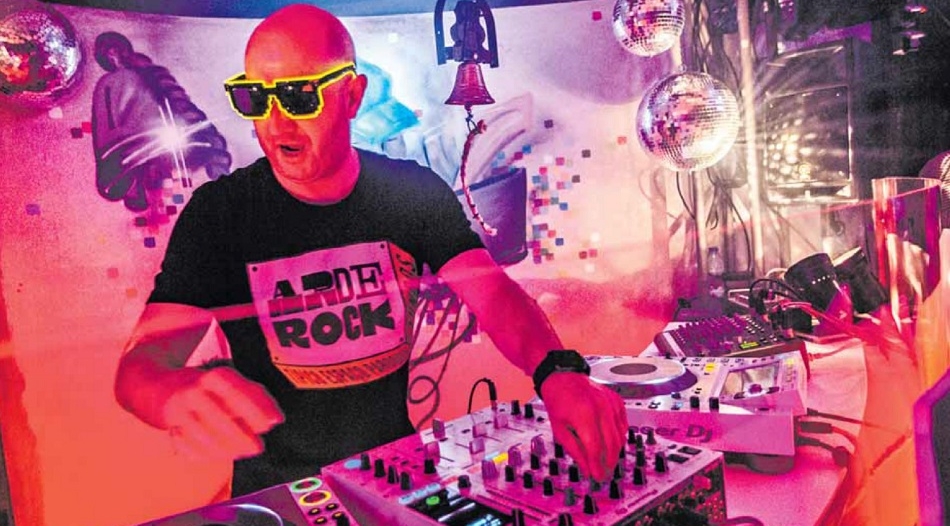
When Peixoto took responsibility for the parish of São Miguel de Laúndos in northern Portugal, he inherited a community facing significant financial difficulties. In 2006, the parish opened Ar de Rock Laundos, a volunteer-led space designed to generate funds while creating somewhere for different generations to meet, socialise and spend time together.
There were karaoke nights and music, but Peixoto quickly realised that the atmosphere needed more energy. He began putting together his own playlists, initially moving through pop and rock, before buying a controller and teaching himself how to mix. What started almost accidentally became increasingly important as the events attracted larger crowds and invitations began arriving from outside the parish.
It was the beginning of a pattern that would later define his career: music was never introduced purely as entertainment, but as a way of changing the relationship between the people sharing the same space.
Afghanistan and Learning to Become a DJ
The transition towards electronic music became clearer during Peixoto's work as a military chaplain.
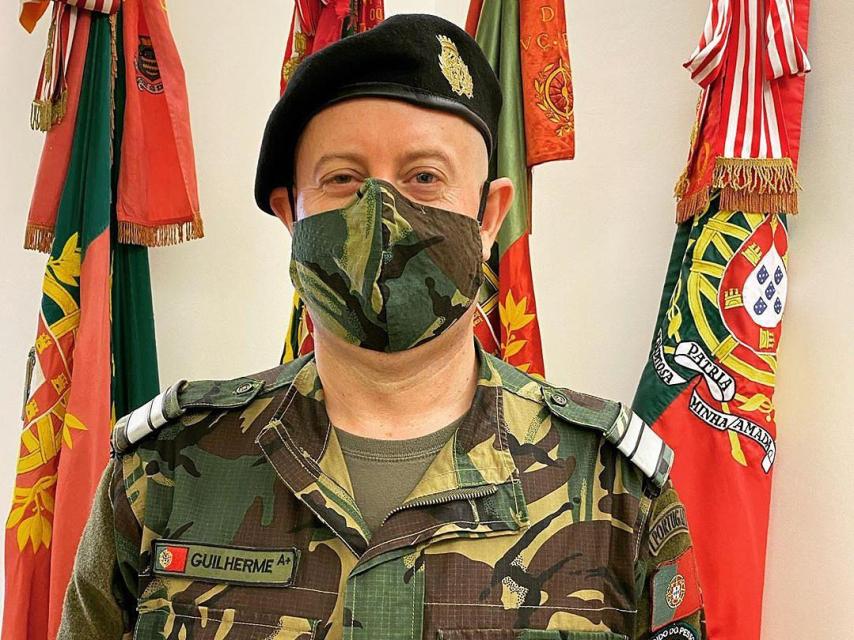
He spent six months in Kabul with Portuguese forces, where the commander knew about the events he organised back home and asked him to create entertainment for soldiers living thousands of kilometres away from their families. Peixoto brought the same instinct into a radically different environment, using music to offer temporary release from the pressure and isolation surrounding military life.
By then, electronic music had begun replacing the pop and rock that characterised his earliest DJ experiments. Its continuous flow and ability to sustain an atmosphere suited what Peixoto was trying to achieve, but he also understood that enthusiasm alone would not be enough if he wanted to perform at a higher level.
After returning from Afghanistan, he enrolled at ProDJ School in Portugal.
The decision was significant because it changed DJing from something largely self-taught into a discipline he was willing to study seriously. Peixoto later recalled having to unlearn techniques he had picked up incorrectly over several years while studying alongside much younger students who absorbed the technical side considerably faster.
During that period he continued practising wherever possible, including events at his parish and parties for Erasmus students, gradually developing the technical foundation that would later become essential when the size of his audiences began increasing dramatically.
The Pandemic and a New Digital Audience
The next major turning point arrived when clubs around the world were forced to close.
During the Covid-19 pandemic, livestreaming became one of electronic music's most important temporary infrastructures. DJs who had previously depended on physical clubs suddenly performed from empty venues, studios, rooftops and living rooms while audiences experienced dance music through phones and laptops.
For Padre Guilherme, the same period created an unexpected opportunity.
His livestreams began attracting attention outside Portugal as he experimented with house, afro house, progressive house and increasingly melodic forms of techno. The unusual combination of electronic music, religious symbolism and a Catholic priest behind the decks gave the broadcasts immediate visual impact, while their message of connection fitted naturally into a period defined by isolation.
As the audience expanded, so did the musical identity. Peixoto eventually found that melodic techno provided the space he needed to combine emotional electronic arrangements with Christian messages without making either element feel completely disconnected from the other.
That discovery would become crucial to the sound of Padre Guilherme.
World Youth Day 2023: The Morning That Changed Everything
If the pandemic introduced Padre Guilherme to a larger digital audience, World Youth Day in Lisbon in 2023 turned him into an international phenomenon.
In the early morning at Parque Tejo, more than 1.5 million young people were gathered ahead of the concluding Mass celebrated by Pope Francis. Padre Guilherme was given the unusual task of waking them up with a DJ set.
What followed quickly travelled around the world.
His performance moved through techno and major records including Avicii's “The Nights” and Master KG's “Jerusalema”, while religious elements such as a remixed Gloria and excerpts from speeches by Pope Francis and John Paul II were incorporated into the music. As the sun rose over Lisbon, young pilgrims danced alongside priests and bishops preparing for Mass.
For Guilherme, the scale was almost unimaginable. He later described the challenge of walking onto the stage without knowing whether 1.5 million people would actually respond to what he was about to play.
The images of an enormous crowd dancing while a priest controlled the music became the perfect summary of the contradiction that international media immediately found fascinating. Yet World Youth Day also demonstrated something more important: the concept could work beyond a small community or online livestream.
Padre Guilherme had discovered a musical language capable of operating on an enormous scale.
Finding His Sound: When Melodic Techno Meets Sacred Music
The most interesting part of Padre Guilherme's evolution is what happened after the initial viral attention.
His performances increasingly moved towards a specific sonic identity built around melodic techno, sacred music and cinematic atmosphere, with emotional synth lines and long electronic builds creating space for spoken messages, religious references and visual symbolism. His booking representation describes the project in similar terms, emphasising melody, rhythm, spirituality and collective energy rather than treating the religious elements as simple samples placed over techno tracks.
This distinction matters because Guilherme's sets are not designed as conventional sermons accompanied by electronic beats. Instead, he approaches the set as a continuous journey in much the same way as other melodic techno artists, allowing atmosphere to develop gradually while messages appear inside the structure of the music.
Peixoto has spoken about precisely this idea of the DJ set as a “journey”. In his view, electronic audiences are often interested less in waiting for one specific record than in surrendering to the complete progression of a performance. That continuous experience gives him room to communicate ideas without completely interrupting the energy of the dancefloor.
The approach becomes particularly effective during his larger performances, where visual production is equally important. Religious architecture, biblical imagery, light, large video screens and sacred references can coexist with the aesthetics normally associated with a contemporary techno show.
At its best, the result feels less like religion being placed on top of dance music and more like an attempt to discover what the two forms of collective experience might already have in common.
From the Church to Hï Ibiza, Zamna and the Festival Circuit
After Lisbon, Padre Guilherme's career moved quickly beyond events directly connected with the Catholic world.
His name began appearing in increasingly recognisable electronic contexts, including Afterlife at Hï Ibiza, Medusa Festival and Zamna Festival, while performances at major public events and international venues demonstrated that audiences were willing to engage with the project outside a specifically religious setting.
He has also performed in locations where the visual relationship between spirituality and electronic music becomes particularly dramatic, including the Torre dos Clérigos in Porto and near Christ the Redeemer in Rio de Janeiro. Elsewhere, he has maintained a direct connection with Catholic culture through events including the Jubilee of Digital Missionaries and Catholic Influencers in Rome and Hope Happening in Brussels.
That ability to move between very different environments is what makes his position in the contemporary electronic landscape so unusual. Padre Guilherme can appear within a major dance-music setting without attempting to hide his identity as a priest, then return to a religious gathering without presenting his connection with club culture as something separate or embarrassing.
The same clerical collar remains visible in both worlds.
Pope Francis, Pope Leo XIV and Bringing Faith Into Contemporary Culture
The connection with the Vatican has inevitably become another defining part of Padre Guilherme's story.
In 2019, he met Pope Francis and asked him to bless his headphones, producing an image that would later feel almost prophetic once Guilherme's international DJ career exploded. Francis' wider encouragement for priests to engage with contemporary culture also had a strong influence on Peixoto, who has said that it pushed him to study further, connect with other DJs and become more active online.
By 2026, that conversation had entered another chapter.
At a sold-out Budapest Park show in August, Padre Guilherme incorporated messages from Pope Leo XIV into his production, turning the pontiff's words into part of a techno performance while religious imagery and electronic visuals filled the venue's screens. The show also included an electronic interpretation of “Knockin' on Heaven's Door”, further illustrating how freely Guilherme moves between familiar musical culture and explicitly spiritual material.
For Peixoto, this is not about replacing conventional religious communication but recognising that younger audiences spend much of their lives inside different cultural environments. Rather than insisting that those audiences enter his world first, his approach is to meet them somewhere they already understand.
The club becomes one of those places.
Lux Aeterna and the Move Towards Original Music
The next challenge is increasingly musical rather than conceptual.
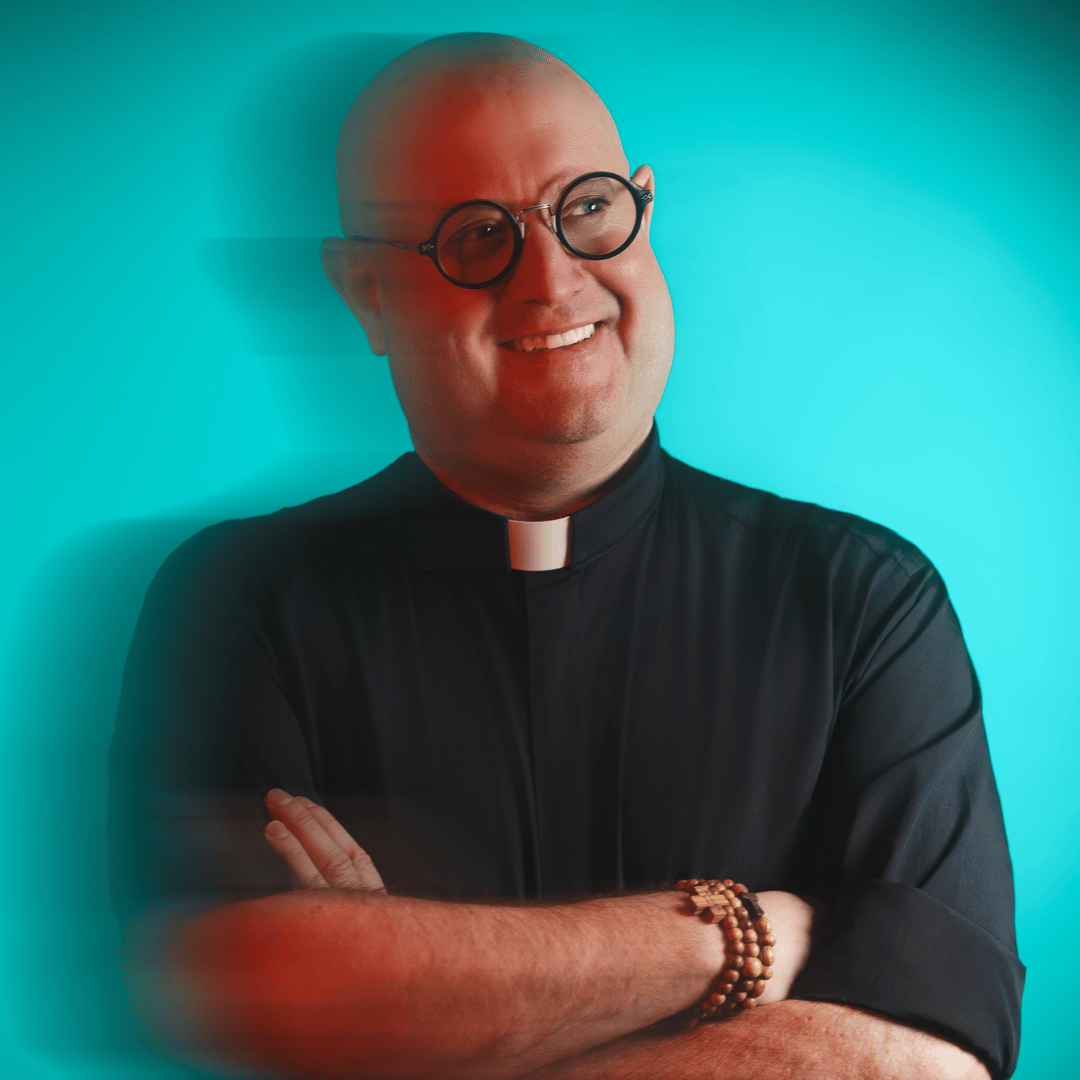
Through Lux Aeterna Records, Padre Guilherme has started building a catalogue that extends his ideas beyond live DJ sets. Releases such as “Veneremur Et Adoremus,” “Integral Ecology,” “Si Tuvieras Fe” and “We Want an Unarmed and Disarming Peace” explore themes of spirituality, peace and transcendence within contemporary electronic production.
He is also working on his first album, a project developed with Italian producers and featuring material in several languages. In a 2026 interview, Guilherme described the record as being centred around the idea that individuals do not need extraordinary circumstances before they can contribute positively to the world, while also naming Anyma and Rosalía among his dream collaborations.
The album could represent an important transition in the Padre Guilherme story.
A viral video can depend on the surprise of seeing a priest standing behind a DJ booth, but recorded music eventually has to survive without that visual contrast. Developing a distinctive catalogue will therefore determine whether Padre Guilherme's long-term influence remains connected primarily to the uniqueness of his persona or expands into a recognisable production identity of its own.
Why Padre Guilherme Is More Than the “Techno Priest”
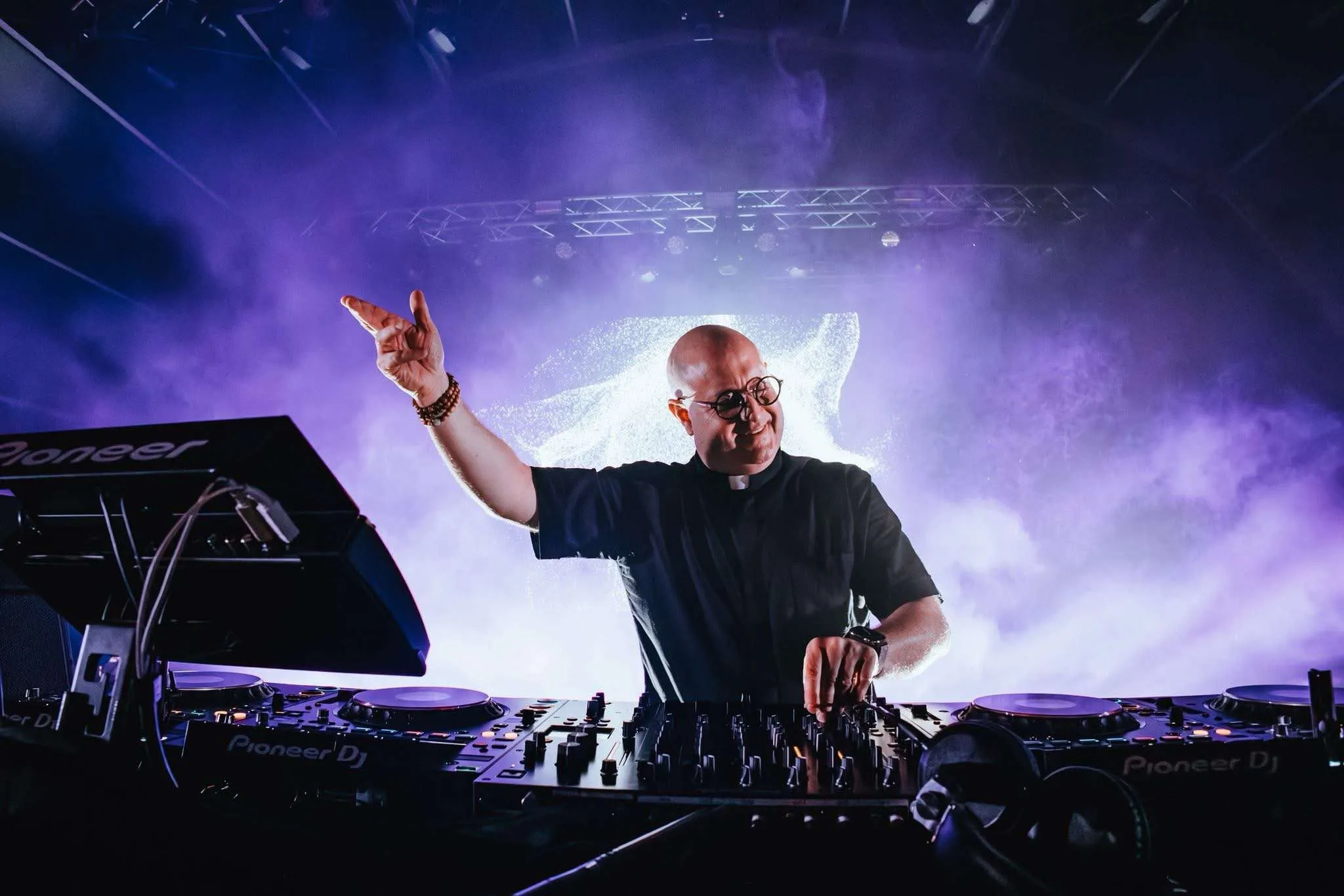
The easiest way to explain Padre Guilherme is through contradiction: Catholic priest meets techno DJ, clerical collar meets strobe lights, papal messages meet four-on-the-floor kick drums.
Yet that explanation becomes less convincing the deeper his project develops.
Electronic music has always been built around collective experience. Clubs and festivals create temporary communities in which thousands of people who may share very little outside the venue move according to the same rhythm for several hours. The music depends on repetition, anticipation, release and the feeling that the audience is participating rather than simply observing.
Religious ritual obviously belongs to a very different tradition, but it also understands the power of repetition, sound, architecture, light and collective participation.
Padre Guilherme has effectively built his artistic identity inside the space where those ideas overlap.
He does not attempt to transform a techno festival into a church, nor does he present dance culture as something that needs to be cleaned up before he can enter it. Instead, he works inside electronic music's existing language, using the structure of a DJ set to communicate themes of peace, faith, unity and human connection.
That may explain why the project has reached people far beyond traditional Catholic audiences.
You do not necessarily need to share Padre Guilherme's beliefs to understand the feeling he is trying to create when a large crowd moves together.
Final Thoughts
Padre Guilherme's story initially attracts attention because it appears to bring together two worlds that should have almost nothing in common.
A Catholic priest behind a techno console is an easy image to remember, and the scale of his World Youth Day performance turned that image into a global phenomenon almost overnight. Yet his career makes more sense when viewed not as a contradiction, but as the result of a long progression that began years before the viral videos.
He started using music to create community inside a struggling parish, discovered its emotional power while serving as a military chaplain, returned home and studied DJing seriously, built an online following during the pandemic and eventually developed a form of melodic techno capable of carrying the messages that mattered to him.
The venues became bigger, the production became more ambitious and the audience expanded from parish events to one and a half million people in Lisbon, but the underlying purpose remained remarkably consistent.
Music was still about bringing people into the same space.
Today, as Padre Guilherme moves between sacred landmarks, Catholic events and stages associated with the international electronic circuit, the project is entering another phase. Original productions and his forthcoming album will test whether the musical identity can become as recognisable as the story surrounding the man behind it.
Whatever happens next, Guilherme Peixoto has already demonstrated something unusual about contemporary electronic culture. The dancefloor remains one of the few spaces where repetition, sound and collective movement can create an immediate feeling of belonging among complete strangers, and he has recognised that this emotional mechanism can communicate far beyond the conventional boundaries of a club.
For many DJs, that shared moment is the objective of the night.
For Padre Guilherme, it is where the conversation begins.