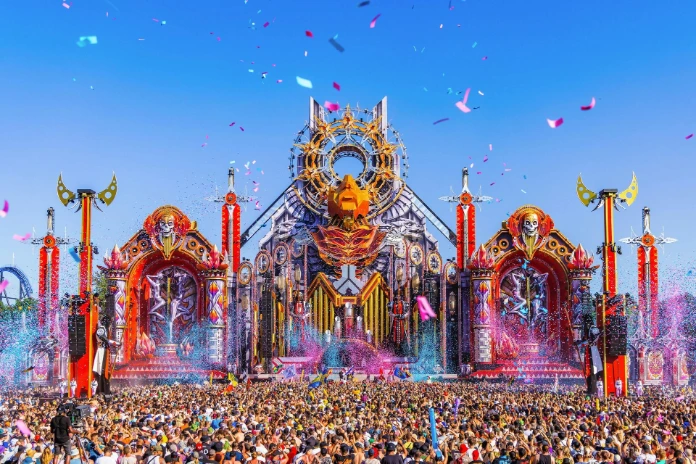
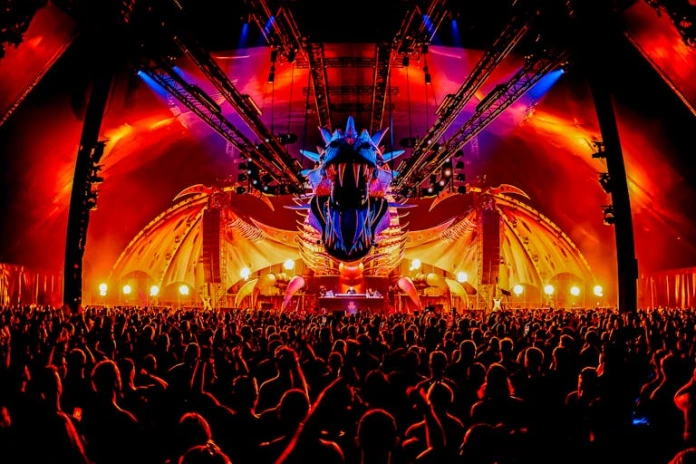
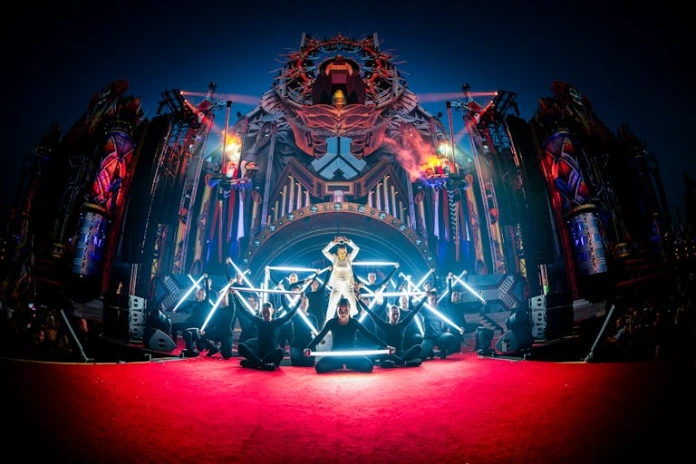
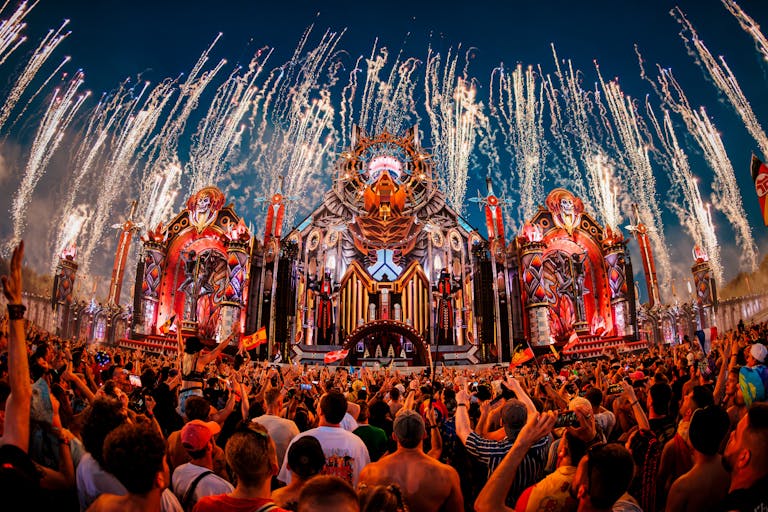
Defqon.1 2026, one of the most important hard dance festivals in the world, has been cancelled for the remainder of the weekend after authorities in the Netherlands issued a code red warning for extreme heat. The decision, announced by Q-dance, forced the Holy Grounds in Biddinghuizen to close from Friday, June 26, turning what should have been a massive celebration of hardstyle culture into one of the most difficult moments in the festival’s recent history.
In this post:
• Defqon.1 2026 Cancelled
• Why the Festival Was Stopped
• The Code Red Heat Warning
• A Difficult Decision for Q-dance
• What This Means for Festival Culture
• Climate, Safety and the Future of Outdoor Events
• Final Thoughts
Defqon.1 2026 Cancelled
For hardstyle fans, Defqon.1 is not just another festival.
It is a ritual, a yearly gathering, a world built around hard dance music, stage design, endshows, ceremonies, flags, colors and an extremely loyal community. People travel from different countries to be there, and for many of them the weekend is planned months in advance.
That is why the cancellation of Defqon.1 2026 feels so heavy.
Q-dance announced that the festival had been cancelled for the remainder of the weekend, with the Holy Grounds closing from Friday, June 26. In their official message, the organizers described the situation as “the unthinkable”, a word that perfectly captures how painful this decision must have been for both the festival team and the thousands of visitors already emotionally invested in the event.
This was not a small schedule change.
It was the end of the weekend before it could fully unfold.
For a festival like Defqon.1, where every day builds toward rituals, endshows and collective moments, stopping the event early means breaking a story that was supposed to be lived until the end.
Why the Festival Was Stopped
The cancellation was caused by extreme heat conditions in the Netherlands.
According to reports, the Royal Netherlands Meteorological Institute, KNMI, issued a code red weather warning due to dangerous temperatures, with heat expected to reach around 40°C. In consultation with authorities, Q-dance decided that continuing the event would no longer be safe.
That detail is important.
This was not simply a case of bad weather or uncomfortable conditions. This was a public safety issue. Large outdoor festivals depend on many fragile elements: crowd movement, water availability, medical support, emergency access, transport, camping conditions and the physical resistance of visitors exposed to heat for many hours.
When the weather becomes extreme, everything changes.
A festival crowd is not just a number of people dancing in front of a stage. It is a temporary city. When heat becomes dangerous, that temporary city becomes extremely difficult to manage safely.
And that is why the decision had to be taken seriously.
The Code Red Heat Warning
The strongest part of this story is the code red warning itself.
NL Times reported that the Netherlands issued its first-ever code red weather alarm for extreme heat, with temperatures expected to reach dangerous levels. This makes the Defqon.1 cancellation not only a festival story, but also part of a larger climate and public safety discussion.
Outdoor festivals have always had to deal with weather.
Rain, mud, storms, wind and heat have always been part of the risk. But extreme heat creates a different kind of problem because it directly affects the body. It can lead to dehydration, exhaustion, fainting, heatstroke and serious medical emergencies, especially in a high-energy festival like Defqon.1.
Hard dance festivals are physically intense.
People do not simply stand still. They dance, jump, move between stages, camp, queue, walk long distances and spend hours under the sun. In that context, heat is not just uncomfortable. It can become dangerous very quickly.
This is why the cancellation, however painful, makes sense from a safety perspective.
No lineup, no endshow and no festival ritual can be more important than people’s lives.
A Difficult Decision for Q-dance
It is easy to imagine how devastating this decision must have been for Q-dance.
Defqon.1 is one of the strongest brands in hard dance culture. It is built with enormous production work, months of planning, stage construction, artist scheduling, logistics, safety planning and community expectations. Cancelling the remaining days means not only financial and organizational damage, but also emotional damage.
For fans, Defqon.1 is personal.
For the team behind it, it is probably even more personal.
This is why the official communication matters. The language used by Q-dance did not feel cold or distant. It acknowledged the emotional weight of the moment. The organizers knew that thousands of people would be disappointed, frustrated and heartbroken.
But the key point remains safety.
A festival organizer can control many things: lights, sound, stages, lineup, security, access and timetable. But it cannot control the climate. When weather conditions reach an official emergency level, the only responsible decision is sometimes the one nobody wants to make.
That is what seems to have happened here.
What This Means for Festival Culture
The cancellation of Defqon.1 2026 raises a much bigger question for the entire electronic music festival industry: how can large outdoor events adapt to a future where extreme weather is becoming harder to ignore?
This is not only a Defqon.1 issue. It concerns every major summer festival, especially those built around camping, long opening hours, huge crowds and physically intense music cultures. Hardstyle, techno, EDM and dance festivals are not passive experiences. They are built around movement, energy and collective participation. People dance for hours, move from stage to stage, queue under the sun, sleep little and often spend entire days exposed to the heat. That physical intensity is part of what makes these festivals so powerful, but it also becomes one of the biggest challenges when temperatures reach dangerous levels.
For this reason, the future of outdoor festivals will probably require a different way of thinking about safety and planning. Organizers may need to invest more in shaded areas, larger free water systems, cooling zones and medical support designed specifically for heat-related emergencies. Timetables could also become more flexible, with some of the most intense sets moved later into the evening or night, when temperatures are lower. In extreme cases, festivals may even have to consider reduced capacity, stronger heat-alert protocols and clearer communication with visitors before they arrive on site.
These changes are not small, and they may not be easy to implement. Festivals are complex machines, with artists, production teams, security, transport, camping areas and thousands of people moving through the same space. But what happened with Defqon.1 shows that climate conditions can no longer be treated as a secondary detail. The festival experience is still about music, freedom and shared energy, but it also has to become more prepared, more flexible and more realistic about the environment in which it takes place.
In the end, protecting the crowd does not weaken the spirit of a festival. It protects the very community that makes the festival possible.
Climate, Safety and the Future of Outdoor Events
What happened to Defqon.1 shows how deeply music culture is now connected to climate conditions. For a long time, festivals have been judged mainly by their lineups, stage production, sound systems, visual identity and the emotional moments they create for the crowd. All of this still matters, of course. A powerful mainstage, a strong closing show and a carefully built atmosphere are still part of what makes a festival unforgettable. But today, these elements are no longer enough on their own. Safety, preparation and climate resilience are becoming just as important as the artistic side of the event.
This is especially true for destination festivals, where people do not simply arrive for a few hours and then go home. They travel from different countries, sleep on-site, spend several days inside the festival area and become part of a temporary community. In that kind of environment, organizers are not only responsible for concerts and performances. They are responsible for the wellbeing of thousands of people living together in a space that depends on weather, infrastructure, medical support, water access and emergency planning.
Defqon.1 has always been built around a strong sense of community. The word “Warriors” is not just a slogan or a branding choice. It represents the loyalty, intensity and emotional connection of the crowd. But community also means responsibility. In extreme conditions, taking care of each other becomes part of the festival identity itself, not something separate from it.
This is why the cancellation should not be seen only as a failure or as a lost weekend. It should also be understood as a warning for the entire festival industry. The future of outdoor events will depend not only on how impressive the stages are or how strong the lineup is, but on how well festivals can protect the people who make those moments possible.
Final Thoughts
The cancellation of Defqon.1 2026 is a painful moment for hardstyle fans, Q-dance and the wider electronic music community.
It is painful because Defqon.1 is more than a festival. It is one of the symbolic homes of hard dance culture. It is a place where music, ritual, stage design and crowd energy come together in a way that very few events can replicate.
But this time, the music had to stop.
Extreme heat and a code red warning turned the weekend into a safety emergency, forcing organizers to make the hardest possible decision. For fans, it is understandable to feel disappointed. For the organizers, it must be devastating. But when public safety is at risk, cancellation becomes the only responsible choice.
What remains is a larger lesson for the festival world.
Outdoor electronic music events are entering a new era where climate conditions can no longer be treated as rare exceptions. Heat, storms and extreme weather are becoming part of the planning reality.
Defqon.1 2026 will be remembered for a reason nobody wanted.
But if the industry learns from it, this moment can also help shape safer, more resilient festivals in the future.
For now, the most important thing is simple: the Warriors will return.
And when they do, the Holy Grounds will mean even more.