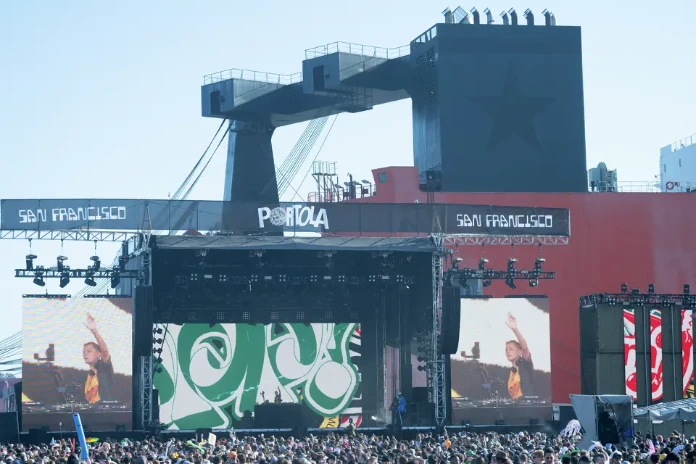
September 26–27, 2026 | Pier 80, San Francisco, California
San Francisco is preparing for one of the most distinctive weekends on the international electronic music calendar. On September 26 and 27, Portola Music Festival returns to Pier 80 for its fifth edition, once again transforming the city’s industrial waterfront into a meeting point between club culture, electronic music, alternative sounds and contemporary pop.
Since launching in 2022, the Goldenvoice-produced festival has developed an identity that feels noticeably different from the traditional American EDM model. Portola has never relied on a single genre, nor has it built its reputation purely around headline power. Instead, its appeal comes from the way it places globally recognised artists next to underground selectors, live electronic projects, pop innovators and artists whose work sits somewhere between all of those worlds.
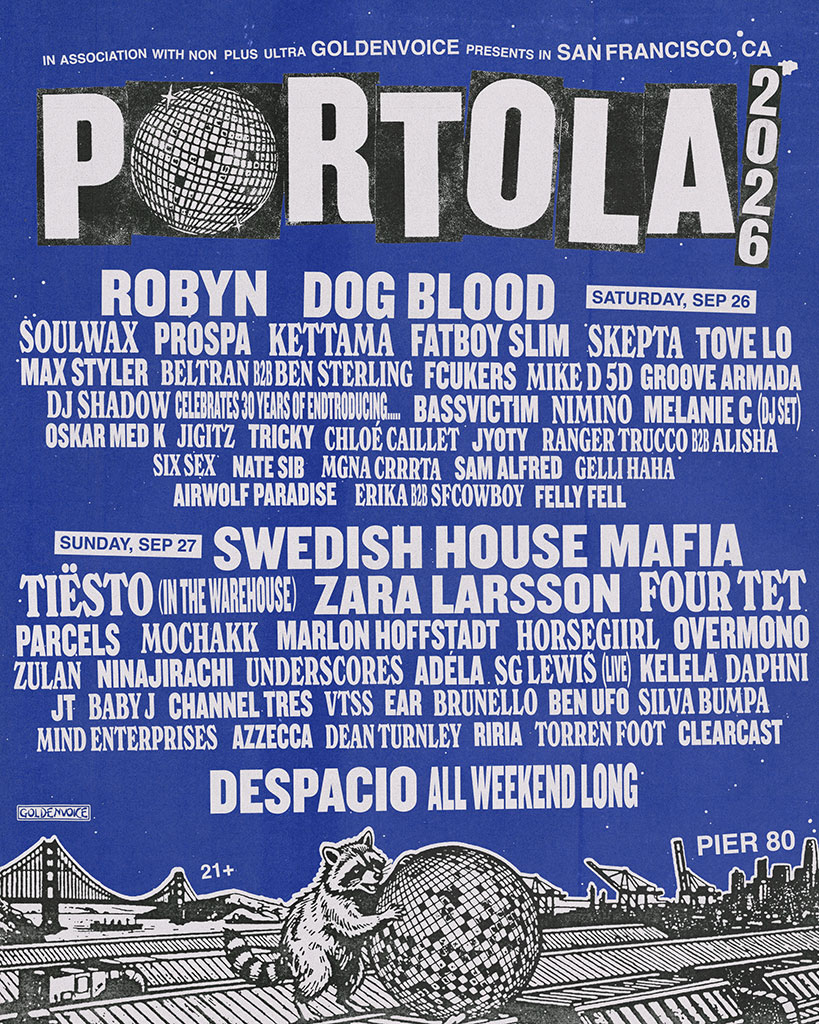
The 2026 edition might be the clearest expression of that philosophy yet. Robyn and Dog Blood lead Saturday, while Swedish House Mafia take centre stage on Sunday, joined across the weekend by Tiësto, Four Tet, Soulwax, Fatboy Slim, Zara Larsson, Tove Lo, Mochakk, Overmono, KETTAMA, Prospa, SG Lewis, Marlon Hoffstadt, Ben UFO and dozens more.
Particularly significant is the return of Dog Blood, the collaborative project between Skrillex and Boys Noize, whose Portola appearance marks a rare reunion after several years away from the live circuit. It is exactly the kind of booking that explains why Portola has become such an interesting fixture on the festival calendar: familiar names appear in unexpected contexts, while some of the weekend’s most exciting moments are likely to come from combinations that would feel unusual almost anywhere else.
In this article:
- Portola Returns to San Francisco for Its Fifth Edition
- Why Portola Feels Different From a Traditional Electronic Festival
- Saturday: Robyn, Dog Blood, Soulwax and Fatboy Slim
- Sunday: Swedish House Mafia, Tiësto, Four Tet and Mochakk
- The Warehouse: One of Portola’s Defining Spaces
- From Underground Club Music to Global Pop
- Portola Week Takes Over San Francisco
- Everything You Need to Know Before Going
- Why Portola 2026 Stands Out
- Our Final Thoughts
Portola Returns to San Francisco for Its Fifth Edition
Five editions may not sound like a long history when compared with festivals that have been operating for decades, but Portola has established a clear personality remarkably quickly.
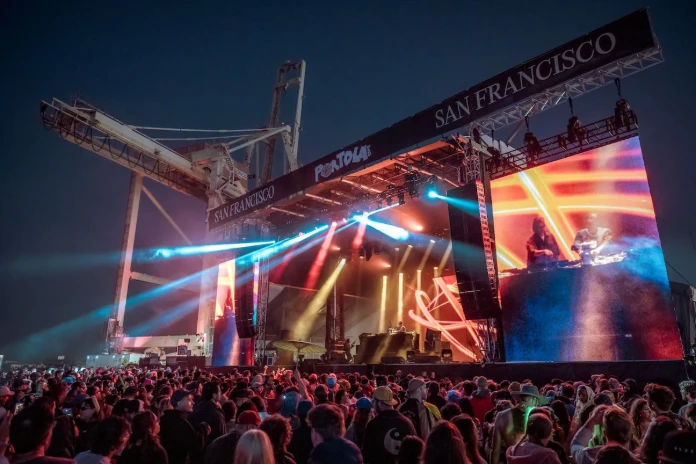
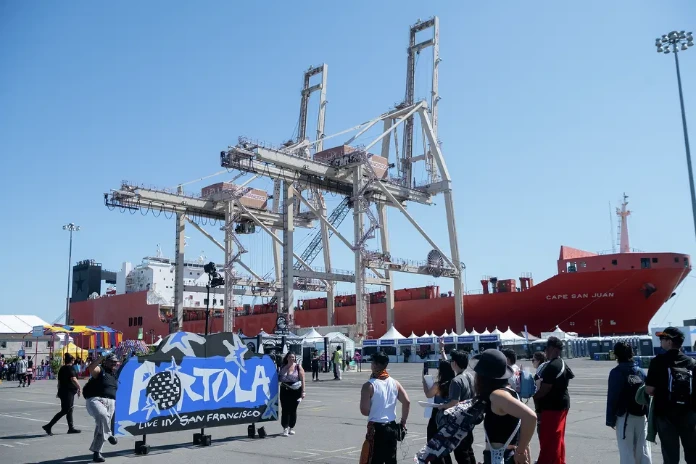
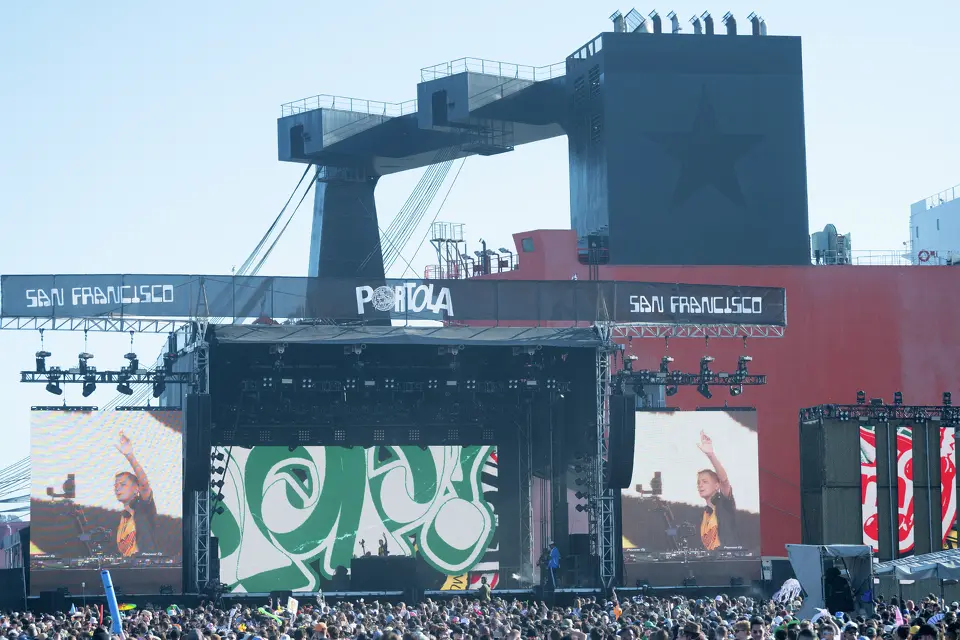
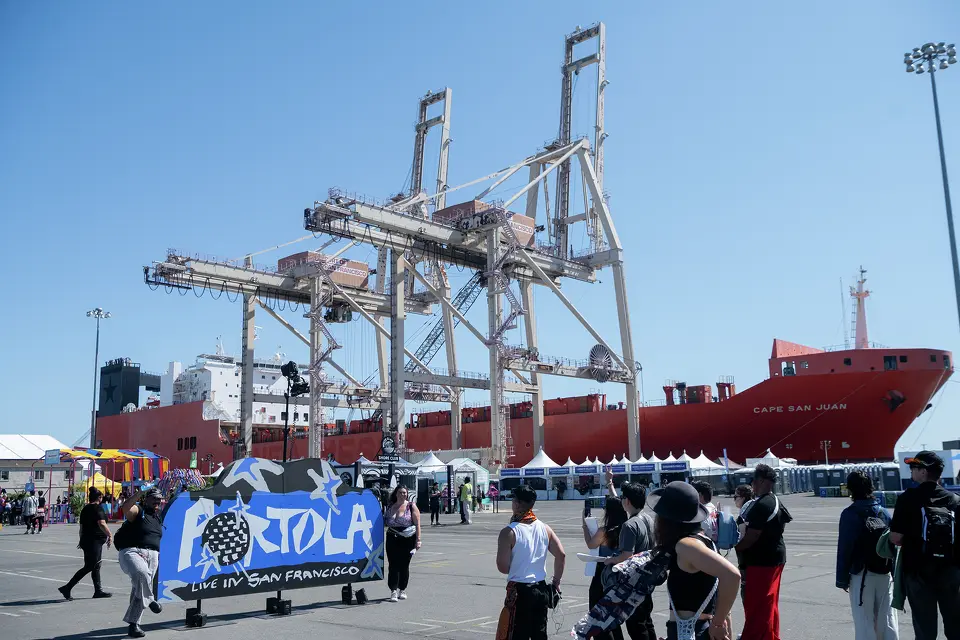
The festival debuted in 2022 at Pier 80, and the decision to keep returning to the same location has helped create a strong connection between the event and its surroundings. Portola is not simply a festival that happens to take place on San Francisco’s waterfront. Its warehouses, shipping infrastructure, concrete expanses and skyline of cranes have gradually become part of the visual language of the event.
For 2026, the festival once again spreads across both indoor and outdoor spaces at Pier 80, with music running throughout the afternoon and into the evening across several stages. The event remains strictly 21+, and attendance has grown significantly since the first edition, yet Portola has managed to retain the feeling that its programming is aimed at people who genuinely follow electronic music rather than simply attend major festival weekends.
That distinction matters. Portola may now operate on a large scale, but scale has never been the central story. The festival’s reputation has instead been built on curation, and in 2026 that approach feels more ambitious than ever.
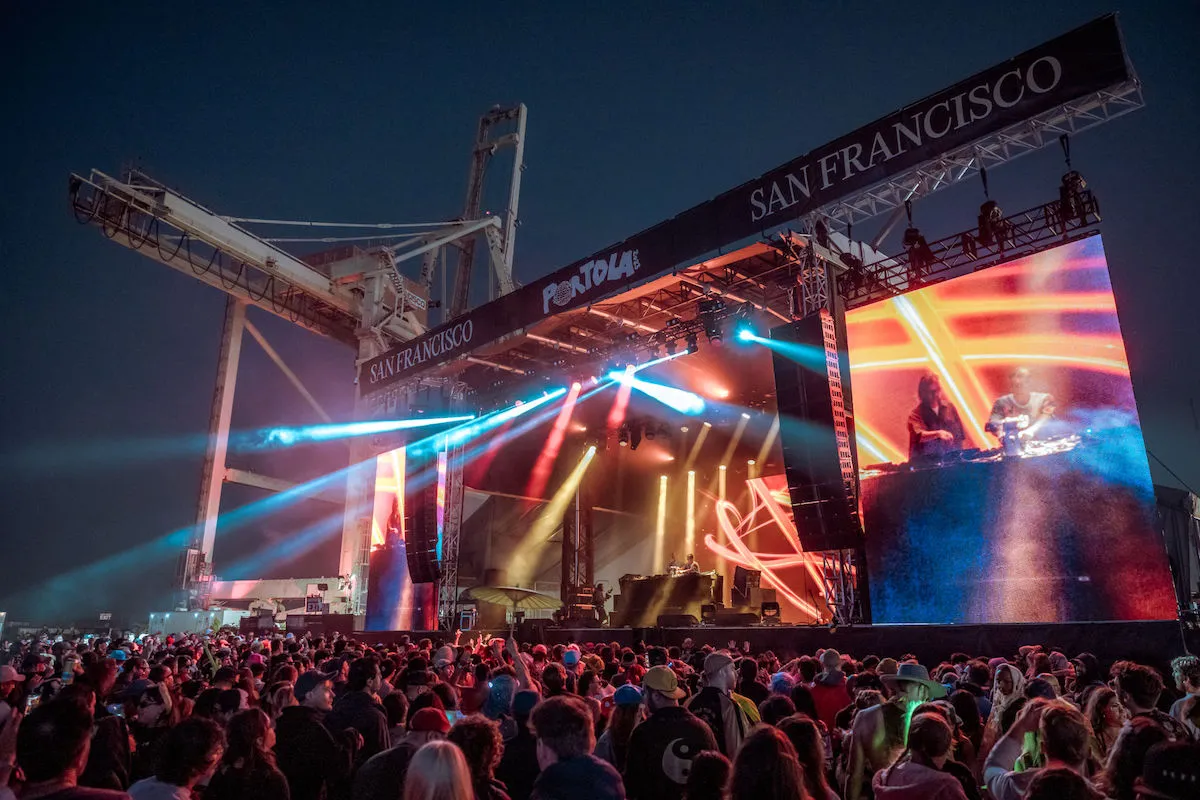
Why Portola Feels Different From a Traditional Electronic Festival
Looking at the Portola 2026 lineup for the first time can feel almost disorientating, because the names belong to several different musical worlds.
Swedish House Mafia and Tiësto appear on the same weekend as Four Tet and Ben UFO. Robyn sits alongside Dog Blood, while Fatboy Slim shares a programme with artists such as KETTAMA, Mochakk, Overmono, VTSS and Marlon Hoffstadt. Add Zara Larsson, Tove Lo, Soulwax, DJ Shadow, Daphni, SG Lewis and Parcels, and the festival begins to resemble less of a traditional genre-specific event and more of a snapshot of contemporary electronic culture.
The important thing is that this diversity does not feel accidental. Portola is not mixing genres simply for the sake of having a bigger poster. Instead, the programme reflects the way electronic music is actually consumed today, particularly by an audience that might move comfortably between a house set, experimental club music, electronic pop and a live performance during the same night.
That fluidity is one of Portola’s defining qualities. Mainstream dance music and underground club culture are not treated as opposing worlds, while pop artists are integrated into the programme without making the festival feel like a conventional crossover event.
A Portola weekend is therefore less about committing to one scene and more about moving between several of them. For an audience that no longer defines its taste through a single genre, that approach feels increasingly relevant.
Saturday: Robyn, Dog Blood, Soulwax and Fatboy Slim
Saturday immediately demonstrates just how broad the Portola concept can be.
At the top of the programme is Robyn, one of electronic pop’s most influential figures and an artist whose work has consistently blurred the boundaries between the club and the pop world. Her appearance alone would already give Saturday a distinctive identity, but the rest of the lineup keeps moving in completely different directions.
One of the weekend’s most anticipated performances will undoubtedly come from Dog Blood, the project bringing together Skrillex and Boys Noize. Their return carries particular weight because Dog Blood has always represented something more unpredictable than either artist’s solo career, combining electro, techno, bass music and rave energy into a project that has rarely followed conventional festival expectations.
That sense of unpredictability continues with Soulwax, whose relationship with electronic music has always existed somewhere between the live band format, club culture and experimental production. Few acts feel more naturally suited to a festival like Portola, where the boundaries between DJ sets, live electronic performance and alternative music are deliberately kept loose.
Then there is Fatboy Slim, whose presence creates a direct bridge between contemporary festival culture and an earlier generation of electronic music. His catalogue remains deeply connected to the late-1990s explosion of big beat, yet his sets still feel perfectly comfortable within modern dance environments. Seeing him on the same programme as artists such as Prospa, KETTAMA, Max Styler and Chloé Caillet makes Saturday feel almost like a conversation between different eras of the dancefloor.
Elsewhere, the programme keeps expanding. Skepta, Tove Lo, Groove Armada, DJ Shadow, Beltran b2b Ben Sterling, Jyoty, Tricky, nimino and Melanie C are among the other names appearing across the day, adding everything from UK club culture and hip-hop influences to house, electronic pop and left-field performance.
What makes Saturday particularly strong is not any single booking. It is the way these artists coexist without the festival losing a sense of direction.
Sunday: Swedish House Mafia, Tiësto, Four Tet and Mochakk
If Saturday showcases Portola’s eclecticism, Sunday pushes that idea even further.
At the centre of the day are Swedish House Mafia, whose presence brings one of electronic music’s most recognisable live spectacles to San Francisco. Axwell, Sebastian Ingrosso and Steve Angello remain deeply associated with the era in which progressive house moved from clubs into arenas and festival main stages, and their appearance gives Portola a genuinely massive closing-day moment.
What makes the booking more interesting, however, is the context around it.
During the same day, attendees can move through a completely different side of contemporary dance music. Mochakk represents the new generation of house artists whose careers have grown rapidly through club culture, festival appearances and a highly recognisable performance style. Marlon Hoffstadt, meanwhile, brings the euphoric, high-energy sound that has become increasingly visible across European dancefloors, while Overmono continue to occupy a space between UK club music, breaks, techno and live electronic performance.
Then there is Four Tet, perhaps one of the artists who best represents Portola’s overall philosophy. His career has moved effortlessly between intimate clubs, experimental production, underground festivals and some of the biggest stages in electronic music, without ever losing the sense that anything could happen during one of his sets.
The programme becomes even more striking when Tiësto enters the picture. Few artists have played a bigger role in the global expansion of electronic music, yet at Portola he appears within the same broader ecosystem as Four Tet, Overmono, Ben UFO, Daphni, VTSS, Channel Tres, SG Lewis, Parcels, Kelela, horsegiirL and Ninajirachi.
On paper, the idea of moving between Tiësto, Four Tet, Ben UFO and Swedish House Mafia within the same festival day sounds almost impossible to reconcile. At Portola, that contrast is precisely what makes the programme interesting.
The Warehouse: One of Portola’s Defining Spaces
Every major festival needs a stage that people remember long after the weekend is over, and at Portola that space is unquestionably The Warehouse.
The vast industrial structure has become one of the event’s defining features, giving the festival an indoor environment that feels closer to an oversized rave than a conventional festival arena. Its scale allows Portola to programme artists who might normally be associated with clubs or warehouse parties without losing the intensity of those environments when thousands of people are involved.
The 2026 programme makes full use of that identity. Saturday brings artists including Prospa, KETTAMA, Max Styler, Beltran b2b Ben Sterling, Groove Armada and Chloé Caillet into the space, while Sunday shifts towards Tiësto, Four Tet, Marlon Hoffstadt, Overmono, VTSS and others.
Those bookings are important because the Warehouse changes the way these artists are experienced. A set from Tiësto inside a cavernous industrial building inevitably feels different from the same performance on an outdoor main stage surrounded by fireworks and giant LED structures. Likewise, Four Tet or Overmono performing within that environment fits naturally with the darker and more club-focused side of Portola.
The Warehouse therefore does more than host artists. It helps shape the festival’s musical identity, creating a space where Portola can lean further into club culture without abandoning the scale of a major international event.
From Underground Club Music to Global Pop
One of the most interesting things about the 2026 lineup is how naturally it moves between artists with completely different audiences.
On one side, names such as Zara Larsson, Tove Lo and Robyn bring a strong Scandinavian pop presence to the weekend, while Swedish House Mafia connect that world to one of the most commercially successful chapters in modern dance music.
Move further into the programme and the tone changes quickly. KETTAMA, Ben UFO, VTSS, Chloé Caillet, Mochakk, Marlon Hoffstadt, Daphni, Beltran and Ben Sterling represent different areas of contemporary club culture, covering everything from house and techno to UK sounds, fast-paced rave energy and more stripped-back grooves.
Artists such as Overmono, Soulwax, Parcels and SG Lewis sit somewhere between those categories, bringing live instrumentation, electronic production and club influences together in ways that make genre labels increasingly unnecessary.
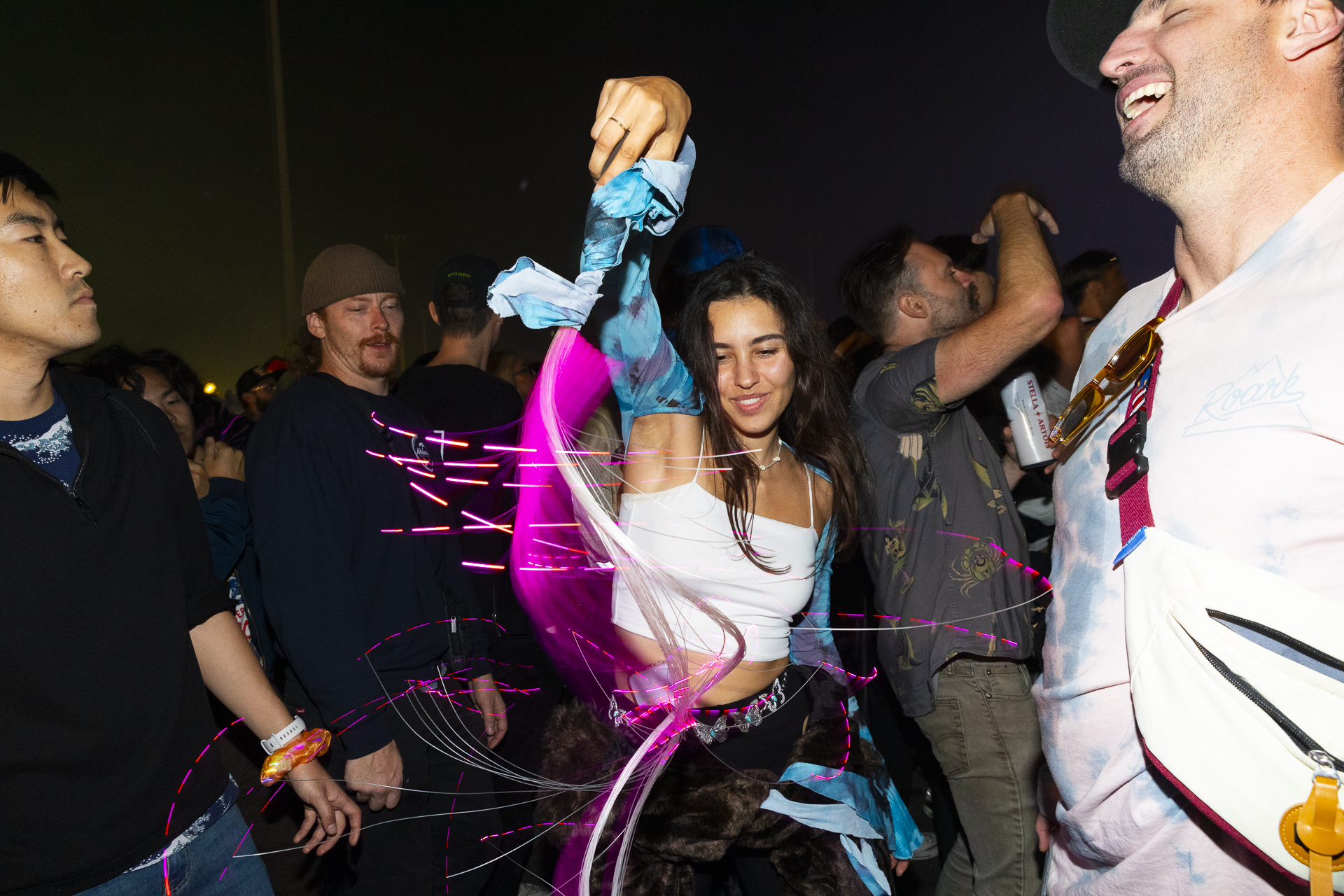
That variety gives Portola a genuine sense of discovery. Someone arriving primarily for Swedish House Mafia might unexpectedly find themselves watching Overmono. A Four Tet fan could end up spending an hour inside Despacio, while someone attracted by Robyn or Zara Larsson might discover a completely different side of the festival in the Warehouse.
That is one of the clearest signs of good curation. A strong festival should not simply confirm what its audience already likes; it should create opportunities for them to find something new.
Portola Week Takes Over San Francisco
Portola’s influence also extends beyond Pier 80 through Portola Week, a series of official pre-parties, after-parties and satellite events spread across San Francisco.
For visitors travelling specifically for the festival, this changes the experience considerably. Rather than arriving for two isolated days at Pier 80, the wider programme creates the possibility of spending several nights inside the city’s club scene, often seeing artists from the main lineup in smaller and more intimate settings.
That connection between the festival and the wider nightlife of San Francisco is important because Portola does not position itself as an isolated event disconnected from the city around it. Its identity is closely linked to nightlife, club spaces and the history of electronic music culture in San Francisco.
The fifth anniversary gives that wider programme additional importance in 2026, with special events surrounding the main weekend and Despacio also playing a role in the celebrations.
For anyone travelling internationally, Portola therefore works particularly well as part of a broader city experience: a weekend in which the main festival becomes the centrepiece, but not necessarily the beginning or the end.
Everything You Need to Know Before Going
Portola Music Festival 2026 takes place on September 26 and 27 at Pier 80 in San Francisco, with the main entrance located around Marin Street. The festival opens during the early afternoon and continues into the evening, with performances spread across indoor and outdoor stages.
The event is strictly 21+, so attendees need to bring accepted physical identification. Portola also operates as a cashless festival, while re-entry is generally not permitted once attendees have entered the site for the day.
Transport is another important consideration. Pier 80 is not designed around large-scale festival parking, so using public transport, official shuttles, Muni, Caltrain, BART connections, bicycles or rideshare is generally the more practical approach.
San Francisco’s waterfront weather is also worth remembering. Temperatures can change noticeably between the afternoon and the evening, particularly around the outdoor stages, while indoor areas such as the Warehouse can become significantly warmer once they fill. Layers and comfortable footwear are therefore less of a fashion recommendation and more of a practical necessity when spending an entire day moving across a large industrial site.
Anyone planning to attend should also check the latest official information regarding bag policies, prohibited items, transportation options and set times before travelling, as these details can change as the festival approaches.
Why Portola 2026 Stands Out
Electronic music festivals are becoming increasingly specialised. Some build their entire identity around techno, others around commercial EDM, house, bass music or highly specific underground scenes.
Portola succeeds because it refuses to choose only one direction.
The festival can book Swedish House Mafia without turning itself into a traditional EDM event. It can programme Four Tet, Ben UFO and Daphni without presenting itself exclusively as underground. Robyn, Zara Larsson and Tove Lo can appear without making the weekend feel like a pop festival, while Soulwax, Overmono and Despacio push the programme towards live electronics and alternative club culture.
The connecting factor is not genre. It is curation.
Portola appears designed for an audience interested in electronic music as a broad cultural space rather than a collection of isolated scenes. That gives the festival room to make unusual choices and, more importantly, to trust that its audience will follow.
In a festival landscape where many lineups increasingly resemble one another, that sense of personality has become one of Portola’s strongest advantages.
Our Final Thoughts
In only five editions, Portola Music Festival has already developed the kind of identity many festivals spend years trying to create.
The 2026 lineup is huge, but its strength goes beyond the names at the top of the poster. Robyn, Dog Blood, Swedish House Mafia, Tiësto, Four Tet, Soulwax, Fatboy Slim, Zara Larsson, Mochakk, Overmono and KETTAMA represent completely different generations and interpretations of electronic music, yet the programme still feels intentionally connected.
Dog Blood’s return gives Saturday a rare and genuinely exciting moment, while Swedish House Mafia bring a completely different kind of scale to Sunday. Between those two points, the weekend moves through warehouse sets, live electronic performances, underground selectors, pop artists and the unique world of Despacio.
Then there is Pier 80 itself. The concrete, cranes, warehouse spaces and San Francisco waterfront give Portola an atmosphere that cannot easily be recreated elsewhere, and that environment has become just as important to the festival’s identity as its increasingly adventurous lineups.
For listeners who enjoy electronic music without feeling the need to stay inside a single genre, Portola 2026 looks set to be one of the most interesting major festival weekends of the late summer season. It is not simply about putting big names on multiple stages; it is about creating a space where different generations, scenes and interpretations of club culture can coexist for two days.
And in 2026, Portola’s fifth edition may be its most complete expression yet.