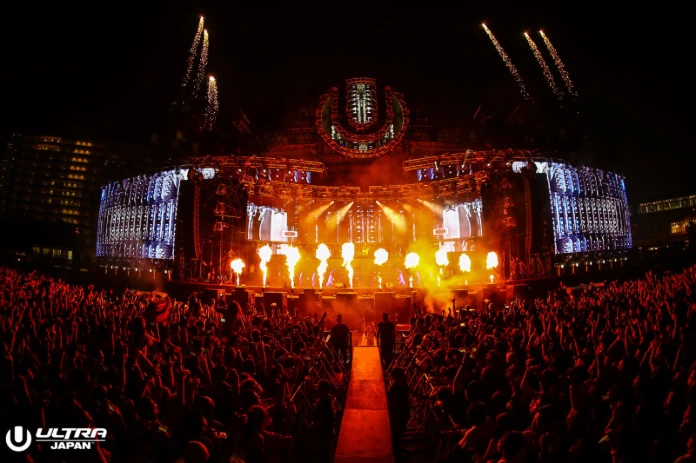
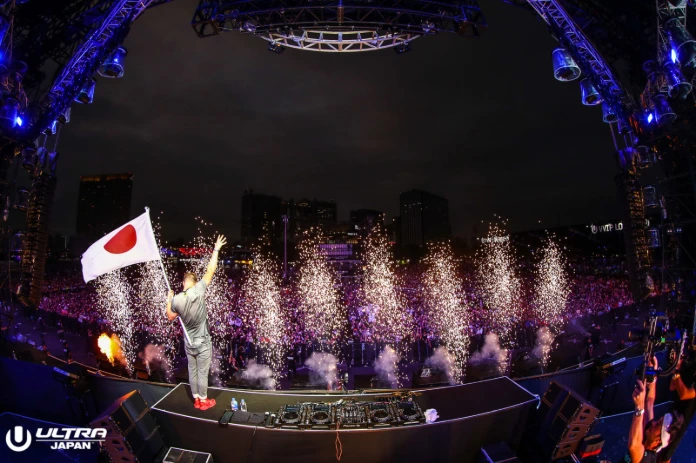
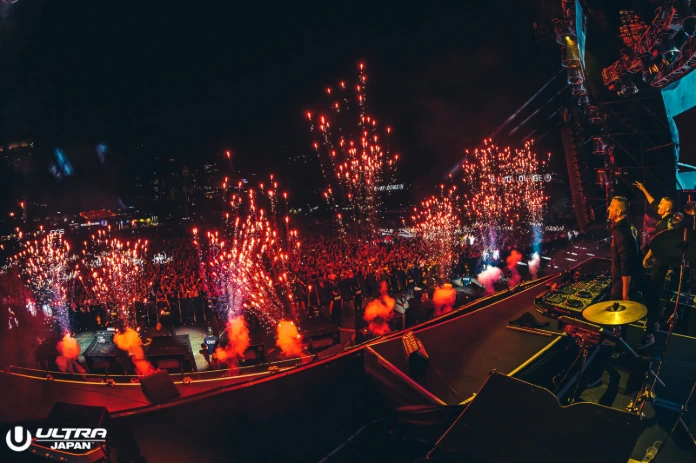
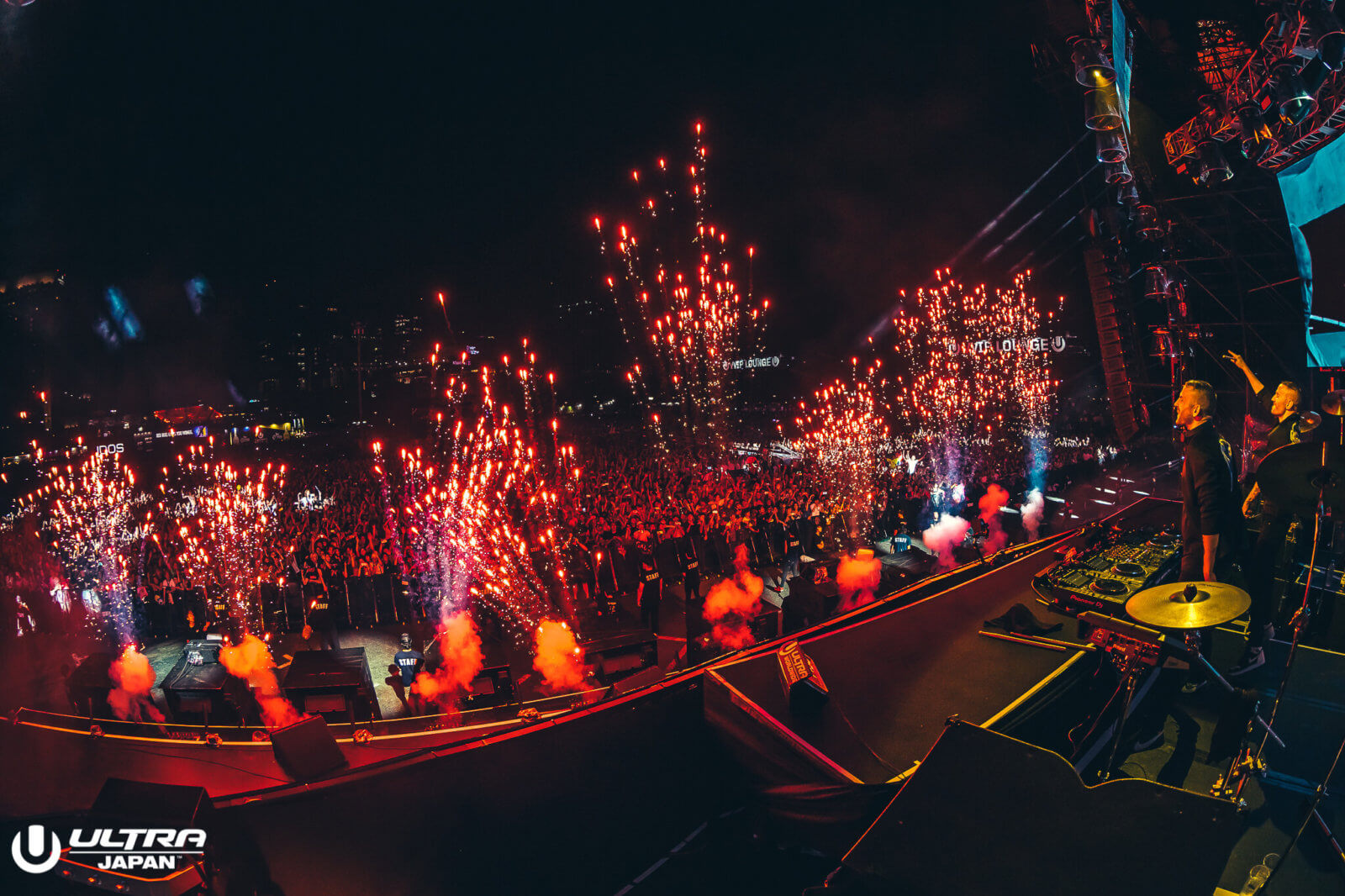
Tokyo is a city built on contrasts, where enormous illuminated districts exist alongside quiet neighborhoods and centuries of tradition, and its electronic music culture follows much the same philosophy. On September 19 and 20, 2026, that contrast will once again reach the waterfront as Ultra Japan returns to Tokyo Odaiba Ultra Park for two days bringing together international EDM headliners, underground house and techno, drum & bass and a substantial selection of artists from Japan's own electronic scene.
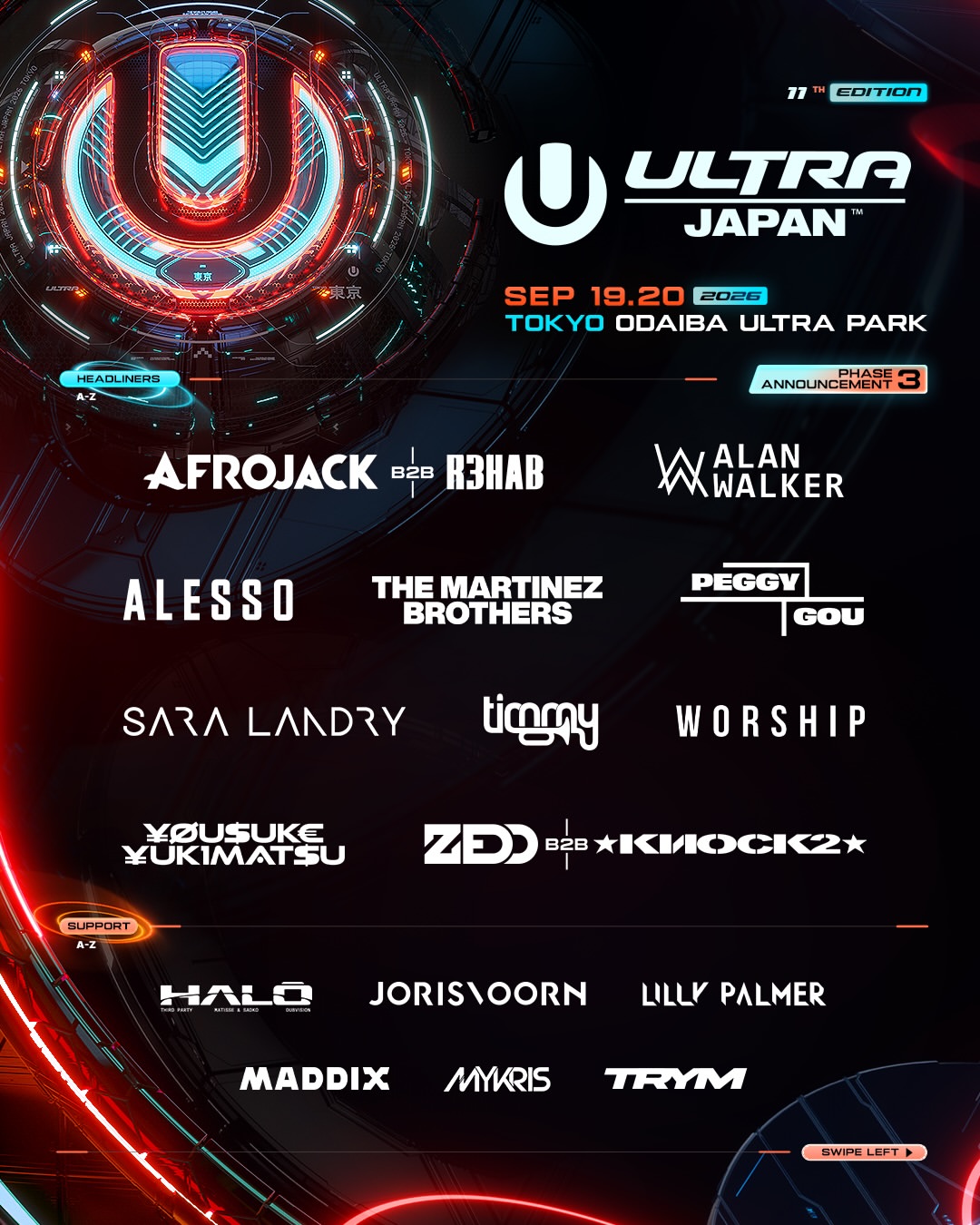
Ultra Japan has long been more than simply the Japanese edition of the festival born in Miami. Since arriving in Tokyo, it has developed its own personality by combining the enormous production associated with the Ultra brand with one of Asia's most distinctive club cultures. The 2026 edition pushes that idea particularly far, with a lineup that moves from Zedd B2B Knock2 and Afrojack B2B R3HAB to Alesso, Alan Walker and WORSHIP, while RESISTANCE brings Peggy Gou, The Martinez Brothers, Sara Landry and Joris Voorn into a completely different side of the weekend.
Rather than asking audiences to choose between commercial EDM and underground electronic music, Ultra Japan is once again putting both inside the same festival.
In this post:
- Ultra Returns to Tokyo
- Day One: Zedd B2B Knock2 and Afrojack B2B R3HAB
- Peggy Gou and The Martinez Brothers Take Over RESISTANCE
- Day Two: Alesso, Alan Walker and a Completely Different Mainstage
- WORSHIP Bring Drum & Bass to Tokyo
- Sara Landry and Joris Voorn Push RESISTANCE Deeper
- Why the Japanese Artists Matter
- More Than an International Festival in Japan
- Everything You Need to Know
- Final Thoughts
Ultra Returns to Tokyo
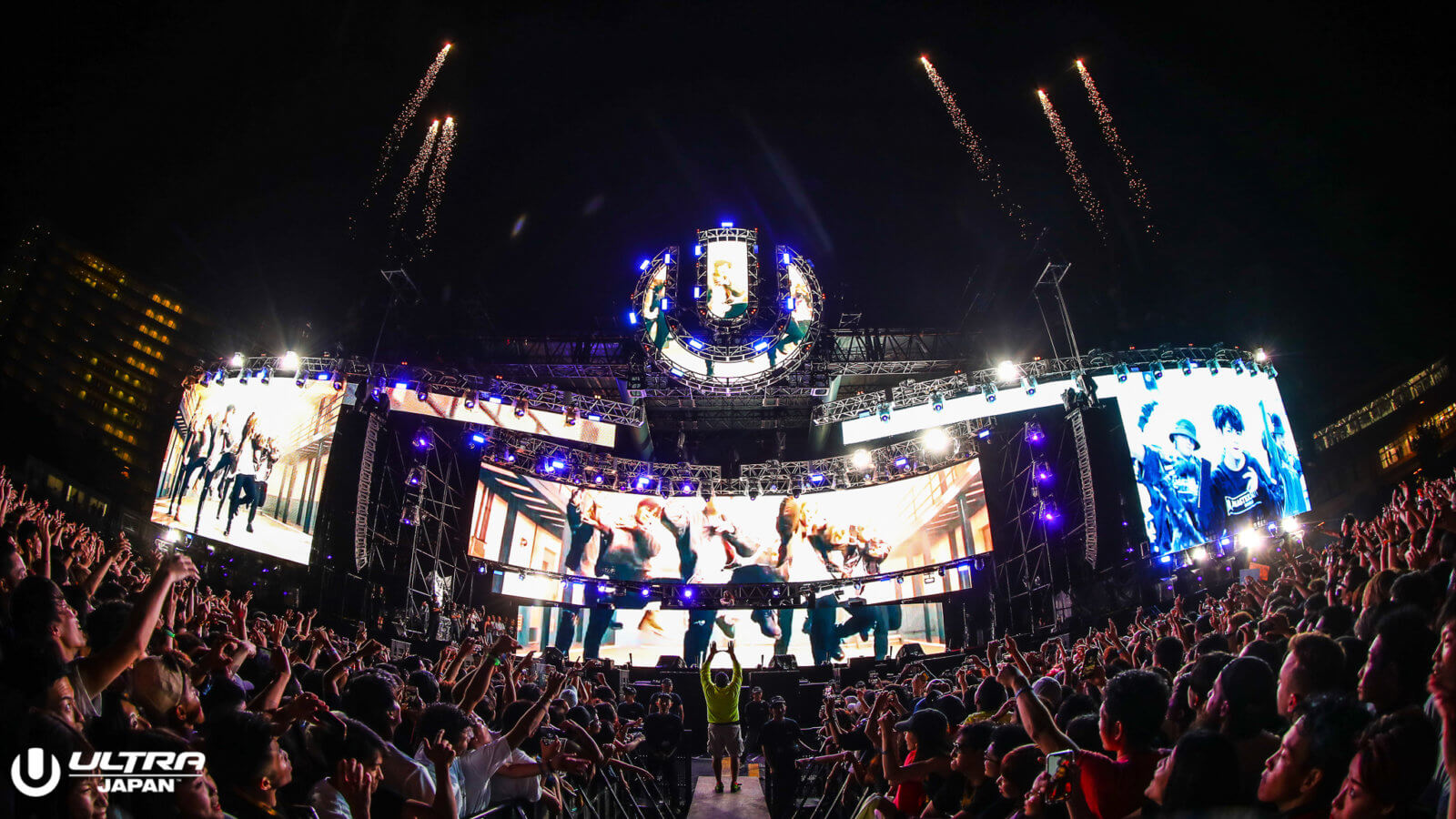
Ultra Japan will take place on September 19 and 20, returning to the specially constructed Tokyo Odaiba Ultra Park in the waterfront district of Odaiba. The location has become an important part of the festival's identity, placing the scale of an international electronic event against Tokyo's modern skyline and giving Ultra Japan a noticeably different atmosphere from its sister editions around the world.
Japan already has one of the most varied festival calendars in Asia. Fuji Rock combines international artists with Japanese music against a mountain landscape, while Summer Sonic turns Tokyo and Osaka into large-scale multi-genre destinations. Ultra Japan occupies a different space. It is one of the country's major events built specifically around electronic music, and Metropolis Japan describes it as one of Asia's premier urban dance festivals, highlighting the contrast between mainstage anthems and the deeper house and techno sounds of RESISTANCE.
That contrast becomes especially clear in 2026. Instead of constructing the lineup entirely around the largest international names available, Ultra has divided the weekend between several musical identities, allowing someone to move from melodic festival EDM into techno, house, drum & bass or the increasingly adventurous Japanese electronic underground without leaving the festival.
Day One: Zedd B2B Knock2 and Afrojack B2B R3HAB
Saturday's Main Stage contains two collaborations that immediately separate Ultra Japan 2026 from a conventional festival lineup.
At the top sits Zedd B2B Knock2, bringing together two generations of electronic music. Zedd represents an era when EDM became deeply connected with global pop culture, while Knock2 has emerged from a younger generation reshaping festival music through bass house and a much more aggressive interpretation of mainstage energy. Rather than simply booking both artists separately, putting them together creates one of the weekend's most unpredictable performances.
The same philosophy continues with Afrojack B2B R3HAB. Both Dutch producers played major roles during the global EDM explosion and remain closely associated with the huge festival sound of the 2010s, but their careers have developed in different directions since then. Seeing them share the booth in Tokyo turns what could have been two familiar headline appearances into something much more specific to this edition.
Saturday also features ¥ØU$UK€ ¥UK1MAT$U, whose rise from Japan's underground into major international festival conversations makes his position on the Main Stage particularly interesting, alongside HALŌ, the progressive-house supergroup formed by Matisse & Sadko, DubVision and Third Party. Maddix brings the harder intersection between techno, trance and festival music, while a selection of Japanese acts completes a day that constantly moves between international scale and local identity.
Peggy Gou and The Martinez Brothers Take Over RESISTANCE
Walk away from the Main Stage on Saturday and Ultra Japan becomes an almost completely different festival.
Peggy Gou headlines the RESISTANCE program, bringing the house-driven sound and unmistakable identity that has taken her from underground clubs to some of the largest stages in electronic music. Her presence is particularly suited to Tokyo, a city where fashion, nightlife and electronic culture frequently overlap in ways that mirror different parts of Gou's own career.
Joining her are The Martinez Brothers, whose groove-heavy approach offers another interpretation of house music, built less around dramatic festival moments and more around the continuous movement of a dancefloor.
The stage also makes room for artists from across the Asian scene, including Mogwaa, DJ co.kr, JOMMY and KATIMI AI, creating a program that does not treat RESISTANCE as simply an imported European or American techno product. Instead, international headliners sit alongside selectors connected much more closely with the regional club ecosystem.
That balance is essential to what makes Ultra Japan interesting. A festival in Tokyo should not sound exactly like Ultra Miami with a different skyline behind it.
Day Two: Alesso, Alan Walker and a Completely Different Mainstage
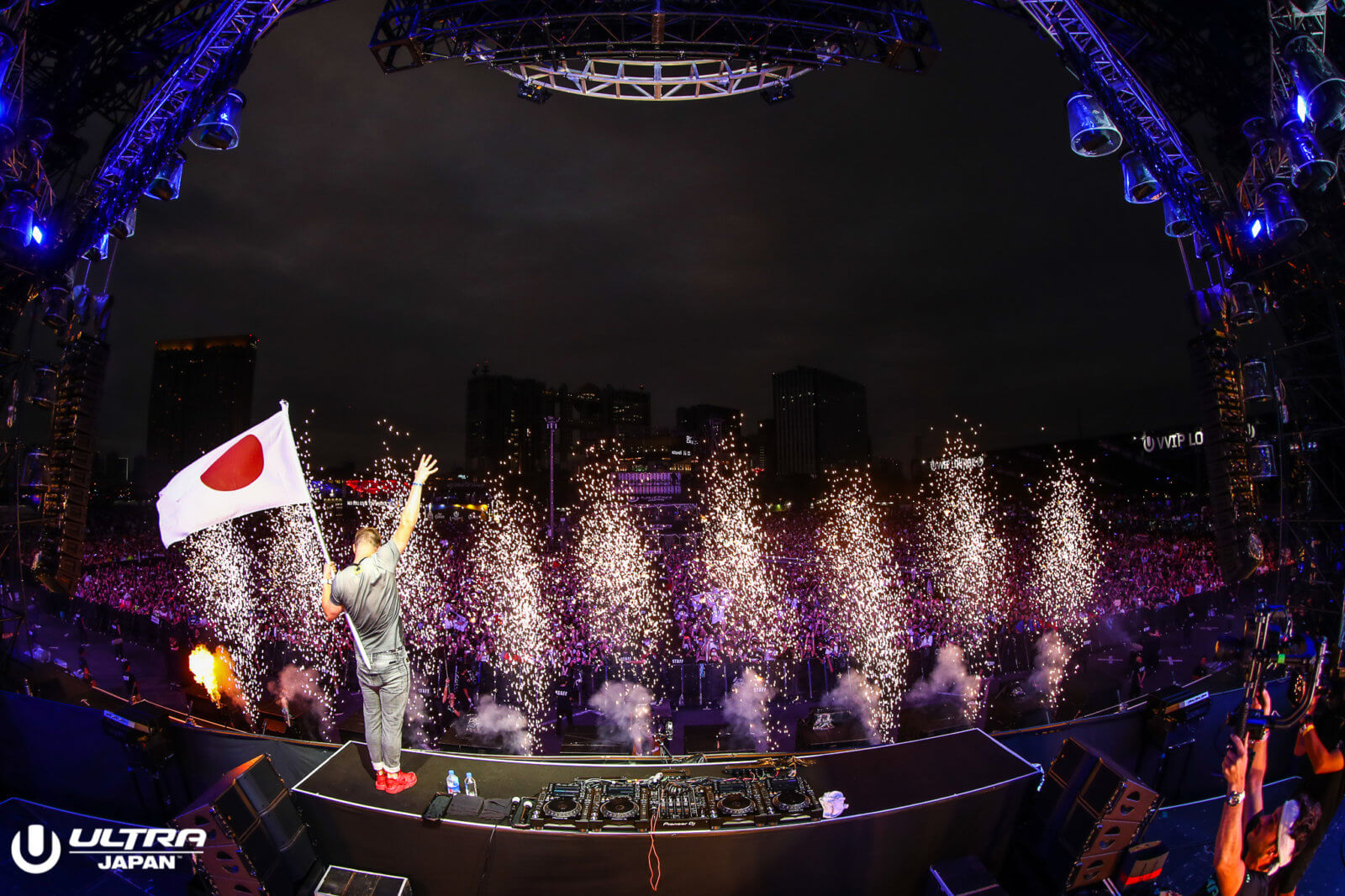
If Saturday is built around unusual B2B combinations, Sunday takes a more recognizable headline approach with Alesso and Alan Walker leading the Main Stage.
Alesso's presence connects Ultra Japan directly with the melodic progressive-house era that helped define the international festival explosion of the previous decade. His catalog remains filled with records designed around emotion and large crowds, making Tokyo another setting for the kind of euphoric mainstage performance that has followed him throughout his career.
Alan Walker represents a different form of crossover success. His melodic electronic productions have reached audiences far beyond traditional dance music, particularly across Asia, where his music has developed an enormous following. Within Ultra Japan, his appearance therefore feels less like a standard international booking and more like a natural fit for the audience the festival has built.
The day becomes heavier through Timmy Trumpet and especially TRYM, whose high-energy combination of hard techno, rave and melody represents how dramatically the sound of large electronic stages has changed in recent years. What once would have been considered too hard for a mainstream festival audience is now increasingly part of the center of electronic music culture.
WORSHIP Bring Drum & Bass to Tokyo
One of Sunday's most interesting bookings comes from WORSHIP, the drum & bass supergroup formed by Sub Focus, Dimension, Culture Shock and 1991.
Their presence adds another major dimension to the weekend. Drum & bass has experienced a remarkable resurgence across international festival culture, moving beyond dedicated bass events and becoming increasingly visible on stages traditionally dominated by house and EDM. Putting WORSHIP on Ultra Japan's Main Stage reflects how far that shift has progressed.
The collective format also makes the performance considerably different from a conventional DJ booking. Four producers closely associated with modern drum & bass share the stage, creating the kind of high-energy set capable of introducing the genre to listeners who may have arrived primarily for Alesso, Alan Walker or Timmy Trumpet.
It is precisely this kind of programming that prevents Ultra Japan from becoming trapped by its own history. The festival can celebrate the artists who defined the EDM era while simultaneously acknowledging where large-scale electronic music is moving next.
Sara Landry and Joris Voorn Push RESISTANCE Deeper
Sunday's RESISTANCE lineup becomes considerably harder with Sara Landry at the top of the bill.
Landry's rise has been one of the clearest examples of techno's transformation over the last several years. The harder, faster sound once associated primarily with warehouse environments has increasingly moved onto major festival stages, and her appearance in Tokyo places that evolution directly inside the Ultra ecosystem.
Yet RESISTANCE does not commit entirely to one interpretation of techno. Joris Voorn presents “Trip to Galaxy,” bringing his more melodic and progressive sensibility to the stage, while Lilly Palmer adds another powerful techno presence.
One of the most interesting local bookings is Ken Ishii B2B Risa Taniguchi. Ken Ishii occupies an important place in the history of Japanese techno, and pairing him with a contemporary Japanese artist such as Taniguchi creates a bridge between generations rather than treating the country's scene as an afterthought beneath the international headliners.
It is a small detail within an enormous lineup, but it says a great deal about how Ultra Japan can distinguish itself from other editions of the brand.
Why the Japanese Artists Matter
International festivals sometimes make the mistake of arriving in a country while barely interacting with its actual music culture. Ultra Japan's 2026 lineup makes a much greater effort to avoid that.
Beyond the Main Stage and RESISTANCE names, the Ultra Park Stage is filled with Japanese producers, DJs and collectives. Saturday includes artists such as KOTONOHOUSE, Pasocom Music Club, TJO, TREKKIE TRAX CREW and Masayoshi Iimori, while Sunday continues with names including YOSA & TAAR, DJ KOMORI, YUC'e and PAS TASTA.
This stage may not contain the names that immediately sell international festival tickets, but culturally it could be one of the most important parts of the weekend. Japan has an electronic scene that extends far beyond the stereotypical image of Tokyo nightlife, moving through techno, experimental club music, hyperpop-adjacent production, bass music and numerous sounds that are difficult to place inside conventional Western festival categories.
For visitors travelling to Ultra Japan from abroad, spending the entire weekend exclusively in front of the Main Stage would therefore mean missing part of what makes attending an electronic festival in Tokyo worthwhile.

More Than an International Festival in Japan
Ultra Japan's strongest asset has always been its location, but not simply because Tokyo provides a spectacular background for festival photography.
The city has one of the world's most distinctive relationships with electronic culture. Technology, fashion, gaming, underground nightlife and pop culture continuously overlap, while Japanese DJs and producers have developed scenes that can feel simultaneously connected to and separate from Western electronic music.
Ultra brings a huge international festival infrastructure into that environment, but the 2026 lineup works best when those two worlds actually interact. Zedd B2B Knock2, Afrojack B2B R3HAB and Alesso provide the recognizable global scale, while ¥ØU$UK€ ¥UK1MAT$U, Ken Ishii, Risa Taniguchi and the Ultra Park artists prevent the weekend from feeling detached from the city hosting it.
Meanwhile, RESISTANCE gives the event another personality entirely, offering visitors who are less interested in traditional mainstage EDM a festival within the festival.
That combination is ultimately what makes Ultra Japan different. It does not need to choose between nostalgia and what comes next, or between global names and Japanese culture. Its most interesting moments happen when all of those elements occupy the same weekend.
Everything You Need to Know
Festival: ULTRA JAPAN 2026
Dates: September 19–20, 2026
Location: Tokyo Odaiba Ultra Park, Tokyo, Japan
Stages: Main Stage, RESISTANCE and Ultra Park Stage
Saturday, September 19 – Main Stage: Zedd B2B Knock2, Afrojack B2B R3HAB, ¥ØU$UK€ ¥UK1MAT$U, HALŌ, Maddix and more.
Saturday – RESISTANCE: Peggy Gou, The Martinez Brothers, Mogwaa, DJ co.kr, JOMMY, KATIMI AI and more.
Sunday, September 20 – Main Stage: Alesso, Alan Walker, WORSHIP, Timmy Trumpet, TRYM, Mykris and more.
Sunday – RESISTANCE: Sara Landry, Joris Voorn: Trip to Galaxy, Lilly Palmer, Ken Ishii B2B Risa Taniguchi and more.
For the current advance sale, GA one-day tickets are listed at ¥18,000 and two-day GA passes at ¥32,000, while U-23 and PGA options are also available.
Final Thoughts
Ultra Japan 2026 arrives at an interesting moment for electronic music because the definition of a major festival lineup is changing. The artists who helped build the enormous EDM boom remain powerful enough to headline around the world, but alongside them a new generation of harder, faster and increasingly genre-fluid electronic music is demanding the same stages.
Tokyo will see both sides of that evolution in September.
Alesso, Afrojack, R3HAB and Zedd connect the weekend with the era that transformed electronic music into a global festival phenomenon, while Knock2, TRYM, Sara Landry and WORSHIP represent very different directions in which that culture is now moving. RESISTANCE brings another world through Peggy Gou, The Martinez Brothers and Joris Voorn, while the Japanese programming gives the festival an identity that cannot simply be reproduced at another Ultra destination.
For international visitors, that may be the strongest reason to pay attention to this edition. Ultra Japan offers the production and headliners expected from one of electronic music's biggest global brands, but places them inside a city with a musical culture unlike anywhere else.
On September 19 and 20, Odaiba will become the meeting point between the history of festival EDM, the rapidly changing sound of contemporary dance music and Tokyo's own electronic underground.
And in a festival landscape where major events increasingly risk looking and sounding the same, that contrast may be exactly what makes Ultra Japan 2026 worth watching.