
Some collaborations feel inevitable long before they actually happen, and Barry Can’t Swim and Sammy Virji joining forces is certainly one of them.
Both artists have spent the past few years becoming defining figures in a new generation of UK electronic music, albeit through very different routes. Barry Can’t Swim has developed a sound built around warm melodies, live instrumentation and a loose interpretation of house music, while Virji has played an important role in pushing UK garage back onto some of the biggest club and festival stages in the world.
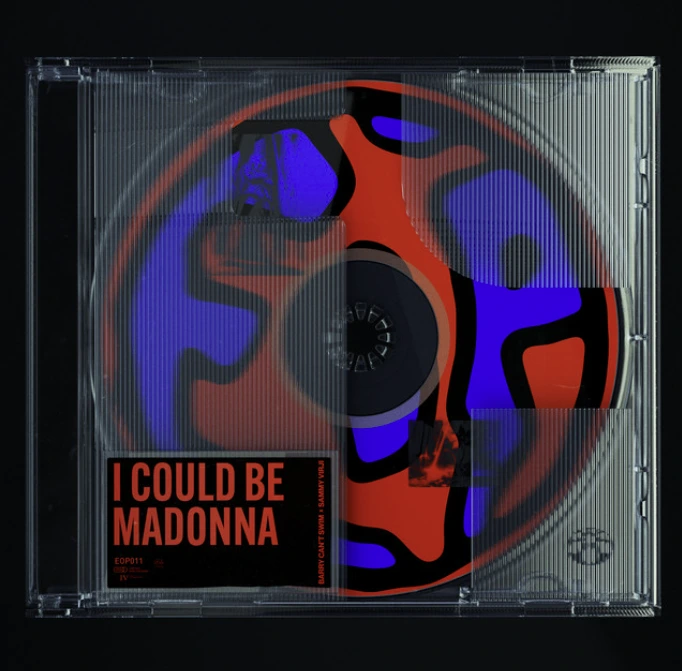
Their first official collaboration, “I Could Be Madonna,” brings those two musical identities together without forcing either of them to compromise.
Released on September 11, the track moves effortlessly between bouncing garage rhythms, melodic piano touches, chopped vocals and a bassline that gives the production a constant sense of momentum. There is plenty happening throughout its three-minute runtime, but nothing ever feels unnecessarily crowded. Instead, Barry and Virji seem to understand exactly when to step forward and, perhaps more importantly, when to leave room for the other.
The result is a track that feels instantly recognizable as the work of both artists while still sounding like something neither would have made alone.
In this article:
- From Alexandra Palace to the Studio
- Two Different Sounds, One Natural Collaboration
- UK Garage Without Living in the Past
- Barry Can’t Swim Brings the Colour
- Sammy Virji Keeps Everything Moving
- Built for the Dancefloor Without Chasing a Huge Drop
- Another Interesting Chapter for Barry Can’t Swim
- Our Final Thoughts
From Alexandra Palace to the Studio
The collaboration did not exactly come out of nowhere.
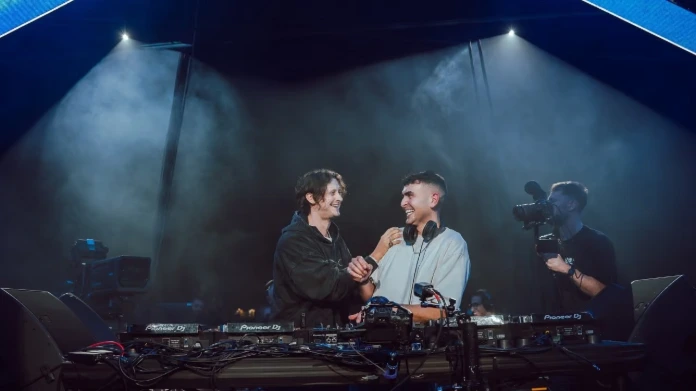
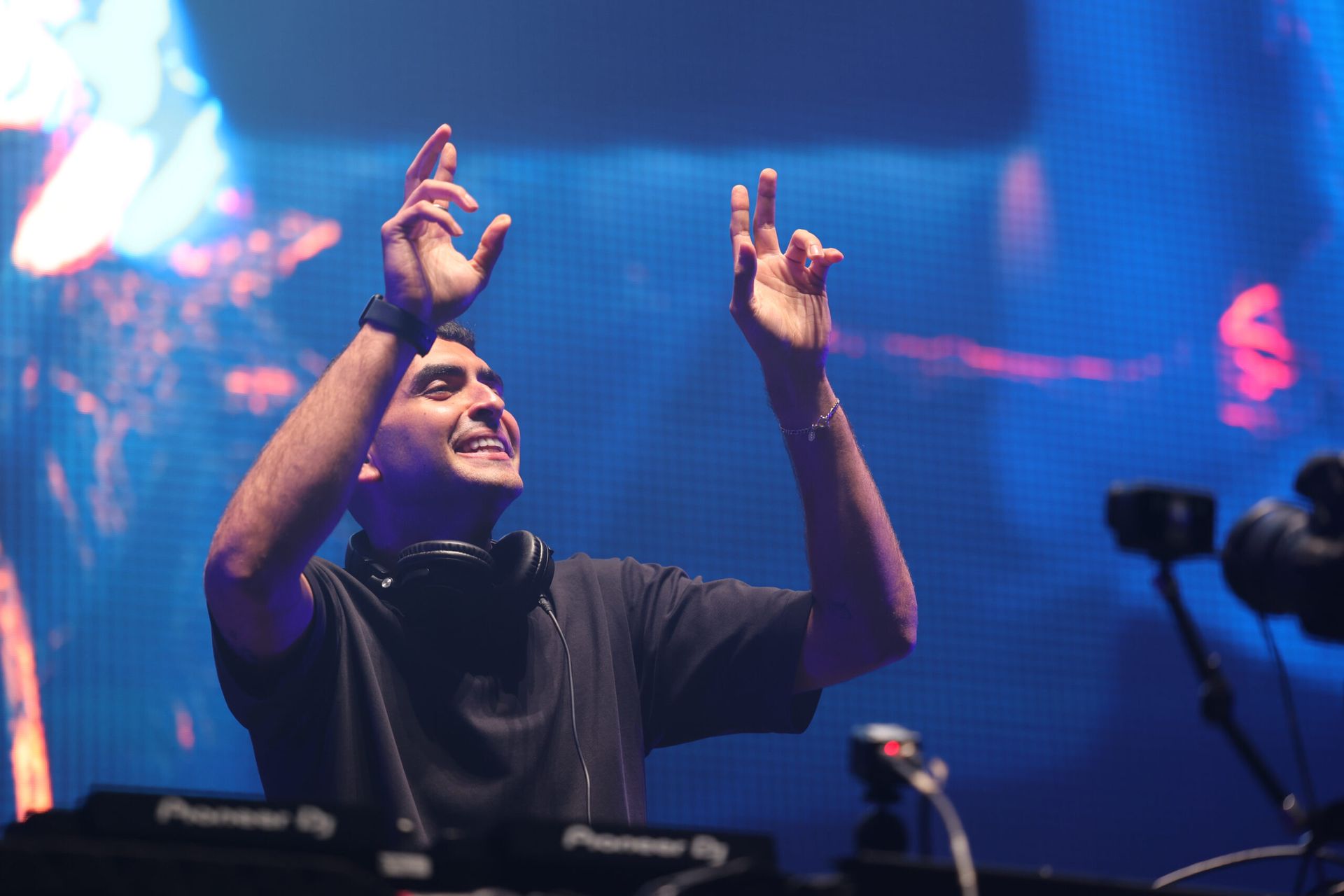
Earlier this year, Barry Can’t Swim joined Sammy Virji during his headline show at Alexandra Palace, where the pair surprised the crowd with a back-to-back set. It was already an interesting combination on paper, but watching their styles meet behind the decks made the possibility of an eventual studio collaboration feel increasingly natural.
A few months later, that chemistry has found its way into “I Could Be Madonna”.
There is something about the track that carries the same energy as a good B2B. Neither artist seems interested in completely taking control of the record; instead, the production develops through a constant exchange of ideas.
Virji’s influence gives the track its rhythmic backbone, while Barry’s melodic instinct brings warmth and personality around it. Rather than sounding like two separate productions stitched together, the different elements are allowed to interact with each other naturally.
That is ultimately one of the most satisfying things about the release.
High-profile collaborations often arrive with so much expectation that the music can become a checklist of recognizable signatures: one artist gets the drums, another provides the melody, both names appear on the artwork and the job is done.
“I Could Be Madonna” feels much less calculated.
There is a genuine sense that the two producers understood what the other could bring to the track and built around those strengths rather than competing for space.
Two Different Sounds, One Natural Collaboration
From the opening moments, Sammy Virji’s influence is impossible to miss.
The drums carry the loose, skipping swing that has become central to his productions, while the bassline sits confidently underneath without overwhelming the rest of the arrangement. At around 130 BPM, the track has enough pace to feel immediately suited to a club setting, but its energy comes from the groove rather than brute force.
That leaves plenty of space for Barry Can’t Swim.
His contribution is felt through the brighter melodic elements, subtle piano touches and textures that give the production a warmer, more expressive quality. There are moments where the track feels almost playful, moving between percussion, vocal fragments and melodic ideas without ever becoming predictable.
It is this contrast that gives “I Could Be Madonna” its character.
Virji provides the movement; Barry brings much of the colour around it.
Yet the distinction between the two is never so obvious that the track begins to sound divided. By the time everything comes together, the most interesting elements no longer feel particularly attributable to one producer or the other, they simply feel like part of the same record.
UK Garage Without Living in the Past
There is obviously a strong UK garage foundation running through “I Could Be Madonna”, but the track never feels overly concerned with recreating a specific period of the genre.
That distinction matters.
Garage has been enjoying another major moment across electronic music, with elements of UKG, speed garage and bassline increasingly finding their way into festival sets, mainstream releases and club records. Inevitably, a revival like that also brings plenty of productions that lean heavily into nostalgia.
Barry and Virji take a more contemporary approach.
The rhythmic DNA is unmistakably connected to classic UK garage, but the production feels bigger, cleaner and much more aligned with the environments both artists currently operate in. It sounds equally comfortable imagining itself in a packed club as it does moving through an outdoor festival set.
At the same time, the pair never strip away the looseness that makes garage appealing in the first place.
The swing is still there. The bassline still carries the groove. The vocals are treated almost as another rhythmic element rather than simply sitting above the instrumental.
It is clearly a garage record, but it never feels like an exercise in reminding listeners what garage used to sound like.
Instead, it shows how naturally the genre continues to evolve when producers are willing to move beyond its most obvious reference points.
Barry Can’t Swim Brings the Colour
One of the qualities that has always separated Barry Can’t Swim from much of the electronic landscape around him is the way his productions often feel unusually human.
Even as his profile has grown considerably, his music has retained an organic quality through piano, live instrumentation, samples and small imperfections that make the tracks feel less rigid than traditional club productions.
That side of his sound becomes particularly important here.
Without Barry’s melodic sensibility, “I Could Be Madonna” could easily have become a straightforward garage weapon — and probably a very good one. Instead, his contribution adds another layer of personality to the record.
The piano details soften the edges of the percussion, while the melodic sections bring a slightly emotional undertone without dragging the track away from the dancefloor.
It is a balance Barry has become increasingly comfortable exploring.
Rather than separating club functionality and musicality, he allows the two to coexist, which is one of the reasons his tracks can work just as effectively through headphones as they do in front of thousands of people.
“I Could Be Madonna” continues that approach, only this time inside a much more explicitly garage-driven framework.

Sammy Virji Keeps Everything Moving
If Barry provides much of the colour, Sammy Virji gives the record its engine.
Virji has become exceptionally good at understanding that a dance track does not always need to be complicated to be effective. Some of his best productions are built from relatively simple ideas, a strong bassline, swinging percussion, a vocal hook and a few carefully placed changes, but the way those elements interact makes the tracks constantly feel alive.
The same philosophy runs throughout “I Could Be Madonna”.
The production rarely stops moving, even when very little is actually changing on the surface. Small percussive details appear and disappear, vocal chops become part of the rhythm and the bass continually pushes the track forward.
Nothing feels static, more importantly, Virji leaves enough space around those ideas for Barry’s melodic elements to breathe.
That restraint is part of what makes the collaboration so effective. The track could easily have been pushed towards something heavier or more aggressive, particularly given how powerful Virji’s productions can sound through a large system, but the pair instead keep the mood light and energetic.
There is a sense of fun running through the entire release, and it never feels forced.
Built for the Dancefloor Without Chasing a Huge Drop
Perhaps the biggest strength of “I Could Be Madonna” is that it understands exactly what kind of dancefloor record it wants to be.
This is not a track built around an enormous festival drop or a dramatic breakdown designed to create one obvious peak moment. Its appeal is much more continuous.
The energy comes from the groove.
At 130 BPM, the record moves quickly enough to inject momentum into a set, but its relatively spacious arrangement means a DJ could place it in several different moments without it feeling out of place.
It could arrive early and begin lifting the energy of a room. It could sit comfortably in the middle of a set. It could work outdoors during the afternoon just as easily as it could inside a club several hours later.
That flexibility is increasingly valuable in modern electronic music, where the strongest records are often the ones capable of connecting different audiences and environments.
“I Could Be Madonna” does exactly that.
There is enough garage credibility to satisfy listeners already familiar with Virji’s world, but the warmer melodic touches make the track immediately approachable for fans arriving through Barry Can’t Swim.
Neither side of that audience is asked to make much of a compromise.

Another Interesting Chapter for Barry Can’t Swim
The release also arrives during another interesting period in Barry Can’t Swim’s evolution as an artist.
After building a distinctive musical identity through projects such as When Will We Land? and Loner, Barry increasingly seems comfortable moving around the wider electronic spectrum without losing the qualities that make his productions recognizable.
Recent releases have shown that freedom particularly clearly.
Where “Dance Dance Dance!” explored a sound more closely connected to French touch, “I Could Be Madonna” heads directly towards UK garage just a short time later.
On paper, those directions could feel disconnected.
In practice, Barry’s melodic instinct gives both tracks a common thread.
That willingness to move between different corners of electronic music may become one of the most interesting aspects of his next chapter. Rather than settling into one easily identifiable genre, he appears increasingly interested in seeing how his musical personality changes when placed inside different rhythmic environments.
Working alongside Sammy Virji makes perfect sense within that approach.
Virji brings him into one of the most recognizable rhythmic languages in UK dance music, while Barry brings enough of his own character to prevent the collaboration from ever feeling like a guest appearance inside somebody else’s sound.
Our Final Thoughts
There is something refreshingly uncomplicated about “I Could Be Madonna.”
Barry Can’t Swim and Sammy Virji are currently two of the most recognizable names to emerge from the new generation of UK electronic music, so their first collaboration could easily have been treated as a huge statement release.
Instead, they have made a track that simply feels good.
Virji brings the swing, the bass and that unmistakable garage momentum, while Barry fills the spaces around it with melody, warmth and small musical details. The vocal hook ties everything together without dominating the arrangement, allowing the groove itself to remain the real centre of the track.
The result feels nostalgic enough to acknowledge the history of UK garage but contemporary enough to belong completely to the current moment.
More importantly, it never sounds like two successful artists trying to prove how successful they are.
It sounds like two producers who enjoyed making music together.
That same chemistry was already visible when they shared the booth at Alexandra Palace, and “I Could Be Madonna” feels like a natural continuation of it: playful, immediate and built around the understanding that sometimes the best collaborations happen when both artists know exactly how much space to give each other.
For Barry Can’t Swim and Sammy Virji, hopefully this is only the beginning.