
Most travellers remember an airport for its architecture, its restaurants or the excitement of an upcoming journey. Very few remember the music. Yet, from the moment we walk through the terminal until we board the aircraft, every soundtrack playing in the background has often been carefully selected for a reason.
Much like restaurants, hotels and supermarkets, airports are increasingly using music as part of the passenger experience. The goal isn't simply to fill the silence, but to influence emotions, reduce stress and even communicate the identity of a destination before travellers have taken their first step outside the terminal.
Recent events have highlighted just how important that soundtrack has become. In Honolulu, the introduction of AI-generated music sparked a heated debate between technology and authenticity, while on the other side of the world, Cairns Airport in Australia chose classical music to create a calmer and more welcoming environment for passengers. Together, these two stories reveal how something as subtle as background music can shape the entire travel experience.
In this post
Why airports carefully curate their playlists
The AI music controversy in Honolulu
How local musicians responded
Why classical music still works
What airport playlists teach us about music psychology
Final Thoughts
The soundtrack of a journey begins before take-off
For decades, airports were designed with efficiency in mind. Today, however, they are becoming destinations in their own right, offering restaurants, shopping areas, lounges and immersive spaces where passengers often spend several hours.
As airports evolve, so does their relationship with music.
Rather than relying on random playlists, many terminals now invest in carefully curated soundtracks that match different areas of the airport. Softer music often accompanies waiting lounges, while brighter and more uplifting selections welcome arriving passengers. The objective is simple: create an atmosphere that feels calm, organised and memorable without demanding attention.
It's a strategy rooted in psychology.
Research has consistently shown that music influences mood, stress levels and the way people perceive environments. For travellers navigating delays, security checks and long queues, the right soundtrack can subtly transform a stressful experience into a more comfortable one.
When artificial intelligence became the airport DJ
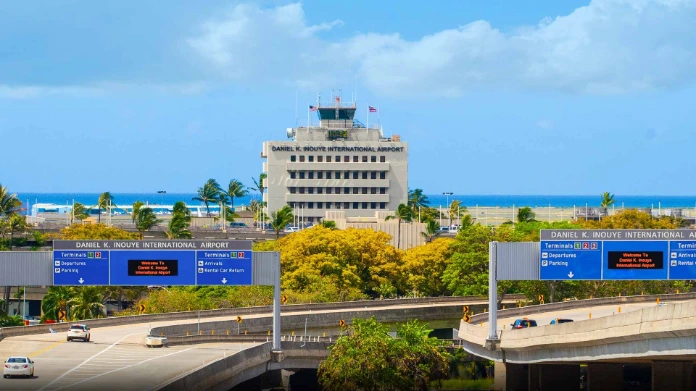
Earlier this year, Daniel K. Inouye International Airport in Honolulu found itself at the centre of an unexpected cultural debate after introducing AI-generated musical themes throughout parts of the terminal. The project aimed to create original background music inspired by Hawaii while exploring the creative possibilities of artificial intelligence.
Instead of receiving universal praise, the initiative quickly divided public opinion.
Many travellers appreciated the idea of original music specifically designed for the airport, but local musicians questioned whether artificial intelligence could truly represent Hawaii's rich musical heritage. For critics, the issue wasn't simply about technology—it was about identity.
An airport is often the first impression visitors have of a destination. If that soundtrack is generated by algorithms rather than local artists, does it still reflect the culture people have travelled to experience?
The debate rapidly expanded beyond Hawaii, becoming part of a much broader discussion surrounding artificial intelligence and creativity in the music industry.
A musical response from Hawaii's artists
What happened next made the story even more interesting.
Rather than limiting themselves to criticism, a group of Hawaiian musicians responded by creating alternative playlists and original compositions designed to showcase authentic local talent. Their goal wasn't to reject technology entirely, but to remind people that music is ultimately about human stories, lived experiences and cultural identity.
Their message resonated far beyond the airport itself.
While artificial intelligence can imitate musical styles with increasing accuracy, it cannot reproduce the personal histories, traditions and emotions that shape an artist's work. For many listeners, that difference remains impossible to ignore.
The discussion highlighted an increasingly important question for the future of music: should AI replace creativity, or should it simply become another tool available to musicians?
Australia chooses a completely different soundtrack
While Honolulu experimented with artificial intelligence, Cairns Airport in Australia took a much more traditional approach.
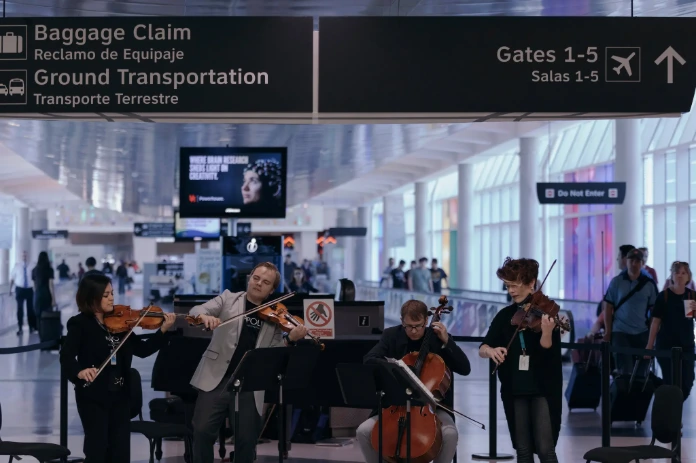
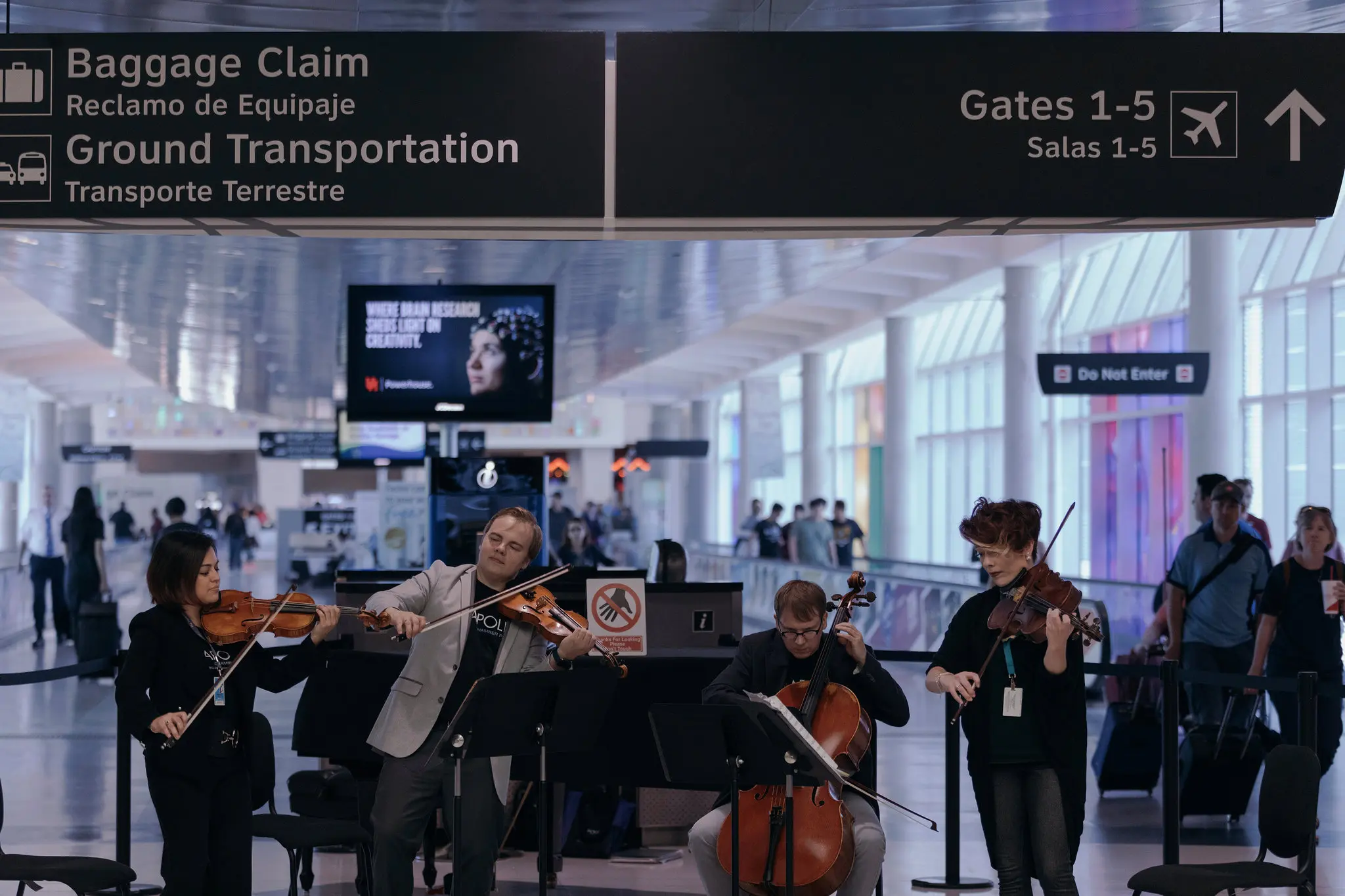
Instead of introducing new technology, the airport began welcoming passengers with carefully selected classical music, creating an atmosphere designed to reduce stress and encourage relaxation before and after flights.
It may sound like a simple decision, but it reflects decades of research into how music affects human behaviour.
Classical compositions typically feature slower tempos, softer dynamics and predictable harmonic structures, qualities that help reduce tension in environments where people often feel anxious or overwhelmed.
For airports, this creates a subtle but meaningful difference.
Passengers may not consciously notice the soundtrack, but they often experience the environment as calmer, quieter and more welcoming.
Sometimes, the most effective playlist is also the simplest.
What airports can learn from restaurants and supermarkets
The growing importance of airport playlists reflects a much broader trend across public spaces.
Restaurants use music to influence how customers experience food. Supermarkets carefully adjust playlists to shape shopping behaviour. Hotels rely on sound to reinforce their brand identity. Airports are now embracing exactly the same philosophy.
Music has become part of environmental design.
It can influence how long people stay in certain areas, how comfortable they feel and even how they remember a place long after leaving it. In many cases, travellers don't consciously notice the soundtrack—but they remember the feeling it created.
That emotional connection is becoming increasingly valuable in an industry where passenger experience often matters just as much as operational efficiency.
The future of airport playlists
Artificial intelligence will undoubtedly play an increasingly important role in music production over the coming years.
It can assist composers, generate ideas and create entirely new sonic experiences. The debate surrounding Honolulu Airport, however, suggests that many listeners still value authenticity above technological novelty, especially when music is expected to represent a specific culture or community.
Perhaps the future lies somewhere in between.
AI may become an extraordinary creative assistant, while human artists continue providing the emotion, cultural identity and storytelling that algorithms cannot fully replicate.
When travellers arrive in a new country, they are not simply looking for efficiency.
They are looking for a sense of place.
Music remains one of the most powerful ways to create that connection.
Final Thoughts
Airport playlists rarely become headlines, yet they quietly shape the experience of millions of travellers every single day.
The contrasting stories of Honolulu and Cairns demonstrate that background music is no longer treated as a simple technical detail. It has become part of how airports communicate identity, welcome visitors and influence emotions before a journey even begins.
Whether through AI-generated compositions or timeless classical works, the soundtrack of an airport says something about the place it represents.
As technology continues to transform the music industry, the challenge will not simply be creating better playlists. It will be ensuring that those playlists continue to tell genuine human stories.
After all, every journey begins with a first impression—and sometimes, that impression is heard long before it is seen.