
From hot-air balloons above Cappadocia to the vast salt flats of Bolivia and aircraft hangars outside Paris, Cercle has spent the last decade proving that where we listen to electronic music can matter almost as much as what we are listening to. Behind the spectacular visuals, however, lies a bigger question: can a location actually change the way music feels?
There is a moment in almost every Cercle performance when the music seems to merge with the place around it.
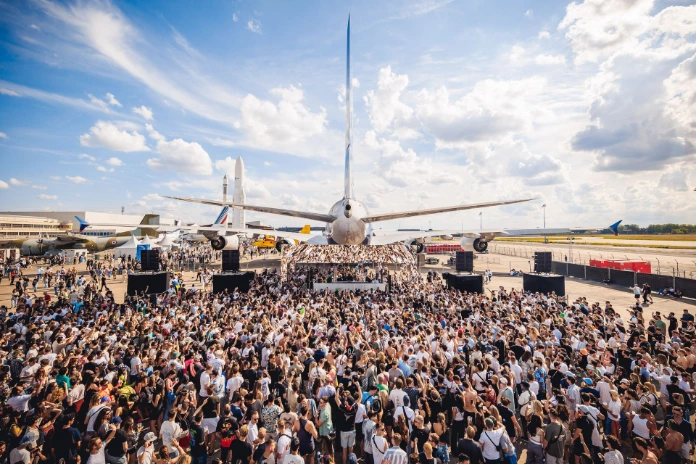
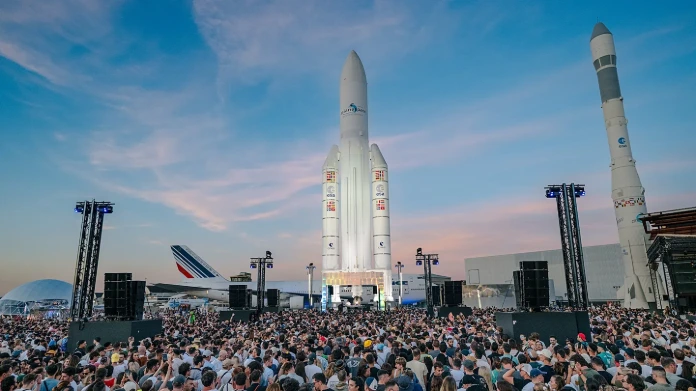
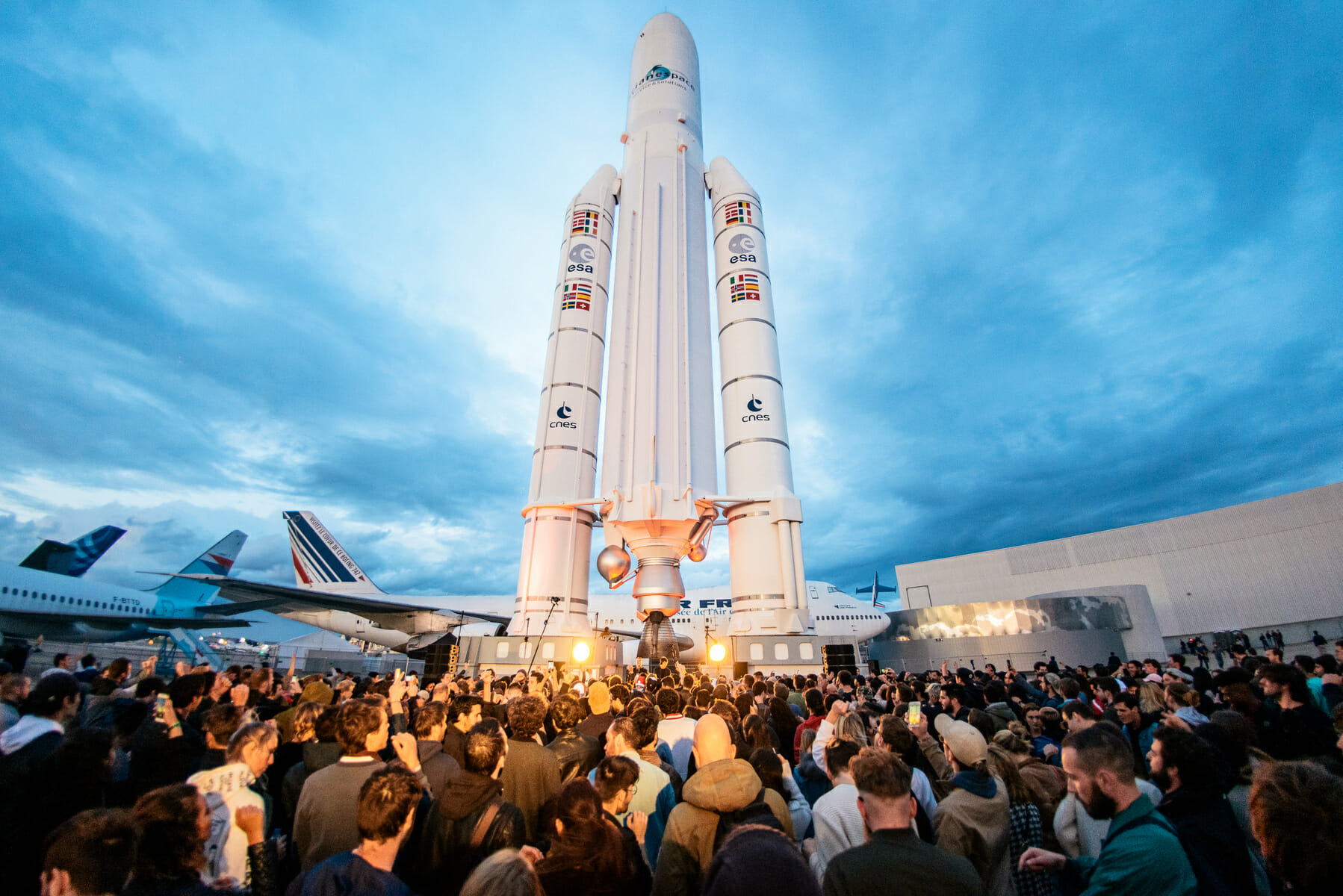
Sometimes it happens when the camera pulls away from Ben Böhmer and suddenly reveals the hot-air balloon floating above Cappadocia. Sometimes it is the endless white horizon of Salar de Uyuni surrounding FKJ, or the monumental presence of an ancient Egyptian temple behind Adriatique. At Cercle Festival, it can be an Airbus A380 or an Ariane rocket towering over the crowd at Le Bourget.
The track itself has not changed, and neither has the artist, yet the experience suddenly feels different.
That idea has become one of Cercle's defining contributions to contemporary electronic music. Over the years, the French project has built its identity around placing artists in environments that would normally have little to do with club culture, then allowing music, architecture, landscape and history to become part of the same experience.
Today, Cercle operates across events, festivals, a record label and immersive audiovisual productions, with performances staged in some of the most recognisable locations in the world. Yet what makes those sets memorable is not simply the fact that the locations look impressive on camera.
It is the way those places change the emotional meaning of the music around them.
In this article:
When the Venue Becomes Part of the Music
From Cappadocia to Salar de Uyuni: Building Memory Through Place
Why Electronic Music Works So Well Outside the Club
Cercle Festival: Turning an Aviation Museum Into a Dancefloor
Three Stages, Three Completely Different Experiences
Why Scale Changes the Way a Set Feels
The Camera Is Part of the Experience Too
When Spectacle Comes With a Cost
Why Cercle's Idea Still Matters
Our Final Thoughts
When the Venue Becomes Part of the Music
For Cercle, a location is rarely just somewhere to place a DJ booth. Architecture, landscape and cultural history become another layer of the performance.
Electronic music has always had a close relationship with space.
The same track can feel completely different depending on where it is played. Through headphones, it becomes private and intimate; inside a dark club at four in the morning, the same record becomes physical and collective. Techno changes inside a concrete warehouse, just as house music can take on an entirely different emotional quality when played outdoors at sunset.
Cercle takes this relationship between sound and environment and pushes it much further.
Rather than creating a neutral stage in which the artist remains the only point of focus, the project deliberately chooses locations that are visually, culturally and historically impossible to ignore. The environment does not sit quietly behind the DJ. It enters the performance and influences the way the audience experiences what it is hearing.
A long melodic progression feels different when it unfolds above the valleys of Cappadocia. An atmospheric breakdown takes on another dimension when the horizon appears almost endless. Even moments of silence can become more dramatic when they happen in front of a monument that has existed for centuries.
None of this necessarily makes the music objectively better, but it changes its context, and context has always played a fundamental role in the way we experience and remember music.
That is perhaps where Cercle's concept becomes most interesting.
From Cappadocia to Salar de Uyuni: Building Memory Through Place
Some of Cercle's most iconic performances are remembered almost as much for their environments as for the artists behind the decks.
Looking through Cercle's history can sometimes feel more like browsing through a travel journal than following an electronic music platform.
Ben Böhmer performed from a hot-air balloon above Cappadocia. FKJ played surrounded by the immense white landscape of Salar de Uyuni in Bolivia. Adriatique performed at the Temple of Hatshepsut in Egypt, while other projects have taken place in locations ranging from the Eiffel Tower to the Grand Palais.
What makes these performances work is that the relationship between the artist and the location rarely feels completely random.
Ben Böhmer's melodic and emotional sound naturally complements the slow movement of a balloon above Cappadocia, while FKJ's more organic and intimate approach feels almost amplified by the emptiness of the salt flats. Without a traditional stage structure dominating the frame, the surrounding landscape becomes part of the rhythm of the performance itself.
Over time, those images become inseparable from the music.
Hearing one of those tracks again can immediately bring back the visual memory of the location in which it was performed. The landscape, the light and the atmosphere start becoming part of how the music is remembered.
This is powerful because we rarely store music in isolation. We remember where we heard it, who we were with, what the room looked like and what was happening around us at the time.
Cercle essentially builds that connection between music and memory into the experience from the very beginning.
Why Electronic Music Works So Well Outside the Club
Taking electronic music away from the traditional club environment reveals elements that can easily disappear within a conventional nightlife setting.
Clubs remain the natural home of electronic music, and nothing Cercle does changes that.
What Cercle shows, however, is how differently electronic music can behave once it is removed from that environment.
Inside a club, sound tends to dominate everything else. Darkness reduces visual distractions, repetition encourages immersion and the dancefloor creates a strong collective focus on rhythm. The physical space is designed to disappear into the music.
Cercle often does the opposite.
The audience becomes constantly aware of architecture, weather, daylight, landscape and scale. A DJ set begins to function less as a purely musical performance and more as an audiovisual experience in which the sound shares attention with the world around it.
Electronic music is particularly well suited to this because the genre often allows for long transitions, gradual builds and repetition. There does not always need to be a singer standing at the centre of the frame or a traditional stage demanding constant visual attention.
The environment therefore has room to breathe alongside the music.
A drone shot can become part of a breakdown, sunset can effectively replace stage lighting and a building, mountain or monument can frame a drop more powerfully than an LED wall ever could.
At that point, the landscape stops being scenery, it becomes part of the production.

Cercle Festival: Turning an Aviation Museum Into a Dancefloor
At Paris-Le Bourget, Cercle translated the philosophy behind its individual performances into a full-scale festival built around aircraft, rockets and aviation history.
Cercle Festival is probably the clearest large-scale expression of the idea behind the brand.
The event takes place at the National Air and Space Museum of France at Paris-Le Bourget, a location connected to more than a century of aviation history. Instead of hiding that identity behind temporary festival structures, Cercle has made it part of the experience.
Aircraft, rockets and hangars become the architecture of the festival.
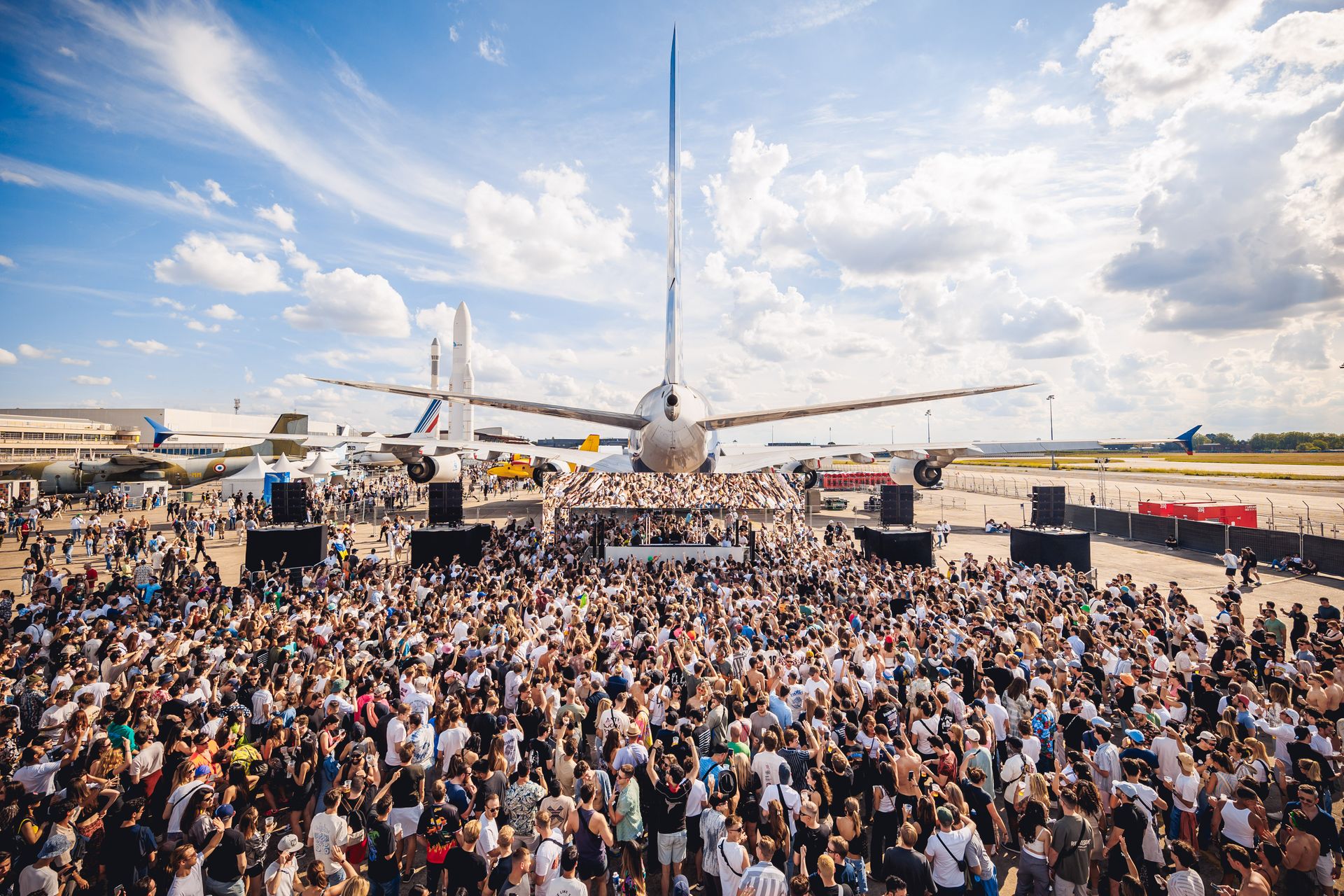
During the 2024 edition, the contrast was immediately visible. Visitors entering the site were confronted by an Airbus A380 and the Ariane 5 launcher, while another stage was located inside a hangar containing two Concorde aircraft.
That changes the atmosphere before the music even starts.
In a traditional festival, stages are usually built from scratch and then given identity through screens, lighting, lasers and scenography. At Le Bourget, the environment already has its own identity, scale and history.
There is little need to artificially create spectacle when an actual aircraft is already standing above the dancefloor.
This is where Cercle's philosophy works particularly well, because the festival does not simply occupy the museum.
It uses the museum to define the experience.
Three Stages, Three Completely Different Experiences
The A380, Ariane and Concorde stages show how moving only a few hundred metres can completely transform the atmosphere of the same festival.
One of the most interesting elements of Cercle Festival is that the three stages do not simply offer different lineups.
They feel like three completely different environments.
Standing beneath the Airbus A380 creates one kind of visual scale, while dancing in front of the Ariane launcher produces another. Moving inside the Concorde hangar then changes everything again: the light becomes darker, the space more enclosed and the relationship between the artist and the crowd more intimate.
Even if the music remained identical, the experience would not.
The 2024 edition demonstrated this clearly. Moving from outdoor performances beneath aircraft and rockets into the enclosed Concorde stage changed not only the visuals but also the feeling of the sets themselves. What outside felt open and cinematic could suddenly become dense, physical and much closer to a traditional club environment once inside the hangar.
This is exactly why lineup curation matters so much within Cercle's concept.
Different artists interact with space in different ways, and the contrast between stages becomes part of the festival narrative.
The programme therefore feels less like a simple sequence of names and more like a journey through different environments and moods.
At Cercle Festival, the location is not simply hosting the lineup.
It is interpreting it.
Why Scale Changes the Way a Set Feels
Standing beneath an aircraft or a rocket changes our perception of proportion, and that physical feeling inevitably becomes part of the music.
Scale is another fundamental part of the Cercle experience.
Electronic festivals have always relied on scale to create impact. Bigger sound systems, larger crowds and enormous screens are designed to make music feel overwhelming and physical.
Cercle often creates the same sensation in a different way.
Instead of relying only on production technology, it allows the objects and architecture already present in the location to create that sense of magnitude.
At Le Bourget, the tail of an Airbus rises above the crowd while the Ariane rocket dominates the skyline. Inside the Concorde hangar, the aircraft themselves almost become part of the ceiling.
This changes the audience's perception of the space.
Suddenly the DJ booth looks relatively small, the crowd appears smaller and the location itself becomes the dominant visual element.
There is something almost cinematic in that shift. The performance no longer feels like something taking place on a stage in front of an audience.
It feels like something happening inside a much larger world.
That sense of scale is difficult to reproduce inside a traditional venue, because it comes not only from production but from the environment itself.
The Camera Is Part of the Experience Too
Cercle did not become globally recognised only because of where it stages its performances, but because of how those places are filmed and revealed to the audience.
The success of Cercle cannot be separated from another important element: the camera.
A huge part of the audience will never physically attend one of these performances. Their experience happens through a screen, sometimes months or even years after the original event took place.
That means Cercle is effectively creating two experiences at the same time: one for the audience in front of the artist and another for the millions of people watching online.
The visual direction is therefore essential.
Wide shots, drone movements and camera reveals are not simply documenting the performance. They are controlling the way the location is discovered.
A close-up of the DJ creates intimacy, then a sudden wide shot reveals the scale of the landscape. The crowd appears for a few seconds before the camera moves again and shows the architecture surrounding it.
The location is revealed gradually, almost like another character in the performance.
This approach helped Cercle stand out at a time when full DJ sets had become almost endlessly available online. The question was no longer only who was playing or what they were playing.
It became equally important to know where they were playing.
And that changed the way audiences consumed electronic music online.
When Spectacle Comes With a Cost
Creating extraordinary experiences requires extraordinary production, and Cercle's recent financial difficulties have shown how demanding that model can become.
There is also a more complicated side to building experiences at this level.
Cercle's identity has always been connected to ambition, and ambition is expensive.
Moving artists, production teams and equipment into unusual locations is fundamentally more complex than producing a conventional club event. Maintaining high audiovisual standards, organising livestreams and adapting cultural or historical sites to temporary performances requires significant logistical and financial resources.
That tension became particularly visible in 2026, when Cercle founder Derek Barbolla publicly spoke about serious financial difficulties affecting the project and asked the community for support.
The situation cannot simply be reduced to the cost of spectacular locations. Rising expenses, taxes, reduced margins and years of continued investment all contributed to the pressure.
Still, the moment revealed something important about Cercle's model.
The same ambition that made the project internationally recognisable is also what makes it difficult to sustain indefinitely.
Cercle has always built experiences that deliberately avoid the easiest production choices. That is part of what makes the project special, but it also creates a constant tension between artistic ambition and financial reality.
And perhaps this is why the current moment feels so significant.
Why Cercle's Idea Still Matters
Whatever happens next to the organisation itself, Cercle's influence on the visual language of electronic music already extends far beyond its own events.
Cercle's legacy may ultimately be bigger than any individual festival or performance.
Over the last decade, electronic music audiences have become increasingly accustomed to seeing artists perform in deserts, monuments, rooftops, mountain landscapes and historic buildings.
Location has become part of the visual identity of electronic music.
Artists and promoters now understand that a performance can simultaneously function as a live event, a digital product and a visual story capable of reaching audiences around the world.
Cercle did not invent the concept of performing music in unusual places, but it helped create one of the most recognisable modern formats for combining electronic music, location and filmmaking.
Its influence is visible in the way audiences now expect more from that relationship.
A venue is no longer always just a container for the music.
Sometimes it is expected to say something too.
And once audiences have seen DJs performing beneath aircraft, above landscapes or in front of ancient monuments, the definition of what an electronic music stage can look like becomes much broader.
Our Final Thoughts
Cercle's greatest achievement is not simply finding beautiful locations, but understanding how a place can change the emotional meaning of the music happening within it.
The most interesting thing about Cercle is that its central idea sounds almost obvious once it is explained.
Music feels different depending on where we hear it.
Turning that simple observation into a global identity, however, requires far more than choosing beautiful locations.
The environment has to feel meaningful rather than decorative. The artist needs to fit the atmosphere of the space, the visual direction has to reveal the location at the right moments and the production has to enhance what is already there without overwhelming it.
When all those elements work together, the result becomes difficult to define as simply a DJ set.
It sits somewhere between a concert, a travel film, an architectural experience and a piece of audiovisual storytelling.
That is why some Cercle performances remain so easy to remember years later. We remember the music, but we also remember where it happened. The balloon, the salt flats, the temple, the aircraft or the rocket become inseparable from the tracks being played.
And perhaps that is the clearest answer to the question Cercle has spent the last decade exploring.
Location does not simply change where we experience electronic music. It changes the way we remember it, the way we emotionally interpret it and, sometimes, the meaning the music takes on in that exact moment.