For millions of players, the soundtrack of a football game has never really been background music.
Long before Spotify could generate a personalised playlist in seconds, before TikTok could turn an unknown track into a global hit overnight and before recommendation algorithms became one of the dominant forces in music discovery, FIFA was already introducing young listeners to songs they might never have searched for themselves.
A player could start a career mode, spend twenty minutes adjusting a formation or simply leave the game running in the menu and unexpectedly discover a British indie band, a Brazilian producer, an African vocalist or an electronic artist from the other side of the world. Those songs would then become inseparable from goals, late-night matches, Ultimate Team sessions and entire periods of growing up.
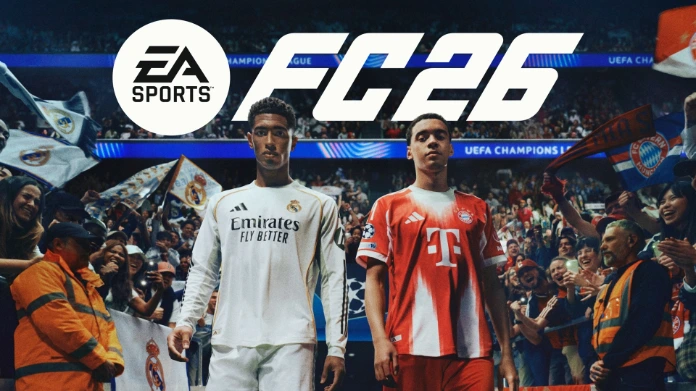
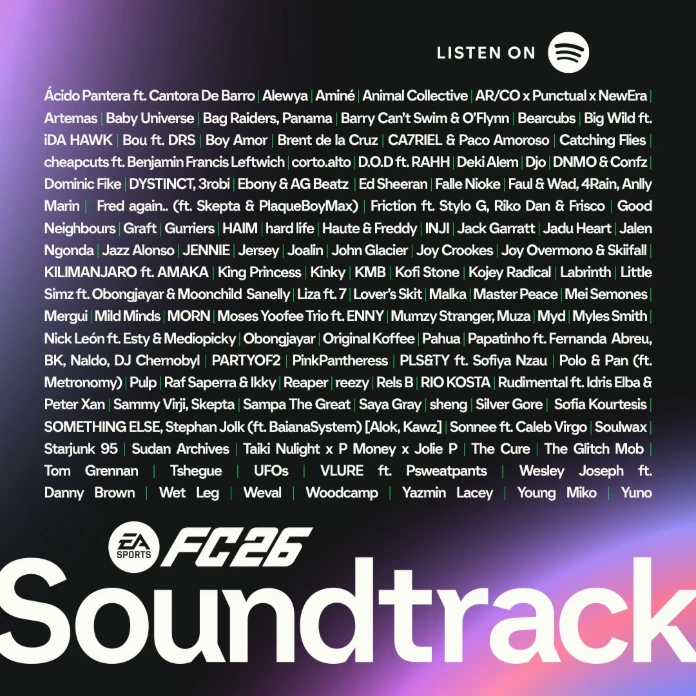
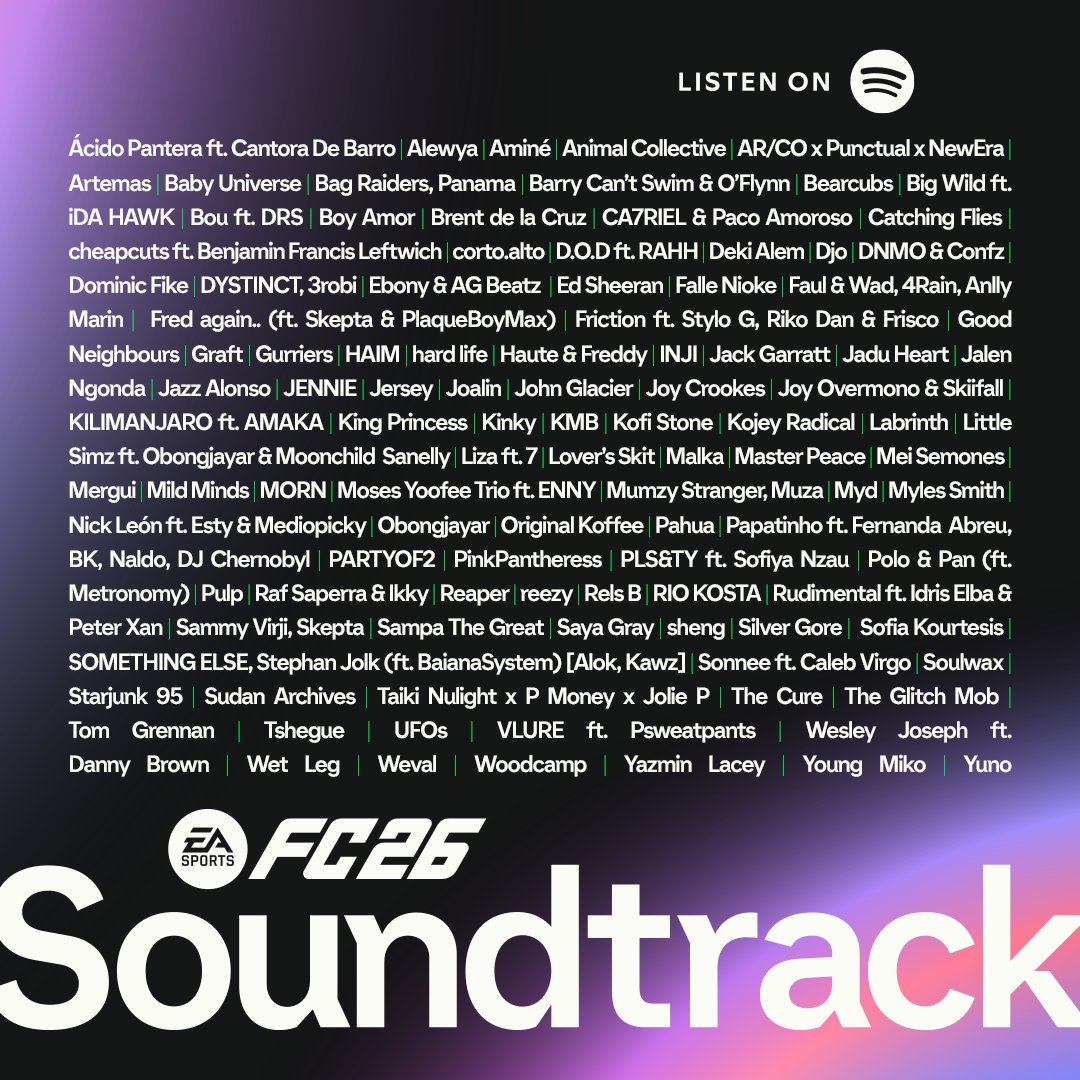
That relationship between football, gaming and music has developed for more than two decades, and EA SPORTS FC 26 shows how ambitious the concept has become. Its official soundtrack contains 109 tracks representing more than 30 countries, combining internationally established artists with emerging performers and 27 previously unreleased songs. The selection ranges from Fred again.., Skepta, JENNIE, PinkPantheress and Ed Sheeran to The Cure, HAIM, Obongjayar, Young Miko, Sofia Kourtesis, Barry Can’t Swim, Sammy Virji and dozens of artists operating far outside conventional pop playlists.
But the most interesting thing about FC 26 is not simply the size of its soundtrack.
It is what the soundtrack tells us about curation.
EA has gradually transformed the music inside its football games from a collection of licensed tracks into something closer to a global editorial playlist, one capable of putting established stars and relatively unknown artists in front of the same enormous audience without organising them according to genre, country, language or traditional radio formats.
In an era dominated by algorithmic recommendations, that kind of human-led curation has become more interesting, not less.
In this article:
- How FIFA became a music discovery platform
- Why football and music work so naturally together
- The scale and diversity of the FC 26 soundtrack
- Ed Sheeran, Fred again.., The Cure and the established names
- Why emerging artists remain central to EA’s strategy
- Moise Kean and the increasingly blurred line between football and music
- How EA curates a soundtrack for a global audience
- What Spotify’s integration with EA SPORTS could change
- Human curation versus algorithmic discovery
- What independent playlist curators can learn from EA
- Why gaming soundtracks still matter in the streaming era
- Final Thoughts
Before the Algorithm, There Was FIFA
For younger listeners today, discovering music through software feels completely normal.
Spotify recommends songs based on listening behaviour, YouTube creates personalised mixes, TikTok introduces fragments of tracks through short-form videos and social platforms can transform a song into a worldwide trend within days.
The situation was very different when FIFA soundtracks began developing their cultural identity.
During the late 1990s and early 2000s, discovering international music required considerably more effort. Radio remained heavily localised, television music channels followed particular markets, and streaming platforms did not yet exist. FIFA therefore occupied a surprisingly powerful position: the same selection of music could reach young players across dozens of countries at essentially the same time.
That global consistency became one of its greatest strengths.
EA music supervisor Cybele Pettus has compared the role of FIFA to what MTV and terrestrial radio once represented for younger audiences, while pointing out one fundamental difference: football is inherently international. A player in Italy, Brazil, Germany, Ghana or Mexico could encounter the same songs regardless of the local radio environment surrounding them.
As the series grew, its soundtrack therefore became something larger than additional entertainment accompanying a videogame, it became a discovery mechanism.
Some players remember the teams they built. Others remember the goals they scored. But an extraordinary number of them can also remember precisely which FIFA first introduced them to a particular artist, that emotional connection is difficult for a conventional playlist to reproduce.
The Soundtrack as a Global Mixtape
One of the most interesting descriptions of the FIFA curation process comes from long-time EA music supervisor Raphi Lima, who has compared each annual soundtrack to creating a huge global mixtape.
The comparison is useful because a great mixtape is not supposed to contain only the biggest available songs. Its value comes from the relationship between familiar music and unexpected discovery, that philosophy remains visible in FC 26.
Someone encountering the soundtrack because of Ed Sheeran or JENNIE can find themselves listening moments later to Sampa The Great, Woodcamp, Original Koffee, Sheng, Obongjayar or Sofia Kourtesis. Rock appears alongside electronic music, hip-hop beside indie, Afrobeats beside drum & bass, Latin sounds beside K-pop and experimental pop.
The point is not to create a perfectly consistent genre playlist, in fact, doing so would work against the identity EA has developed.
The consistency comes instead from attitude: tracks need enough personality to survive repeated exposure and enough energy or atmosphere to exist naturally within the rhythm of the game.
That is a very different approach from simply selecting the most-streamed songs of the year.
FC 26: 109 Tracks and More Than 30 Countries
The scale of the EA SPORTS FC 26 soundtrack illustrates how far this philosophy has developed.
EA officially announced 109 songs representing more than 30 nations, with 27 previously unreleased tracks included in the selection. Major names such as Fred again.., PinkPantheress, Skepta and JENNIE sit alongside emerging artists from a wide range of scenes and territories.
Even some of the more recognisable choices are less predictable than they initially appear.
The Cure, for example, are represented not by an obvious catalogue classic but through the Cosmodelica Electric Eden Remix of “And Nothing Is Forever.” Pulp appear with “Spike Island,” while electronic names including Barry Can’t Swim & O’Flynn, Sammy Virji, D.O.D, Sofia Kourtesis, Weval, The Glitch Mob and Soulwax sit inside the same ecosystem.
This matters because it demonstrates that EA is not trying to reproduce one existing music market.
The soundtrack is closer to a snapshot of multiple scenes happening simultaneously.
A player may recognise five artists immediately and know almost nothing about the next fifteen, that uncertainty is where discovery begins.
Big Names Are the Door, Not the Entire Room
There is an obvious commercial advantage in including global stars.
An artist such as Ed Sheeran gives a soundtrack immediate visibility, while names like Fred again.., JENNIE and PinkPantheress connect FC to some of the most recognisable areas of contemporary music culture. For FC 26, Sheeran even contributed the previously unheard track “Symmetry.”
But if EA built the soundtrack entirely from obvious names, it would lose much of what has historically made FIFA music distinctive.
The major artists bring listeners through the door; the unfamiliar tracks are often the ones they remember years later.
EA’s music supervisors have explained that the sourcing process begins virtually as soon as the previous game’s soundtrack is finished, drawing on contacts across labels, publishers, managers and artists while listening to thousands of potential tracks before narrowing the selection.
That process resembles serious playlist curation much more closely than traditional videogame licensing, the question is not simply whether a song is good.
It is whether it belongs inside a particular listening environment, whether it adds something different to the selections around it and whether repeated exposure will make the listener want to know more.
Discovery Can Change an Artist’s Career
The value of an FC placement becomes particularly clear when looking at what can happen to smaller artists after appearing in the game.
EA’s music supervisors have said that some artists have experienced streaming increases of more than 500% in the weeks following soundtrack exposure, while smaller acts have used FIFA placements as leverage for publishing or recording deals and even international touring opportunities.
That changes the way we should think about the soundtrack.
For an established artist, appearing in FC may be another large cultural placement, for an emerging artist, however, the game can function as an enormous discovery platform.
The player is also unusually receptive. They are not necessarily opening the game because they are searching for new music, which means the discovery often occurs without the resistance that can appear when someone is consciously evaluating a recommendation.
A track simply begins playing, after several sessions, it becomes familiar, eventually the player searches for it.
This process resembles one of the oldest strengths of radio, but it occurs inside an interactive environment where listeners may spend dozens or hundreds of hours.
Moise Kean: When the Footballer Becomes Part of the Soundtrack
FC 26 also contains a particularly symbolic crossover between the two cultures at the centre of the game.
Italian international Moise Kean, who releases music under the name KMB, became the first professional footballer to appear as an artist on an EA SPORTS FC soundtrack, with his track “BOMBAY.”
It is an interesting milestone because football and music have been moving closer together for years.
Players increasingly operate as cultural figures beyond sport, while artists become club investors, shirt collaborators, campaign partners and high-profile football fans. Music appears inside stadiums, football imagery appears in videos and fashion connects both worlds.
With KMB, the relationship becomes almost literal: a player exists inside the game both as a footballer and as part of its music culture.
Why These Songs Become Memories
The power of a FIFA or FC soundtrack cannot be explained entirely through reach.
Context matters just as much, when a song enters an ordinary Spotify playlist, it may receive three minutes of attention before the listener moves on. Inside a videogame, the relationship can develop over months.
The same track might play while a player opens packs, searches the transfer market, changes tactics or prepares for a match. It gradually becomes connected to rituals and emotions that have nothing to do with the song itself.
This is why old FIFA tracks often trigger such intense nostalgia, the listener is not simply remembering the music.
They are remembering everything that surrounded it, that repeated contextual association gives videogame soundtracks a cultural durability that many conventional editorial playlists struggle to achieve.
A song is not merely saved, it becomes attached to a period of someone’s life.
When Spotify Entered the Game
The relationship between streaming and EA SPORTS became even more interesting in 2025, when Spotify and EA began testing direct Spotify integration inside EA SPORTS FC 25.
The pilot initially gave Spotify Premium users in selected markets access to music, podcasts and, where available, audiobooks directly through the game. Players could open Spotify from within FC, change tracks through the pause menu and even replace match commentary with their chosen Spotify audio. The test initially launched in Australia and Saudi Arabia before being extended to Canada, Mexico and Portugal.
That development potentially changes the role of the videogame soundtrack.
Historically, EA controlled the listening environment almost entirely. The player entered the game and heard the tracks selected by its music team, Spotify introduces personalisation into that system.
Suddenly, a player could theoretically move between EA’s curated musical identity and their own listening habits without leaving the game.
The interesting question is whether those two approaches compete with one another or become complementary.
Curation Versus Personalisation
At first glance, giving players access to Spotify might seem to weaken the importance of the official FC soundtrack.
Why listen to somebody else’s selections if your entire personal library is available?
But that assumes that discovery and preference are the same thing.
They are not.
Personalised streaming is extremely effective at giving listeners music based on what they already enjoy. A carefully curated soundtrack can do something different: deliberately place unfamiliar music in front of somebody who would never have requested it.
Spotify itself acknowledged this difference during the EA pilot, noting that its global editorial teams were creating recommendations designed around music culture from different parts of the world.
The strongest future model may therefore combine both systems.
Personalisation gives listeners control. Curation gives them surprise.
A user can choose the songs they already love when they want familiarity, while the official soundtrack continues to provide an editorial identity and introduce music from outside their usual listening patterns.
For playlist curators, this distinction is increasingly important.
What Playlist Curators Can Learn From EA SPORTS FC
The most useful lesson from EA is that a good playlist does not need to be built entirely around similarity.
In fact, too much similarity can make discovery meaningless.
FC soundtracks work because they create connections between tracks that might otherwise exist in completely different musical environments. Genre becomes less important than energy, identity and context.
There are several principles independent curators can take from this approach.
First, recognisable artists should create trust rather than dominate the playlist. A listener may arrive because they recognise one name, but the purpose of strong curation is to take them somewhere they did not expect to go.
Second, international diversity works when it feels natural rather than obligatory. FC does not separate artists into geographical categories; they coexist within the same listening journey, just as football itself crosses national borders.
Third, sequencing and context matter as much as individual track quality. A great song can still be the wrong song for a particular playlist.
Finally, discovery requires risk. If every selection can already be predicted from the listener’s history, the curator has added very little.
That may be the most important difference between a playlist assembled by someone who loves music and an endless personalised feed optimised only around previous behaviour.
The Human Element Still Matters
Streaming has fundamentally changed how music is discovered, and there is no realistic way to separate curation from algorithms anymore.
But FC demonstrates why human taste still has value.
EA’s team listens to enormous amounts of music, follows emerging scenes and makes choices months before the final soundtrack reaches players. The result is not personalised to one individual, yet that is precisely why it can expose listeners to something outside their usual musical environment.
The soundtrack says: you might not know this yet, but listen to it.
That recommendation carries a different type of authority from an algorithm saying: you listened to these five artists, so you may also like this sixth one.
Both approaches are useful, only one requires somebody to take an editorial position.
Why FC Soundtracks Still Matter
It would have been reasonable to assume that Spotify, Apple Music, YouTube and TikTok would eventually make videogame soundtracks less relevant.
Instead, the opposite has happened.
The playlist now continues beyond the console. Official soundtracks are available on streaming platforms, players revisit older editions, artists promote their FC placement as a career milestone and songs move back and forth between the game, Spotify playlists and social media.
EA itself celebrated 25 years of FIFA music in 2022 by working with Spotify to make more than 1,000 songs from the soundtrack archive available for fans to revisit and vote on.
The soundtrack therefore no longer exists only inside the game, it has become its own musical archive.
FC 26 continues that tradition with a selection broad enough to include superstar pop, indie rock, electronic music, hip-hop, African sounds, Latin music, K-pop and artists whose genres are much harder to categorise.
That mixture may seem chaotic when written as a list, inside the game, it becomes an identity.
Final Thoughts
The most important thing about the EA SPORTS FC 26 soundtrack is not that it contains 109 songs.
It is that those songs are being placed in front of an audience that may never have encountered many of them anywhere else.
For more than two decades, FIFA and now EA SPORTS FC have operated as an unusual form of global music curator, using football as the common language through which completely different musical cultures can meet. The series has introduced players to future stars, made obscure tracks inseparable from childhood memories and demonstrated that a videogame can influence musical taste just as effectively as radio, television or streaming.
FC 26 continues that philosophy on an even larger scale, combining artists from more than 30 nations with global stars, new music and unexpected choices such as The Cure alongside some of the most current names in electronic, pop and alternative music.
At the same time, EA’s experiment with Spotify suggests that the next chapter may be even more interesting. The future of music inside games may no longer require choosing between a fixed soundtrack and a personalised library. It may allow both to coexist, giving listeners the freedom to choose what they already know while still leaving space for somebody else to introduce them to what comes next.
For playlist curators, that is the real lesson, the value of curation has never been simply putting good songs together.
It is creating the conditions in which someone discovers a song they would never have found on their own, and then remembers exactly where they heard it for the first time.