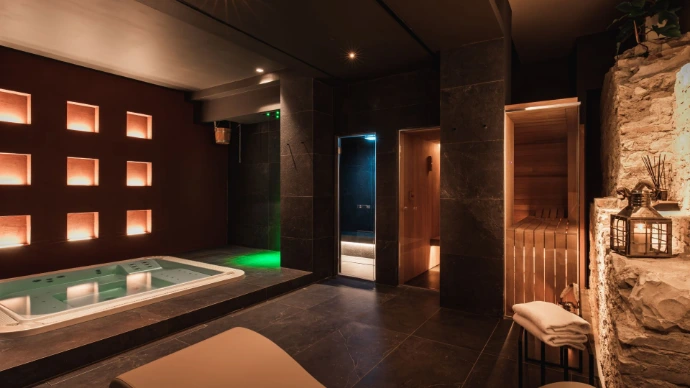


When people enter a spa, they usually notice the scent of essential oils, the softness of the lighting and the immediate sense of distance from the outside world. Music is often present from the very first moment, yet it is rarely treated as the main feature of the experience.
That is exactly why it matters.
A spa playlist is not designed to attract attention in the same way as a restaurant soundtrack, a festival set or a retail playlist. Its role is subtler: it must slow the pace of the room, reduce tension and support the feeling that time has temporarily become less important. The music needs to be calming without becoming empty, repetitive without becoming irritating and atmospheric without sounding artificial.
What seems like a simple collection of ambient tracks is therefore the result of a much more delicate balance between psychology, sound design, personal taste and brand identity.
In this post
- Why spas use music
- What makes a track sound relaxing
- The story behind “Weightless”
- Why one calming song cannot work for everyone
- How wellness spaces build their musical identity
- The human reality behind the wellness atmosphere
- Final Thoughts
Relaxation begins with the environment
A spa does not create calm through one element alone.
Lighting, temperature, scent, interior design and the behaviour of staff all contribute to the experience, but music helps connect those details into one atmosphere. Without it, even a beautifully designed space can feel strangely exposed. Conversations, footsteps, doors and equipment become more noticeable, making the environment feel practical rather than restorative.
A carefully selected soundtrack softens those interruptions.
Slow ambient textures, gentle piano, soft electronic music and sounds inspired by nature can make the room feel more continuous, reducing the contrast between one treatment area and another. The playlist becomes a form of invisible architecture, shaping how guests perceive the space without asking them to consciously listen.
The most effective spa music often works precisely because it remains in the background.

What makes music feel relaxing?
There is no single formula capable of turning every song into a calming experience, but certain musical characteristics appear repeatedly in relaxation playlists.
Lower tempos are common because they create a slower sense of movement. Predictable structures can also help because the listener is not constantly waiting for sudden changes, dramatic drops or sharp shifts in volume. Softer dynamics, limited percussion and gradual transitions allow the nervous system to remain in a more stable state.
Music educator Kathleen Howland has described effective calming music as predictable enough to feel supportive, but not so repetitive that it becomes boring. She also notes that personal history, cultural background and musical preference influence whether a listener actually finds a piece relaxing.
This is an important distinction.
A slow song is not automatically a relaxing song, and a genre commonly labelled “wellness music” will not create the same response in everyone. Someone who associates piano music with studying or pressure may respond differently from someone who connects it with comfort. Another listener may find gentle electronic music far more calming than classical compositions.
The playlist therefore needs structure, but it also needs sensitivity.
The song described as the most relaxing in the world
One of the most famous examples in the relationship between music and relaxation is “Weightless” by Marconi Union.
The track was created with input from sound therapists and was designed around several characteristics commonly associated with relaxation. It begins at approximately 60 beats per minute before gradually slowing towards 50 BPM, while its arrangement avoids abrupt changes and combines low frequencies, piano, guitar, chimes and natural sounds.
A widely reported Mindlab International test involved 40 participants completing difficult puzzles while their physiological responses were monitored. In that test, “Weightless” reportedly reduced stress and anxiety by 65% compared with the starting condition and performed better than the other songs included.
That figure helped turn the track into a global wellness reference, but it should not be treated as proof that one song can produce the same result for everyone.
Later research involving 57 university students found that “Weightless” was associated with a significant reduction in skin conductance after a stress task, although it did not outperform every other condition on heart rate or breathing measures. The researchers concluded that it could be useful for reducing acute stress, while also presenting a more nuanced picture than the famous 65% claim suggests.
The story of “Weightless” is therefore interesting not because it discovered a universal musical cure, but because it demonstrates how deliberately designed sound can influence the body.
Why spa playlists cannot rely on one universal sound
The idea of a scientifically perfect relaxation playlist is attractive, especially for wellness businesses looking for a reliable formula. In reality, however, relaxation is deeply personal.
A guest may prefer soft piano, while another may find it emotionally heavy. Nature sounds can feel restorative to some listeners and artificial to others. Minimal electronic music may create a sense of space, but if the frequencies are too dark or repetitive, it can make the room feel cold rather than peaceful.
This is why the best spa playlists often avoid committing to one narrow style.
They move gently between ambient music, acoustic textures, modern classical pieces, organic electronic production and carefully selected environmental recordings. The aim is not to create a dramatic emotional journey, but to maintain an atmosphere that feels stable without becoming static.
Volume is equally important.
Even the most carefully selected track can disrupt the experience when played too loudly. In a wellness environment, music should support breathing, conversation and silence rather than compete with them.
The difference between relaxing music and music therapy
Spa playlists are often described using therapeutic language, but it is important to separate relaxing background music from professional music therapy.
A curated spa soundtrack may help guests feel calmer and more comfortable, but music therapy is a structured clinical practice delivered by trained professionals and adapted to individual needs. A general playlist cannot diagnose anxiety or replace medical treatment.
This does not make spa music unimportant.
Research continues to suggest that music can influence stress responses, support relaxation and help people regulate mood. However, its value lies in complementing the wider experience rather than acting as a guaranteed treatment.
For a wellness business, responsible communication matters. Describing a playlist as calming or designed for relaxation is very different from promising medical outcomes that the music cannot consistently deliver.
How spas build a musical identity
Not every wellness space should sound the same.
A luxury hotel spa may use elegant ambient music and modern classical compositions to communicate refinement. A coastal retreat might combine organic house, soft percussion and environmental recordings associated with water. A yoga-focused studio may prefer drones, acoustic instruments and slower meditative tracks, while an urban wellness centre could use minimal electronic music to create a contemporary atmosphere.
In this sense, the playlist becomes part of the brand.
The choice of music tells guests whether the space wants to feel traditional, spiritual, luxurious, natural or modern. Even when visitors cannot identify the individual artists, they can still understand the personality being communicated through sound.
This is similar to the role of music in restaurants, hotels and fashion stores. The soundtrack is not merely entertainment; it helps the environment explain what kind of place it wants to be.
The perfect playlist must also know when to disappear
One of the most overlooked elements of wellness sound design is silence.
A playlist that never creates space can become tiring, even when every track is gentle. Constant music may make relaxation feel manufactured, especially when the same ambient textures continue without contrast.
The most effective programming often includes moments where the arrangement becomes almost weightless, allowing natural room sounds and breathing to remain present. Transitions should be smooth, but they should not erase every sense of space.
Relaxation does not always mean adding more calming sounds.
Sometimes it means removing enough sound for the listener to stop feeling surrounded by stimulation.

The uncomfortable reality behind the wellness atmosphere
There is another side of the wellness industry that playlists cannot hide.
The soothing music, scented oils and carefully designed interiors associated with spas often create an image of effortless calm, yet the workers producing that experience may face low pay, insecure employment and demanding physical or emotional labour. Researchers writing about the wellness sector have argued that the industry’s tranquil public image can conceal exploitation and poor working conditions behind the scenes.
This tension matters because wellness is not only something sold to customers.
It should also apply to the people providing the service.
A spa cannot credibly present itself as a place of restoration while expecting therapists, reception staff and cleaners to absorb exhausting workloads in silence. The atmosphere created by music and design may be beautiful, but a genuinely responsible wellness business must consider working conditions with the same care it gives to the guest experience.
The perfect playlist cannot compensate for an unhealthy workplace.
Why relaxing music is more complex than it sounds
At first glance, a spa playlist appears easy to create. Choose slow tracks, add nature sounds and avoid anything too energetic.
In practice, that approach is rarely enough.
The music must work across different ages, cultures and personal associations. It needs to support the physical environment, match the identity of the spa and remain comfortable over long periods for both guests and employees. It must also avoid making exaggerated therapeutic claims simply because a track has become famous online.
Most importantly, it should understand that relaxation is not created by tempo alone.
It comes from the relationship between sound, space, expectation and the individual listener.
Final Thoughts
Spa and wellness playlists are designed to feel effortless, but their apparent simplicity hides a complex set of decisions.
Tempo, dynamics, instrumentation and predictability can all influence how calming a track feels, while music such as Marconi Union’s “Weightless” demonstrates that carefully constructed sound may contribute to measurable reductions in stress. At the same time, later research and expert commentary remind us that no single song works universally and that personal preference remains essential.
The best wellness playlists therefore do not try to force relaxation.
They create the conditions in which relaxation becomes easier.
They support the room without dominating it, introduce movement without urgency and make silence feel intentional rather than empty. When combined with thoughtful design, professional care and fair treatment of workers, music can help transform a spa from a collection of treatments into a complete sensory experience.
The most relaxing soundtrack is not necessarily the one filled with the softest sounds.
It is the one that understands when to be heard, and when to disappear.
If you made it this far, thank you for reading. Have a good music day.