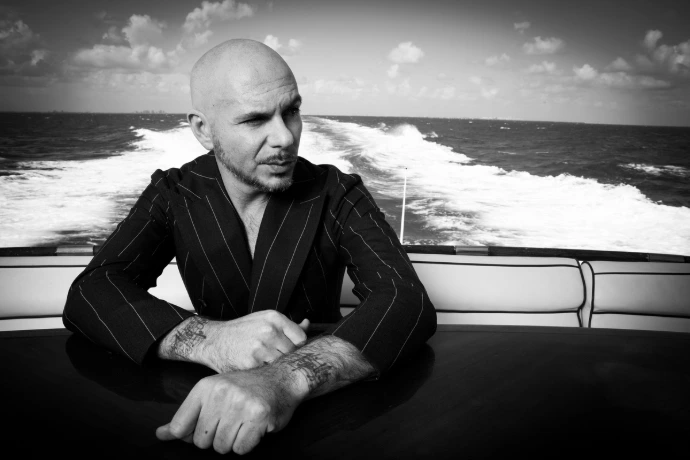
More than a decade after his last Italian appearance, Pitbull is heading back to Milan for the only Italian date of his 2026 I'm Back Tour, bringing Lil Jon, DJ Laz and more than twenty years of global hits to the Unipol Dome.
In this article:
Pitbull returns to Italy for his only Italian show of 2026
The I'm Back Tour: from Lisbon to Milan and across Europe
From Mr. 305 to Mr. Worldwide: the story behind Pitbull's global rise
From “I Know You Want Me” to “Timber”: the records that defined an era
When pop, EDM and Latin music collided
Lil Jon and DJ Laz join Pitbull for the Milan show
More than twenty years of hits in one arena
Why Pitbull's music still works in 2026
From Miami clubs to global arenas
Pitbull in Milan 2026: date, venue and concert information
Pitbull is coming back to Italy
If you danced to I Know You Want Me (Calle Ocho) at a birthday party, heard Give Me Everything playing endlessly in clubs at the beginning of the 2010s or spent the summer of 2013 with Timber seemingly following you from beaches to car radios and late-night parties, Pitbull's return to Italy will probably feel like more than another concert announcement.
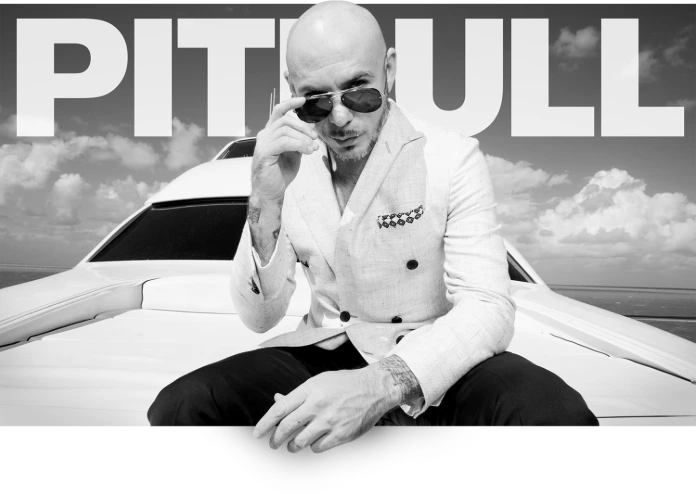
On Monday, November 9, 2026, Armando Christian Pérez, better known around the world as Pitbull, Mr. 305 and eventually Mr. Worldwide, will return to Italy for the Milan date of his I'm Back Tour, taking over the Unipol Dome for what is currently scheduled as his only Italian show.
The name of the tour feels particularly appropriate. Pitbull may no longer dominate international radio in exactly the same way he did during the peak of the early 2010s, but his music never really disappeared. Tracks such as Hotel Room Service, I Know You Want Me, Give Me Everything, International Love and Timber remained part of club playlists, parties and radio throwbacks long after their original chart runs had ended, gradually becoming part of the collective memory of an entire generation.
That is why his return carries a different kind of weight. It is not simply about seeing one artist back on stage, but about hearing a catalogue closely connected to a very specific era of pop culture come alive again inside an arena.
For the Milan show, Pitbull will also be joined by Lil Jon as special guest, while DJ Laz will open the night with a DJ set, making the concert feel even more connected to the Miami club culture that shaped Pitbull's musical identity from the beginning.
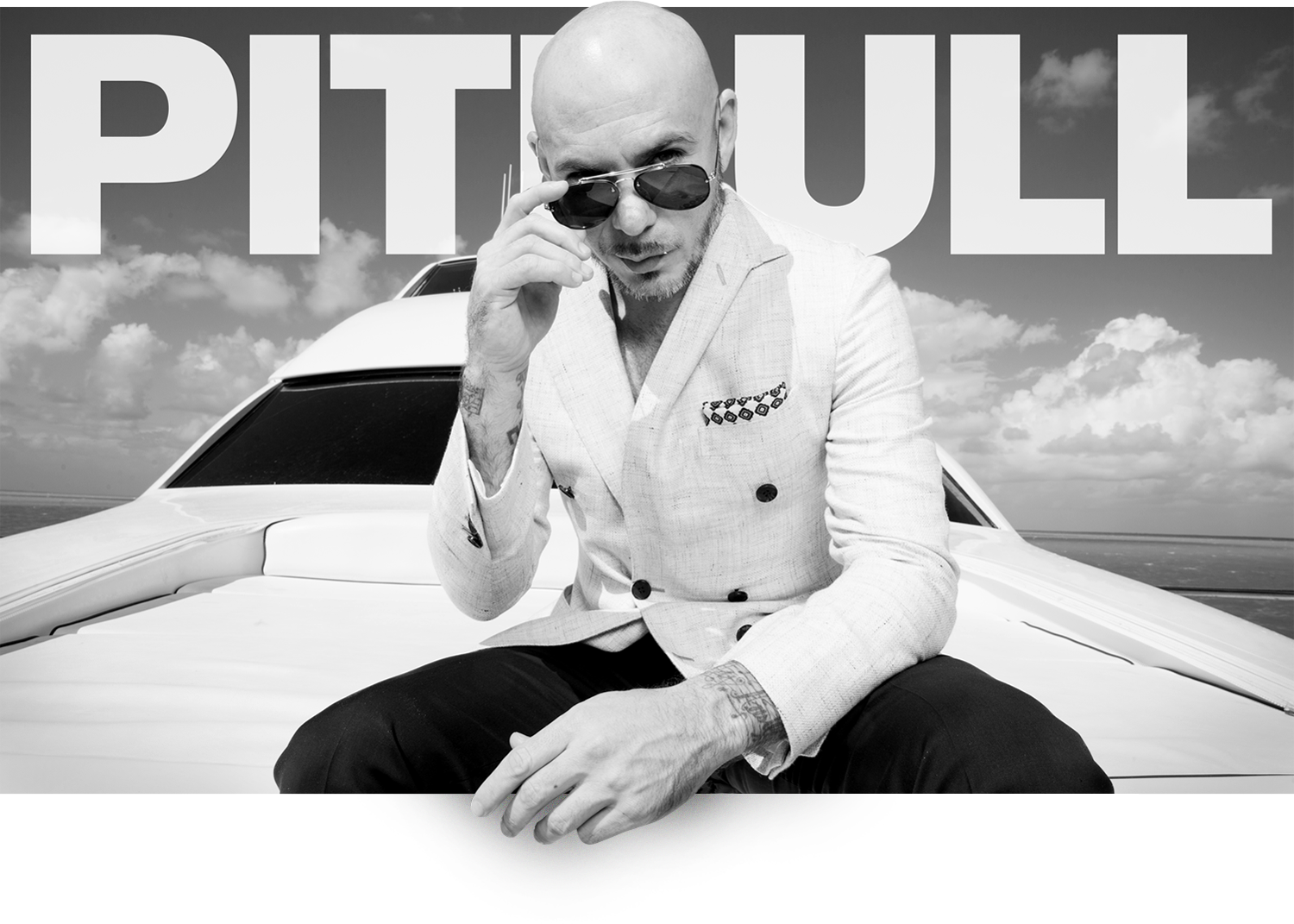
The I'm Back Tour: Pitbull returns to Europe
The Milan concert is part of a wider European run that begins in Lisbon on November 2, before moving through several major cities including Barcelona, Madrid and Zürich and eventually arriving in Italy on November 9.
After Milan, the tour continues across Europe, touching cities such as Lyon, Dortmund, Vienna, Prague and Budapest and reconnecting Pitbull with an audience that followed some of the biggest moments of his career during the late 2000s and early 2010s.
That period was particularly important for the development of mainstream pop. Electronic dance music was beginning to move from clubs and underground scenes into arenas, festivals and global radio rotation, while hip-hop, Latin music and commercial pop were becoming increasingly intertwined.
Pitbull found himself in the middle of that transformation.
Rather than belonging completely to one genre, he built a career by moving comfortably between several of them. His records could combine rap verses with enormous pop choruses, Latin rhythms with European electronic production, and club-focused beats with melodies designed for mainstream radio.
It was a formula that turned out to be perfectly suited to a rapidly globalising music industry.
By the time Pitbull became known as Mr. Worldwide, the nickname no longer sounded like an exaggeration. His music had already become a regular presence across Europe, Latin America and the United States, often functioning as a bridge between musical scenes that were becoming increasingly connected.
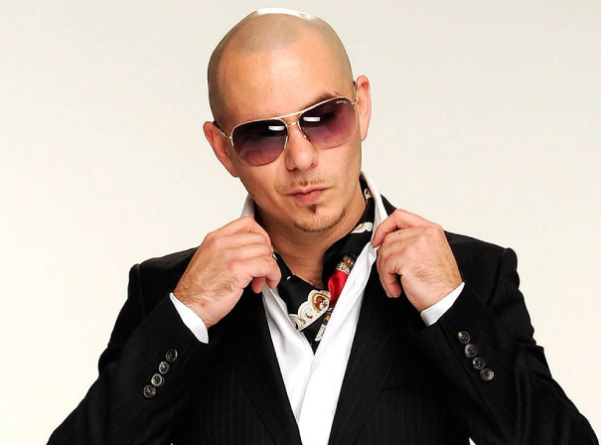
From Mr. 305 to Mr. Worldwide
Before the arenas, international tours and instantly recognisable collaborations, there was Mr. 305.
Pitbull was born Armando Christian Pérez in Miami in 1981 to Cuban parents, and the city became much more than a simple geographical reference in his career. Miami's multicultural identity exposed him to hip-hop, salsa, merengue, reggaeton, Caribbean rhythms and electronic club music, all of which would later emerge in different forms across his catalogue.
The nickname Mr. 305 referred directly to Miami's area code and represented that connection to his hometown.
As his success began to expand outside Florida, however, a different identity gradually emerged.
Mr. Worldwide.
The name captured the evolution of his career surprisingly well. Pitbull never relied exclusively on one musical community or audience. His greatest strength was his ability to understand how different sounds could coexist inside the same track and how a record could work in Miami, Madrid, Milan or Mexico City without losing its immediate appeal.
His music was often straightforward by design. The hooks were direct, the rhythms were instantly recognisable and the production was constructed around movement rather than complexity.
Pitbull understood something extremely simple about commercial dance music: when a track is built for a crowd, the crowd needs to understand it almost immediately.
That instinct would become one of the defining features of his career.
The songs that defined an era
The scale of Pitbull's influence becomes clearer when looking at the sequence of records that gradually transformed him from a Miami rapper into one of the most recognisable crossover artists in the world.
One of the key turning points came with I Know You Want Me (Calle Ocho), a track that combined Latin energy, club production and a repetitive hook that seemed almost impossible to escape once it entered international radio rotation.
The song introduced Pitbull to a much wider audience and established many of the elements that would become central to his sound.
Hotel Room Service followed with another club-focused formula, further proving that Pitbull had developed a strong instinct for records that could move easily between radio, nightlife and mainstream pop culture.
Then came the period that would define his global career.
In 2011, Give Me Everything, featuring Ne-Yo, Afrojack and Nayer, arrived at exactly the right moment. Electronic production was becoming increasingly dominant in mainstream music, and the track brought together rap, pop and EDM in a way that felt perfectly aligned with the direction the industry was moving.
The production was bright and immediate, Ne-Yo's chorus was designed for mass singalongs and Pitbull's verses gave the track an identity that remained connected to club culture even as it became a global radio hit, more collaborations followed.
International Love with Chris Brown pushed even further toward polished electro-pop, while Feel This Moment with Christina Aguilera turned a familiar synth melody into another large-scale anthem, and then came Timber.
Released with Kesha in 2013, the track became one of the most recognisable songs of Pitbull's career, combining country-inspired instrumentation with dance production and a chorus built for immediate impact.
Its opening harmonica remains enough to transport many listeners back to the early 2010s within seconds.
That is what makes these songs so powerful in 2026, they are no longer simply successful singles, they have become memories.
When pop, EDM and Latin music collided
Pitbull's biggest years coincided with one of the most dynamic periods in recent mainstream music.
At the beginning of the 2010s, electronic dance music was rapidly expanding beyond specialist clubs and festival scenes. Artists such as Swedish House Mafia, Avicii, David Guetta and Calvin Harris were helping transform electronic production into one of the central languages of global pop.
At the same time, Latin music was becoming increasingly visible outside Spanish-speaking markets, setting the foundations for an even larger global expansion in the years that followed.
Pitbull occupied a particularly interesting position between those worlds.
His records often combined American hip-hop structures with Latin influences and European electronic production, creating a sound that felt international even before the concept of global crossover became as common as it is today.
That made him especially effective at moving between audiences.
A Pitbull track could be played in a Miami club, a European festival tent or a mainstream radio station without feeling completely out of place in any of those environments.
In retrospect, that flexibility is one of the reasons his catalogue still sounds so closely connected to the period.
Songs like Give Me Everything were not simply hit records. They captured a moment when pop, hip-hop, EDM and Latin music were beginning to merge into a new international mainstream.
Lil Jon and DJ Laz join Pitbull in Milan
The Milan concert will not be built around Pitbull alone.
Lil Jon will join him as special guest, adding another major name from the 2000s and early 2010s club era to the Unipol Dome lineup.
Lil Jon's influence extends far beyond his unmistakable voice and explosive stage personality. As one of the leading figures behind the rise of crunk, he helped shape the sound of Southern hip-hop before gradually expanding his presence into mainstream club culture and electronic music.
His relationship with Pitbull also stretches back many years, making his inclusion in the tour feel far more natural than a conventional support appearance.
Both artists built major parts of their careers around a similar principle: music should create an immediate physical reaction.
Whether through a shouted hook, a heavy club beat or a chorus designed for thousands of people to repeat together, their records were created to generate movement and participation rather than distance between performer and audience.
The presence of DJ Laz adds another important element to the night.
Closely associated with Miami's radio and club culture, his opening set reinforces the connection between the concert and the musical environment that helped shape Pitbull in the first place.
The result should be a night that feels less like a standard arena tour and more like a celebration of a particular era of nightlife.
More than twenty years of Pitbull in one show
One of Pitbull's greatest advantages as a live performer in 2026 is the depth of his catalogue.
The I'm Back Tour does not need to rely exclusively on a new album or a single creative phase. Instead, the show can move freely across more than twenty years of music, bringing together different stages of his career while maintaining a consistent sense of energy.
Early Miami-focused material can sit naturally next to international pop hits, while collaborations with artists such as Jennifer Lopez, Ne-Yo, Christina Aguilera, Kesha and Enrique Iglesias provide a seemingly endless sequence of recognisable moments.
That familiarity creates a very different live dynamic.
Many of the songs do not require introduction because the audience already knows what is coming within the first few seconds.
A beat starts, a familiar sample appears or Pitbull delivers one of his signature ad-libs, and the reaction is immediate, his visual identity has always contributed to that experience as well.
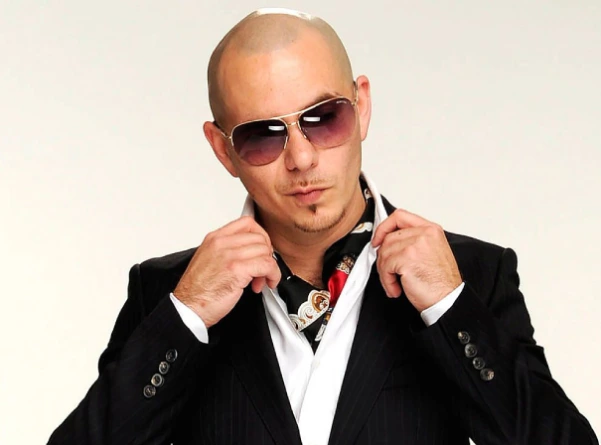
The tailored suits, sunglasses and unmistakable presence eventually became inseparable from the Mr. Worldwide character, but underneath that branding there has always been a very clear understanding of live entertainment.
Pitbull does not approach a concert as a sequence of isolated performances, he builds momentum.
Songs overlap, choruses arrive quickly, the pacing remains high and the show increasingly begins to feel like one long party rather than a conventional retrospective.
Why Pitbull's music still works in 2026
The timing of Pitbull's European return is particularly interesting because the music of the late 2000s and early 2010s is experiencing a noticeable cultural revival.
A younger generation is discovering that period through streaming platforms, TikTok edits and nostalgia-driven playlists, while listeners who experienced those songs when they were originally released are now returning to them with an entirely different perspective.
Tracks that were once dismissed by some critics as straightforward commercial pop are increasingly being recognised as part of a very specific musical moment.
The production was maximalist, the choruses were enormous and many artists were openly attempting to create records that could work simultaneously on radio, in clubs and at festivals.
Pitbull was almost perfectly designed for that environment, and while nostalgia undoubtedly plays a role in his current appeal, it does not explain everything. The songs themselves still function, the hooks remain immediate, the structures are easy to follow and the production was built around collective energy rather than subtlety.
That quality becomes particularly important in an arena, when thousands of people recognise the opening notes of the same track at the same moment, the distinction between an old song and a new one suddenly becomes far less important, what matters is the reaction.
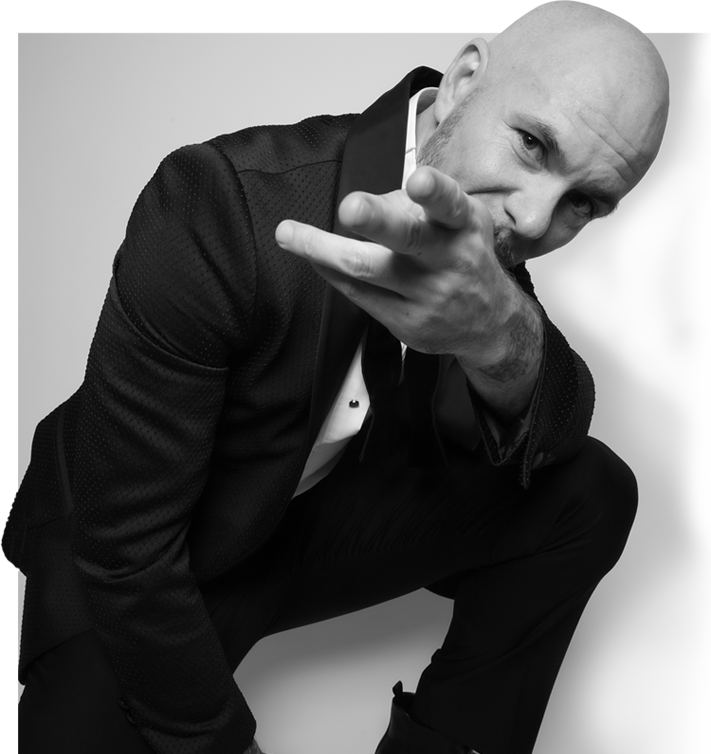
From Miami clubs to global arenas
Pitbull's career has always been defined by expansion.
What started with a strong local identity in Miami gradually became a global project, driven by constant collaborations, international touring and a clear understanding of how quickly pop music was becoming more interconnected.
Over the years, he worked with artists including Jennifer Lopez, Shakira, Christina Aguilera, Ne-Yo, Enrique Iglesias, Kesha and Chris Brown, while electronic producers helped give many of his biggest tracks the scale required to dominate international dancefloors.
That crossover strategy eventually brought him major commercial success and industry recognition, including a Grammy Award for Best Latin Rock, Urban or Alternative Album for Dale.
Yet awards and sales tell only part of the story, Pitbull's cultural impact is probably easier to understand by observing what happens when one of his songs begins playing unexpectedly.
A familiar beat enters, people recognise it almost instantly.
The lyrics return even if they have not heard the track for years, that type of recognition is difficult to manufacture and even harder to maintain over time.
It is one of the reasons why the Mr. Worldwide persona eventually grew beyond simple branding, Pitbull became a character associated with an entire period of mainstream music, and his most famous records now carry the atmosphere of that period with them wherever they are played.
Milan gets Mr. Worldwide back
The Unipol Dome feels like an appropriate setting for Pitbull's return to Italy because his catalogue was always built for large spaces.
The songs rely on oversized choruses, instant recognition and moments that become more effective when thousands of people respond at once.
The Milan audience is also likely to bring together several different generations of listeners.
Some may remember Pitbull from his earliest Miami records.
Others discovered him through I Know You Want Me and Hotel Room Service.
For many, Give Me Everything will forever be connected to nights out, summer holidays and the beginning of the 2010s, while Timber probably requires only its first few seconds to bring an entire period rushing back.
That mixture of generations could become one of the most interesting aspects of the night.
Different people will arrive with different memories, but many of those memories are attached to the same catalogue.
The I'm Back Tour therefore works not only as a celebration of Pitbull's career, but as a celebration of the audience that grew up around it.
Pitbull – I'm Back Tour: Milan 2026
Artist: Pitbull
Special guest: Lil Jon
Opening DJ set: DJ Laz
Date: Monday, November 9, 2026
Venue: Unipol Dome, Milan
Show time: 8:30 PM
Tour: I'm Back Tour
Italian dates: One
Tickets for the Milan show are available through authorised ticketing channels.
Mr. Worldwide is back
There is something almost perfectly circular about Pitbull returning to European arenas in 2026.
The music industry around him has changed dramatically, Streaming replaced downloads, social media transformed the way hits are discovered, electronic music moved through several new phases and Latin music became an even larger global force.
Yet the basic idea behind Pitbull's music remains remarkably intact, a great party record does not necessarily belong to one year.
It can disappear for a while, return through a playlist, a club night or an unexpected social media trend and suddenly sound alive again, Pitbull built an entire career around those kinds of records.
On November 9, the Unipol Dome will bring more than twenty years of them together in one place, from the Miami roots of Mr. 305 to the international pop explosion that eventually created Mr. Worldwide.
There will be Lil Jon, there will be DJ Laz, there will be an arena full of people discovering that they remember far more Pitbull lyrics than they probably expected, and eventually, one of those familiar intros will begin.
For a few minutes, it may feel like 2011, 2012 or 2013 all over again, only this time, Mr. Worldwide is back in Milan.
Dale.