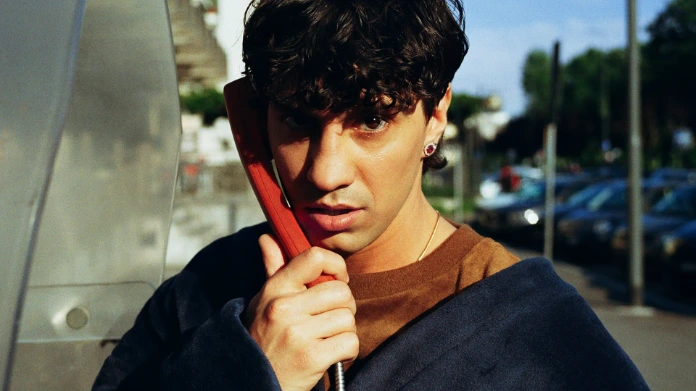
From his early days in Liguria and the birth of Wild Bandana to the success of La Divina Commedia and his historic performance at San Siro, discover the journey of Mario Molinari: the artist who transformed personal struggles into one of the most distinctive stories in Italian hip-hop.
By Micaela Villani | Rap District – Victor Bendo Selections
Few artists in contemporary Italian hip-hop have developed such a distinctive identity as Tedua. Known for his unconventional flows, intricate lyrics and cinematic approach to storytelling, the Genoese rapper has gradually established himself as one of the most influential figures of his generation. His career is not simply a story of commercial success, but a journey shaped by personal struggles, musical experimentation and an extraordinary ability to transform life experiences into art.
Born Mario Molinari in Genoa in 1994, Tedua grew up between Milan and the Ligurian coast, moving through different environments that would eventually become central to his artistic identity. His childhood was marked by family difficulties, foster care and a constant search for belonging. Experiences that might have represented obstacles became the foundations of his music, giving his lyrics an emotional depth that distinguishes him from many of his contemporaries.
From the early experiments with Wild Bandana and the emergence of the Drilliguria movement to the success of Orange County, Mowgli and La Divina Commedia, his evolution reflects the transformation of Italian rap itself.
Today, Tedua represents a unique combination of street culture, literary references and personal storytelling. His journey from small recording spaces in Liguria to the biggest stages in Italy is the story of an artist who never stopped reinventing himself.
In This Article:
The Early Years: Childhood Between Milan and Liguria
Cogoleto: The Place Where Everything Began
Wild Bandana and Drilliguria: The Rise of a New Scene
Orange County: The Beginning of Tedua's Rise
Mowgli: The Jungle That Made Him Stronger
La Divina Commedia: When Rap Meets Literature
From Cogoleto to San Siro: The Evolution of a Live Performer
Sanremo and Ryan Ted: A New Chapter in His Career
Tedua: More Than a Rapper, A Story of Artistic Redemption
The Early Years: Childhood Between Milan and Liguria
Mario Molinari was born in Genoa on February 21, 1994. His childhood, however, was far from conventional. At a very young age, he experienced family separation and spent part of his early life in foster care, moving between different living arrangements and growing up away from his mother.
Milan became an important part of his childhood. He spent several years in the city's Calvairate neighbourhood, an environment that exposed him to urban culture and helped shape his perspective on the world. The difficulties he experienced during those years would later emerge repeatedly in his lyrics, becoming one of the most personal elements of his artistic identity.
Music entered his life at an early stage, partly through his mother, who introduced him to hip-hop by giving him albums such as Eminem's The Eminem Show, 50 Cent's Get Rich or Die Tryin' and Fuego. These records helped him discover a form of expression capable of communicating emotions, frustrations and experiences that were difficult to put into words.
Among his most important musical influences was Chicago drill, particularly the work of Chief Keef. However, Tedua would eventually develop a style that went beyond the aggressive rhythms and flows associated with American drill, combining them with introspective lyrics, storytelling and references to literature and cinema.
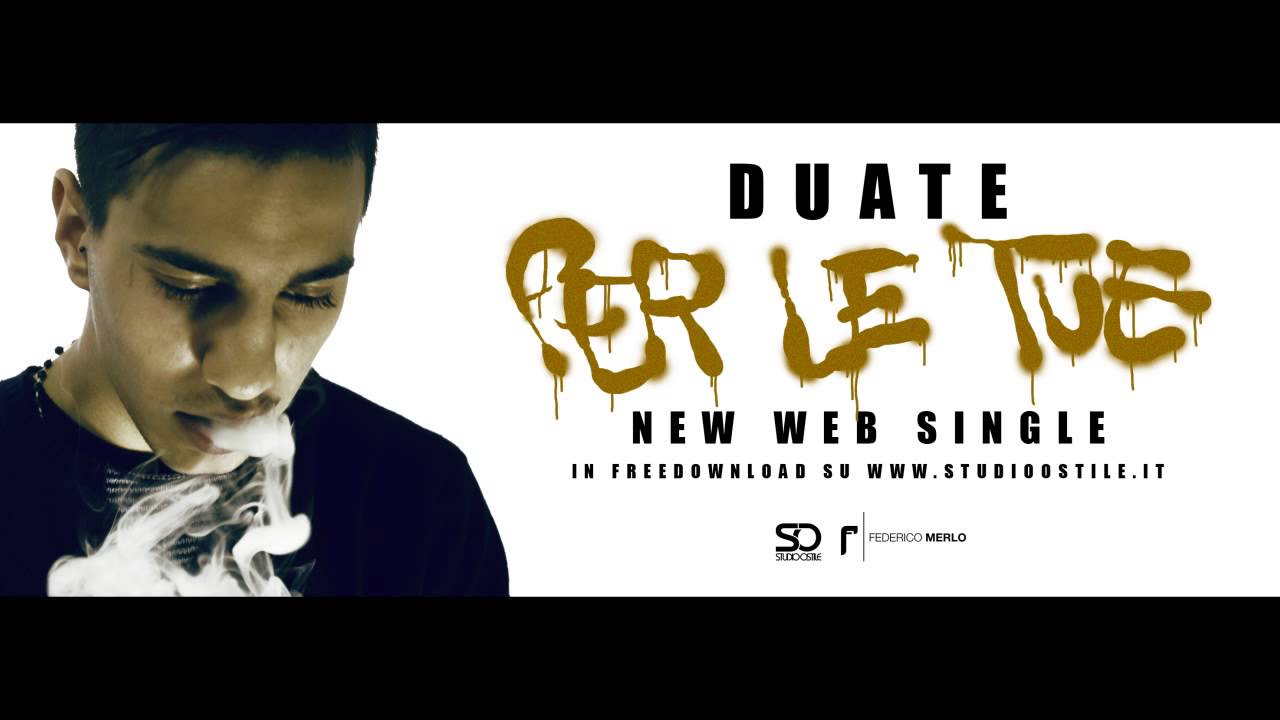
His artistic name also reflects his connection with Milanese culture. It originates from riocontra, a form of slang based on reversing syllables, through the intermediate name Duate. This linguistic background became part of the identity he would gradually build as an artist.
Cogoleto: The Place Where Everything Began
During his adolescence, Mario returned to Liguria, initially moving to Arenzano with his mother and her new partner before settling in Cogoleto, a small coastal town approximately 25 kilometres from Genoa.
He would spend around eight years there, between the ages of 13 and 21. Despite the difficulties of adapting to a new environment, Cogoleto became the place where his artistic journey truly began.
The transition was not easy. Arriving with a Milanese accent in a small Ligurian town, he often felt out of place. His personal background and family circumstances contributed to a sense of isolation, and his school years were marked by difficult relationships with classmates and discrimination.
Yet, it was precisely in this environment that he met some of the people who would change his life.
At the age of 13, he met Vaz Tè, whose real name is Alessandro Guzzo. Through him, he also came into contact with Izi, born Diego Germini, another young artist from Cogoleto.
The three began writing lyrics, experimenting with recordings and developing their own musical identities. What started as a friendship between teenagers gradually evolved into a creative movement.
Other young artists, including Ill Rave, Sangue and Guesan, became part of the same circle.
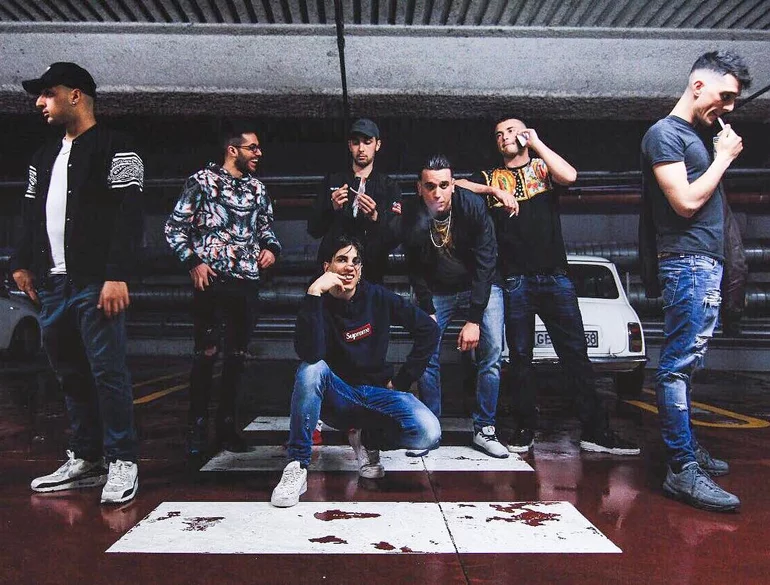
Together, they laid the foundations for Wild Bandana, a collective that would become one of the most recognisable names associated with the development of Ligurian rap.
Wild Bandana And Drilliguria: The Rise Of A New Scene
Wild Bandana was never simply a traditional rap group. It was a collective built around shared experiences, mutual collaborations and a common musical vision.
Its members worked together, exchanged ideas, appeared on each other's tracks and developed a sound that reflected their surroundings. One of their main meeting points was Studio Ostile in Genoa, where they regularly gathered to record and experiment with new productions.
Their musical identity drew inspiration from the American drill movement, particularly the Chicago scene associated with artists such as Chief Keef, while developing a distinctly Italian approach.
This creative environment contributed to the emergence of what became known as Drilliguria, a movement connecting Genoa, Cogoleto and several surrounding towns along the Ligurian coast.
It represented something important for Italian hip-hop. At a time when Milan and Rome dominated much of the national conversation, a new generation of artists was emerging from smaller communities, proving that musical innovation did not necessarily have to originate in the country's biggest cities.
In 2017, the collective released Amici Miei Mixtape, a project that became one of the defining statements of this movement. Tedua also contributed financially to its realisation, using the money from his first record deal.
The project reflected the collective spirit that had accompanied his early development and highlighted the importance of friendship and collaboration in his career.
Wild Bandana helped establish the foundations of a wider scene, with artists such as Bresh, Disme and Nader Shah also contributing to the evolution of Ligurian rap.
What had started in bedrooms and small recording spaces was becoming a movement capable of influencing the national music industry.
Orange County: The Beginning Of Tedua's Rise
In 2015, Tedua returned to Milan with the intention of finding his place in the music industry. Interestingly, his initial ambition was not necessarily to become a rapper, but to work as a tour manager.
His circumstances were still far from comfortable. He shared an apartment with Rkomi in the Calvairate area and worked different jobs, including construction work and washing dishes, to support himself.
Music, however, remained his priority.
That same year, he released Aspettando Orange County, his first mixtape, working with producers such as Charlie Charles, Sick Luke and Chris Nolan.
The project introduced audiences to his unconventional approach to rap: fast and unpredictable flows, sharp wordplay and lyrics that combined street experiences with deeply personal reflections.
In 2016, he followed it with Orange County Mixtape, before releasing his first official studio album, Orange County California, in 2017 through Universal Music.
Tracks such as Pugile, Circonvalley, featuring Izi, and OC (California) helped establish his musical identity and introduce his storytelling to a wider audience.
The title Orange County was inspired by the American television series The O.C. and its protagonist, Ryan Atwood. The character's story resonated with Tedua: a young man from a disadvantaged background who finds himself in a completely different social environment, constantly searching for a place where he belongs.
The parallel with Mario's own journey was evident. From the difficulties of his childhood to his experiences in Liguria and Milan, his life had been shaped by the feeling of existing between two different worlds.
With this project, Tedua began translating that feeling into a recognisable musical language, establishing himself as one of the most interesting voices in the new Italian rap scene.
Mowgli: The Jungle That Made Him Stronger
On March 2, 2018, Tedua released Mowgli – Il Disco della Giungla, his second studio album and a decisive moment in his career.
The title was far from accidental. Inspired by the protagonist of The Jungle Book, Mowgli represents a young individual growing up in an environment governed by difficult rules, forced to learn how to survive and find his own place.
For Tedua, the jungle also became a metaphor for the world in which he had grown up: foster families, urban neighbourhoods, economic difficulties and the constant need to adapt.
The album included tracks such as Burnout, Vertigini, Fashion Week, featuring Sfera Ebbasta, and Elisir.
Its success marked a turning point. Mowgli reached the top of the Italian album charts, confirming Tedua's transition from an underground artist with considerable potential to one of the leading names in Italian trap.
His music had evolved, but its emotional core remained unchanged: the desire to understand his past and transform it into something meaningful.
The album also demonstrated his ability to combine different musical influences, creating a sound that was both accessible and deeply connected to his personal experiences.
La Divina Commedia: When Rap Meets Literature
After consolidating his position in the Italian music scene, Tedua entered a new creative phase.
In 2020, he released Vita Vera Mixtape and Vita Vera Mixtape – Aspettando La Divina Commedia, projects that anticipated a much more ambitious artistic direction.
That journey reached its peak on June 2, 2023, with the release of La Divina Commedia, an album inspired by Dante Alighieri's literary masterpiece.
The project was more than a collection of songs. It was a conceptual journey through three symbolic dimensions: Inferno, Purgatorio and Paradiso.
Tedua reinterpreted Dante's structure through his own experiences. The Inferno became a representation of his troubled childhood and personal struggles; the Purgatorio reflected the sacrifices, uncertainty and determination of his career; while the Paradiso represented the possibility of finding love, peace and acceptance.
This literary approach allowed him to create an album that moved beyond the traditional boundaries of contemporary rap, combining autobiography, cultural references and a carefully constructed narrative.
The project featured collaborations with some of the biggest names in Italian music, including Guè, Marracash, Salmo, Lazza, Rkomi, Sfera Ebbasta, Geolier and Bresh.
Tracks such as Hoe, featuring Sfera Ebbasta, Malamente, Red Light, Paradiso Artificiale and Angelo Custode helped define the project's musical and narrative identity.
The response was extraordinary. La Divina Commedia debuted at the top of the Italian charts, with its tracks dominating the singles rankings, and eventually achieved seven-times platinum certification.
In 2024, Tedua expanded the project with Il Paradiso (La Divina Commedia Deluxe), featuring songs including Beatrice, with Annalisa, and Kill Bill.
The reference to Dante's Beatrice further demonstrated his ability to combine contemporary rap with classical literary imagery.
At this point, Tedua had developed something that went beyond conventional trap music. His lyrics had become a form of personal storytelling, where literature, cinema, street culture and autobiography could coexist within the same artistic universe.

From Cogoleto To San Siro: The Evolution Of A Live Performer
Tedua's artistic evolution was equally visible on stage.
The La Divina Commedia Tour in 2023 marked a major step forward, taking his music from clubs and festivals to some of Italy's largest indoor arenas.
Originally planned as a smaller tour, the demand for tickets led to an expansion of the schedule. The tour eventually reached 12 dates, all sold out, with more than 105,000 tickets sold.
Among the most significant moments was his return to Genoa on November 11, 2023. Performing in the city where he was born, after having built his identity in Cogoleto and developed his career in Milan, carried a special symbolic meaning.
Milan was equally important. The city that had once represented separation, uncertainty and the difficulties of his childhood had become one of the places where his music was celebrated by thousands of people.
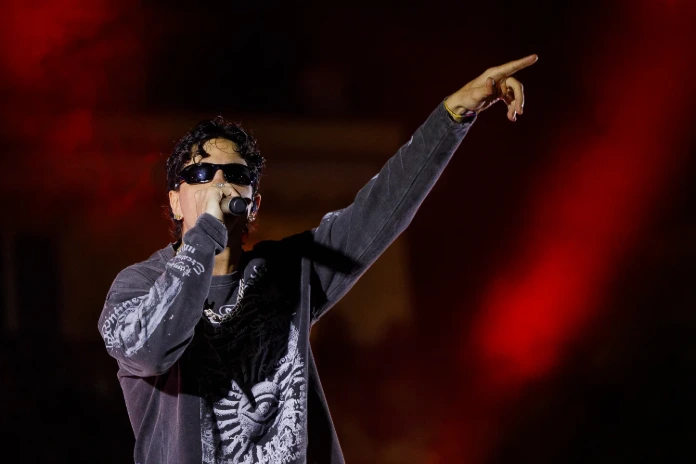
In 2024, he took another major step with Il Paradiso – Atto Finale at the I-Days festival in Milan, becoming the first Italian headliner in the history of the event.
Then came another milestone: his first concert at San Siro Stadium on June 24, 2026.
For an artist whose music had so often explored feelings of exclusion and the search for belonging, performing at one of Italy's most iconic venues represented a powerful moment of artistic and personal achievement.
The journey that had begun in small recording spaces in Liguria had reached one of the biggest stages in the country.
Sanremo And Ryan Ted: A New Chapter In His Career
Tedua's story continued to evolve beyond the traditional boundaries of rap.
His appearance at the 2025 Sanremo Festival, with Bagagli (Improvvisazione), offered another opportunity to bring his personal history to a wider audience.
The performance revisited some of the most significant moments of his life, from his childhood experiences in Milan to his return to Liguria and the sacrifices required to build a career in music.
Rather than presenting a conventional rap performance, Tedua delivered an autobiographical narrative, using words and rhythm to reflect on the person behind the stage name.
In 2026, the announcement of Ryan Ted brought his story back to the universe that had accompanied the beginning of his career.
Arriving ten years after Orange County Mixtape, the project represented a symbolic connection between his early artistic identity and the artist he had become.
It was also a reminder of how much his journey had changed: the young man who once identified with Ryan Atwood, searching for his place in the world, had become one of the most established figures in Italian rap.
The next chapter includes the TED RYAN TOUR, scheduled for January 2027, with dates in Jesolo, Bologna, Turin, Rome and Milan.
The tour represents another opportunity to celebrate his evolution and revisit the different stages of a career that has continually challenged the boundaries of Italian hip-hop.
Tedua: More Than A Rapper, A Story Of Artistic Redemption
What makes Tedua such an interesting figure in contemporary Italian hip-hop is not simply his success, his technical ability or his influence on the drill scene.
It is the way he has managed to turn his own biography into an artistic language.
His music speaks about childhood, family, social exclusion, friendship, ambition and the difficult process of finding one's identity. His references range from American hip-hop to Dante, from television series to classical literature, creating a universe that is both deeply personal and widely relatable.
He also played an important role in bringing the Ligurian rap scene to national attention, helping establish Wild Bandana and the wider Drilliguria movement as significant chapters in the evolution of Italian hip-hop.
From Mario Molinari to Incubo, from Duate to Tedua, every stage name has represented a different moment in his development.
And perhaps that is the most meaningful part of his story: he never stopped reinventing himself without losing touch with where he came from.
Born in Genoa, shaped by Milan and raised artistically in Cogoleto, Tedua has transformed a fragmented childhood into a coherent musical journey.
His career is a reminder that music can be much more than entertainment. It can become a way of understanding the past, overcoming personal obstacles and building an identity.
From Orange County to La Divina Commedia, from the first experiments with Wild Bandana to the stage of San Siro, Tedua has demonstrated that artistic growth does not necessarily mean abandoning one's roots.
Sometimes, it means finding a way to bring them with you, turning every experience into another chapter of the story.
And for Tedua, that story is far from over.