By Gianluca Ferrari — Re.Fresh Magazine
In this article:
When Scarcity Becomes a Marketing Strategy
Sfera Ebbasta and the 48-Hour Pre-Order
Organic Hype vs Manufactured Hype
How FOMO Became Part of the Music Industry
The Pressure on Artists
A Different Approach: Authentic Anticipation
Izi and the Power of Silence
When Music Becomes a Social Obligation
Why Do We Keep Buying?
When Scarcity Becomes a Marketing Strategy
Over the last few years, culture and consumption have increasingly been dominated by one very specific vision: turning a product into an event, and possibility into urgency. Multibillion-dollar brands have built entire collections around the principle of scarcity, often artificial scarcity,feeding an increasingly powerful sense of FOMO and convincing consumers that the more limited something is, the more desirable it must become.
The fewer pieces available, the greater the perception of exclusivity, and the stronger the desire to own something that others may never be able to have. What begins as a simple product therefore becomes a symbol of access, status and participation, something that is valuable not only because of what it is, but because of how difficult it is to obtain.
This mechanism has now become completely at home in the music industry as well, where record labels have gradually started moving according to the same logic as fashion, streetwear and luxury. Within Italian rap, in particular, the phenomenon has become increasingly visible, with releases often presented not simply as new music, but as moments that must be experienced immediately.
Sfera Ebbasta and the 48-Hour Pre-Order
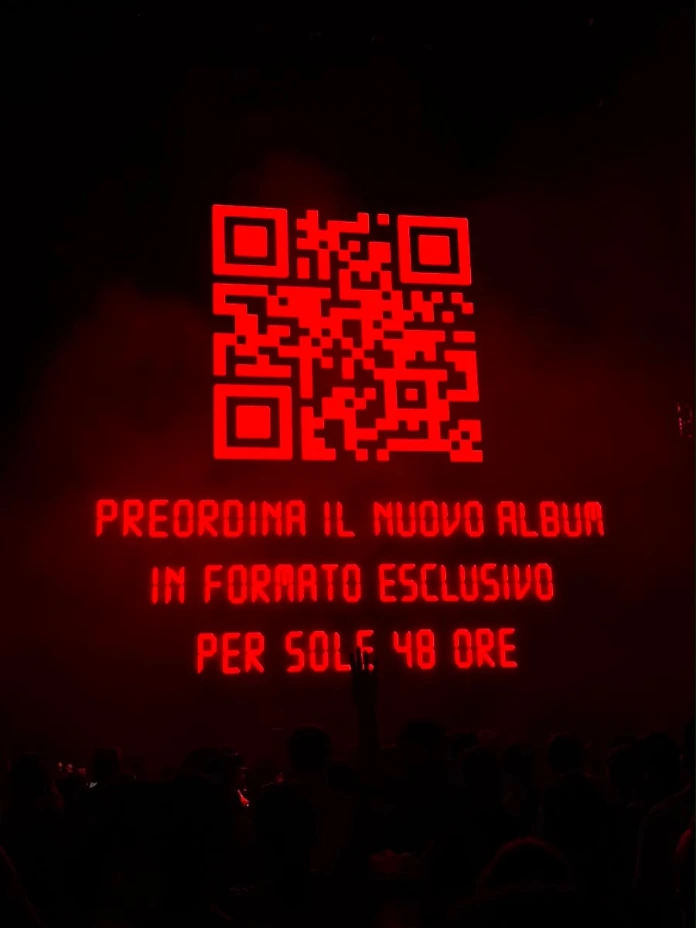
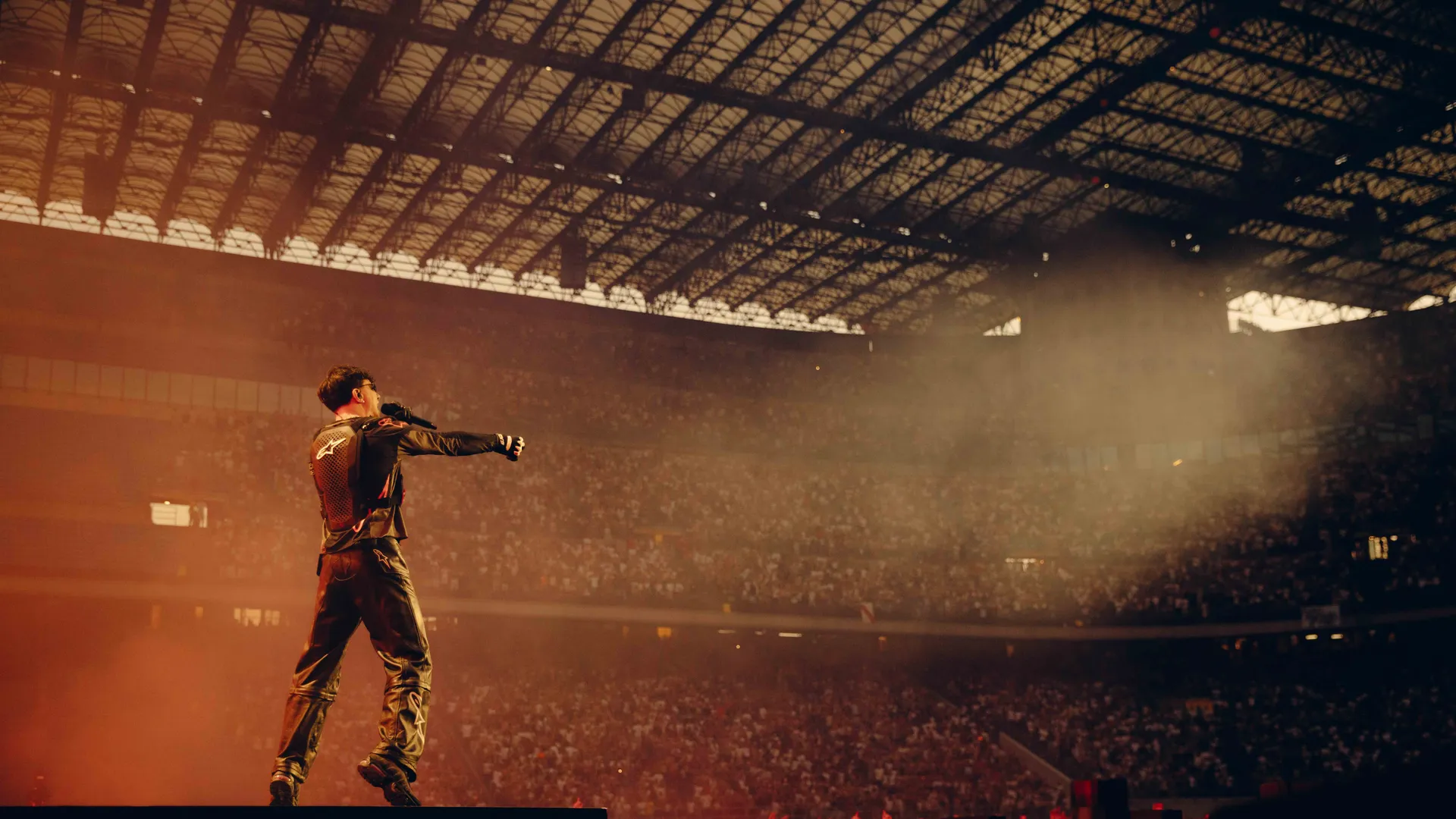
Imagine standing inside San Siro surrounded by tens of thousands of people when, suddenly, a screen tells you that you have 48 hours to buy an album whose title, cover, release date and tracklist you still barely know. You have not heard the project, you cannot judge its quality and you do not really know what you are paying for, yet the message is clear: act now, or risk losing the opportunity.
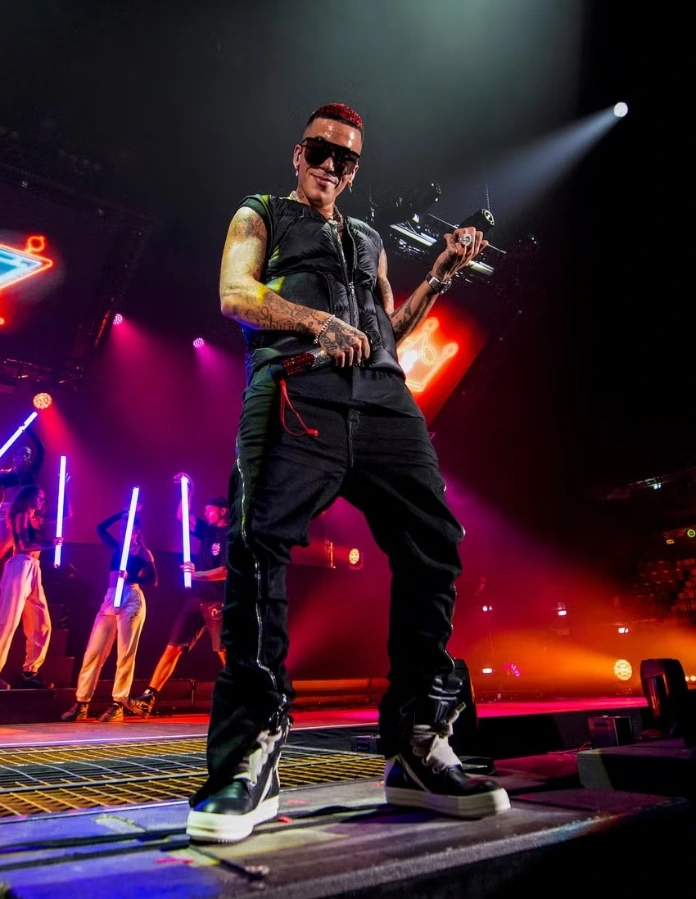
This is essentially what happened in July 2026, when Sfera Ebbasta announced his new album during his San Siro shows, opening a blind pre-order through a very limited commercial window and offering fans only partial information about what they were buying.
The album, Purosangue, is scheduled for release in December, but those who purchased it during those two days effectively did so in the dark, driven not by the music itself, because there was still very little music to judge,but by something much more powerful from a commercial point of view: the fear of missing out on an experience before even knowing what that experience really was.
This strategy is certainly not exclusive to the artist from Cinisello. It comes from a much broader commercial model, imported from the world of fashion and streetwear through brands such as Supreme or Nike, where limited quantities, restricted drops and carefully controlled availability have long been used to increase perceived value.
The same logic has gradually become normal in music. Travis Scott, for example, has repeatedly released multiple editions and versions of the same project, turning the album itself into a wider commercial ecosystem made of collectibles, physical editions and exclusive products designed to increase both sales and engagement.
Organic Hype vs Manufactured Hype
The point, however, is not simply that hype exists. Hype has always existed around major releases, important artists and anticipated records. The real distinction lies between hype that grows naturally and hype that needs to be continuously accelerated, managed and manufactured.
That distinction changes everything.
The real problem with this increasingly widespread scenario is not necessarily the morality surrounding it, but rather its undeniable effectiveness. The same mechanism now runs through fashion, technology, sport and entertainment: turning desire into urgency generates profit, because urgency reduces the time available for reflection and replaces rational choice with the fear of losing access.
Music is therefore not an exception to the rule. If anything, it is one of the environments in which this mechanism works best, because music already carries an emotional dimension that makes fans particularly receptive to ideas of belonging, identity and exclusivity.
It is important, then, to distinguish between genuine hype and manufactured hype.
The first develops because listeners genuinely care about what an artist is about to release. It can grow from silence, curiosity, previous work, live performances or simply from trust in the artist. The second is deliberately constructed around the need to sell, creating an atmosphere in which people feel pushed to buy, listen, wear, attend or participate because otherwise they risk being left behind.
This is precisely where FOMO becomes more than a simple consequence of popularity and starts functioning as a marketing instrument.
When this happens, artistic value can become increasingly secondary to the way the product is presented. Albums, EPs and singles are undoubtedly works of art, but they are also products operating inside an industry built around sales, streams and visibility, and pretending otherwise would be naive.
The problem begins when the mechanisms used to sell those products become more important than the products themselves, because at that point the conversation is no longer primarily about music, but about how effectively urgency can be created around it.
How FOMO Became Part of the Music Industry
The logic behind this system is relatively simple: temporal scarcity creates psychological urgency. Forty-eight hours are not enough to research properly, compare alternatives or simply take time to decide whether a purchase is really necessary, because the presence of a deadline changes the entire nature of the decision.
Instead of asking yourself “Do I really want this?”, you begin asking yourself “What if I want it later and it is no longer available?”.
That is where FOMO begins to operate.
The distance between the moment of payment and the moment the product is actually received can also transform the buyer into an involuntary ambassador. The purchase confirmation becomes an Instagram Story, the limited edition becomes a conversation, and the uncertainty surrounding the product itself helps amplify the buzz at almost no additional cost to the label or artist.
In other words, the audience itself becomes part of the promotional campaign.
By the time the album is finally released, the hype has already been circulating for weeks or months, with pre-orders, conversations, social content and speculation all working together to concentrate as much attention as possible around the launch.
There is, however, an even more insidious level to this mechanism: it has become normal.
When every major artist begins using countdowns, limited editions, surprise drops and exclusive pre-orders, urgency stops feeling exceptional and becomes the basic condition of the market. What was once a special promotional strategy gradually turns into an expectation, and artists who choose not to use it risk disappearing from public conversation altogether.
The Pressure on Artists
There is another dimension that is often overlooked: the weight this system places on the artist.
Not every artist is willing or able to maintain the rhythm demanded by audiences, streaming platforms, charts and record labels, yet many find themselves forced into cycles of constant visibility, where every silence risks being interpreted as irrelevance and every release immediately creates pressure for the next one.
It is no longer enough to make good music. Artists are increasingly expected to create an event, generate urgency, build scarcity and constantly maintain attention around their name, while those who refuse to participate in this cycle risk being perceived as less relevant regardless of the quality of what they create.
Over time, this can easily contribute to burnout, fatigue and creative exhaustion, potentially damaging the artistic growth that the entire system is supposedly designed to support.
A Different Approach: Authentic Anticipation
There is, however, another way of creating anticipation, one that does not require constantly telling the audience that they are supposed to feel excited.
Sometimes the strongest expectation comes precisely from silence, because silence leaves enough space for curiosity to develop naturally. An audience can wait for something not because a marketing campaign repeatedly reminds them that a release is coming, but because they genuinely hope to hear something sincere, carefully developed and artistically meaningful.
There is still value in releasing music when there is genuinely something to say, rather than simply because the calendar demands a new single, a new project or another moment of visibility.
In this kind of relationship between artist and audience, anticipation does not need to be manufactured because it emerges from trust, from previous work and from the idea that the next release will arrive when there is a reason for it to exist.
Izi and the Power of Silence
One interesting example of this approach is Izi.
Since his last full-length album, released several years ago, he has made relatively few appearances within the scene, choosing instead to remain present through selected collaborations rather than maintaining constant exposure. He has appeared on different projects, but without continuously constructing artificial anticipation around his return or transforming every appearance into a major promotional event.
When he does come back, his presence often speaks for itself.
This was particularly evident on MĀYĀ, the album by producer MACE, where Izi appeared on several tracks and reminded listeners of the sensitivity and emotional depth that have always characterised his writing. One of those songs, Tutto Fuori Controllo, became one of the most listened-to tracks on the project, demonstrating how attention can still emerge without relying entirely on artificial scarcity or aggressive marketing.
This does not mean, of course, that Izi's music is worth more than Sfera Ebbasta's, nor that one artist should be considered more authentic simply because he releases less frequently. They represent two very different ways of existing within the same industry, and both remain part of the same commercial system.
The difference lies in the approach.
One artist has embraced the mechanisms of the modern release campaign and turned them into a central part of the spectacle, while the other has chosen to remain within the industry without allowing constant visibility to become the only measure of relevance.
The difference is therefore not necessarily one of talent, but one of relationship with attention.
When Music Becomes a Social Obligation
For listeners, this distinction should lead to a relatively simple question: is the anticipation you are feeling actually yours, or has it been created for you?
Do you want the album because you genuinely care about the artist, because you have heard something that moved you or because you are sincerely curious about what will come next, or do you want it because a countdown, a limited edition and thousands of social posts have convinced you that everyone else is already participating in something you cannot afford to miss?
Manufactured hype has a price, and that price is not only economic. It also has a psychological dimension, because constantly consuming culture under pressure teaches people to approach art with the same anxiety they bring to a flash sale: quickly, impulsively and with the fear that somebody else may get there first.
Over time, this leaves less room for patience, discovery and personal taste, because what deserves attention is increasingly decided in advance by the mechanisms that are best at producing visibility.
The real power of the audience lies in recognising this distinction and choosing consciously.
Artificial hype becomes dangerous precisely because it can contribute to a form of cultural flattening, where variety is gradually reduced and people begin to feel that they are supposed to buy, listen to or appreciate a product simply because the mainstream has already declared it important.
When this happens, critical thinking starts to weaken.
Becoming comfortable with whatever the market continuously places in front of us can be deeply damaging to any form of art, because great artistic work often requires exactly what an economy of urgency refuses to provide: time, mistakes, experimentation, research, uncertainty and patience.
Not everything meaningful can be reduced to a countdown.
Those who have the privilege of standing on a stage in front of thousands, or of reaching millions of people through a platform, also have the ability to influence what younger audiences perceive as normal. With that visibility comes, at least to some extent, a cultural responsibility, because the habits promoted by the biggest artists eventually become part of the way the entire audience understands music.
The risk, otherwise, is to cultivate a generation of passive consumers who become accustomed to products designed around the assumption that whatever is released will be consumed anyway.
Why Do We Keep Buying?
And this is where the discussion eventually comes back to the audience itself.
Continuing to point the finger exclusively at record labels, marketing departments or rappers who monetise this system is ultimately a limited exercise, because the system can only survive as long as people continue responding to it.
The final question, therefore, is not why the music industry continues to sell us closed boxes, limited drops and carefully engineered urgency.
We already know why, because it works, the more uncomfortable question is why we continue to buy them.
Maybe because, somewhere along the way, music itself started to matter slightly less than the social experience surrounding it. Maybe what matters increasingly is proving that we were there, that we bought the ticket, that we owned the limited edition and that we belonged to the supposedly exclusive group that experienced the moment before everyone else.
If that is the direction culture is moving in, then art risks becoming little more than a receipt used to reassure our social anxieties, a way of proving participation rather than experiencing something deeply.
And if that happens, then the real masterpiece is no longer the mysterious album arriving in December.
The real masterpiece is the system that convinced us to pay for our own FOMO.