Some dance records are born from months of studio experimentation, endless revisions and a precise idea of what they are supposed to become. Others emerge almost by accident, from a moment that initially seems completely ordinary and only later reveals its importance. 9 PM (Till I Come) belongs unmistakably to the second category, because when André Tanneberger, better known as ATB, first played the melody that would eventually define the track, he was not consciously trying to write a crossover hit or create one of the most recognisable hooks of late-1990s electronic music.
The melody appeared during a casual studio moment, but its character was immediately difficult to ignore. That slightly bending, guitar-like lead carried something unusually expressive: it was euphoric without sounding overly bright, melancholic without becoming sentimental, and simple enough to remain in the listener’s head after only a few seconds. Once that sound had appeared, the rest of the track gradually began to form around it, and what started as an almost improvised idea eventually travelled from a German studio to European clubs, international radio and, ultimately, the top of the UK Singles Chart.
More than twenty-five years later, 9 PM (Till I Come) still feels like a perfect example of how one strong musical idea can define an entire record. The production is not overloaded, the vocal is deliberately restrained and the arrangement never tries to distract from the central melody. Instead, everything is built to make that hook feel larger each time it returns.
In this post
• ATB before “9 PM (Till I Come)”
• The accidental studio moment behind the hook
• Why the track was called “9 PM”
• How “Till I Come” completed the record
• The guitar-like lead that defined the song
• Why simplicity became one of its greatest strengths
• From European club release to UK number one
• How the track helped push trance into the mainstream
• The role of the Sequential One remix
• Why the melody survived far beyond the late 1990s
• From “9 PM” to “Your Love (9PM)”
• Final thoughts
Before ATB Became ATB
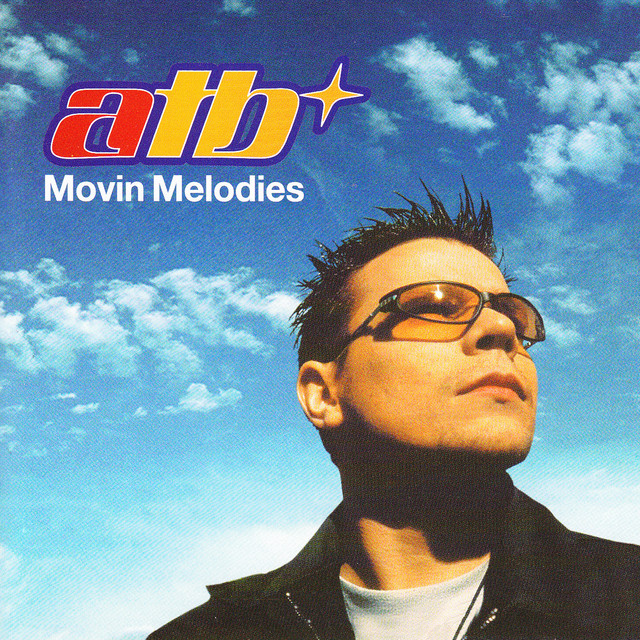
Before 9 PM (Till I Come) turned André Tanneberger into an internationally recognised producer, he had already spent years working inside Germany’s electronic music scene, developing both his technical approach and his understanding of how club records function beyond the studio. During the 1990s, he was part of Sequential One, a project that allowed him to work within the rapidly evolving European dance environment at a time when techno, house, trance and progressive sounds were constantly overlapping and influencing one another.
By the end of that decade, however, Tanneberger was beginning to establish a new identity under the name ATB, and 9 PM (Till I Come) would become the release that defined that transition. The timing was particularly significant because European electronic music was entering a period in which club-focused productions were increasingly capable of crossing into mainstream culture without completely abandoning the structures that had made them successful on the dancefloor.
That crossover was not always obvious. Traditional pop still revolved around strong vocal hooks, clearly defined verses and choruses, while trance depended far more heavily on repetition, atmosphere, gradual tension and melodic release. What ATB managed to do with 9 PM was bring those two worlds together without forcing the track to behave like a conventional pop single. The record remained fundamentally electronic, yet its central melody was immediate enough to function almost like a chorus in its own right.
The Accidental Studio Session Behind the Hook
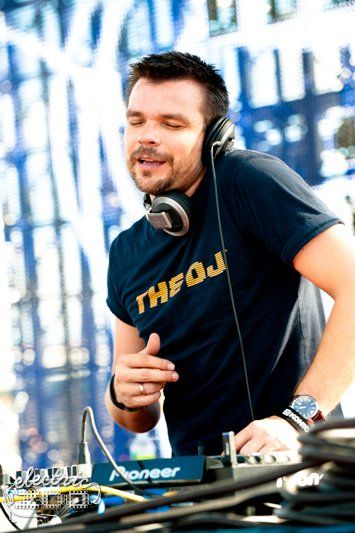
The story behind 9 PM (Till I Come) is unusual because it does not begin with a formal writing session or a deliberate attempt to create a new single. ATB has explained that he had arranged to go to the cinema with a woman he had recently met, and before they left, she became curious about how he made music. He began showing her around the studio, demonstrating his setup and explaining how different elements of a track were put together.
He started with a beat, then selected a guitar-like sound and played a short melodic phrase almost instinctively. What should have been a quick demonstration immediately became something more serious, because the melody had an emotional quality that stood out straight away. Tanneberger began building around it, adding bass and rhythmic elements while continuing to shape the phrase, and before long the original purpose of the studio visit had almost disappeared.
Eventually, he was reminded that they were still supposed to be going to the cinema, so he stopped the session and saved the unfinished project. Rather than inventing a title, he simply looked at the clock, saw that it was 9 PM, and used the time as the filename.
A practical working title had accidentally become part of the track’s identity.
What makes the story interesting is not simply that the name was chosen by chance, but that the entire record seems to reflect the same spontaneity. The hook does not feel overworked or overly calculated; it sounds like an idea that appeared naturally and was preserved before studio perfection could remove its personality.
How “Till I Come” Completed the Record
When ATB returned to the track, the instrumental already had a strong identity, but it still felt incomplete. What it lacked was a human element that could sit inside the production without taking control of it, and this is where the phrase “Till I Come” entered the picture.
Rather than building a traditional vocal arrangement with extended verses and a large chorus, Tanneberger used a short vocal phrase that could work almost like another musical texture. The words were minimal, but that was precisely what made them effective, because they added a recognisable human presence while leaving the central melody untouched.
The result became 9 PM (Till I Come), a title that combined the accidentally chosen project name with the vocal fragment that completed the production.
This balance between voice and instrumental space is one of the reasons the track works so well. The vocal never tries to compete with the lead melody and never becomes more important than the production surrounding it. Instead, it appears almost as an atmospheric layer, creating a sense of intimacy while allowing the instrumental hook to remain the real emotional centre of the record.
In many ways, the lead synth is the song’s true vocalist.
The Sound That Defined the Record
The most recognisable element of 9 PM (Till I Come) is, of course, its central lead: a sound that sits somewhere between a synthesizer and an electric guitar, shaped by noticeable pitch movement and a slightly elastic quality that makes the notes feel as though they are bending into one another.
That movement is essential to the character of the melody. If the same notes were played with a completely static synth patch, the result would almost certainly feel less expressive, because much of the emotion comes from the way the sound travels between pitches rather than simply landing on them.
This gives the hook an almost vocal quality. It does not merely play a melody; it appears to sing it.
The tone itself is equally important because it occupies a very specific emotional space. It is bright enough to feel euphoric on a dancefloor, yet there is also something slightly melancholic in the way the phrase rises and falls. That contrast between euphoria and melancholy would become one of trance music’s most enduring emotional signatures, but in 9 PM it is already present in an unusually direct form.
There is no need for an elaborate harmonic progression or a complicated arrangement around it, because the personality of the sound itself does much of the work.
Why Simplicity Became One of Its Greatest Strengths
One of the most impressive things about 9 PM (Till I Come) is how confidently it relies on a relatively small number of ideas. The production never feels empty, but it also never becomes unnecessarily crowded. ATB understands that once the central hook has established itself, the arrangement does not need to compete with it.
Instead, the structure is built around anticipation and return.
The melody appears, creates its impact and then disappears, allowing the rhythm and atmosphere to carry the track forward before the hook eventually returns. Because the listener already knows the phrase, each reappearance feels increasingly satisfying, and the repetition creates familiarity rather than fatigue.
This is one of the central principles behind effective dance music: repetition only becomes monotonous when the idea being repeated does not evolve emotionally. In 9 PM, the surrounding arrangement changes the way the hook feels, even when the melody itself remains largely the same.
The track therefore manages to sit between club functionality and pop songwriting in a very natural way. Structurally, it behaves like a trance record, but emotionally, the lead melody has the immediacy of a pop chorus.
The Rhythm Beneath the Melody
Although the lead receives most of the attention, the rhythm beneath it is equally important because it gives the melody the physical context it needs. A steady four-on-the-floor kick provides the foundation, while the bass and percussion create continuous forward movement without drawing unnecessary attention away from the hook.
That restraint is fundamental to the production.
The drums do not try to demonstrate technical complexity, and the bass does not compete for melodic space. Their purpose is to create enough momentum for the lead to feel more powerful when it returns, and that is exactly why the record works equally well in different environments.
In a club, the kick and bass give the track a strong physical presence, while on the radio, the central melody remains immediate and memorable enough to reach listeners who may not necessarily identify themselves with trance culture.
That ability to exist comfortably in both spaces became one of the main reasons the track travelled so far beyond the club scene.
From Working Title to Global Hit
ATB himself has suggested in later interviews that he did not initially expect 9 PM (Till I Come) to become a major international success, yet the reaction from labels and audiences quickly proved otherwise. The record was released through Kontor Records, while Ministry of Sound played an important role in its UK breakthrough, helping transform what had begun as a European club record into a genuine crossover hit.
The track first appeared in 1998, but its commercial momentum grew dramatically in 1999, particularly in the United Kingdom, where an earlier release had initially achieved only modest chart success before the record returned in a more visible form.
When it eventually reached the top of the UK Singles Chart, 9 PM (Till I Come) became more than simply a successful dance single. Its success represented a broader shift in the relationship between electronic music and mainstream culture, because a predominantly instrumental trance record with minimal vocals had managed to compete directly with conventional pop releases.
The record’s breakthrough showed that trance did not need to remove its repetitive structures, melodic builds or club-oriented identity in order to reach a wider audience. It simply needed a musical idea strong enough to communicate immediately.
ATB had found that idea in a handful of bent notes.

When Trance Moved Into the Mainstream
The success of 9 PM (Till I Come) arrived during a period when trance was rapidly moving beyond the European club circuit. Producers across Germany, the Netherlands, the UK and other parts of Europe had already been developing the genre for years, but by the end of the 1990s, its emotional melodies and euphoric structures were becoming increasingly compatible with mainstream radio and commercial audiences.
9 PM captured that transition perfectly because it never fully abandoned the characteristics of a club track. The lyrics remained minimal, the structure relied heavily on repetition and the production was unmistakably electronic, yet the hook was so immediate that the track could function outside the dancefloor without requiring major compromise.
That was a significant development.
Electronic music no longer needed to imitate pop in order to achieve pop-level reach. Instead, records like 9 PM demonstrated that the defining characteristics of trance could themselves become mainstream language.
The track eventually achieved major chart success across several European markets, including Italy, and its international reach helped establish ATB as one of the most recognisable names associated with that era of melodic electronic music.
The Sequential One Remix and the UK Version
Another important part of the story is the role of the Sequential One remix, particularly in the UK, where many listeners encountered a version of 9 PM (Till I Come) with a slightly different rhythmic character and a more direct club energy.
The central melody remained unchanged, but the production surrounding it altered the way the track felt, which highlights an important characteristic of electronic music: the same musical idea can completely change depending on the rhythmic and sonic context around it.
A different kick, a more aggressive drum pattern or a slightly altered tempo can make an identical melody feel more euphoric, more urgent or more club-oriented, and 9 PM provides an excellent example of this principle.
The fact that the hook remained equally recognisable across different versions also revealed how strong the musical idea had become. The production could evolve around it without weakening its identity.
The melody had become bigger than the arrangement.
A Sound That Became an ATB Signature
Following the success of 9 PM (Till I Come), ATB continued to explore a similar melodic language, most notably on Don’t Stop!, where elements of that guitar-like lead returned in a new context.
Ordinarily, reusing such a distinctive sound could risk becoming repetitive, but in ATB’s case it helped establish a recognisable sonic signature. The timbre, pitch movement and melodic phrasing became strongly associated with his identity as a producer, to the point where only a few seconds were often enough for listeners to recognise who was behind the track.
That kind of recognisability is difficult to create deliberately because it depends on more than simply choosing a distinctive synth preset. It requires a relationship between sound, melody and performance that feels personal enough to become associated with one artist.
In ATB’s case, that signature had emerged almost accidentally.
What began as a single sound selected during an informal studio demonstration eventually became one of the most identifiable production choices of his early career.
The Strange Power of the Vocal
The vocals in 9 PM (Till I Come) remain interesting precisely because of how little they attempt to do. There is no detailed narrative, no extended verse structure and no traditional pop chorus, yet the brief vocal fragments still play an important emotional role within the track.
Their breathy quality contrasts with the sharper, more synthetic lead, creating a sense of softness around the central melody while preserving the open, dreamlike atmosphere of the production.
Because the lyrics are so minimal, the listener is also given considerable freedom to interpret the track emotionally.
On a crowded dancefloor, 9 PM can feel euphoric and communal, while in a more personal listening context, the same melody can sound nostalgic or even slightly melancholic. The record never fully defines what the listener is supposed to feel, and that ambiguity is part of its strength.
Rather than telling a story directly, it creates a space in which emotion can develop.
Why the Hook Survived Its Era
Many late-1990s dance records remain strongly connected to the technology, drum sounds and production techniques of the period in which they were created. 9 PM (Till I Come) obviously carries those characteristics too, but its central idea proved strong enough to survive beyond them.
At its core, the record can be reduced to a few essential elements: a steady rhythm, a bassline, a minimal vocal and one unforgettable melody.
That simplicity is one of the main reasons the track has aged so well.
The hook does not depend completely on the original mix, the drum programming or the production technology used at the time. It exists independently of those elements, which means it can be transferred into different contexts without losing its identity.
You can change the tempo, modernise the drums, introduce new vocals or rebuild the arrangement entirely, and the melody still remains immediately recognisable.
That is the difference between a production detail and a truly strong musical idea.
From “9 PM” to “Your Love (9PM)”
More than two decades after the original release, the famous melody returned through Your Love (9PM), ATB’s collaboration with Topic and A7S, which reintroduced the hook within a much more contemporary dance-pop framework.
The production around it had changed significantly. The low-end was cleaner, the vocal arrangement was more modern and the structure reflected the expectations of a streaming-era audience, yet the moment the lead appeared, the connection with the original record was unmistakable.
That revival demonstrated how durable the melody had become.
Listeners who had never experienced the late-1990s trance era could still respond to the same musical idea because its effectiveness had never depended entirely on nostalgia. The hook was strong enough to work on its own terms.
The surrounding production had changed, the technology had changed, the audience had changed, the melody did not need to.
Why “9 PM” Still Feels Immediate
There is often a tendency to search for hidden technical complexity when discussing classic electronic records, as though longevity must always be explained by sophisticated production techniques or unusually complicated arrangements. With 9 PM (Till I Come), the explanation is considerably simpler.
The melody is memorable, the sound is distinctive and the arrangement understands exactly when to leave space.
That combination gives the track a clarity that many more complex productions struggle to achieve. Every important element has enough room to breathe, and nothing distracts from the musical idea at the centre of the record.
The pitch bends give the lead a human quality, the repetition makes it familiar almost immediately and the restrained arrangement allows the listener to anticipate its return.
Once the melody has been heard, it becomes difficult to forget.
And in dance music, that can be far more important than technical complexity.
Final Thoughts
9 PM (Till I Come) remains one of those rare electronic records whose enormous cultural impact seems almost disproportionate to the simplicity of its origin. There was no elaborate concept behind the title, no carefully planned attempt to redefine trance and no obvious strategy to create a crossover hit; there was simply a producer showing someone around his studio, selecting a guitar-like sound and playing a melody that immediately felt different from everything around it.
When ATB needed to save the unfinished session, he looked at the clock and called the project 9 PM. From that almost insignificant moment came a track that would travel through European clubs, reach international radio, top the UK Singles Chart and become one of the defining melodic records of the late-1990s trance era.
Its lasting importance, however, is not really found in chart positions or commercial statistics, but in the relationship between melody, sound design and identity. The guitar-like lead did not simply decorate the composition; it became the composition’s emotional centre, and over time it became inseparable from ATB himself.
Today, producers have access to vastly more powerful software, enormous sound libraries and almost unlimited technical possibilities, yet 9 PM (Till I Come) still offers one of electronic music’s clearest lessons: complexity is not what makes a record timeless; sometimes, all it takes is one sound, one melody and enough space for people to remember it.