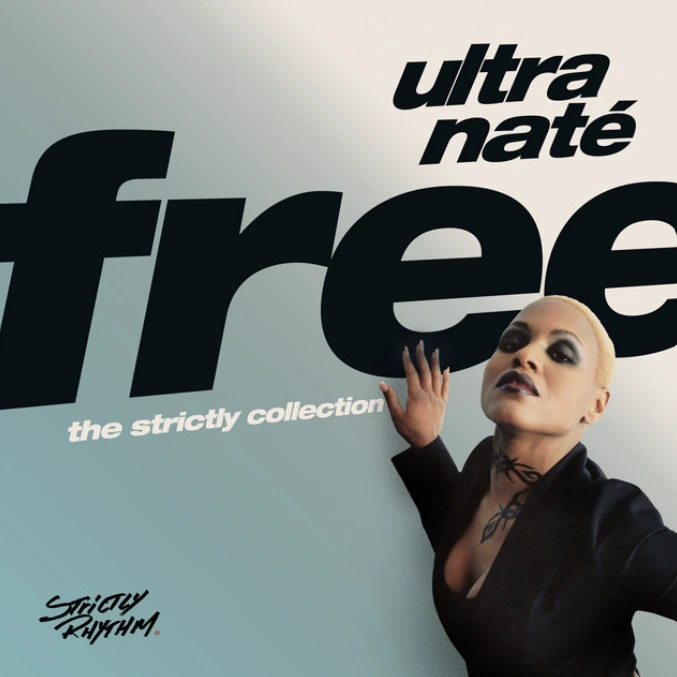

Some dance records survive because of a hook. Others survive because they become attached to a feeling. Ultra Naté’s “Free” managed to do both, combining a house groove, an instantly recognisable guitar line and one of the most direct messages of personal liberation ever placed inside a club record. Nearly three decades later, it still feels less like a song from 1997 and more like something the dancefloor continues to need.
There are house records that immediately reveal the decade they came from, and then there are songs like “Free”, whose emotional language seems to renew itself every time another generation encounters it.
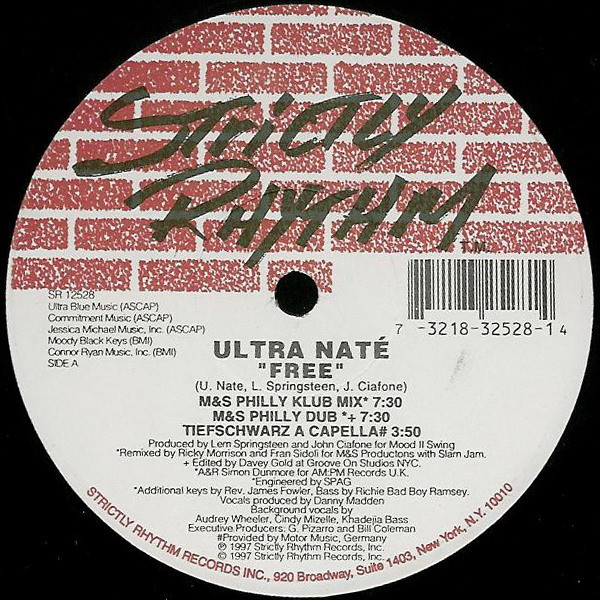
Released in 1997 and created with legendary New York production duo Mood II Swing, the track arrived at a crucial moment in Ultra Naté’s career. She had already spent years working within underground dance music, initially alongside Baltimore production collective the Basement Boys and later through major-label releases, but by the middle of the 1990s she had reached a point where continuing along the same path no longer made sense.
Rather than adapting herself to somebody else’s idea of what her music should sound like, Naté began rebuilding her creative identity around greater artistic freedom. That transition eventually brought her to Strictly Rhythm and to Mood II Swing’s John Ciafone and Lem Springsteen, whose approach allowed her to move beyond a conventional garage-house formula and experiment with influences coming from rock, alternative music and gospel.
The goal was never to abandon dance music. Instead, they wanted to expand what a dance record could contain, creating something that would still work immediately in a club while carrying the emotional scale of a much larger pop anthem.
The result was Free.
What makes the record particularly remarkable is that its message of liberation is not confined to the lyrics. The same idea is present throughout the production: the guitar introduces uncertainty, the verses hold back emotionally, the rhythm provides constant forward movement and the chorus finally allows everything to open up.
The song and its message are moving in exactly the same direction, which is one of the main reasons Free still feels so convincing nearly thirty years later.
In this post:
- A Turning Point in Ultra Naté’s Career
- Why “Free” Did Not Sound Like Typical House Music
- The Guitar That Changes Everything
- Mood II Swing and the Groove Behind the Record
- Ultra Naté’s Vocal Performance
- How the Song Builds Toward Release
- A Simple Message With a Much Bigger Meaning
- From Underground House Record to Global Anthem
- Sound Breakdown
- Final Thoughts
A Turning Point in Ultra Naté’s Career
“Free” arrived at exactly the moment when Ultra Naté was redefining both her sound and the kind of artist she wanted to become.
The story behind Free becomes much more meaningful once it is placed within the moment Ultra Naté was experiencing professionally.
Her entry into music had not followed a carefully planned path. Growing up in Baltimore, she became immersed in local club culture while studying medicine and eventually crossed paths with the Basement Boys, beginning a creative relationship that introduced her to songwriting, recording and the mechanics of dance music production.
Those early experiences eventually led to record deals and international releases, but the relationship between her underground musical identity and the expectations of the wider industry became increasingly difficult to navigate. The American side of the business did not always understand the garage and house culture from which her music came, and there was growing pressure to push her towards a more predictable form of commercial dance-pop.
Eventually, Naté decided to move away from that situation and rethink her career more independently, a process that eventually led her to Strictly Rhythm, one of the most influential labels in New York house music.
That background is important because Free was not created by an artist simply trying to repeat a successful formula. It emerged from a period in which Naté was actively questioning that formula and searching for a musical direction that felt more personal.
Working with Mood II Swing gave her the space to do exactly that. Rather than returning to the garage-house sound she already knew well, the sessions began opening towards guitars, alternative influences and a larger emotional palette.
In retrospect, the title Free feels almost perfectly connected to that moment in her life. Naté has explained that the song was not intended as a literal autobiographical account of leaving her previous label, but the broader ideas of independence, self-belief and personal choice inevitably reflected the kind of transition she was experiencing.
The song was never about one specific form of freedom, and that would ultimately become one of its greatest strengths.

Why “Free” Did Not Sound Like Typical House Music
At a time when vocal house already had a familiar formula, Ultra Naté and Mood II Swing deliberately looked beyond dance music for inspiration.
One of the most important creative decisions behind Free was also one of the simplest: nobody involved wanted to make another predictable vocal house record.
Ultra Naté and Mood II Swing began introducing elements from rock, alternative music and gospel into the sessions, searching for a sound that could remain credible inside club culture while feeling emotionally broader than the typical dance productions surrounding it.
One particularly important reference was R.E.M.’s “Losing My Religion”, especially the bittersweet quality created by its instrumentation. Naté was interested in that mixture of melancholy and accessibility, and traces of that emotional contrast can be heard almost immediately in Free.
The record does not introduce itself with the obvious elements one might expect from late-1990s vocal house. There is no immediate piano stab or oversized synth hook announcing the arrival of the dancefloor. Instead, the opening is led by guitar, giving the track a slightly melancholic and unresolved character that initially feels closer to alternative rock.
Only gradually does the record reveal the house production beneath it. The drums establish movement, the bass fills out the groove and Naté’s vocal begins shaping the emotional direction of the song until the guitar, which could easily have belonged to another genre, becomes completely natural inside a club record.
The crossover works because Mood II Swing never attempt to turn Free into a rock song. They simply use rock instrumentation to give house music a different emotional colour, expanding the vocabulary of the track without losing the rhythmic foundation that allows it to function on the dancefloor.
The Guitar That Changes Everything
Before the beat fully takes control, one guitar line establishes the emotional tension that makes the chorus feel significantly more powerful.
The opening guitar is arguably the defining instrumental element of Free and one of the main reasons the record remains instantly recognisable.
Played by Woody Pak, the riff gives the song an identity before Ultra Naté has even reached its central message. Rather than introducing immediate celebration, it creates a feeling somewhere between melancholy and anticipation, suggesting that the freedom promised by the chorus has not yet been reached.
That emotional ambiguity becomes particularly important once the first verse begins dealing with uncertainty, lost belief and the process of finding confidence again.
From a production perspective, this is an extremely effective choice because the song would have much less emotional space to develop if it opened in complete euphoria. By beginning from somewhere more reflective, the arrangement gives the chorus a destination.
The guitar therefore does far more than provide a memorable hook. It establishes the emotional problem that the rest of the record will gradually resolve.
When the chorus finally arrives, the sense of release feels stronger because the music has already spent time searching for it.
Mood II Swing and the Groove Behind the Record
Beneath the rock influences and the emotional songwriting, Mood II Swing ensure that “Free” never loses sight of its natural home: the dancefloor.
By the time they worked with Ultra Naté, Mood II Swing were already deeply respected figures within New York house music, and Free demonstrates exactly why their productions could feel sophisticated without becoming unnecessarily complicated.
The groove remains direct and unmistakably rooted in house, built around a four-on-the-floor pulse that gives the entire song physical momentum. What makes the arrangement effective, however, is how carefully that rhythm is balanced against everything happening above it.
The production never becomes overcrowded. There is enough space for the guitar to remain prominent, enough room for Naté’s vocal to expand and enough consistency in the drums to keep the record working as a club track even during its most emotional moments.
Instead of continually adding new elements in an attempt to create impact, Mood II Swing allow the arrangement to build naturally around the song.
That restraint becomes especially important in the chorus because Free does not rely on a separate instrumental climax. The vocal hook, the harmony and the groove reach their emotional peak together, meaning that the musical release and the lyrical release become the same moment.
Years before the rise of the modern EDM structure in which a vocal section often exists primarily to prepare an instrumental drop, Free showed that the chorus itself could provide all the release a dancefloor needed.
Ultra Naté’s Vocal Performance
The production provides movement, but it is Ultra Naté’s voice that transforms the record’s simple message into something genuinely convincing.
A weaker vocal performance could easily have changed the entire character of Free.
The song is built around an extremely direct message, and lyrics about freedom or believing in yourself can very quickly become generic when they are not delivered with the right level of conviction. Naté avoids that problem because her performance balances vulnerability with authority.
During the verses, her delivery feels comparatively restrained, which suits lyrics centred around uncertainty and the feeling that something has been lost. As the track develops, however, her vocal becomes progressively stronger and more open, creating the impression that she is discovering the confidence expressed in the chorus while the song itself unfolds.
Her long-time vocal producer Danny Madden played an important role in that development. Naté has spoken about how working with him helped her understand and strengthen her voice, particularly because she had not originally entered the industry as a formally trained professional singer.
For Free, that voice was approached with a much larger emotional scale in mind, and the final performance reflects that ambition. When the chorus arrives, Naté does not simply sing a catchy hook; she delivers it almost as a declaration.
That difference is essential because the track needs the listener to believe the message rather than simply remember it.
How the Song Builds Toward Release
The structure of “Free” mirrors the idea at the centre of the song, moving from uncertainty towards momentum before finally arriving at liberation.
One of the most satisfying aspects of Free is the way its arrangement develops without requiring dramatic changes in instrumentation.
The opening establishes a reflective mood through the guitar, while the verse introduces emotional uncertainty and allows the groove to begin creating movement underneath it. As the song progresses, Naté’s vocal gains confidence and the production gradually feels wider until the chorus arrives and removes much of the hesitation that defined the earlier sections.
The transition feels natural because the arrangement and the lyric are telling the same story.
Rather than treating the instrumental as a separate element sitting underneath the vocal, Mood II Swing use the production to reinforce the emotional development of the song. The record begins in a place of doubt and gradually works towards a sense of freedom, which makes the chorus feel less like a repeated pop hook and more like the answer to everything established beforehand.
This relationship between tension and release has always been fundamental to dance music, but Free applies it emotionally as well as rhythmically.
The listener does not simply wait for the beat to become bigger. We wait for the song to become more certain of itself.

A Simple Message With a Much Bigger Meaning
The language of “Free” remains intentionally universal, allowing listeners to place their own experiences inside the song rather than being told exactly what freedom should mean.
Perhaps the most important reason Free has survived beyond the decade in which it was released is that its message was never tied to one specific story.
Ultra Naté and the writers deliberately avoided defining what the listener needed to free themselves from. The idea was broad enough to apply to anyone feeling trapped by a relationship, an addiction, insecurity, professional frustration, social expectations or any other situation that prevented them from living the life they wanted.
That openness transformed the chorus from a conventional dance hook into something far more flexible.
For one listener, freedom might mean finally walking away from a destructive relationship, while for somebody else it could mean coming out, changing careers, overcoming fear or simply deciding to stop allowing other people’s expectations to determine their choices.
The song offers a message without dictating the circumstances in which that message should be used.
That is an extremely effective form of songwriting because it allows the meaning of Free to change depending on who is listening and what they happen to be experiencing at the time.
The words remain the same, but the story around them is different for everybody.
From Underground House Record to Global Anthem
What began within club culture quickly travelled far beyond the underground scene that created it, becoming one of the defining dance records of the late 1990s.
Before Free became an international hit, it had to prove itself in the environment from which it came.
The record first gained support in clubs, with Louie Vega among the influential DJs who began playing the promotional version before the track crossed over into radio and mainstream culture.
That progression matters because the record did not begin as a pop single designed to imitate club music. Its credibility was established on the dancefloor first, and the mainstream audience followed afterwards.
Commercial success soon arrived on a much larger scale. In the UK, Free reached No. 4 on the Official Singles Chart and remained inside the Top 100 for 17 weeks, while also becoming a major dance chart success. Across Europe, the song reached even greater heights, including a No. 1 position in Italy.
What makes that crossover particularly significant is that Free never sounds as though it is hiding its house identity in order to become accessible.
The four-on-the-floor groove remains central, the production still carries the sensibility of underground dance music and the arrangement never attempts to disguise where the record came from.
Instead of house music moving towards pop, mainstream listeners moved towards Free.
That distinction helps explain why the record has retained so much credibility within club culture despite achieving enormous commercial success.
Sound Breakdown
The Guitar
The guitar is the defining instrumental hook of Free and the element that immediately separates the record from a conventional vocal house production.
Woody Pak’s riff introduces a subtle melancholy before the rhythm section fully establishes itself, creating an emotional tension that remains present even when the song becomes more uplifting. Its importance therefore goes well beyond melody, because from the opening seconds it establishes the sense that the record is moving from uncertainty towards something more liberating.
Without that initial tension, the chorus would not feel nearly as powerful.
The Drums
The drums provide the consistency necessary to keep Free rooted firmly in house music, but Mood II Swing resist the temptation to make them dominate the arrangement.
The four-on-the-floor pulse remains present enough to give the record immediate dancefloor functionality while leaving considerable space for the guitar, vocal and harmonic elements. Rather than continually demanding attention, the rhythm section acts as the engine underneath the song, maintaining momentum while the emotional story develops above it.
That balance is a major reason the production still feels controlled rather than overcrowded.
The Bass and Groove
The bass gives the track warmth and forward movement without becoming overly aggressive, complementing the drums and helping create a groove that remains energetic without distracting from the vocal.
Everything in the low end appears designed to support the song rather than compete with it, allowing Naté’s performance and the guitar to remain the most recognisable elements while the rhythm quietly maintains physical momentum underneath them.
This restraint is particularly effective because the chorus already carries significant emotional weight. The production does not need to become dramatically heavier when the hook arrives, since the groove has been doing its work from the beginning.
The Vocal
Ultra Naté’s voice is the emotional centre of Free, and much of the song’s success depends on the way her performance evolves across the arrangement.
She begins from a relatively reflective position before gradually introducing more confidence and power, allowing the chorus to feel like the conclusion of an emotional journey rather than simply the loudest section of the record.
The message would be far less convincing if the vocal sounded completely certain from the opening seconds. Instead, the performance develops alongside the song, which makes the eventual declaration of freedom feel earned.
The Chorus
The chorus is the moment when every major element of Free finally aligns.
By that point, the guitar has already established the emotional tension, the rhythm has created constant movement and Naté’s vocal has gradually become more confident. When the central hook arrives, there is therefore no need for a separate instrumental explosion because the song itself has already reached its emotional peak.
In modern dance terminology, the easiest way to explain it would be this: the chorus is the drop.
The release comes from the combination of vocal, harmony and groove rather than from an independent production trick, which is one of the reasons the track still feels so naturally constructed.
The Arrangement
The arrangement succeeds because it is built around gradual escalation rather than constant impact.
Every section has a clear role. The opening establishes the emotional atmosphere, the verses introduce uncertainty, the groove creates momentum and the chorus finally provides resolution. Instead of continually adding new musical ideas, the production develops the meaning of elements that are already present.
That simplicity gives the record clarity and ensures that the listener always understands where the emotional centre of the song lies.
Final Thoughts
Ultra Naté’s Free is one of those rare dance records in which production, songwriting and cultural meaning eventually become almost impossible to separate.
The guitar introduces uncertainty before the beat begins pushing the track forward, while Mood II Swing build a groove strong enough for the club but spacious enough to leave the vocal at the centre of the arrangement. Ultra Naté then takes an extremely simple idea about personal freedom and delivers it with enough conviction that the chorus becomes something listeners can adapt to their own experiences.
Nothing about the record needs to be unnecessarily complicated, and that simplicity is precisely what gives it strength.
The message is direct without feeling empty, the production is accessible without sacrificing its underground identity and the chorus feels enormous without requiring the kind of exaggerated instrumental drop that would become common in later generations of electronic music.
More importantly, Free understands something fundamental about what a dancefloor can represent.
People do not always go there simply to escape reality for a few hours. Sometimes they go because a dancefloor gives them the space to imagine a different version of themselves, surrounded by other people who may be searching for exactly the same feeling.
Free gave that experience a voice.
Nearly three decades later, the guitar still introduces the same sense of possibility, the groove still creates the same forward movement and Ultra Naté’s chorus can still turn a room full of strangers into a temporary community built around one shared idea.
That is why Free has become much more than a successful house record from the late 1990s.
It remains one of dance music’s great songs about having the courage to become the person you want to be.