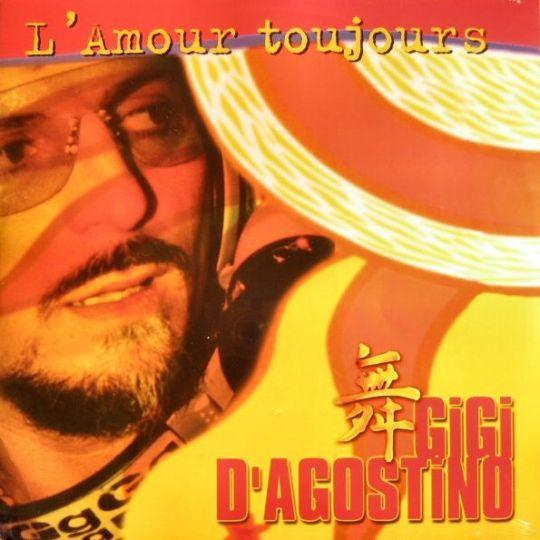


In this Sound Breakdown, we explore how Gigi D’Agostino’s “L’Amour Toujours” became one of the most iconic Italo dance anthems of all time. From its emotional synth melody to its hypnotic rhythm, vocal hook and timeless festival energy, the track remains a perfect example of how simplicity, repetition and feeling can create a global dance classic.
In this post:
The Story Behind the Track
The Sound of Italo Dance
The Main Melody
Rhythm and Groove
Vocal Hook and Emotional Contrast
Arrangement and Structure
Why the Track Still Works Today
Producer Perspective
Playlist / Curator Perspective
Final Thoughts
How Gigi D’Agostino Created the Timeless Power of “L’Amour Toujours”
Some songs become hits because they perfectly capture the sound of their time. Others go further: they survive their era, return across generations and become part of collective memory.
Gigi D’Agostino’s “L’Amour Toujours”, also widely known as “I’ll Fly With You”, belongs to the second category.
Released during the golden age of European dance music, the track became one of the most recognizable Italo dance anthems ever produced. Its power does not come from extreme complexity. Instead, it comes from the perfect balance between emotional melody, direct rhythm, simple structure and a vocal hook that feels instantly memorable.
More than twenty years later, “L’Amour Toujours” still works because it understands one of the most important rules of dance music: a great track does not only make people move. It makes them feel something.
The Story Behind the Track
“L’Amour Toujours” is one of the defining tracks in Gigi D’Agostino’s career.
The song appears on his 1999 album “L’Amour Toujours”, a project that helped consolidate his identity as one of the most influential figures in Italian and European dance music. The track was later released as a single and became a major international success, reaching audiences far beyond Italy.
The official credits identify Gigi D’Agostino as producer, with composition credited to Gigi D’Agostino, Diego Leoni, Carlo Montagner and Paolo Sandrini. MusicBrainz also lists Gigi D’Agostino and Paolo Sandrini as mixer and arranger on the “L’Amour Vision” version.
This is important because the track does not sound like a random club record. It sounds carefully built.
Every element is simple, but every element has a clear purpose: the beat creates movement, the bass gives the groove weight, the melody creates emotion, and the vocal gives the listener something to remember.
The Sound of Italo Dance
To understand why “L’Amour Toujours” works, we need to place it inside the sound world of late 1990s and early 2000s Italo dance.
This style often combined four main ingredients:
A steady four-on-the-floor beat
Bright, emotional synth melodies
Repetitive but memorable hooks
A balance between club energy and radio accessibility
Gigi D’Agostino’s approach was especially distinctive because his tracks often had a Mediterranean emotional quality. Compared to colder or more aggressive club productions, his music frequently felt melodic, melancholic and almost romantic.
“L’Amour Toujours” is a perfect example of this.
It is clearly a dance track, but it does not feel purely mechanical. Under the beat there is a strong emotional center. The synth melody feels almost nostalgic, while the vocal creates a feeling of hope, attachment and escape.
This emotional contrast is what gives the song its longevity.

The Main Melody
The main synth melody is the heart of the track.
It is simple, repetitive and instantly recognizable. That simplicity is not a weakness. It is exactly why the song works.
A strong dance melody needs to be easy to remember after just one listen. In “L’Amour Toujours”, the melodic phrase is clear enough to be sung, whistled or recognized immediately in a festival crowd.
The sound design is bright and direct. The lead synth does not try to be overly complex or futuristic. Instead, it occupies a clear space in the mix and becomes the emotional signature of the track.
The melody has a slightly bittersweet quality. It feels uplifting, but not completely happy. This is one of the reasons the song feels deeper than many other dance tracks from the same era.
It is euphoric and nostalgic at the same time.
Rhythm and Groove
At its foundation, “L’Amour Toujours” is built around a classic dance rhythm.
The beat follows a steady four-on-the-floor structure, giving the track the constant forward motion needed for clubs, radio and festival environments. The kick drum is not overly aggressive by modern standards, but it is stable, clean and functional.
The rhythm does not distract from the melody. Instead, it supports it.
This is one of the smartest production choices in the track. Rather than filling the arrangement with too many percussive details, the groove remains simple and effective. The listener can focus on the emotional hook while still feeling the physical pulse of the record.
The tempo, generally listed around 139 BPM for common versions of the track, places it in a high-energy dance zone without feeling chaotic. It has enough speed to work on the dance floor, but enough melodic openness to remain accessible to mainstream listeners.
That balance helped the song travel beyond clubs.
Vocal Hook and Emotional Contrast
The vocal is another essential part of the track’s identity.
The phrase “I’ll fly with you” became the emotional center of the song. It is direct, universal and easy to remember. The lyrics do not need to be complicated because the feeling is immediately clear.
The vocal gives the song a human dimension.
Without it, “L’Amour Toujours” would still be a strong instrumental dance track. With the vocal, it becomes something bigger: a song about escape, devotion and emotional connection.
This is where the track becomes more than club music.
The contrast between the mechanical rhythm and the emotional vocal creates tension. The beat keeps moving forward, while the vocal feels almost suspended above it. This combination gives the song its distinctive atmosphere: energetic but emotional, simple but powerful, danceable but sentimental.
Arrangement and Structure
The arrangement of “L’Amour Toujours” is built around gradual recognition.
The track does not rely on constant surprise. Instead, it repeats and reinforces its strongest ideas until they become unforgettable.
This is a key principle in dance music production.
A club track needs repetition because repetition creates hypnosis. But repetition only works if the repeated elements are strong enough. In this case, the melody and vocal hook are strong enough to carry the entire track.
The different versions of the song also show how flexible the core idea is. Longer club-oriented versions give more room to the groove and gradual development, while shorter edits make the song more direct for radio and video formats.
This adaptability helped the track reach different audiences.
It could work in a DJ set, on radio, in a music video, at parties and later in festival contexts. Very few tracks manage to function across so many environments.
The Mix: Clean, Direct and Functional
The mix of “L’Amour Toujours” is not about modern loudness or extreme compression.
Its strength comes from clarity.
The main elements are easy to identify: kick, bass, lead synth, vocal and supporting textures. Nothing feels unnecessary. The track leaves enough space for the melody to dominate, while the rhythm section keeps everything grounded.
This type of mix is very effective for dance music because it translates well across different listening systems.
On club speakers, the beat and bass carry the physical energy. On small speakers, the melody and vocal still make the song recognizable. On radio, the hook remains immediate.
That is one of the secrets of a timeless dance record: it must survive outside the studio.
“L’Amour Toujours” does exactly that.
Why the Track Still Works Today
The reason “L’Amour Toujours” still works today is not only nostalgia.
Of course, the song carries the sound of its era. The synths, rhythm and vocal treatment immediately evoke early 2000s European dance culture. But the track continues to connect because its core elements are timeless.
A memorable melody does not expire.
A strong emotional hook does not expire.
A simple dance groove does not expire.
The production may belong to a specific period, but the emotional architecture of the song remains effective. This is why new listeners can still discover the track and understand its appeal without having lived through the original dance era.
It feels familiar even when heard for the first time.
Producer Perspective
From a producer’s perspective, “L’Amour Toujours” is a masterclass in restraint.
The track does not try to impress through complexity. Instead, it focuses on a few powerful ingredients and repeats them with confidence.
The most important production lessons are:
First, the melody must be strong enough to carry the song.
Second, the rhythm should support the hook rather than compete with it.
Third, the vocal should communicate a clear emotion.
Fourth, the arrangement should build recognition rather than confusion.
Many producers overcomplicate dance tracks by adding too many layers, transitions and effects. “L’Amour Toujours” shows the opposite approach. It proves that a track can become iconic when every element is easy to understand but emotionally effective.
Its simplicity is not basic.
Its simplicity is strategic.
Playlist / Curator Perspective
From a playlist curator perspective, “L’Amour Toujours” is extremely powerful because it fits multiple contexts.
It can work in:
Classic dance playlists
Eurodance throwback playlists
Festival nostalgia playlists
Party playlists
Italo dance selections
Emotional electronic playlists
2000s dance collections
This versatility explains part of its long life.
The song can be experienced as a nostalgic classic, a dance-floor anthem, a romantic electronic track or a festival singalong. That flexibility makes it valuable for curators because it can connect with different listener moods.
For Victor Bendo Selections, this is the kind of track that shows why emotional dance music can last longer than trend-driven club records.
It has energy, but also identity.
Cultural Legacy
“L’Amour Toujours” became more than a successful single. It became one of those tracks that people recognize almost immediately from the opening melody.
Its continued presence across playlists, live events, online culture and new generations of listeners confirms its status as a European dance classic.
The track also represents an important moment in Italian dance music history. It helped show that Italian electronic music could travel internationally while maintaining a distinctive melodic identity.
Gigi D’Agostino did not simply create a club track. He created a sound that became part of the emotional memory of an era.
Final Thoughts
“L’Amour Toujours” remains iconic because it is built on the perfect balance between simplicity and emotion.
The beat is direct. The melody is unforgettable. The vocal is universal. The structure is clear. The atmosphere is nostalgic, romantic and euphoric at the same time.
It is a reminder that electronic music does not need to be cold or impersonal. When produced with the right emotional instinct, a dance track can become deeply human.
More than two decades after its release, Gigi D’Agostino’s “L’Amour Toujours” still feels alive because it captures something that every great song needs: the desire to escape, to connect and to feel free.
Sound Breakdown Rating: 9.4/10