
From an intimate a cappella recorded in Manchester to the euphoric dancefloors of the 1990s and the modern productions of Skrillex and Boys Noize, the remarkable journey of a melody that has continued to reinvent itself for more than four decades.
Some records are remembered because they capture the sound of a particular era, while others manage to transcend the moment in which they were created, finding new meanings as musical trends and generations change. “It's a Fine Day” belongs to this second category, having travelled from the independent music scene of early 1980s Manchester to the warehouses of the British rave movement, before becoming a recurring reference point for electronic music producers around the world.
For many listeners, the song is inseparable from Opus III's 1992 interpretation, a hypnotic combination of ethereal vocals, luminous synthesizers and house rhythms that helped define the atmosphere of early rave culture. Others may recognize its unmistakable melody through Orbital's Halcyon, the trance reinterpretations that followed during the late 1990s, or the more aggressive electronic production of Skrillex and Boys Noize's Fine Day Anthem in 2023.
What makes this musical journey particularly fascinating is that It's a Fine Day was never conceived as a dance record. Its origins lie in a remarkably simple composition written by Edward Barton and originally recorded by Jane Lancaster, whose almost unaccompanied vocal performance created an intimate, slightly unsettling atmosphere that seemed far removed from the energy of electronic dancefloors.
Yet the qualities that made the original recording so unusual would eventually become the foundation of its extraordinary longevity. The simplicity of the melody, the restrained vocal delivery and the emotional ambiguity hidden within its apparently optimistic lyrics allowed successive generations of producers to reinterpret the composition without losing its identity.
Few songs illustrate the transformative possibilities of electronic music quite like It's a Fine Day, a record whose history demonstrates how a single melody can evolve through different genres while continuing to evoke the same strangely familiar emotions.
In this article
• The unusual origins of It's a Fine Day in 1980s Manchester
• Edward Barton, Jane Lancaster and the original a cappella recording
• How Opus III transformed a forgotten song into a rave anthem
• Kirsty Hawkshaw and the voice that defined a generation
• Inside the production: House rhythms, synthesizers and hypnotic melodies
• The emotional contrast between melancholy and euphoria
• It's a Fine Day and the rise of British rave culture
• Orbital's Halcyon and the creative possibilities of sampling
• How the melody travelled through trance and electronic music
• Skrillex and Boys Noize bring the anthem into a new era
• Why It's a Fine Day remains influential more than four decades later
• Final thoughts
Before the Rave: The Unusual Origins of It's a Fine Day
The story of It's a Fine Day begins in Manchester during the early 1980s, a period when the city's musical identity was undergoing a particularly exciting transformation. The influence of punk and post-punk had encouraged a generation of musicians to experiment beyond traditional songwriting conventions, creating an environment in which independent labels, alternative performers and unconventional recording techniques could flourish.
Among the artists associated with this creative atmosphere was Edward Barton, an eccentric songwriter, poet and performer whose work frequently explored the relationship between language, repetition and musical expression. Barton approached songwriting with an unusual sensibility, finding inspiration in ordinary situations and expressions that might otherwise have passed unnoticed, and transforming them into compositions capable of provoking unexpected emotional reactions.
It's a Fine Day emerged from this experimental approach almost by accident. According to the story reconstructed by Billboard Italia, Barton developed the melody while looking out from a balcony in Manchester, drawing inspiration from the simplicity of an ordinary day. The composition was built around a short melodic phrase and lyrics that appeared reassuring on the surface, yet carried an emotional ambiguity that would later become one of the song's most recognizable characteristics.
Rather than developing the material into a conventional pop recording, Barton entrusted the song to Jane Lancaster, who performed under the name Jane. Her interpretation, released through Cherry Red Records in 1983, was remarkable for its minimalism, relying almost entirely on the natural character of her voice rather than an elaborate instrumental arrangement.
The recording attracted attention within British independent music circles, receiving support from influential radio presenter John Peel, whose programmes frequently introduced unconventional artists to a wider audience. Nevertheless, the song remained far removed from mainstream popular music, occupying a curious space between experimental pop, folk-like simplicity and spoken musical poetry.
What made the composition unusual was the contradiction between its apparently cheerful subject and the atmosphere created by Lancaster's performance. Although the title suggested optimism, the melody possessed a delicate melancholy, while the absence of instrumental accompaniment made the vocal feel strangely exposed.
Beneath its innocent surface, It's a Fine Day contained an emotional uncertainty that would eventually become essential to its success in electronic music. Nearly a decade later, producers working within an entirely different musical environment would recognize the possibilities hidden inside that deceptively simple melody.

Jane Lancaster: The Power of a Voice Without Instrumentation
Listening to Jane Lancaster's original recording today reveals how unusual the song must have sounded when it first appeared in 1983. At a time when British popular music was increasingly experimenting with synthesizers, drum machines and elaborate studio arrangements, It's a Fine Day took an almost opposite direction, allowing the vocal to carry the entire composition without the rhythmic or harmonic support normally expected from a commercial release.
Lancaster's delivery was restrained and remarkably natural, avoiding the dramatic techniques associated with traditional pop singing. Her voice moved through the melody with a sense of distance, creating the impression of someone quietly observing the surrounding world rather than performing directly for an audience.
The lack of instrumentation made every detail of the performance more noticeable, from the subtle changes in her vocal tone to the spaces separating individual phrases. Without drums establishing a consistent tempo or chords directing the emotional development of the music, the melody remained suspended in an almost undefined musical space.
This unusual simplicity also meant that It's a Fine Day was not immediately associated with a particular genre. Depending on the listener's perspective, the recording could resemble a traditional folk melody, an experimental vocal performance or a minimalist piece of alternative pop, while never fitting comfortably into any of those categories.
In retrospect, this quality became one of the composition's greatest strengths. Because the original recording offered so little instrumental information, it left an extraordinary amount of creative freedom for future reinterpretations, allowing producers to imagine entirely different rhythmic and harmonic environments around the same vocal melody.
What initially appeared to be a modest independent release would eventually provide the foundation for one of the most recognizable electronic records of the following decade.
Opus III: From an Intimate Song to a Rave Classic
By the beginning of the 1990s, British nightlife had undergone a transformation that would permanently influence the development of electronic music. The acid house explosion of the late 1980s had introduced a new relationship between DJs, producers and audiences, while rave culture was expanding beyond traditional nightclubs into warehouses, outdoor gatherings and temporary venues where thousands of people came together around electronic music.
Within this rapidly developing environment, producers were experimenting with the possibilities of sampling, synthesizers and programmed rhythms, often combining influences from house, techno, breakbeat and early trance to create records that were simultaneously energetic and atmospheric.
It was during this period that Opus III, a British electronic group consisting of producers Kevin Dodds, Ian Munro and Nigel Walton, alongside vocalist Kirsty Hawkshaw, began developing the sound that would bring It's a Fine Day to an international audience.
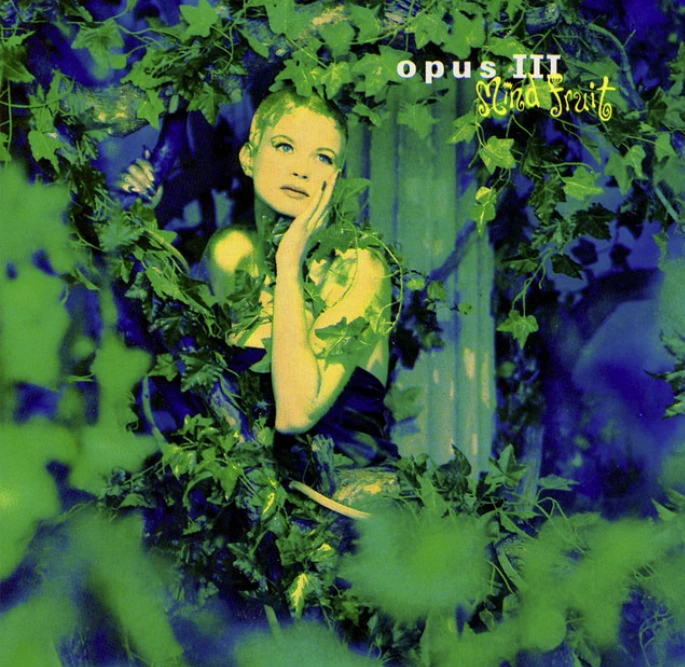
Their reinterpretation, released in 1992 and included on the album Mind Fruit, transformed Edward Barton's original composition into a hypnotic electronic production built around a steady house rhythm, melodic synthesizers and Hawkshaw's distinctive vocal performance.
Although the central melody remained recognizable, the addition of electronic instrumentation fundamentally changed the listening experience. Where Jane Lancaster's recording had sounded intimate and almost isolated, the Opus III version introduced movement, harmonic richness and a sense of collective energy that made the song ideally suited to the emerging rave environment.
The group did not simply accelerate the original or place a dance beat underneath the vocal. Instead, they explored the rhythmic possibilities already present within the melody, allowing its repeated phrases to interact with electronic sequences and carefully arranged instrumental layers.
The resulting record retained the emotional ambiguity of the original composition while introducing an entirely new dimension of physical energy. It was uplifting without becoming conventionally cheerful, melodic without losing its hypnotic quality, and accessible enough to attract listeners beyond the underground electronic scene.
The commercial response was significant, with the single reaching number five on the UK Singles Chart and topping the American Billboard Hot Dance Club Play chart. These achievements helped establish Opus III internationally, but the record's cultural importance would ultimately extend beyond its chart performance.
By transforming a relatively obscure vocal composition into a dancefloor anthem, Opus III created a record that captured the relationship between emotional introspection and collective euphoria at the heart of early 1990s rave culture.
Kirsty Hawkshaw: The Voice That Made the Record Unforgettable
While Opus III's production transformed the musical identity of It's a Fine Day, the distinctive character of Kirsty Hawkshaw's voice played an equally important role in its success. Her performance provided the emotional connection between the original composition and its electronic reinterpretation, preserving the delicate atmosphere of the melody while allowing it to coexist with a much more energetic instrumental arrangement.
Hawkshaw possessed a vocal quality particularly suited to this combination. Her clear, restrained delivery could float above the synthesizers without competing with them, creating a sense of lightness that contrasted beautifully with the steady rhythmic foundation underneath.
Unlike the powerful, expressive vocal performances associated with many house records of the period, Hawkshaw's interpretation remained deliberately understated. Rather than dominating the production, her voice became part of its atmosphere, moving between the foreground and the surrounding electronic textures.
The circumstances surrounding her introduction to Opus III also reflect the experimental spirit of the British rave movement. In an interview recalled by Insomniac, Hawkshaw described meeting members of the group at a Spiral Tribe rave, where Kevin Dodds was recording birdsong in the woods using a digital audio tape recorder.
The anecdote offers a revealing glimpse into the creative environment from which the project emerged. Electronic musicians were increasingly interested in sounds found beyond conventional studios, experimenting with field recordings, sampling and new technologies that allowed everyday experiences to become part of musical compositions.
Within this context, Hawkshaw's voice was treated not simply as a traditional lead vocal but as an essential element of the overall sound design. Her performance introduced a distinctly human quality into an otherwise synthetic arrangement, while its restrained character allowed the production to maintain the mysterious atmosphere inherited from Barton's original song.
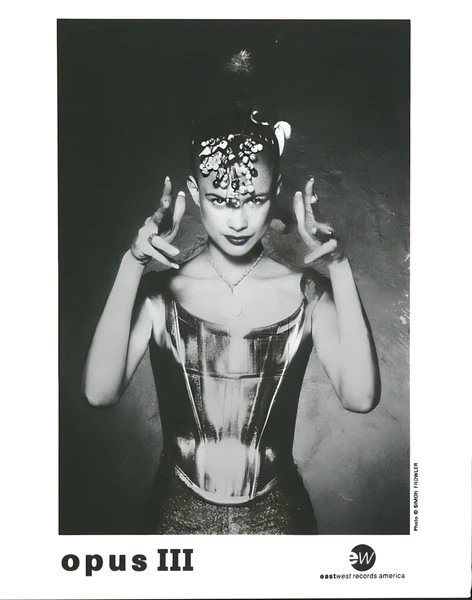
The accompanying music video further strengthened this identity through minimalist imagery and Hawkshaw's distinctive appearance, helping establish a visual language that audiences would associate with the record.
The enduring appeal of the Opus III version depends heavily on this relationship between voice and production: Hawkshaw's performance preserves the vulnerability of the original melody, while the electronic arrangement transforms that vulnerability into something expansive and euphoric.
It is precisely this combination that would later inspire other important figures in electronic music, most notably Orbital.

Inside the Sound: How Opus III Created a Timeless Electronic Record
One of the most interesting aspects of It's a Fine Day is the apparent simplicity of its production. Compared with many contemporary electronic records, the arrangement does not depend on elaborate transitions, aggressive drops or constant rhythmic changes. Instead, its impact emerges from the relationship between a relatively small number of musical elements, each contributing to the hypnotic atmosphere that has made the track so recognizable.
The Opus III version is built around repetition, layered synthesizers, a consistent house groove and a vocal melody that remains the emotional center of the entire arrangement. These components interact with remarkable precision, allowing the music to develop gradually without abandoning its central identity.
The Rhythm: A House Groove Designed for Movement
The most immediate difference between the original recording and the Opus III reinterpretation is the introduction of a steady electronic rhythm. Built around a four-on-the-floor kick drum, the track adopts the rhythmic foundation that had become central to house music, creating a continuous pulse that provides both energy and structure.
The percussion arrangement is relatively restrained, using additional rhythmic elements to create movement without overwhelming the vocal or melodic components. Rather than emphasizing complex drum programming, the production relies on the consistency of the groove, allowing the listener to become absorbed in the relationship between the rhythm and the repeated vocal phrases.
At approximately 125 BPM in its commonly catalogued album version, the record occupies an effective position between the accessible energy of classic house and the increasingly hypnotic character of early rave music. The tempo creates a sense of forward momentum without pushing the arrangement toward excessive intensity, allowing the emotional atmosphere to remain as important as the physical experience of dancing.
Unlike many modern electronic productions, where tension is frequently constructed around dramatic breakdowns and explosive drops, It's a Fine Day develops through continuity. Its rhythmic foundation encourages movement while leaving enough space for the melody to establish a deeper emotional connection.
The Synthesizers: Building an Atmosphere Between House and Trance
If the rhythm provides the physical foundation of the record, the synthesizers are largely responsible for its dreamlike atmosphere. Opus III surrounded the vocal with bright electronic textures, repeated melodic patterns and expansive synthesizer layers, transforming the sparse original composition into a much richer musical environment.
The synthesizers create movement without constantly demanding attention, allowing subtle changes in texture and intensity to shape the arrangement over time. Their melodic patterns interact with the vocal rather than competing with it, reinforcing the hypnotic character of the composition while introducing a distinctly electronic identity.
Particularly interesting is the relative softness of many of these sounds. Although the track possesses the energy necessary for a rave setting, its synthesizer textures often feel luminous and atmospheric rather than aggressive, reflecting a period when producers were beginning to explore the relationship between house rhythms and the more immersive qualities that would later become strongly associated with trance.
The production therefore occupies an interesting position within the evolution of early 1990s electronic music, combining the rhythmic accessibility of house with an increasingly atmospheric approach to arrangement.
The Piano: A Connection to Classic House Music
Alongside its synthesizer textures, It's a Fine Day incorporates house-style piano elements that connect the production to the musical language of late-1980s and early-1990s dance music. These sounds introduce harmonic definition and warmth, providing a recognizable contrast to the more atmospheric electronic layers surrounding the vocal.
During this period, piano-driven house records had become particularly important within British dance culture, frequently combining uplifting harmonies with steady electronic rhythms to create an immediate connection with club audiences.
Opus III drew upon aspects of this tradition without allowing the piano to dominate the arrangement. Instead, its presence contributes to the overall balance between melodic brightness and emotional restraint, helping establish the euphoric atmosphere while preserving the melancholy inherited from the original composition.
The Vocal: Repetition as a Production Technique
Perhaps the most effective production decision lies in the way Opus III organized Kirsty Hawkshaw's vocal within the track. Rather than following a conventional pop structure built around clearly separated verses and choruses, the arrangement uses the repetition of the central melody as one of its principal compositional elements.
As the instrumental develops, the recurring vocal phrases gradually acquire a hypnotic quality, their emotional character changing subtly according to the sounds surrounding them. At certain moments, Hawkshaw's voice feels exposed and intimate, while elsewhere it becomes absorbed into the synthesizers, functioning almost like another melodic instrument.
This interaction is particularly important because it allows the recording to build emotional intensity without relying on dramatic structural changes. The repetition creates familiarity, but the carefully arranged instrumental layers prevent the music from feeling static.
The strength of It's a Fine Day lies in its ability to make a relatively simple melody feel increasingly powerful through repetition, texture and atmosphere, demonstrating that emotional intensity does not necessarily require elaborate arrangements.
The Emotional Paradox: Why It's a Fine Day Feels Both Melancholic and Euphoric
Beyond its production, one of the most enduring qualities of It's a Fine Day is the contradiction between the apparent optimism of its title and the emotional atmosphere created by the music.
The lyrics describe ordinary moments associated with a pleasant day, suggesting simplicity, reassurance and the comforting familiarity of everyday life. Yet the melody communicates something more complicated, carrying a melancholy that becomes particularly noticeable through the restrained vocal delivery and repetitive structure.
This emotional ambiguity was already present in Edward Barton's original composition, but Opus III amplified it by placing the melody within an uplifting electronic arrangement. The result was a record in which sadness and celebration could coexist, allowing the listener to experience the physical energy of dance music without losing the introspective quality of the vocal.
This combination is especially relevant when considered within the broader context of rave culture. Although the movement is frequently remembered for its collective excitement, intense rhythms and enormous gatherings, many of its most influential records also explored nostalgia, longing and emotional vulnerability.
Electronic music offered a space where these apparently opposing feelings could exist together, allowing individuals to experience personal emotions within a collective environment.
It's a Fine Day embodies that relationship particularly well. Its rhythm encourages movement, while the melody invites reflection, creating an emotional experience that can feel uplifting and melancholic at the same time.
The song's emotional strength comes from its refusal to establish a single interpretation. Rather than telling listeners how they should feel, it allows the music to become a reflection of their own experiences.
This ambiguity helps explain why the composition has remained so effective across different generations, as producers have repeatedly discovered new ways to explore the contrast between its seemingly innocent melody and its more introspective atmosphere.
It's a Fine Day and the Rise of British Rave Culture
When Opus III released their interpretation of It's a Fine Day in 1992, electronic music was experiencing a period of extraordinary cultural development. The British rave movement had already transformed nightlife during the previous years, creating new communities organized around DJs, underground records and collective experiences that often existed outside the traditional structures of the music industry.
Large gatherings in warehouses, fields and temporary venues had become central to this emerging culture, while producers were experimenting with styles that moved between house, techno, breakbeat and increasingly melodic forms of electronic music.
Within this environment, certain records acquired a significance that extended far beyond their commercial performance. They became associated with particular moments, shared experiences and the collective memory of a generation that was discovering new ways of connecting through music.
It's a Fine Day arrived at a particularly important moment in this development, offering a combination of melodic accessibility and electronic experimentation that appealed to audiences beyond the underground scene.
Its hypnotic structure made it effective within DJ sets, while the emotional quality of Hawkshaw's vocal distinguished it from many of the more rhythmically aggressive tracks circulating at the time. The record could function as a dancefloor anthem without abandoning the unusual character that had made the original composition so compelling.
Its commercial success also demonstrated the growing ability of rave music to influence mainstream popular culture. As the track circulated through clubs, radio broadcasts and music television, it helped introduce the aesthetics and sounds of electronic dance music to listeners who might never have attended an underground rave.
The visual identity associated with Opus III, particularly through Kirsty Hawkshaw's appearance in the music video, further reinforced the connection between the record and the experimental culture surrounding early electronic music.
For many listeners, It's a Fine Day became a musical reminder of a period when dance music was expanding beyond established boundaries, combining underground creativity with an increasingly international audience.
Yet its influence was far from limited to the early 1990s, and another British electronic act would soon demonstrate how the same vocal could inspire a completely different musical direction.

Orbital's Halcyon: When a Familiar Vocal Became Something New
The influence of It's a Fine Day became particularly evident through its connection with Orbital, the British electronic duo formed by brothers Phil and Paul Hartnoll, whose productions played an important role in the development of atmospheric techno and electronic music during the 1990s.
In 1992, Orbital released Halcyon, a composition that incorporated a sample of Kirsty Hawkshaw's vocal from the Opus III recording, transforming it into an entirely different musical experience.
Where Opus III had constructed a recognizable dance anthem around the melody, Orbital approached the vocal as a sound that could be manipulated and integrated into a broader electronic landscape. The result emphasized atmosphere, repetition and gradual progression, creating a more expansive and meditative listening experience.
Paul Hartnoll later explained that the idea emerged through an informal studio experiment, when he began sampling the Opus III recording while exploring the possibility of creating a pop-inspired composition. What started as a relatively spontaneous creative process eventually developed into one of Orbital's most recognizable tracks.
The transformation is particularly interesting because the sampled vocal remains connected to its original identity while functioning differently within the new arrangement. Through manipulation and repetition, Hawkshaw's voice becomes part of the instrumental structure itself, demonstrating how sampling technology could blur the distinction between a recorded performance and an electronic musical instrument.
This approach reflected an increasingly important development in electronic production. Rather than treating existing recordings as fixed compositions, artists could isolate individual elements and reorganize them within new musical environments, creating works that carried references to the past while expressing entirely different ideas.
Through Halcyon, the melody of It's a Fine Day became part of another important chapter in electronic music history, illustrating how a recognizable vocal could move between different genres without losing its emotional identity.
The connection between the two records also established a precedent that would continue influencing producers throughout the following decades.
From Rave to Trance: A Melody That Continued to Evolve
While many dance records achieve success within a particular period before gradually disappearing from public attention, It's a Fine Day followed a remarkably different trajectory. Its central melody continued appearing in new productions, remixes and reinterpretations, adapting to the changing sounds of electronic music while retaining the recognizable character of the original composition.
One reason for this longevity is the simplicity of the melody itself. Because it remains identifiable even when removed from its original arrangement, producers have been able to experiment with different rhythmic foundations, synthesizer textures and production techniques without losing the essential musical reference.
As electronic music developed throughout the 1990s, the composition became particularly attractive to producers working within the increasingly popular trance movement, whose emphasis on melodic repetition and emotional progression offered another environment in which the song could flourish.
A notable reinterpretation arrived with It's a Fine Day by Miss Jane in 1998, followed by the influential ATB remix, which introduced the melody to listeners associated with the late-1990s trance scene.
The new versions emphasized the more euphoric possibilities of the composition, surrounding its familiar vocal phrases with the bright synthesizers and energetic rhythms that were becoming characteristic of the genre.
For audiences who had not experienced the original rave movement, these reinterpretations provided a new introduction to the song, demonstrating how a melody associated with an earlier generation could remain effective within a changing musical landscape.
The process continued through subsequent decades, as producers working in house, trance and other electronic styles repeatedly returned to the composition.
What makes these reinterpretations interesting is not simply their use of a familiar melody, but the way each version reflects the production aesthetics of its period. The same musical foundation can sound intimate, euphoric, atmospheric or aggressive depending on the arrangement surrounding it.
Few electronic compositions have demonstrated such an ability to adapt to changing musical styles while remaining immediately recognizable, and It's a Fine Day has continued to achieve precisely that.
More than thirty years after Opus III introduced the song to rave audiences, another generation of producers would return to its melody with an entirely different approach.
Skrillex and Boys Noize: Bringing It's a Fine Day Into a New Era
In July 2023, Skrillex and Boys Noize released Fine Day Anthem, reintroducing the unmistakable melody associated with It's a Fine Day through a contemporary club production that reflected the increasingly fluid boundaries between house, techno and other electronic styles.
The collaboration arrived during a significant period in Skrillex's artistic development, following the release of his albums Quest for Fire and Don't Get Too Close earlier that year. Having already established himself as one of the most influential figures in modern electronic music, the American producer was exploring a broader range of club-oriented sounds, drawing inspiration from underground dance music while maintaining his recognizable approach to sound design.
Boys Noize, whose career has long been associated with powerful electronic rhythms and experimental club productions, proved a natural collaborator for the project.
Rather than attempting to recreate the luminous atmosphere of Opus III's 1992 version, the producers approached the material through a darker, more forceful production style, combining a driving four-on-the-floor rhythm, distorted electronic textures, manipulated vocal fragments and a powerful bassline.
The contrast with the earlier recordings is immediately noticeable. Where Opus III allowed Kirsty Hawkshaw's voice to float above an atmospheric arrangement, Skrillex and Boys Noize integrated the familiar vocal phrases into a more aggressive rhythmic structure, using processing and repetition to create tension between the melody and the surrounding instrumental elements.
The production emphasizes the physical impact of the low frequencies, with sharper percussion and more pronounced electronic effects giving the track a distinctly contemporary club identity.
Nevertheless, the emotional connection with the original composition remains unmistakable. The familiar melody continues to function as the central reference point, providing a sense of nostalgia that contrasts with the intensity of the new production.
The track had already attracted attention through appearances in DJ sets and live performances before its official release, including the wider period surrounding Skrillex's memorable 2023 Coachella performance alongside Fred again.. and Four Tet.
Its eventual publication highlighted the remarkable ability of the melody to remain relevant within contemporary electronic music, even after decades of reinterpretation.
More than thirty years after Opus III transformed the original song into a rave anthem, Skrillex and Boys Noize demonstrated that its musical identity could still support an entirely new generation of club sounds.
Their reinterpretation represents another stage in the evolution of a composition that has repeatedly adapted to the changing language of electronic music without losing its recognizable emotional character.
Why It's a Fine Day Remains One of Electronic Music's Most Enduring Melodies
The extraordinary longevity of It's a Fine Day raises an interesting question about the relationship between musical simplicity and cultural influence. How has a composition built around such a restrained melody continued to inspire producers across more than four decades of electronic music?
Part of the answer lies in its balance between familiarity and emotional ambiguity. The melody is immediately memorable, but it avoids the conventional harmonic and vocal gestures that might associate it too strongly with one particular musical style. Its emotional character remains open to interpretation, allowing the surrounding arrangement to influence the way listeners experience it.
This flexibility has made the composition particularly suitable for the creative processes that have shaped electronic music since the 1980s, including sampling, remixing and the reinterpretation of existing recordings.
Jane Lancaster's original performance emphasized intimacy and vulnerability, while Opus III transformed the material into a euphoric expression of rave culture. Orbital explored its atmospheric possibilities through sampling, later trance producers highlighted its melodic potential, and Skrillex and Boys Noize demonstrated how effectively the same musical foundation could function within contemporary club production.
Each version reflects a different period in electronic music history, with its own technology, production aesthetics and creative priorities. Yet all of them remain connected through a melody that has preserved its emotional identity despite the transformations surrounding it.
The song therefore illustrates one of the defining principles of electronic music: innovation does not necessarily require abandoning the past, but can emerge through the reinterpretation of familiar sounds within new creative contexts.
This relationship between continuity and reinvention has been central to the evolution of dance music, allowing producers to establish connections between different generations while developing new musical languages.
It's a Fine Day offers a particularly compelling example because its transformations are connected to several important moments in the history of the genre, from the experimental independent scene of the early 1980s to rave, trance and contemporary club music.
Its influence cannot be explained exclusively through chart positions, commercial success or the number of reinterpretations it has inspired. The composition has endured because its emotional character remains effective even when the musical environment surrounding it changes completely.
The real achievement of It's a Fine Day is that it has never become permanently attached to one sound, one generation or one musical movement, despite playing a recognizable role in all of them.
Final Thoughts: The Song That Never Stopped Evolving
More than forty years after its original release, It's a Fine Day remains one of the most fascinating examples of how a relatively simple musical idea can evolve into something far greater than its initial form.
What began as an unusual vocal composition by Edward Barton, recorded with remarkable restraint by Jane Lancaster, became an international electronic anthem through the creative vision of Opus III. Its subsequent reinterpretations by Orbital, trance producers and contemporary artists such as Skrillex and Boys Noize have allowed the melody to move through several generations of electronic music while retaining its distinctive emotional identity.
The song's history also reflects the evolution of electronic production itself, from the growing possibilities of sampling and synthesizer technology to the increasingly sophisticated sound design of modern club music.
Yet beneath the changing arrangements and production techniques, the essential qualities of the composition have remained remarkably consistent. Its simple melody, memorable vocal character and unusual balance between optimism and melancholy continue to provide the foundation for every reinterpretation.
For those who experienced the British rave movement of the early 1990s, the Opus III version remains closely associated with an extraordinary period in dance music history. Younger listeners, meanwhile, may have discovered the melody through trance reinterpretations or more recent productions, encountering the same musical idea within an entirely different cultural context.
Neither experience diminishes the significance of the other. Instead, each new interpretation adds another chapter to a story that has continued unfolding long after the original recording first appeared.
Few songs have travelled so naturally between independent experimentation, underground rave culture, international dancefloors and contemporary electronic production while maintaining such a recognizable emotional character.
Perhaps the most remarkable aspect of It's a Fine Day is that its continuing relevance does not depend on nostalgia alone. The melody has survived because it remains open to reinvention, allowing different generations of producers to discover new possibilities within a composition that initially appeared almost impossibly simple.
And after more than four decades, the story of It's a Fine Day offers a reminder of something fundamental about electronic music: its history is not only shaped by the creation of entirely new sounds, but also by the ability to hear familiar ones differently.
Some records define the sound of an era, while others continue evolving long enough to become part of the history of music itself. It's a Fine Day has managed to do both.
Sound Breakdown | Victor Bendo Selections
Exploring the stories, production techniques and musical ideas behind the records that shaped electronic music.