

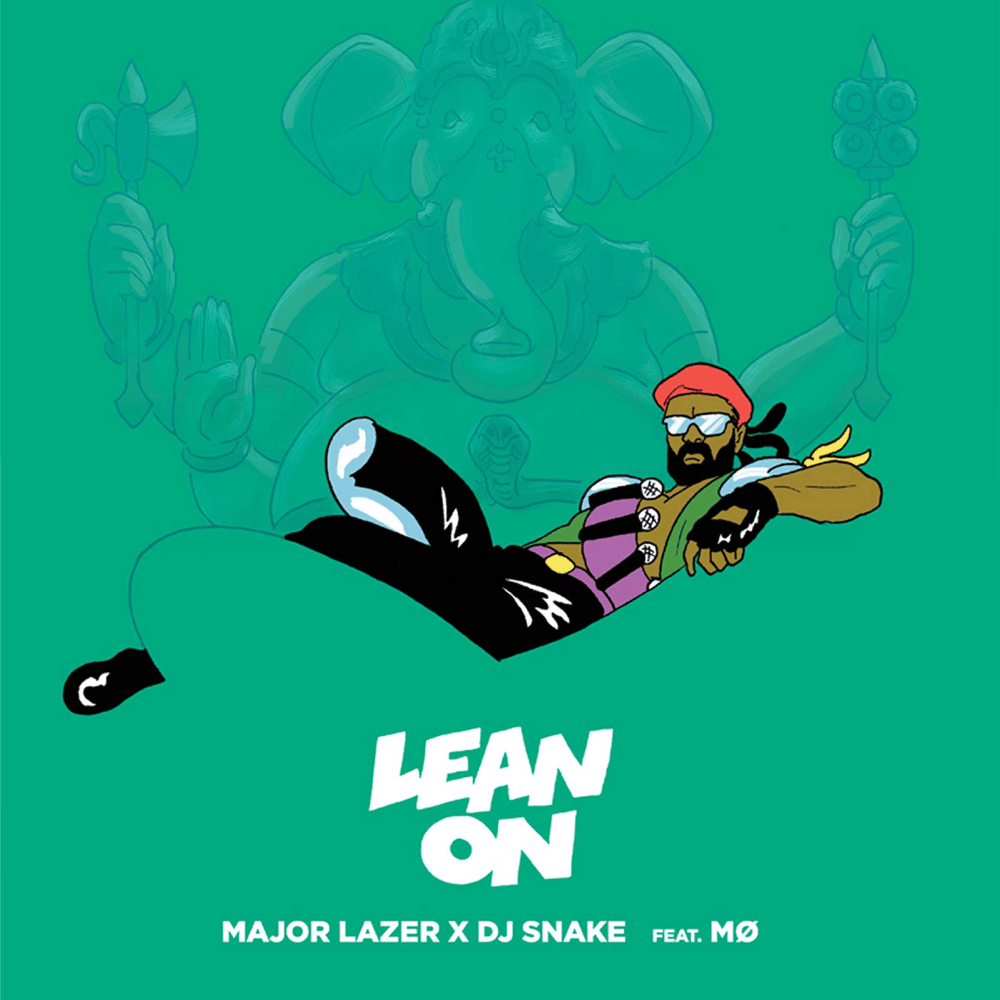
Major Lazer, DJ Snake and MØ’s “Lean On” is one of the most important dance-pop records of the 2010s. Released in 2015, the track blended electronic production, moombahton rhythm, global pop minimalism and MØ’s unmistakable vocal style into a song that felt light, modern and instantly universal. In this Sound Breakdown, we explore why “Lean On” became a streaming-era anthem and how it helped reshape the sound of mainstream dance music.
In this post:
- The Story Behind “Lean On”
- A Global Pop Moment
- MØ’s Vocal Identity
- Sound: Minimal, Tropical and Addictive
- DJ Snake and Major Lazer’s Production Formula
- The Drop That Changed Dance-Pop
- The Music Video and Global Aesthetic
- Why the Track Still Works Today
- Playlist / Curator Perspective
- Final Thoughts
Inside “Lean On”: How Major Lazer, DJ Snake and MØ Redefined Global Dance Music
Some songs explode because they sound bigger than everything around them.
“Lean On” did the opposite.
When Major Lazer, DJ Snake and MØ released the track in 2015, electronic music was still strongly associated with huge festival drops, maximal synths and peak-time EDM energy. Many producers were trying to make dance music louder, heavier and more spectacular.
“Lean On” became massive by being lighter.
It did not rely on a dramatic vocal powerhouse, a giant progressive house build-up or an aggressive big-room drop. Instead, it moved with space, bounce and restraint. The track felt minimal but warm, global but intimate, electronic but human. It was built around a simple vocal phrase, a flexible rhythm and a drop that sounded more like a dance gesture than an explosion.
That is exactly why it changed everything.
“Lean On” was not only a hit. It was a signal that mainstream dance music was entering a new phase: less about size, more about rhythm; less about impact, more about feel.
The Story Behind “Lean On”
“Lean On” arrived at a crucial moment for Major Lazer.
By 2015, the project led by Diplo had already built a strong identity around global dance sounds, dancehall influence, electronic production and cross-cultural collaborations. Major Lazer was never a traditional EDM act. Its music was always built around movement, rhythm and international energy.
With DJ Snake and Danish singer MØ involved, “Lean On” became the perfect meeting point between several worlds.
Major Lazer brought the global dance identity.
DJ Snake brought the sharp, modern electronic touch.
MØ brought a vocal personality that felt raw, youthful and immediately recognizable.
The track was released as part of the “Peace Is the Mission” era and quickly became one of the biggest songs of the year. Its rise was not limited to clubs or festival sets. It became a radio hit, a streaming giant, a social media favorite and a defining sound of mid-2010s dance-pop.
What made the song so powerful was that it did not feel forced. It sounded effortless, almost weightless, but behind that simplicity there was a very precise understanding of where pop and electronic music were going.

A Global Pop Moment
One of the main reasons “Lean On” became so important is that it sounded global without feeling generic.
The track did not belong clearly to one national scene or one narrow genre. It carried elements of electronic music, moombahton, dancehall-inspired rhythm, pop songwriting and tropical atmosphere, but none of those ingredients dominated completely.
This made the song extremely flexible.
It could work in Europe, the United States, clubs, radio, beach playlists, festivals and casual listening environments. It had enough rhythm for dance audiences, enough melody for pop listeners and enough identity to stand out in the streaming era.
That balance was rare.
Many global pop songs try to sound universal by becoming neutral. “Lean On” became universal by sounding specific. Its rhythm, vocal and drop were instantly identifiable. The song had a shape, a color and a movement of its own.
That is why it became more than a hit single.
It became one of the tracks that helped define what global dance-pop would sound like in the second half of the 2010s.
MØ’s Vocal Identity
MØ’s voice is one of the most important elements of “Lean On”.
Her vocal performance does not follow the classic EDM-pop formula. It is not a huge diva vocal, and it does not try to dominate the production with dramatic power. Instead, it moves with a slightly raw, flexible and almost elastic quality.
That vocal texture gives the track personality.
MØ sounds emotional but not overly polished. Her delivery feels youthful, direct and slightly fragile, which gives the song a human center. In a production that is otherwise very clean and rhythmic, her voice adds imperfection and character.
This is crucial because “Lean On” could have easily become too mechanical. The beat is tight, the drop is minimal and the structure is simple. Without a distinctive vocal, the track might have felt like a clever production exercise. MØ turns it into a song.
Her voice makes the hook memorable.
It gives the track its emotional identity.
It also makes the song feel intimate, even though it became one of the biggest dance records in the world.

Sound: Minimal, Tropical and Addictive
The sound of “Lean On” is built around restraint.
Compared to the massive EDM anthems that dominated the early 2010s, the production is surprisingly spacious. The drums are sharp but not overwhelming. The synths are bright but not crowded. The drop is memorable, but it does not hit with the force of a big-room track.
Instead, the track works through bounce.
The rhythm has a light, syncopated movement that gives the song its physical identity. It feels danceable without being aggressive. The percussion and melodic fragments create a sense of forward motion, while the vocal keeps the song grounded in pop accessibility.
This is where “Lean On” became influential.
It showed that a dance track could be huge without sounding huge in the traditional EDM sense. It did not need a wall of synths. It did not need a maximal drop. It only needed a strong groove, a recognizable vocal and a production style that left enough space for the listener to move inside it.
The result is a track that feels clean, warm and addictive.
DJ Snake and Major Lazer’s Production Formula
The production of “Lean On” works because it combines Major Lazer’s global rhythm sensibility with DJ Snake’s instinct for sharp, memorable electronic hooks.
Major Lazer’s identity is rooted in movement. The project has always been connected to dancehall, Caribbean rhythms and international club sounds. That background gives “Lean On” its body. The track does not move like a standard pop song. It sways, bounces and pulses.
DJ Snake’s contribution can be felt in the precision of the electronic elements. The drop is simple but extremely effective. The sound design is clean, distinctive and instantly recognizable. There is no unnecessary complexity. Every sound is placed to create maximum impact with minimum weight.
That is the real production genius of “Lean On”.
It is minimal, but not empty.
It is catchy, but not obvious.
It is electronic, but not cold.
The track feels carefully designed, yet it never loses its effortless quality.

The Drop That Changed Dance-Pop
The drop of “Lean On” is one of the most important drops of the 2010s because it helped move mainstream dance music away from pure impact and toward rhythmic identity.
Instead of exploding into a huge synth wall, the drop introduces a playful, high-pitched melodic phrase that almost feels like a vocal chop or digital chant. It is simple, strange and instantly memorable.
This was a major shift.
In the years before “Lean On”, many EDM drops were built around size. Bigger synths, bigger kicks, bigger festival moments. “Lean On” showed that a drop could be smaller and still become massive.
The drop does not overpower the song.
It gives it movement.
It becomes a dance gesture, something easy to recognize, imitate and feel. That quality made it perfect for the streaming and social media era. The track did not need a dramatic climax to be effective. It only needed a few seconds of sound that people could immediately identify.
That is why the drop still feels fresh.
It changed the emotional expectation of what a pop-dance drop could be.
The Music Video and Global Aesthetic
The visual identity of “Lean On” also played a major role in the song’s impact.
The official music video, filmed with a strong India-inspired aesthetic, gave the track a global visual language that matched its sound. The colors, choreography, architecture and movement helped reinforce the idea that “Lean On” was not tied to one local scene.
It was a global dance record.
The video did not simply promote the track. It expanded its world. It made the song feel warmer, brighter and more culturally expansive. At a time when YouTube was central to global music discovery, that visual identity helped push the song far beyond traditional radio and club audiences.
The track already sounded international.
The video made it look international too.
That combination was extremely powerful.
Why the Track Still Works Today
“Lean On” still works today because it anticipated the direction of modern pop and dance music.
After its success, mainstream electronic music became lighter, more rhythmic and more global in sound. Tropical house, dancehall-pop, moombahton-inspired beats and minimal electronic drops became much more common across charts and playlists.
But “Lean On” still stands above many of the songs it influenced because it has a stronger identity.
The vocal is instantly recognizable.
The rhythm is still infectious.
The drop still feels playful and fresh.
The production still sounds clean and modern.
Even though the track is clearly connected to the mid-2010s, it has aged better than many bigger EDM records from the same period. That is because it was never dependent on pure scale. Its power came from groove, space and character.
Those elements last longer than trends.
Playlist / Curator Perspective
From a playlist perspective, “Lean On” remains one of the most useful crossover dance tracks of the 2010s.
It fits naturally into summer playlists, dance-pop collections, tropical house selections, EDM classics, road trip playlists, party throwbacks, global pop playlists and workout sets. It can lift the energy without making the mood too aggressive.
That is one of its greatest strengths.
Some dance tracks are too intense for casual listening. Others are too soft for club or party contexts. “Lean On” sits perfectly in the middle. It is energetic but not heavy. Catchy but not annoying. Familiar but still distinctive.
For curators, this makes the track extremely valuable.
It can connect different sections of a playlist. It can move from pop into dance. It can bring a global summer feeling without losing mainstream accessibility.
More than anything, “Lean On” creates instant recognition.
When it starts, listeners know exactly where they are.
Why It Became a Modern Classic
“Lean On” became a modern classic because it arrived with the right sound at the right cultural moment.
Streaming was changing how songs traveled.
YouTube was turning music videos into global discovery tools.
EDM was becoming less about only festival drops and more about pop integration.
Listeners were becoming more open to international rhythms and hybrid sounds.
“Lean On” brought all of that together in one track.
It had the simplicity of a pop song, the movement of a global club record and the production identity of modern electronic music. It was easy to understand, but difficult to replicate.
Many songs became bigger because they followed the formula that “Lean On” helped establish.
But few had the same magic.
Final Thoughts
“Lean On” remains one of the most important dance-pop records of the 2010s because it changed the way mainstream electronic music could sound.
Major Lazer, DJ Snake and MØ created a track that was minimal, rhythmic, emotional and global. It did not need to be loud to be powerful. It did not need to be complex to be memorable. It did not need a huge drop to become a dance anthem.
Its strength came from balance.
The rhythm made it move.
The vocal made it human.
The drop made it unforgettable.
The production made it universal.
Years later, “Lean On” still feels fresh because it captured a shift in music before that shift became obvious. It showed that global dance music could be light, spacious and deeply effective.
It was not just a hit.
It was the sound of pop music changing direction.
Sound Breakdown Rating
Hook: 9.7/10
Vocal Identity: 9.5/10
Production: 9.4/10
Global Impact: 10/10
Playlist Value: 9.8/10
Replay Value: 9.6/10
Overall Rating: 9.7/10