
Some electronic records are remembered because they dominated a particular summer, while others become inseparable from the era that produced them. Then there are the rare tracks that somehow escape those boundaries entirely. Darude’s “Sandstorm” belongs to that final category.
More than twenty-five years after its original release, only a few seconds are needed to recognize it. There are no lyrics to remember and no famous vocal performance attached to the record. Instead, everything revolves around a frantic electronic riff, a relentless rhythm and an arrangement that seems permanently suspended between tension and release. What began as an experiment by a young Finnish producer learning how dance records were constructed eventually became one of the most universally recognizable pieces of electronic music ever released.
“Sandstorm” first appeared in Finland in 1999, at a moment when trance was expanding rapidly beyond European clubs and becoming part of a much larger international dance culture. Yet even within that environment, Darude’s record felt unusual. It was fast, aggressive and unmistakably designed for the dancefloor, but remarkably simple in its fundamental ingredients. There was no traditional chorus and no singer capable of carrying the song onto radio. The synthesizer had to do everything.
And somehow, it did.
The record travelled from Finland to clubs across Europe, reached No. 3 on the UK Singles Chart, entered sports arenas, became deeply embedded in gaming culture and eventually found another life as one of the internet’s most persistent musical memes.
Behind that enormous cultural legacy, however, is a much smaller story: a producer sitting in front of a computer, studying other people's records and trying to understand why they worked.
In this post:
- Before Sandstorm: Darude Learns How Dance Music Works
- The Riff That Changed Everything
- From Bedroom Production to JS16
- Building the Sound of Sandstorm
- How a Synth Preset Accidentally Named the Track
- Why Sandstorm Feels Like It Never Stops Moving
- When the Synth Became the Vocal
- From Finland to an International Dance Anthem
- When Sandstorm Escaped Electronic Music
- From Stadiums to Internet Culture
- Why Sandstorm Still Works 25 Years Later
- More Than a Trance Classic
Before Sandstorm: Darude Learns How Dance Music Works
Before “Sandstorm” turned him into an internationally recognized producer, Toni-Ville Henrik Virtanen — the artist who would become Darude — was essentially teaching himself electronic music by taking other records apart.
Working on a computer with software such as FastTracker 2, Virtanen would listen closely to dance tracks and study their structure. Instead of hearing a record simply as one continuous piece of music, he began paying attention to where individual elements appeared: when the kick entered, when the hi-hats changed, how long a breakdown lasted and how producers gradually rebuilt energy afterwards.
It was an analytical way of learning production, but one that would become extremely important to “Sandstorm”. The track's strength would eventually depend less on harmonic complexity than on exactly those questions of timing, repetition and arrangement.
While studying another electronic record, Virtanen became interested in a section built around a rapid sixteenth-note pattern. He began experimenting with the same rhythmic principle, but replaced the original idea with his own notes and sounds.
That experiment gradually produced the pattern that would become the heart of “Sandstorm”.
The story is interesting because one of dance music's most recognizable riffs did not begin with someone deliberately trying to write an anthem. It emerged from the process of learning. Darude was attempting to understand how another producer had created movement inside a track and, almost accidentally, discovered a musical idea powerful enough to define his own career.

The Riff That Changed Everything
If “Sandstorm” has one element that explains almost everything that followed, it is that riff.
Trying to describe it verbally almost feels unnecessary. The rapid succession of notes has become so recognizable that people can imitate it without knowing anything about synthesizers, trance or even Darude himself. That simplicity is precisely what makes the melody so effective.
The early version was developed inside FastTracker 2, using relatively limited sounds compared with the enormous production libraries available today. Darude continued developing the idea before eventually transferring the project into Cubase VST during 1999.
At one point, he began experimenting with distortion on the lead.
That apparently straightforward decision changed the personality of the entire record. Instead of sounding like an ordinary electronic melody, the pattern became sharper, rougher and considerably more aggressive. The notes themselves remained simple, but their timbre gave them urgency.
This distinction is essential to understanding “Sandstorm”. The riff is memorable because of the notes, but it becomes unmistakable because of the sound.
Rather than behaving like a conventional melody that develops through different phrases, it almost becomes another piece of percussion. Each note attacks the listener, disappears immediately and makes space for the next. When repeated at high speed, those attacks create the sensation that the record is constantly pushing forward.
The melody does not float above the rhythm.
It becomes part of the rhythm.
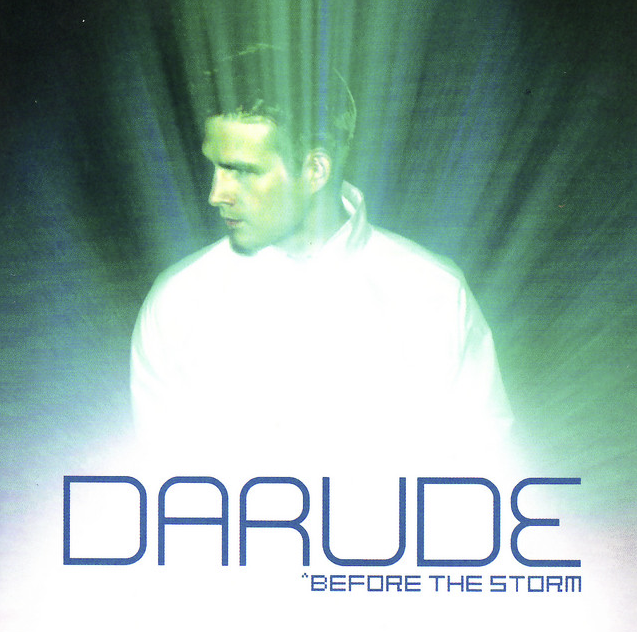
From Bedroom Production to JS16
Once the demo had developed far enough, Darude began doing something extremely simple: burning CDs and giving them to DJs around Turku.
The objective was initially feedback rather than international success. One of those copies, however, eventually reached Finnish producer Jaakko Salovaara, better known as JS16, who had already achieved significant success through his work with Bomfunk MC’s.
Salovaara heard something in the demo immediately.
Instead of simply giving Darude advice about the production, he wanted to develop the track properly and invited him to become the first artist connected with his new 16 Inch Records label.
Suddenly, the small computer production Darude had been developing at home entered a professional studio.
This transition is an important part of what makes “Sandstorm” fascinating from a production perspective. The essential identity of the record had already been created using relatively accessible software, but JS16's studio allowed those ideas to be rebuilt and expanded with professional hardware.
Darude brought the foundation: the riff, samples, chord information and the identity of the track.
The studio gave those ideas size.
Building the Sound of Sandstorm
The equipment surrounding the final production reads almost like a snapshot of late-1990s electronic music.
Among the instruments available were machines such as the Nord Rack 2, Roland JP-8080, Roland JV-2080, Korg Trinity and Ensoniq ASR-10, while parts of Darude's earlier production process had also involved software such as ReBirth.
But the interesting lesson of “Sandstorm” is not simply that classic synthesizers were used.
It is how relatively few ideas were required once the correct sounds had been found.
The original lead already provided an unmistakable identity, while hardware including the Nord and JP-8080 helped rebuild and expand the surrounding production. Wide synth chords created atmosphere behind the more aggressive central pattern, while the rhythm section maintained the physical momentum underneath everything.
The result is based on contrast, the lead is sharp and repetitive, the chords feel much wider, the kick remains stable underneath them, percussion continuously reinforces the sensation of movement.
None of those individual elements needs to be enormously complicated because they each perform a very specific function. The track does not become powerful by constantly adding more information; it becomes powerful because every sound knows exactly why it is there.
That is perhaps one of the most useful production lessons hidden inside “Sandstorm”. More technology does not necessarily create a stronger record. Sometimes an unforgettable sound, a strong rhythmic foundation and an arrangement that understands tension are enough.
How a Synth Preset Accidentally Named the Track
Even the title of the record emerged from the production process almost by accident.
Inside the studio, one of the synthesizers being used was the Roland JP-8080. When the instrument was switched on, it loaded a startup patch called “Sandstorm.”
Darude and JS16 used the patch for elements of the chords underneath the lead, and the name eventually became attached to the still-untitled track.
In retrospect, “Sandstorm” feels almost impossibly appropriate.
The production sounds chaotic without ever actually losing control. The lead arrives in rapid waves, the percussion constantly pushes forward and the arrangement creates the impression of being surrounded by something that never completely settles.
It would be easy to imagine that the title had been carefully selected to describe that sensation.
Instead, it was sitting inside a synthesizer.
There is something fitting about one of electronic music's most famous instrumental records receiving its name directly from the equipment used to make it.
Why Sandstorm Feels Like It Never Stops Moving
At approximately 136 BPM, “Sandstorm” immediately carries the speed associated with the energetic trance of its period. But BPM alone does not explain why the record feels so relentlessly fast.
The real reason is the way Darude manipulates repetition and expectation.
The central riff gives the listener almost no opportunity to become passive. Its rapid notes continuously occupy the foreground, while the four-on-the-floor rhythm provides an unwavering foundation underneath. Rather than introducing completely new ideas every few bars, the arrangement creates movement by changing how much of the familiar material the listener is allowed to hear.
Because the listener already knows exactly what is coming, the anticipation becomes part of the pleasure. Removing the central melody temporarily does not make the track weaker; it makes its eventual return feel larger.
This is one of the fundamental ideas behind trance production. Repetition does not necessarily mean standing still. Once a listener becomes familiar with a pattern, small changes around that pattern become much more noticeable.
“Sandstorm” continuously exploits that principle.
It rarely needs to surprise the listener with a completely new musical idea because the real excitement comes from waiting for the idea everyone already recognizes to return.
When the Synth Became the Vocal
Perhaps the strangest aspect of “Sandstorm's” enormous crossover success is the complete absence of a singer.
There are no lyrics, there is no emotional vocal hook, there is not even a phrase listeners can sing together in the traditional sense.
Yet the record behaves almost exactly like a vocal anthem.
The reason is that the synthesizer takes the role normally occupied by the human voice.
Its lead riff is introduced so clearly and repeated so effectively that it becomes the track's chorus, identity and hook simultaneously. A listener does not need to understand a language or remember a line of text. Hearing only a handful of notes is enough.
This may actually have helped “Sandstorm” travel further.
A lyric can connect a song to a specific language, meaning or cultural context. An instrumental hook is much more open. The same Finnish trance record could make sense in a European club, a British radio chart, an American sports arena or a gaming stream because nothing in the track needed translation.
The emotion is communicated almost entirely through energy.
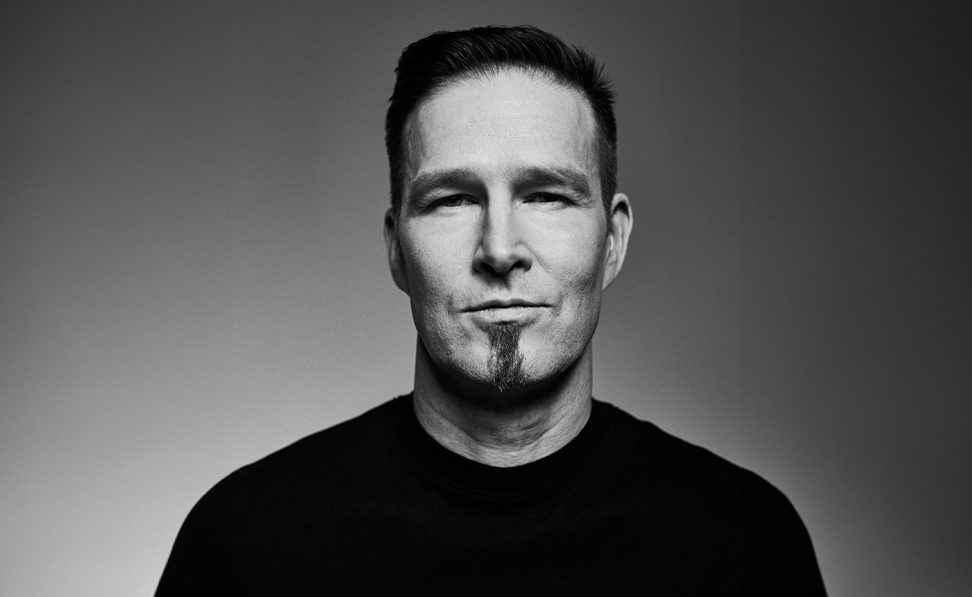
From Finland to an International Dance Anthem
“Sandstorm” was first released in Finland in October 1999, but it quickly became clear that the record was capable of travelling far beyond its original scene.
Its spread happened before Spotify, TikTok or modern social media could instantly expose a track to millions of listeners. Instead, DJs, clubs, radio and physical releases gradually carried the record from one market to another.
By 2000, that momentum had reached the United Kingdom, where “Sandstorm” climbed to No. 3 on the Official Singles Chart.
For an instrumental trance record created by a relatively unknown Finnish producer, that achievement was remarkable.
But chart success tells only part of the story.
What “Sandstorm” demonstrated was that a dance record did not necessarily need to become more conventional in order to reach a mainstream audience. Darude had not added a pop singer or transformed the track into something easier for radio to understand.
The same characteristics that made it work in a club — speed, repetition, tension and that unmistakable lead, became the characteristics that made millions of people remember it.
When Sandstorm Escaped Electronic Music
Many successful electronic tracks eventually remain connected to electronic music.
“Sandstorm” did not.
As the years passed, the record began appearing increasingly often inside sports arenas and stadiums, where its structure turned out to be almost perfectly suited to generating immediate crowd energy.
This environment revealed another strength of the production.
Some club tracks depend heavily on context. They work because a DJ has spent twenty minutes gradually building towards them. “Sandstorm” does not require that preparation.
You can play the riff almost anywhere and the reaction begins immediately.
Its connection with sport became particularly visible in the United States, including its famous association with the University of South Carolina, where the track developed into an unofficial stadium anthem.
At that point, “Sandstorm” was no longer simply being remembered as a trance hit from 1999.
It had acquired an entirely new function.
For people who had never experienced the European trance explosion, the record became the sound of anticipation, competition and collective energy.
From Stadiums to Internet Culture
Then came perhaps the strangest chapter in the entire story.
During the 2010s, “Sandstorm” found another audience through gaming, YouTube, Twitch and internet culture.
The joke was remarkably simple. Whenever somebody asked for the name of a song online, people would answer:
“Darude – Sandstorm.”
It did not matter what song was actually playing.
Eventually, the meme became so widespread that an entire generation encountered “Sandstorm” through internet culture rather than through clubs, radio or trance.
Normally, becoming a meme risks reducing a song to a punchline. In this case, however, the opposite happened. The joke only worked because “Sandstorm” was already recognizable enough for people to understand the reference.
The meme therefore reinforced the very characteristic that had made the track special from the beginning.
Everyone knew that riff.
A song released before the modern social-media era had somehow discovered a second life perfectly suited to it.
Why Sandstorm Still Works 25 Years Later
It would be easy to explain the continued popularity of “Sandstorm” through nostalgia.
But nostalgia alone cannot explain everything.
It explains why somebody who heard the track in a club in 2000 might still react to it today. It does not explain why listeners born years after its release recognize the melody or why the record continues to function in completely different cultural environments.
The more convincing explanation lies inside the production itself.
“Sandstorm” is built around an idea that is simple enough to remember immediately but distinctive enough to confuse with almost nothing else.
The riff establishes the identity, the rhythm establishes movement, the arrangement creates anticipation, the breakdowns remove just enough energy to make the returns feel enormous.
And because there is no vocal, none of that identity depends on a particular style of songwriting that could eventually sound dated.
The technology surrounding electronic production has changed dramatically since 1999. Producers today can access thousands of synthesizers, effects, samples and processing tools from a laptop.
But the central lesson behind “Sandstorm” has changed very little, complexity does not automatically create identity.
Sometimes the most important thing a producer can discover is one sound that nobody forgets.
More Than a Trance Classic
There are dance records that define an artist, and then there are records that gradually become part of culture far beyond the artist who created them.
“Sandstorm” managed to become both.
What started with Darude studying the structure of other electronic records became an experiment inside FastTracker, then a distorted synth pattern, then a demo passed around Finland and finally a professional production developed alongside JS16.
From there, the story became almost impossible to predict.
A track without lyrics became an international chart hit. A trance record became stadium music. A song released in 1999 became an internet meme more than a decade later. And a synthesizer riff created while a young producer was still learning his craft became one of the easiest pieces of electronic music to recognize anywhere in the world.
That journey is what makes “Sandstorm” particularly interesting from a Sound Breakdown perspective.
Its legacy is not really about the Roland JP-8080, the Nord Rack 2, FastTracker or any individual production technique. Those tools explain how the record was created, but not why people continued caring about it.
Darude found a musical idea with an identity strong enough to survive every environment it entered.
More than twenty-five years later, “Sandstorm” no longer belongs exclusively to the trance generation that first made it successful. It belongs equally to festival crowds, sports fans, gamers, producers, internet culture and listeners who were not even alive when the record was released.
Some electronic classics survive because people remember the period in which they were created.
“Sandstorm” survived because people never stopped recognizing it.