Some dance records remain important because they perfectly capture the period in which they were released. Others outgrow that moment and become part of the language of the genre itself. Robin S.’s “Show Me Love” belongs firmly to the second category.
More than three decades after its breakthrough, the record still sounds immediately familiar. Its organ riff continues to appear in clubs, festival sets and new house productions, while Robin S.’s vocal has become one of the defining performances in vocal-house history. The song is now so deeply embedded in popular culture that it can feel as though it always existed in its final form, complete with the bouncing Korg M1 organ, the heavy snare and the unmistakable demand at the centre of the chorus.
The reality was far less straightforward.
“Show Me Love” originally appeared in 1990 in a considerably different arrangement and failed to make a significant impression. Its eventual transformation came through Swedish producer StoneBridge, who was invited to remix the track after approaching Champion Records for new material. His first attempt was rejected for remaining too close to the original, forcing him to return to the studio and rebuild the song almost completely. Working under time pressure before a Saturday-night performance, he kept little more than Robin S.’s vocal and the existing kick drum, then discovered the organ sound that would define the record while moving through presets on a Korg M1 synthesiser.
That accidental discovery is one of the most famous stories in house music, but it only explains part of the track’s success. The organ riff gave “Show Me Love” its physical identity, while Robin S.’s performance gave it emotional permanence. The production is sparse, disciplined and almost mechanical, yet the voice at its centre sounds frustrated, vulnerable and determined. That contrast allowed the record to work simultaneously as a club tool, a pop song and a statement about the difference between hearing someone promise love and actually seeing them prove it.
In this post
- The original version of “Show Me Love”
- How StoneBridge became involved
- Why the first remix was rejected
- The accidental discovery of the Korg M1 organ
- How the drums and synths created the groove
- Robin S.’s vocal performance
- The meaning behind the lyrics
- How the song crossed from clubs into mainstream culture
- Its influence on later generations of house music
- Why “Show Me Love” still works today
- Final thoughts
Before “Show Me Love” became the record everyone knows
The story begins with a version that most listeners have never heard.
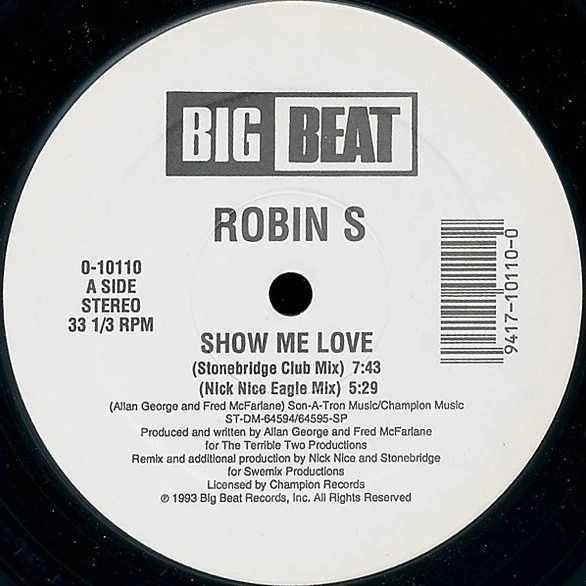
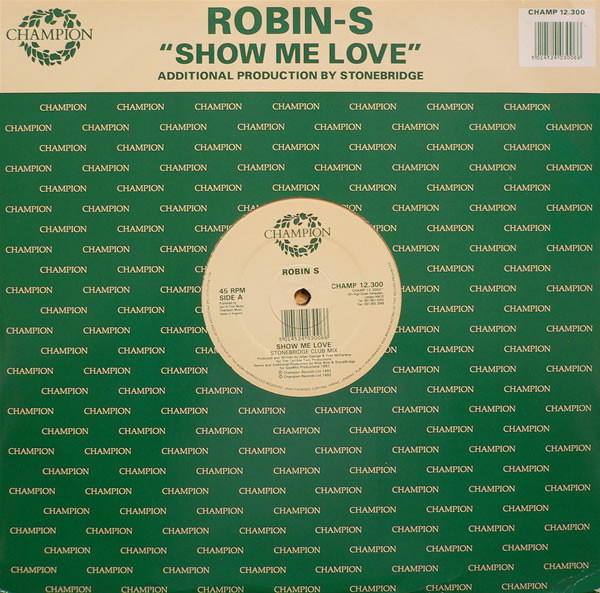
Written by Allen George and Fred McFarlane, “Show Me Love” was originally released through Champion Records in 1990. The song already contained the topline and emotional idea that would later become famous, but its first arrangement belonged much more clearly to the sound of its immediate period. Synthetic saxophone, piano chords, funk-influenced elements and a busier rhythmic structure surrounded Robin S.’s vocal, giving the track the shape of a respectable early-1990s dance and R&B crossover rather than a future house standard.
There was nothing fundamentally wrong with the song, but the production did not reveal what was most distinctive about it. Robin’s voice carried a strong emotional tension, yet the arrangement often softened that tension instead of emphasising it. The instrumental contained too many ideas competing for attention, and the song failed to separate itself from the growing number of strong vocal-house releases emerging at the beginning of the decade.
This is an important part of the story because it shows that the quality of the writing alone was not enough. “Show Me Love” already had its central lyric and its vocal personality, but it still needed an arrangement capable of turning those elements into something instantly recognisable. The breakthrough did not come from rewriting the song. It came from hearing the song differently.
Champion Records was well placed to recognise that possibility. The label had already developed a strong relationship with American dance and club music, licensing influential records and working across house, street soul, hip-hop and techno. Paul Oakenfold was working in A&R at the company during this period, and the label’s small structure meant that staff members often handled several roles at once. That combination of specialist knowledge and flexibility created the conditions in which an overlooked vocal track could be given another chance.
The person who eventually unlocked it was StoneBridge.
How StoneBridge entered the picture
StoneBridge, born Sten Hallström, was already working as a DJ, producer and remixer when he approached Champion Records looking for material. His production on Ann Consuelo’s “See the Day” had attracted the label’s attention, and he asked whether there were other songs in the catalogue that might benefit from a new mix. Champion offered him “Show Me Love.”
His first version did not immediately solve the problem.
StoneBridge kept the original kick drum, added new drums and attempted to create a bassline using the Korg M1’s “Pick Bass” preset. However, he preserved too much of the existing arrangement, and Champion felt the result remained too close to the original release. The remix was not completely unsuccessful, but it had not transformed the song enough to justify a second campaign around it.
That rejection became the turning point.
Instead of adjusting a few sounds or making the mix louder, StoneBridge abandoned the cautious approach. He returned to the project on a Saturday with only a few hours available before a DJ booking and decided to strip the song back to its foundations. He retained Robin S.’s vocal and the original kick drum, then started rebuilding the production around the bassline he had already written.
The limited time may have helped. There was no opportunity to overthink the arrangement or fill the track with unnecessary decoration. The production had to be direct, functional and strong enough to work quickly. What followed was less a traditional remix than a complete act of reduction, in which the original song was dismantled until only its emotional centre remained.
StoneBridge was no longer trying to improve the first version.
He was searching for the simplest possible arrangement capable of making Robin S. sound impossible to ignore.
The Korg M1 accident that changed the track
The defining moment arrived while StoneBridge was moving through presets on the Korg M1.
He had initially written the bassline using preset number 16, “Pick Bass.” When he moved to the next sound, preset number 17, “Organ 2,” the same notes suddenly acquired a completely different character. The pattern became sharper, more percussive and far more unusual. Instead of behaving like a conventional bassline, the organ seemed to function simultaneously as low-end movement, rhythmic punctuation and melodic hook.
StoneBridge later described the discovery as accidental. He had not entered the session intending to build a global hit around an organ sound, nor had he spent hours designing the riff from scratch. The notes already existed as a bassline; changing the preset revealed their real potential.
The significance of that decision lies in how the organ interacts with the rest of the production.
The Korg patch does not contain a huge amount of sub-bass on its own. Rather than layering it with a separate bass instrument, StoneBridge allowed the organ and the kick drum to create the low end together. The kick provided weight and consistency, while the organ supplied definition, groove and harmonic identity. This gave the track a firm foundation without making it heavy or overcrowded.
The riff itself is deceptively simple. Its power comes from syncopation and space. The notes do not merely follow the four-on-the-floor rhythm; they bounce around it, leaving small gaps that make every return feel physical. Those gaps are essential because they allow the groove to breathe. Rather than filling every beat, the organ creates tension through absence, letting the listener anticipate the next note before it arrives.
This is why the riff became so influential. It is not simply memorable as a melody. It contains the entire rhythmic logic of the track.
The organ tells the body where to move.
Why the production still feels so powerful
Once the famous riff had been found, StoneBridge resisted the temptation to surround it with too much additional material. The completed production became a masterclass in restraint, relying on a small number of sharply defined elements rather than a dense arrangement.
The kick maintains a steady club foundation, while the organ creates most of the groove. A heavy snare gives the rhythm extra force, and small synth details add contrast without distracting from the main idea. The arrangement rarely changes in an obvious way, but subtle adjustments are enough to guide the listener from verse to chorus.
One of the most effective examples is the use of discreet string pads during the chorus. StoneBridge added two minor chords very low in the mix, creating a gentle warmth and emotional lift without changing the rhythm or making the section feel conventionally “bigger.” The listener senses that the chorus has arrived even though the groove remains almost identical.
That choice reveals a sophisticated understanding of dance music structure.
A less confident producer might have added more drums, additional synth layers or a dramatic harmonic shift to announce the chorus. StoneBridge did the opposite. He trusted the groove and allowed a nearly hidden pad to change the emotional colour. The result preserves the hypnotic continuity needed for the dancefloor while still giving the song a clear pop structure.
The snare carries a similarly distinctive history. StoneBridge had heard a powerful snare in a David Morales mix but could not find a clean isolated hit, so he sampled a moment in which the snare and kick played together. That is why the final snare feels unusually thick and forceful: it contains the weight of another drum beneath it.
At the beginning of the track, a rough distorted synth introduces another layer of personality. Inspired by the raw energy StoneBridge heard in Todd Terry’s productions, it was created using a Yamaha DX100 driven hard through the mixing desk with the levels pushed into distortion. The sound adds aggression to a song that might otherwise have felt too smooth, providing a useful contrast with the sweetness and emotional openness of the vocal.
Each of these details serves a specific purpose. The organ creates identity, the kick and snare create physical impact, the strings introduce emotional definition and the distorted synth adds edge. None of them compete for the centre of the record because the centre always remains Robin S.
Robin S. turns the groove into a real song
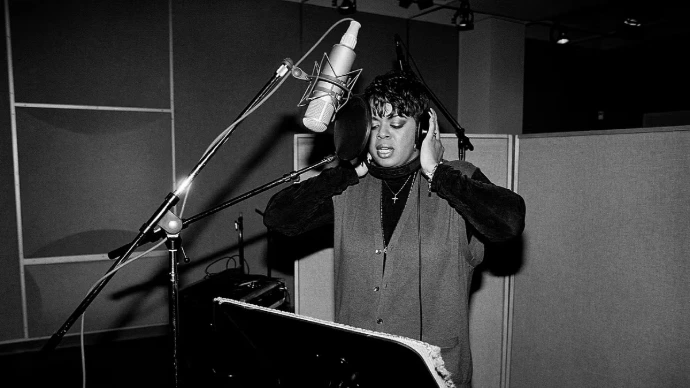
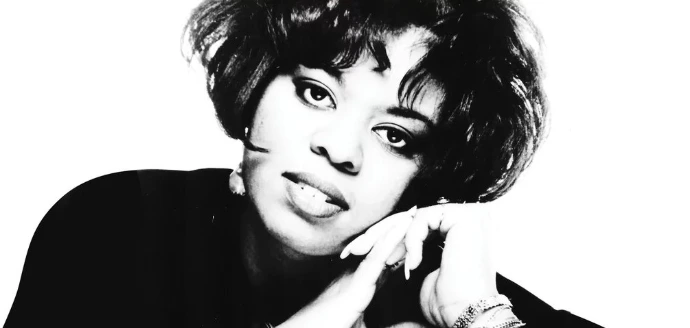
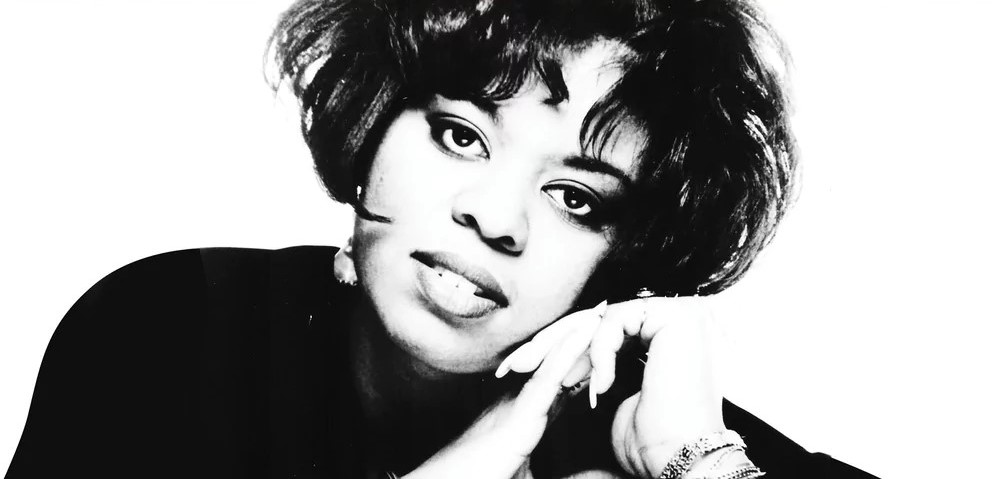
It is easy to focus on the organ riff because it is one of the most recognisable sounds in house music, but “Show Me Love” would not have become an enduring anthem without Robin S.’s vocal performance.
Her voice gives the production scale without needing the arrangement to become larger. She sings with the authority of someone who has already heard every possible promise and no longer has patience for language without action. The emotional position is not passive. She is not asking to be convinced by another romantic declaration; she is demanding evidence.
This is what separates the song from a generic love anthem.
The lyric is built around disappointment, but Robin’s delivery does not sound defeated. There is vulnerability in the verses, especially in the way she refers to broken promises and words that no longer carry meaning, yet the chorus transforms that vulnerability into a boundary. Love must be shown, not simply described.
The contrast between the vocal and instrumental makes the message even stronger. The production is repetitive, controlled and disciplined, while Robin sounds emotionally exposed and increasingly forceful. The groove never changes its position, but the voice moves through frustration, yearning and resolve.
That relationship creates tension throughout the record.
The instrumental seems to insist on forward motion, while the vocal keeps returning to an unresolved emotional question. The listener dances to a groove that feels confident while hearing a singer describe the failure of someone else to provide emotional security.
This is a familiar strength of vocal house. The genre often turns disappointment, loneliness and romantic uncertainty into collective release, allowing deeply personal lyrics to become shared dancefloor experiences. “Show Me Love” is one of the clearest examples because the sadness is never removed; it is reorganised into something empowering.
Robin S. later described the remix as far stronger than the original and recognised the extraordinary longevity of the song, calling vocal house one of music’s most powerful forms of energy.
Her performance explains why.
A lyric about action rather than promises
The phrase “show me love” is simple enough to be understood immediately, but the song’s emotional meaning depends on the contrast between showing and telling.
The narrator has heard promises before. She has been offered language, reassurance and romantic intention, but those words have failed to produce anything real. The chorus therefore becomes a demand for consistency. Love is meaningful only when it appears through behaviour.
That message gave the track a life beyond the club.
A listener did not need to understand house music, recognise the production techniques or know anything about Champion Records to connect with the song. The emotional situation was universal: someone has spoken beautifully but acted poorly, and the person on the receiving end has reached the point where words are no longer enough.
The directness of the writing also allows Robin’s performance to carry the complexity. The lyric does not describe every detail of the relationship, which leaves space for different listeners to project their own experiences onto it. Her voice communicates what the words deliberately leave open.
This balance between a simple chorus and a highly expressive performance is one of the reasons the song crossed into mainstream culture so effectively.
The production made people move.
The lyric gave them something to sing.
The vocal made them believe it.
The difficult road from remix to release
Although StoneBridge’s second remix would eventually become a global hit, the producer was not initially convinced that he had created something important.
He played the unfinished result to people around him and received mixed reactions. Swedish producer Denniz Pop reacted with visible disbelief, while another A&R contact told StoneBridge it was the strongest work he had ever made. StoneBridge himself remained uncertain because the mix had been completed so quickly.
Champion Records accepted the new version, although the release still required further editing. The label requested a longer mix, and several revisions were made before everyone agreed on the final arrangement. One of the details repeatedly discussed was the return of the raw synth figure after each chorus, which helped give the track a stronger structural signature.
The final release process also reveals how different the industry was at the time.
StoneBridge received a relatively modest remix fee and was not immediately informed that the record had become successful. Months later, while visiting London, he turned on the television in his hotel room and unexpectedly heard his remix being performed on Top of the Pops. When he contacted Champion to ask why nobody had told him, the label joked that they had not wanted his remix fee to increase.
The story is funny, but it also reflects the uncertain status remixers often occupied. StoneBridge had fundamentally transformed the record, yet the industry did not necessarily treat that work in the same way it treated conventional songwriting or production.
From a creative perspective, however, the importance of his contribution is impossible to overstate.
The original song provided the vocal and emotional foundation.
The remix created the record that entered history.
From club anthem to international crossover
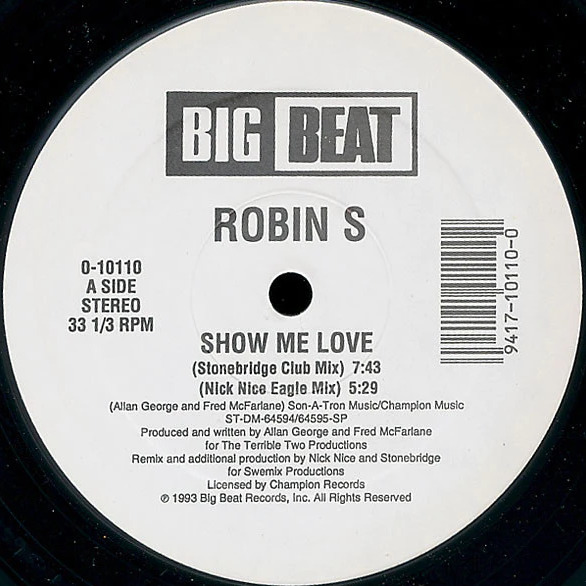
When the StoneBridge version was released in 1993, “Show Me Love” travelled far beyond the specialist house audience.
Its success demonstrated how effectively vocal house could move between underground club culture and mainstream pop without abandoning the qualities that made it work on a dancefloor. The production remained skeletal, repetitive and DJ-friendly, but the vocal and chorus gave radio audiences an immediate entry point.
This crossover was particularly significant because the track did not soften its club identity to become accessible. It did not replace the groove with a conventional pop arrangement or treat electronic production as decoration around a singer. The house rhythm remained central to the record’s identity, and that rhythm became part of its commercial appeal.
“Show Me Love” eventually reached major chart positions in both the United States and the United Kingdom, while becoming one of the defining vocal-house hits of the decade. Its success helped prove that a dance record could preserve the repetition and physical discipline of club music while still functioning as a recognisable song.
That model would become increasingly important in the years that followed.
Producers learned that the dancefloor and radio did not need to exist as opposing worlds. A strong vocal could give a club track emotional reach, while a distinctive house production could prevent a pop song from sounding ordinary.
“Show Me Love” was not the only record to establish that possibility, but it became one of the clearest and most influential examples.
The Korg M1 organ becomes a genre of its own
The organ sound did not remain associated only with one record.
After the success of “Show Me Love,” the Korg M1’s “Organ 2” preset became one of the most recognisable timbres in house music. Producers repeatedly returned to its bright, hollow and percussive character, using similar riffs in club tracks, commercial dance records and later house revivals.
StoneBridge was not the first producer to use the preset, but his particular innovation was to make it carry the role of the bassline alongside the kick drum. Earlier tracks had used comparable organ sounds more like leads or melodic layers, whereas “Show Me Love” placed the instrument at the centre of the low-end and rhythmic structure.
That decision made the sound inseparable from the groove.
Later producers could imitate the instrument easily, but reproducing the effect proved more difficult. The original riff works because of its exact relationship with the drums, vocal and silence around it. Simply loading the same preset does not create the same tension.
The influence became especially visible in periods when organ-led house returned to mainstream popularity. New generations of producers repeatedly rediscovered the same principle: a sharply defined keyboard pattern can carry more energy than a dense wall of synthesizers when the rhythm is strong enough.
For some younger listeners, the sound may now seem like a general feature of house music rather than something closely associated with one historic production.
That may be the clearest sign of influence.
The record’s signature became part of the genre’s vocabulary.

Why the arrangement remains useful to DJs
“Show Me Love” has survived in DJ culture because it offers several forms of value at once.
The opening is instantly recognisable without revealing the entire song immediately. The groove is simple enough to mix with newer house records, while the vocal creates a powerful communal response once it arrives. The arrangement can function during a nostalgic sequence, but it does not need to be presented only as a throwback.
The production’s restraint is crucial here.
Because the record is not overloaded with competing harmonic ideas, it remains compatible with music from several different eras. The organ riff can sit beside classic vocal house, contemporary tech house, piano house or commercial dance music without sounding completely misplaced.
The vocal also gives a DJ control over the emotional temperature of a set.
Playing the instrumental elements creates anticipation, while bringing in the chorus turns the track into a shared singalong. That transition allows “Show Me Love” to operate as both a groove record and an anthem.
Many successful songs remain enjoyable at home but become difficult to place inside a DJ set once their production style falls out of fashion. “Show Me Love” avoided that fate because its arrangement is built from fundamentals: rhythm, repetition, space, tension and a strong voice.
Those elements do not depend on one trend.
They belong to dance music itself.
The difference between nostalgia and timelessness
It would be easy to explain the song’s longevity as nostalgia, particularly for listeners who remember the early 1990s or first encountered the record during a later wave of house revival. Nostalgia certainly plays a role, but it does not fully account for the track’s continued presence.
A purely nostalgic record reminds people of the past.
A timeless record continues to function in the present.
“Show Me Love” still works because its central components remain effective on their own terms. The organ riff still creates movement, the drums still sound direct, the vocal remains emotionally believable and the chorus still communicates its message without requiring historical context.
The track also benefits from an unusual balance between polish and imperfection.
Robin’s voice carries texture and strain rather than sounding surgically controlled. The snare is unusually heavy because of the way it was sampled. The distorted synth was created by pushing inexpensive hardware and the mixing desk beyond clean operating levels. The organ came from a preset discovered by accident rather than a carefully designed signature patch.
Those imperfections give the production personality.
A modern engineer could recreate the arrangement with greater technical precision, cleaner separation and deeper low end, but those improvements might remove some of the tension that makes the original feel alive.
The record sounds deliberate without sounding overdesigned.
That quality is difficult to manufacture.
Its influence on the EDM generation
The song’s legacy extends beyond traditional house music.
Over the years, “Show Me Love” has been sampled, covered, remixed and reinterpreted by artists working across several generations of electronic music. Later festival-oriented versions connected the record with the EDM era, while more restrained reinterpretations proved that the songwriting could survive outside its famous club arrangement.
This ability to move between formats reveals the strength of the original material.
The StoneBridge mix is iconic because of its production, but the song itself contains a vocal and emotional idea strong enough to support very different treatments. Remove the organ and the lyric still works. Remove the vocal and the instrumental remains one of house music’s most recognisable grooves.
Few dance records are equally strong in both directions.
The EDM generation also inherited one of the song’s central lessons: electronic music reaches a broader audience when the production amplifies the emotional meaning rather than distracting from it. The biggest dance-pop anthems of later decades often followed a similar structure, combining a highly recognisable vocal message with an instrumental hook powerful enough to dominate festivals and clubs.
“Show Me Love” arrived before that approach became standard.
It helped demonstrate why the formula could work.
Why the track still feels emotionally current
The production may be tied to the history of early-1990s house, but the emotional conflict at the centre of the song remains completely current.
Promises without action have not become less familiar. The frustration of receiving words without consistency, affection without commitment or reassurance without proof still belongs to everyday relationships. The lyric’s simplicity allows it to survive because it addresses that experience directly.
Robin S. does not describe a specific technology, social custom or cultural moment that might later feel outdated. She expresses a basic emotional need: the desire for love to become visible through behaviour.
This is why the chorus continues to connect with listeners who were born long after the original release.
They may experience the production as retro, but the message does not feel historical.
It feels immediate.

Sound breakdown
The organ riff
The signature riff comes from the Korg M1’s “Organ 2” preset. StoneBridge had originally written the pattern as a bassline, but changing the preset turned it into the syncopated organ figure that became the track’s defining hook. Rather than adding a separate bass instrument, he allowed the organ and kick drum to build the low end together.
The drums
The four-on-the-floor kick provides consistency, while the unusually heavy snare adds aggression and physical impact. StoneBridge created the snare by sampling a hit that also contained a kick, producing the thicker character heard in the final mix.
The distorted synth
The rough synth figure at the beginning was inspired by the raw energy of Todd Terry’s productions. StoneBridge used a Yamaha DX100 and deliberately drove the signal through the desk at extreme levels, creating a harsh sound that balances the sweetness of the vocal.
The chorus pads
The chorus is signalled by two understated minor-chord string pads placed low in the mix. They subtly change the emotional colour without interrupting the groove, allowing the section to feel larger while remaining fundamentally club-focused.
The vocal
Robin S.’s performance combines soul, frustration and authority. Her phrasing leaves enough space for the organ riff to respond, creating a call-and-response relationship between voice and production.
The structure
The arrangement relies on reduction rather than constant addition. Small changes carry unusual importance because the main elements remain stable, giving the track both hypnotic repetition and clear verse-chorus definition.
Why “Show Me Love” became an anthem
A dance record becomes an anthem when it stops belonging exclusively to the people who first discovered it.
“Show Me Love” began within house culture, but its vocal, production and emotional clarity allowed it to travel far beyond the club. It became part of radio, television, weddings, sporting events, nightlife and everyday listening, without losing the groove that originally gave it credibility.
That reach did not come from compromising the track’s identity.
It came from making that identity unusually clear.
The production has one unmistakable musical idea. The lyric has one unmistakable emotional demand. The vocal communicates that demand with complete conviction.
Everything points in the same direction.
That is why the record became easy to remember but difficult to replace.
Final thoughts
The history of “Show Me Love” is built around a sequence of decisions that could easily have produced a very different outcome.
The original version might simply have remained on the shelf. Champion Records might have accepted StoneBridge’s first remix, leaving too much of the earlier arrangement intact. StoneBridge might not have moved from one Korg preset to the next. He might have added a conventional bassline beneath the organ, filled the chorus with larger drums or removed the imperfections that gave the track its character.
Instead, the song emerged through reduction, accident and instinct.
StoneBridge understood that Robin S.’s vocal did not need a complicated arrangement. It needed space, rhythm and one musical idea strong enough to stand beside it. The Korg M1 organ provided that idea, while the kick, heavy snare, distorted synth and understated strings gave the production shape without weakening its focus.
Robin S. then turned the arrangement into something more than a club record. Her vocal made the song emotionally specific, transforming a universal phrase into a demand filled with experience and frustration. She does not simply sing about wanting love. She communicates the exhaustion of being offered words without proof and the strength required to stop accepting them.
That is why “Show Me Love” has lasted.
The organ riff made it instantly recognisable, but recognition alone does not create permanence. The song survived because the sound and message are inseparable. The production gives the vocal confidence; the vocal gives the production meaning.
More than thirty years later, the track remains capable of working in almost any environment. It can introduce a classic-house set, create a nostalgic festival moment, bring together several generations on the same dancefloor or simply play through headphones and still feel emotionally direct.
Many records have used the same organ.
Many songs have borrowed the same language of vocal house.
Very few have recreated the same balance.
“Show Me Love” did not become timeless because it was technically perfect or carefully planned from the beginning. It became timeless because a producer recognised what the song needed, removed everything standing in its way and allowed one extraordinary voice and one accidental riff to carry the rest.
It did not follow the rules of a house anthem.
It helped write them.
If you made it this far, thank you for reading. Have a good music day.