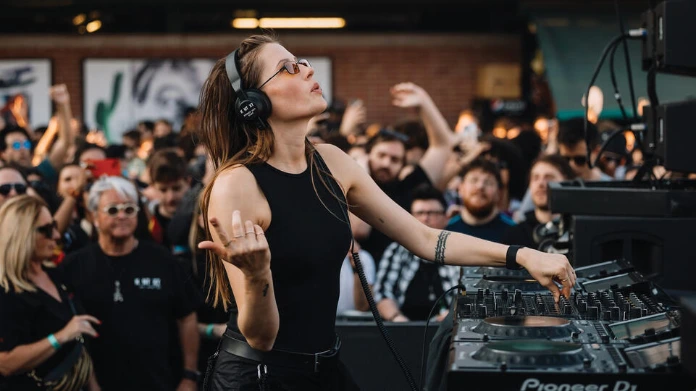
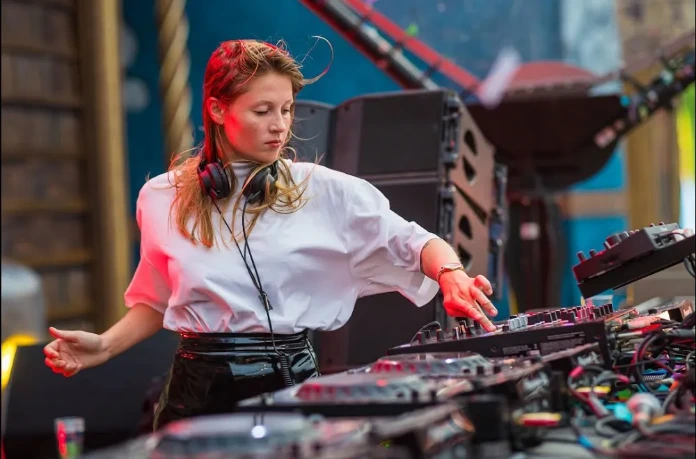
Charlotte de Witte is one of the clearest examples of how techno has moved from dark club rooms to the biggest festival stages in the world without losing its force. From her early days as Raving George to the rise of KNTXT and her global mainstage presence, the Belgian artist has built a career around intensity, discipline and a sound that feels direct, physical and unmistakably her own.
In this post:
• The Rise of Charlotte de Witte
• From Raving George to Her Real Name
• The Sound: Raw, Direct and Built for Impact
• KNTXT and the Power of Independence
• From Underground Rooms to Mainstages
• Why She Changed the Image of Techno
• The Debut Album Era
• Final Thoughts
The Rise of Charlotte de Witte
Some artists grow slowly inside a scene.
Others seem to arrive with a kind of force that makes the whole scene shift around them.
Charlotte de Witte belongs to the second category.
Her rise did not happen because she tried to soften techno for a wider audience. If anything, she did the opposite. She took a sound that was often considered too hard, too dark or too underground for massive stages and pushed it directly into the center of festival culture.
That is what makes her story interesting.
Charlotte de Witte did not become one of the biggest names in electronic music by moving away from techno. She became huge by making techno feel powerful enough for the mainstage.
There is something very clear about her artistic identity. She does not need too much decoration. Her sound is built on pressure, rhythm, acid lines, tension and release. It is direct, but not empty. It is physical, but also emotional in its own way.
And maybe that is the reason why she connects with such a wide audience.
Her music does not ask for too much explanation.
It asks you to feel it.
From Raving George to Her Real Name
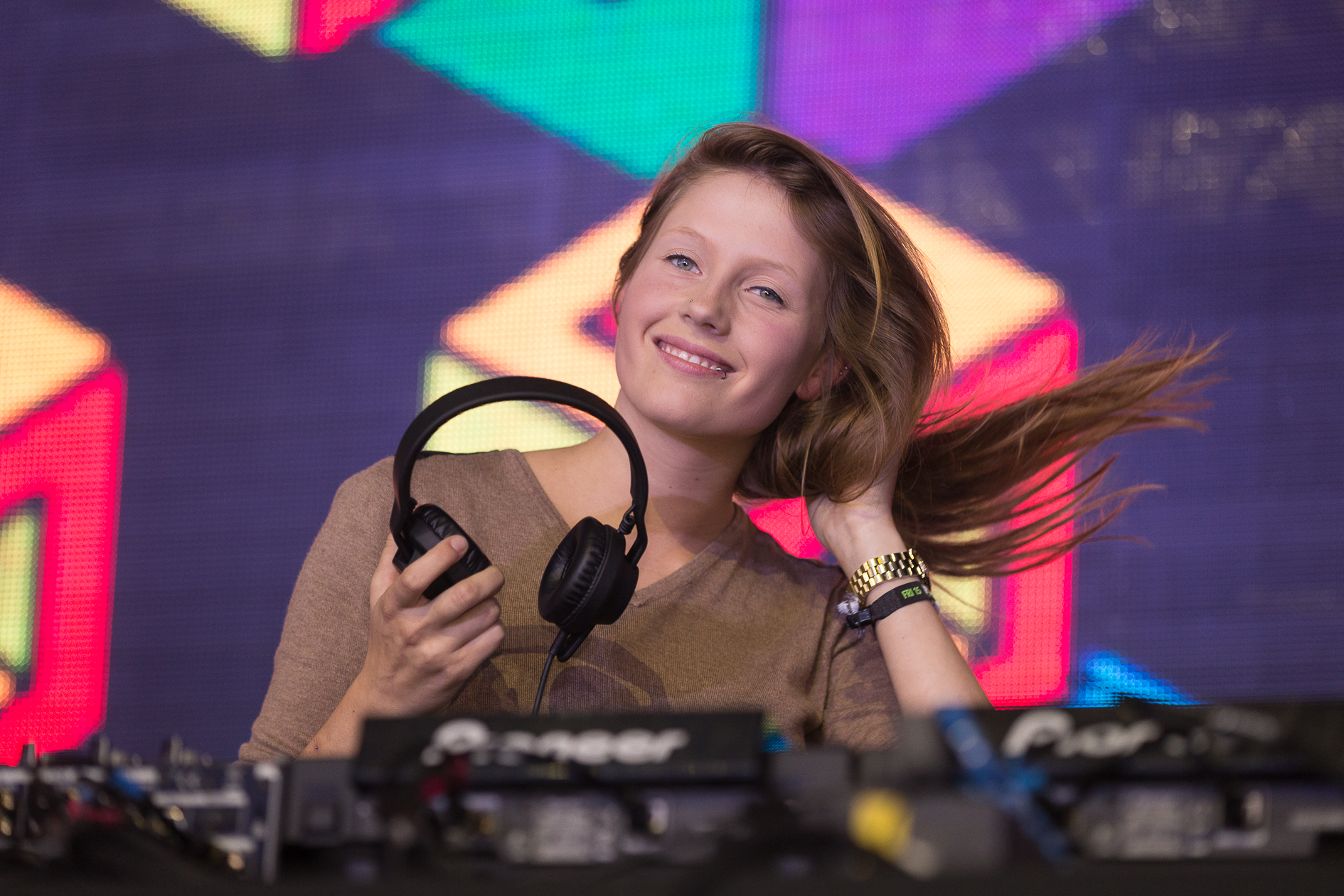
Before becoming known globally as Charlotte de Witte, she released and performed under the name Raving George.
That early period is important because it shows that her success did not appear overnight. It came from years of searching, playing, learning, changing direction and slowly understanding what kind of artist she wanted to become.
In early interviews, Charlotte described discovering the underground scene as a key moment in her life. Her first DJ gig was in a youth center near Ghent in 2010, and even she has described that beginning as far from perfect. That detail makes the story feel more real.
Every artist who now looks untouchable started somewhere.
What changed her career most clearly was the decision to leave the Raving George alias behind and use her real name. That was not only a branding decision. It felt like a statement of identity.
Using her real name made the project more direct.
More personal.
More honest.
From that point, Charlotte de Witte started becoming not just a DJ with strong tracks, but a recognizable artistic figure. The name, the sound, the visual world and the stage presence all started moving in the same direction.

The Sound: Raw, Direct and Built for Impact
Charlotte de Witte’s sound is not built around softness.
It is built around momentum.
Her tracks often move with a sense of urgency. The drums are hard, the acid lines are sharp, the structures are focused and the energy is made for large systems. But what makes her music work is that it never feels random. Even when the sound is aggressive, there is control behind it.
That control is one of her biggest strengths.
A lot of hard techno can easily become flat if everything is pushed at the same level. Charlotte’s best work understands contrast. There is pressure, but also space. There is repetition, but also movement. There is darkness, but also that strange kind of release that makes techno feel almost freeing when heard in the right place.
That is why her sound works both in clubs and on festival stages.
In a dark room, it feels intense and hypnotic.
On a mainstage, it becomes massive.
This is not easy to do. Many artists lose something when they move from clubs to festivals. Charlotte de Witte has managed to scale her sound upward without making it feel completely commercial.
That is probably why she feels so important in today’s techno landscape.
KNTXT and the Power of Independence
KNTXT is a major part of Charlotte de Witte’s story.
It is not just a label name attached to her career. It is the world she built around her music. Through KNTXT, she created a home for her own releases, events, visual identity and wider artistic community.
That matters because techno has always been more than tracks.
It is also labels, nights, communities, graphics, locations, crowds and shared energy. KNTXT gives Charlotte a structure where all of those elements can exist together.
What I find interesting about this is that it shows a different side of her career. From the outside, people often focus on the big festival moments, the huge crowds and the heavy drops. But KNTXT shows the more strategic part of her identity: the need to create an ecosystem, not just play shows.
A strong artist today is rarely just an artist.
They build a world.
Charlotte de Witte understood that very well.
KNTXT gives her independence, but also continuity. It allows her to support other artists, release music without compromising too much, and create a recognizable space for the sound she represents.
From Underground Rooms to Mainstages
One of the most fascinating parts of Charlotte de Witte’s career is how she moves between underground credibility and global visibility.
She has played major festivals like Tomorrowland, Awakenings, Time Warp, Sónar, Ultra and Coachella, but her music still carries the energy of club culture. That balance is difficult to maintain.
Some artists become too polished when they reach bigger stages.
Charlotte has done something different.
She made the bigger stages feel darker, heavier and more techno-oriented.
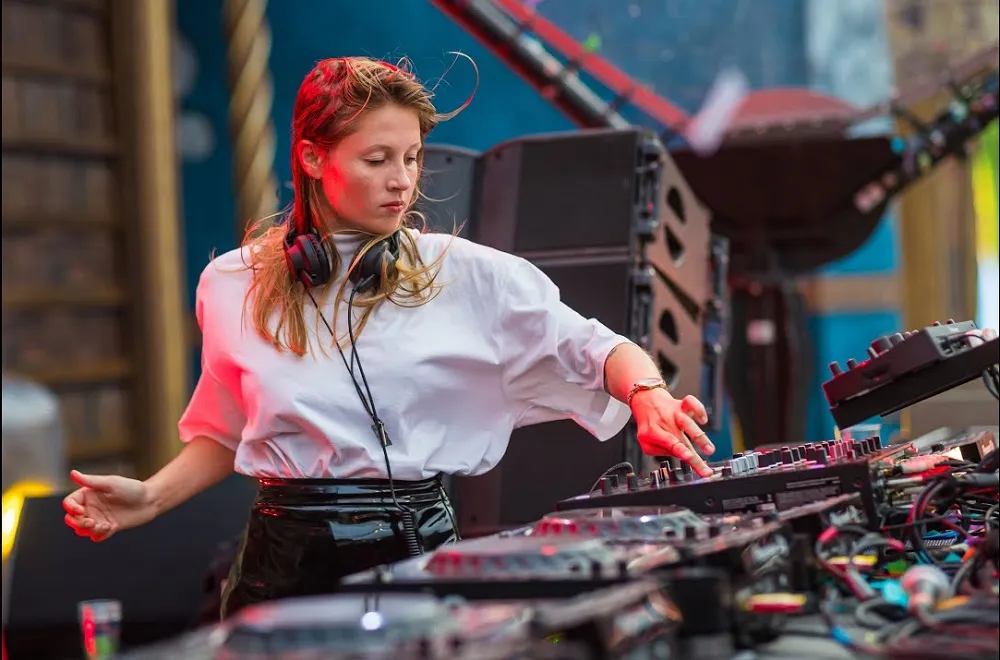
Her historic Tomorrowland moments are important for that reason. They are not just personal milestones. They represent a shift in how techno is perceived by wider festival audiences. When a techno artist can open or close a massive mainstage, it says something about how far the genre has moved.
Techno is no longer only hidden in warehouses or side stages.
It can stand at the center.
And Charlotte de Witte is one of the artists who helped make that possible.
Why She Changed the Image of Techno
Charlotte de Witte changed the image of techno because she made it feel powerful, modern and visible without stripping it of its identity.
For many casual listeners, techno used to feel distant. Maybe too repetitive. Maybe too serious. Maybe too underground.
Charlotte helped translate that intensity for a wider audience.
Not by making it lighter, but by making it bigger.
That is a very different thing.
Her success also matters because she became one of the most visible women in a scene that has often been described as male-dominated. But what is interesting is that her career does not need to be reduced to that point alone. She is not important only because she is a woman in techno. She is important because she is one of the artists defining what modern techno looks and sounds like.
Still, her presence has clearly meant something to many people.
Seeing her control massive stages with such confidence sends a message: techno can be powerful, female, global, uncompromising and mainstream-facing without becoming ordinary.
That is not a small achievement.
The Debut Album Era
For an artist with such a long list of EPs, singles and major performances, the idea of a debut album arriving relatively late in her career actually makes sense.
Charlotte de Witte built her reputation through the dancefloor first.
That is very techno.
The club came before the album narrative. The sets came before the long-form statement. The physical response of the crowd came before the traditional idea of a discography.
But that also makes the debut album era more interesting.
After years of releases and global touring, a debut album becomes less about proving she can produce and more about showing the full shape of her identity. It gives her space to present not just peak-time tracks, but a broader sense of what techno means to her: energy, repetition, emotion, control, movement and memory.
The most interesting thing is that she does not seem to treat the album as a pop crossover move.
It feels more like a return to the club.
A way to say: this is where I come from, this is what shaped me, and this is still where the music matters most.
That is probably the right approach.
Charlotte de Witte does not need to prove that techno can become pop.
She proves that techno can be enough on its own.

Final Thoughts
Charlotte de Witte’s story is powerful because it feels built on consistency.
She did not become a global techno figure by constantly changing direction. She became one by sharpening her identity year after year, set after set, release after release.
From Raving George to KNTXT, from early Belgian clubs to Tomorrowland and Coachella, her career shows how far techno can go when an artist understands both the underground roots and the scale of modern festival culture.
What I personally find most interesting is that her success does not feel accidental. It feels earned through focus. She knows what her sound is. She knows what her audience expects. But she also knows how to keep expanding the world around it.
That is why Charlotte de Witte matters.
She is not just a DJ playing hard techno to big crowds.
She is one of the artists who helped make techno feel like a mainstage language without removing its weight, darkness and intensity.
In a scene where many artists chase the next trend, Charlotte de Witte feels different.
She built her own lane.
And then she made the mainstage come to her.
Rating
Sound Identity: 9.4/10
Stage Presence: 9.6/10
Influence on Techno: 9.5/10
Festival Impact: 9.7/10
Artistic Consistency: 9.3/10
Cultural Relevance: 9.4/10
Overall Rating: 9.5/10