There is a particular moment that almost every Grand Theft Auto player remembers. You steal a car, leave a chaotic mission behind and begin driving across the city without any clear destination. Then a song starts playing on the radio. You may not know the artist, the title or even the genre, but the track fits the road, the light and the atmosphere so perfectly that it becomes impossible to separate the music from the memory.
Years later, hearing that same song somewhere else can bring the entire scene back.
That is the real power of Grand Theft Auto’s radio stations. They are not simply background music and they do not function like a conventional videogame soundtrack. They are fictional cultural institutions built inside each city, complete with presenters, advertisements, local references and carefully selected musical identities. Every station feels as though it belongs to the world around it, while every song helps the player understand that world more deeply.
Across the history of the series, Rockstar Games has used radio to introduce millions of players to genres, artists and musical periods they may never have explored on their own. GTA has made country music memorable to players who had never listened to it, brought underground electronic sounds into bedrooms around the world and turned obscure records into songs connected to some of gaming’s most recognisable environments.
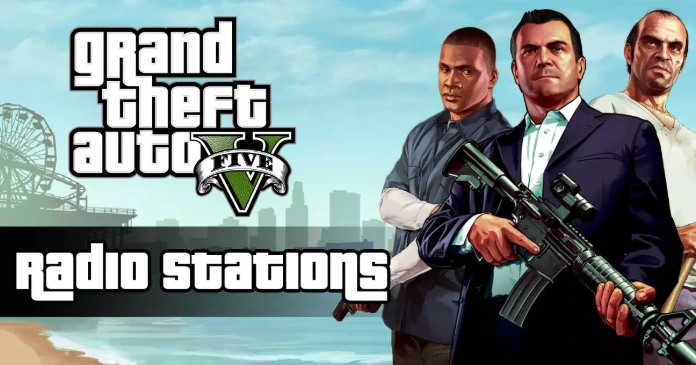
With GTA V and GTA Online, this role expanded even further. The Los Santos radio dial has grown over time to include stations dedicated to pop, classic rock, hip-hop, punk, reggae, funk, soul, indie, house, techno and experimental electronic music. GTABase currently lists 26 stations across GTA V and GTA Online, in addition to a custom station, with more than 750 songs available across the wider soundtrack.
At that scale, Grand Theft Auto is no longer simply using music to support gameplay. It has become a discovery platform of its own.
In this post:
• How radio became part of GTA’s identity
• Why driving changes the way we hear music
• Los Santos as a city built through sound
• The stations that introduced players to new genres
• From licensed soundtrack to artist-led curation
• How electronic music became central to GTA Online
• CircoLoco Records and the connection between games and club culture
• Why GTA radio feels different from a streaming playlist
• The future of music discovery inside videogames
• Final thoughts
How radio became part of GTA’s identity
Music has been part of Grand Theft Auto since the earliest entries in the series, but the decision to place songs inside fictional radio stations gave Rockstar something much more powerful than a conventional soundtrack.
A normal soundtrack usually tells the player what to feel. Music rises during an emotional scene, becomes tense during danger and disappears when the action ends. GTA radio works differently because the player chooses when to listen, which station to select and how long to remain there.
The music belongs to the car rather than the mission.
That apparently simple decision creates a completely different relationship between the player and the soundtrack. A song can appear during an important chase, but it can also play while waiting at a red light, driving through the countryside or moving slowly across the city at night. Because the experience is not always scripted, the connection between music and memory often feels personal.
The fictional radio format also allows Rockstar to create much more than a collection of tracks. Presenters introduce songs, joke about the city, comment on local culture and sometimes react to events from the game. Commercials and talk segments add satire, while each station develops a clear personality that reflects a specific audience within the fictional world.
This makes the radio dial feel like part of the city’s infrastructure.
In San Andreas, the stations helped recreate the sound of early-1990s California through West Coast hip-hop, funk, grunge, country, reggae and house. Vice City used its 1980s setting to connect neon streets and coastal nightlife with pop, rock, new wave and dance music. GTA V then approached Los Santos as a much broader cultural landscape, using music to represent different neighbourhoods, generations and social scenes.
Rockstar does not simply ask which songs are popular. The more important question is whether a track makes the city feel believable.
That is why GTA radio has remained so memorable. The songs are selected not only as entertainment, but as part of the world-building.
Why driving changes the way we hear music
The relationship between music and driving is essential to understanding why GTA has become such an effective discovery platform.
Listening to a new artist on a streaming service can be a passive experience. A song appears in an algorithmic playlist, plays for a few minutes and is quickly replaced by something else. Unless it creates an immediate reaction, it can disappear into an endless sequence of recommendations.
Inside GTA, the same song becomes attached to movement.
The player is not only hearing it. They are travelling through a place while it plays. The skyline, weather, traffic, vehicle and time of day all become part of the listening experience. Even a track that might initially feel unfamiliar gains context from the environment around it.
This is especially powerful in an open-world game because driving is not always treated as a transition that needs to be skipped. It is one of the main ways the player experiences the city. The radio fills that time without making it feel empty.
A song discovered while crossing Los Santos at sunset is therefore remembered differently from a song discovered by scrolling through a playlist. The music becomes connected to an action, a visual atmosphere and sometimes an unexpected event.
You may first hear an indie track while escaping the police, discover a soul record while driving through the hills or encounter underground techno on the way to a nightclub. None of these moments were necessarily created as fixed scenes, but they can still become part of the player’s personal story.
This is why GTA music discovery often feels accidental in the best possible way.
The player is not always searching for new music. The music finds them while they are doing something else.
Los Santos as a city built through sound
GTA V’s Los Santos is presented as a fictional version of Southern California, and its radio stations are one of the main tools used to communicate that identity.
Rockstar’s music team wanted the stations to reflect the environment rather than simply provide a collection of famous songs. Music supervisor Ivan Pavlovich explained that the licensed soundtrack was intended to strengthen the game’s Californian atmosphere, with each station developed around a clear idea before a suitable host was selected.
That approach is visible throughout the dial.
Radio Los Santos and West Coast Classics connect the city to different generations of hip-hop. Non-Stop-Pop FM reflects the constant presence of commercial music in Los Angeles culture, while Los Santos Rock Radio gives older players and characters a nostalgic connection to classic rock.
Elsewhere, East Los FM introduces Latin American sounds, Blue Ark focuses on reggae, Space 103.2 explores funk and R&B, and The Lowdown 91.1 moves through classic soul. Channel X and Vinewood Boulevard Radio represent different corners of punk and alternative rock, while Radio Mirror Park builds an image of the city’s fashionable indie scene.
The electronic stations make the musical geography even wider. Soulwax FM brings house and electronic music, FlyLo FM moves between experimental electronic sounds and hip-hop, and Worldwide FM blends jazz, house and global music. Later additions such as Los Santos Underground Radio, Still Slipping Los Santos and The Music Locker Radio brought house and techno deeper into GTA Online.
This variety matters because it allows the city to feel culturally divided and connected at the same time.
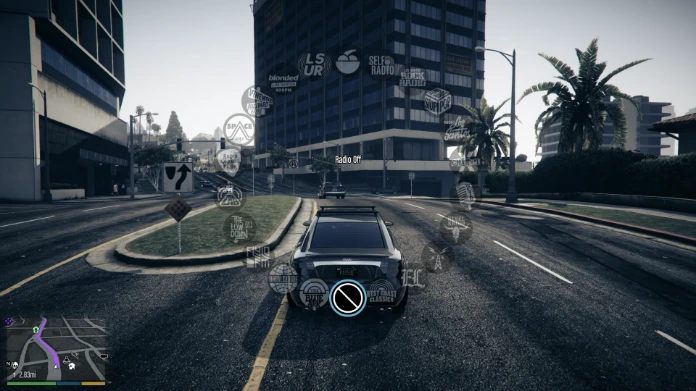
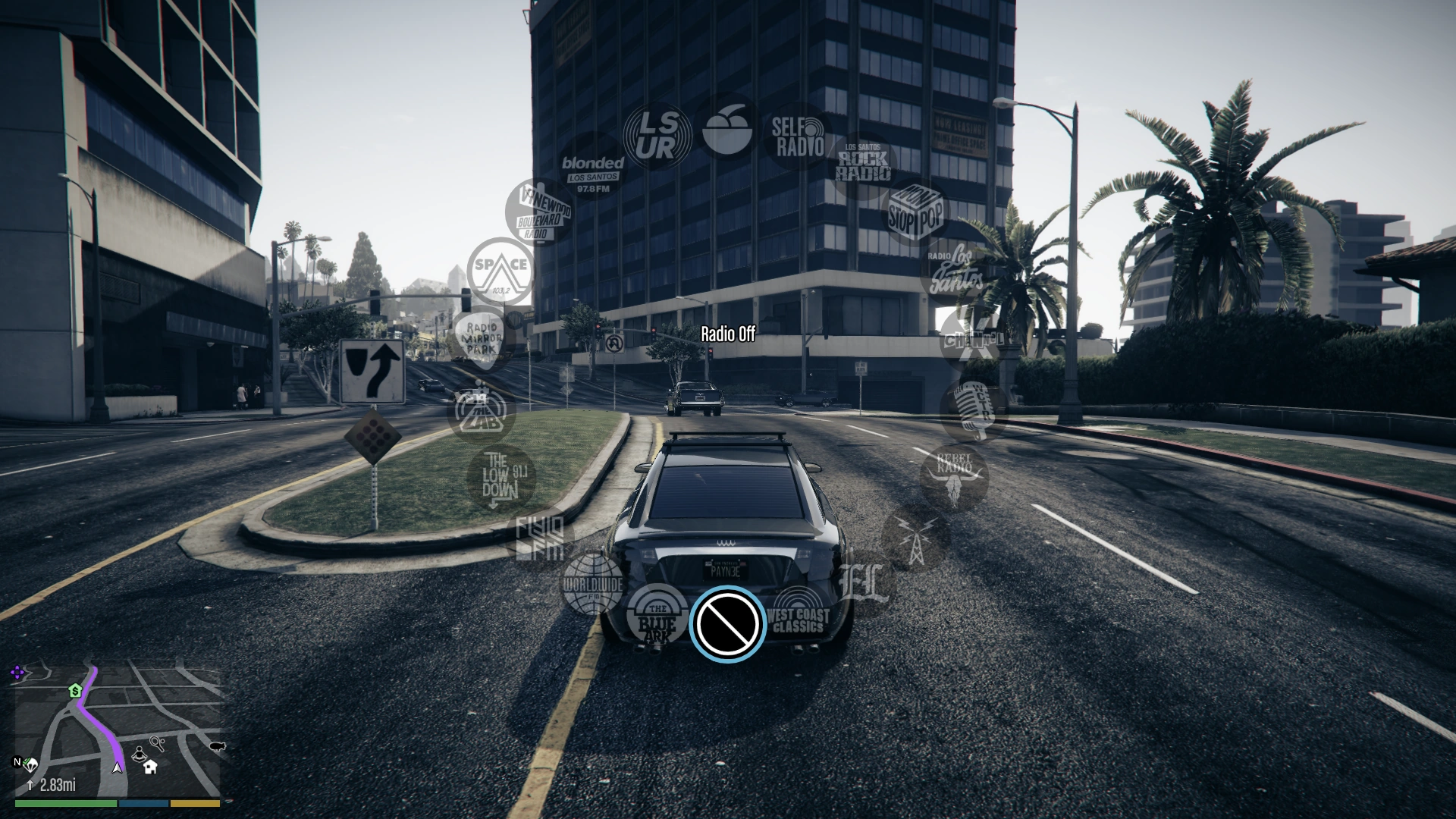
Each station represents a different version of Los Santos, but the player can move between them instantly. A few seconds on the radio wheel can take the experience from classic soul to punk, from mainstream pop to experimental beats or from West Coast rap to underground techno.
The city changes depending on what is playing.
A night drive through downtown with FlyLo FM creates a completely different Los Santos from the same journey accompanied by country music or classic rock. The streets remain visually identical, but their emotional meaning changes.
In that sense, GTA’s radio stations function like filters placed over the game world. They do not only soundtrack the city; they allow players to reinterpret it.
The stations that introduced players to new genres
One of GTA’s greatest musical achievements is its ability to make unfamiliar genres feel accessible.
Players do not need to understand the history of country music before discovering K-Rose in San Andreas. They do not need previous knowledge of funk to enjoy Bounce FM, or an interest in reggae to spend hours with K-Jah. The station creates an entry point, while the game provides the context.
This happens because GTA radio avoids presenting music like a lesson.
There is no feeling that the player is being told which artists are important or which genres deserve respect. The tracks simply exist inside the world, surrounded by humour, fictional advertising and the personality of the host.
Over time, familiarity develops naturally.
A player may begin by avoiding a station because the genre feels distant from their usual taste. Later, after repeatedly hearing it in stolen cars or during long journeys, certain tracks become recognisable. Eventually, the station may become one of the most memorable parts of the game.
This is one reason discussions about GTA soundtracks often become deeply personal. Players do not only name their favourite stations; they remember the songs they discovered because of them. Beatportal spoke with GTA fans who described the radio as an essential part of the open-world experience and a major influence on how they explored music.
The discovery can also continue outside the game.
After hearing a track several times, players search for it online, add it to Spotify, explore the artist’s catalogue or become interested in the wider genre. A fictional station therefore creates a real path into music culture.
For younger listeners in particular, GTA may be the first place where they encounter artists from previous decades. A player who would never independently search for classic soul, old-school hip-hop or 1980s new wave can spend dozens of hours hearing those sounds inside a game.
The soundtrack removes the distance between generations.
Older music is not presented as history. It becomes part of a current, interactive experience.
From licensed soundtrack to artist-led curation
Another reason GTA radio feels different from many videogame soundtracks is the involvement of musicians, DJs and producers as curators and hosts.
Rockstar frequently builds stations around people who already have a strong relationship with the genre. Their presence gives the selections credibility, but it also makes the station feel like a real broadcast rather than a playlist with a fictional name.
FlyLo FM is one of the clearest examples.
The station was curated and hosted by Flying Lotus, combining experimental hip-hop, electronic music and left-field production. Some music was created specifically for the game, while the wider selection included artists whose work would have been unfamiliar to many mainstream players. Flying Lotus described curating and mixing the station as an opportunity to bring his musical world into one of gaming’s largest cultural platforms.
This form of artist-led curation changes the way discovery works.
A streaming algorithm usually recommends music by analysing behaviour, similarity and popularity. A station such as FlyLo FM reflects a human perspective. The choices are connected by taste, context and an understanding of how one track should follow another.
Other GTA V stations follow a similar principle. Soulwax FM carries the identity of Soulwax, while Worldwide FM reflects Gilles Peterson’s interest in music that crosses scenes and borders. blonded Los Santos is connected to Frank Ocean’s creative universe, and later GTA Online updates introduced further stations shaped by artists, labels and club culture.
The host becomes part of the recommendation.
Players may trust a station because they already recognise the curator, but many discover the curator and the featured artists at the same time. In both cases, the radio creates a relationship between listener and selector that feels more intentional than autoplay.
It resembles the role once played by influential radio DJs: presenting music not only because it resembles what the audience already knows, but because the curator believes it deserves to be heard.
How electronic music became central to GTA Online
Electronic music has always had a presence in Grand Theft Auto, but GTA Online allowed Rockstar to build a much deeper connection with contemporary club culture.
As the online world expanded, nightlife became part of the gameplay itself. Players could enter clubs, own venues, attend virtual performances and listen to mixes from real DJs. The music was no longer limited to the car radio. It became part of the architecture and social life of Los Santos.
Los Santos Underground Radio brought house, techno and electronic music directly onto the radio dial. The Music Locker later functioned both as a physical club beneath the Diamond Casino and as a station, further reducing the distance between the virtual world and the real club scene. GTABase lists Los Santos Underground Radio under house, techno and electronic music, while The Music Locker Radio combines house, disco and techno.
These additions were important because they did not treat electronic music only as background for action.
Rockstar presented club culture through selectors, venues and longer-form musical experiences. DJs could exist as characters in the game, while their sets gave players access to sounds that often sit outside mainstream radio.
For someone already interested in house or techno, these stations offered familiar names and credible curation. For other players, they became an introduction to artists and styles they may never have encountered elsewhere.
The scale of GTA Online made that introduction significant.
A record included in an underground DJ’s real-world set may reach thousands of dedicated club listeners. The same musical world placed inside GTA can reach an enormous and culturally diverse audience, including people who have never entered a nightclub.
The game becomes a bridge between scenes.
This does not mean GTA replaces clubs, festivals or specialist radio. The experience is completely different. However, it can create the first moment of curiosity that leads someone toward those spaces.
A player hears a track in Los Santos, searches for the artist, finds a label, listens to a longer mix and eventually begins to understand the culture surrounding the music.
Discovery begins in a stolen car but does not necessarily end there.
CircoLoco Records and the connection between games and club culture
The launch of CircoLoco Records represented the clearest sign that Rockstar’s relationship with music had moved beyond licensing tracks for a game.
Created in partnership with CircoLoco, the club brand closely associated with Ibiza’s DC-10, the label connected Rockstar Games directly with contemporary house and techno culture. The first release campaign centred on the Monday Dreamin’ compilation, introduced through a series of EPs featuring artists including Kerri Chandler, Rampa and Sama’ Abdulhadi.
This was an important development because it reversed the traditional relationship between videogames and music.
Normally, a record already exists and is later selected for inclusion in a game. CircoLoco Records allowed Rockstar to participate in releasing the music itself, creating projects that could move between clubs, streaming platforms and GTA Online.
The connection was not simply promotional. It reflected the direction GTA Online had already taken through virtual nightlife, DJ performances and electronic radio stations.
Rockstar had spent years building digital spaces where club music could be heard. With CircoLoco Records, it helped create a label capable of supplying music to those spaces while also existing independently in the real world.
The debut compilation was later featured as part of GTA Online’s Los Santos Tuners update, showing how the label and the game could support one another.
This creates a particularly interesting model for music discovery.
A listener may encounter an artist through GTA Online, then explore the full CircoLoco release outside the game. Alternatively, someone already following the label may enter GTA and hear the music placed inside a visual and interactive context.
The game becomes both a destination and a distribution channel.
For electronic artists, this offers access to listeners far outside the usual club and festival audience. For Rockstar, it strengthens the cultural credibility of its virtual nightlife. For players, it creates another route toward music that may not normally appear in mainstream playlists.
CircoLoco Records therefore feels like a natural extension of what GTA radio had already been doing for years.
Rockstar was no longer only curating fictional stations. It was helping build a real catalogue around the same philosophy of discovery.
Why GTA radio feels different from a streaming playlist
At first glance, a GTA radio station and a Spotify playlist may seem to perform the same function. Both organise tracks around a style, mood or genre and present them to a listener in sequence.
The experience, however, is fundamentally different.
A streaming playlist usually exists outside a narrative world. Even when it has a strong theme, the listener remains aware that they are using a platform designed around music consumption. They can skip tracks, search for artists, check data and move between playlists immediately.
GTA radio is less efficient, but that is part of its charm.
The player may not know what song is playing at first. They may join halfway through, hear the presenter speak or wait through a fictional advertisement before the next track begins. The experience resembles traditional radio because it includes unpredictability and limited control.
More importantly, the music is connected to place.
Rockstar’s stations are designed for a particular city and the people who supposedly live there. Radio Los Santos does not feel like a generic hip-hop playlist because it belongs to Los Santos. FlyLo FM, East Los FM and Radio Mirror Park each represent a different cultural corner of the same fictional environment.
The presenter, station branding and local satire reinforce that identity.
Streaming platforms are built around the listener. GTA radio is built around the world.
That difference makes discovery feel less personalised but often more surprising. The game does not need to study your listening habits before presenting something unexpected. You can accidentally enter a vehicle with a station already playing and hear a genre you would never select voluntarily.
In an era when algorithms become increasingly accurate at predicting taste, GTA radio preserves the value of accidental exposure.
It reminds us that music discovery is not always about receiving a better version of what we already enjoy. Sometimes it comes from remaining in an unfamiliar environment long enough for something to connect.
The importance of memory
The strongest advantage GTA has as a discovery platform may not be the size of its soundtrack or the credibility of its curators. It may be the way games create memory.
Music heard during an interactive experience can become attached to specific actions and places. The listener does not only remember the song; they remember what they were doing when it played.
A track becomes the sound of driving through San Fierro in the rain, crossing the desert outside Las Venturas or seeing the lights of Los Santos at night. Another becomes permanently connected to a failed mission, a favourite vehicle or the first time the player discovered a new area.
These memories are not necessarily dramatic. In many cases, they come from ordinary moments between missions.
That may be why they last.
The player has time to inhabit the song rather than simply hear it. Repeated journeys also create repeated exposure, allowing unfamiliar music to become familiar without being forced.
Eventually, certain tracks begin to feel as though they belong to the player’s own history, even though the experience took place inside a fictional world.
This emotional connection is difficult for conventional marketing to reproduce.
An artist included on a GTA station is not only gaining placement in front of a large audience. Their music may become part of someone’s memory of a game they spend hundreds of hours playing.
That is much more powerful than a short advertisement or passive recommendation.
The future of music discovery inside videogames
The relationship between games and music is likely to become even more important as virtual worlds grow larger and more socially connected.
Fortnite has already turned concerts and artist collaborations into global digital events. Sports games have long introduced players to new music through annual soundtracks, while titles such as FIFA and EA Sports FC have created strong associations between specific songs and particular periods of players’ lives.
GTA remains different because music is integrated so deeply into the world itself.
The radio format gives Rockstar space to introduce new stations, update existing selections and connect the game with real DJs, labels and scenes. GTA Online demonstrated that this world could continue evolving for years after the original release, with more than 150 tracks added in the enhanced version and multiple stations introduced through later updates.
The next step may involve even more dynamic stations, live programming, label partnerships or music that responds to the player’s location and activities. However, Rockstar will need to preserve the human curation that makes the existing radio system distinctive.
The danger would be turning GTA radio into another algorithmic service.
Its value comes from personality, surprise and a clear sense of place. The best stations feel as though someone with a real musical perspective built them for a specific corner of the city.
Technology can make the system larger and more responsive, but discovery still depends on trust. Players return to stations because they understand their identity, even when they do not recognise every artist.
That relationship between listener, curator and fictional world is what makes GTA’s approach so difficult to copy.
Final thoughts
Grand Theft Auto’s radio stations began as an imaginative way to place licensed music inside cars, but over time they became one of the series’ defining creative features.
They help cities feel real, give characters and neighbourhoods cultural identities and transform the long journeys between missions into meaningful listening experiences. More importantly, they introduce players to music without making discovery feel like a separate activity.
The player does not open GTA to study soul, punk, techno, country or experimental hip-hop. They hear those genres while living inside the game, and that context gives the music room to become familiar.
GTA V and GTA Online expanded this idea into an enormous musical ecosystem. The radio dial now moves across decades and scenes, from classic rock and West Coast hip-hop to reggae, indie, house and underground techno. Artist-led stations give the selections a human identity, while spaces such as The Music Locker bring club culture beyond the car and into the architecture of the game.
The creation of CircoLoco Records then pushed the relationship one step further. Rockstar moved from licensing and curating music to participating in its release, creating a bridge between virtual Los Santos and real-world electronic culture.
What makes all of this effective is not only the quality of the tracklists. It is the way the music becomes attached to experience.
A song heard on ordinary radio can become a favourite. A song heard while driving through a digital city can become a memory.
That is why GTA has introduced so many players to artists they might never have searched for themselves. It does not simply recommend music. It gives the music a road, a skyline, a time of day and a story.
In a world where discovery is increasingly controlled by algorithms, Grand Theft Auto still offers something more unpredictable and human: the feeling of finding the right song by accident, in the wrong car, while going somewhere you never planned to visit.
If you made it this far, thank you for reading.
Have a good music day.
Suggested stations to explore
• FlyLo FM — Experimental electronic music, hip-hop and forward-thinking production.
• Worldwide FM — Jazz, house, world music and eclectic selections.
• Soulwax FM — Electronic music and house with a strong DJ-led identity.
• Los Santos Underground Radio — House, techno and underground club sounds.
• The Music Locker Radio — House, disco and techno connected to GTA Online’s virtual nightlife.
• Radio Mirror Park — Indie rock and electronic music with a distinctly Los Santos atmosphere.
• West Coast Classics — Classic West Coast hip-hop and rap.
• Space 103.2 — Funk and R&B for some of the most relaxed drives through the city.