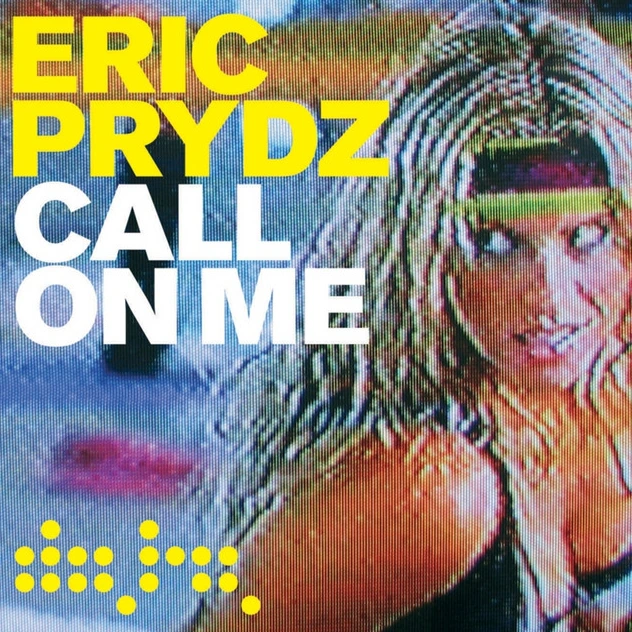


Eric Prydz’s “Call on Me” is one of the most recognizable dance tracks of the 2000s. Built around a hypnotic Steve Winwood vocal hook, a direct house groove and one of the most iconic music videos of its era, the track became much more than a club hit: it became a pop culture phenomenon. In this Sound Breakdown, we explore why its simplicity, repetition and physical energy still make it unforgettable today.
In this post:
The Story Behind “Call on Me”
The Steve Winwood Connection
A Hook Built on Repetition
Sound: Commercial House at Its Most Direct
The Groove and the Dancefloor Formula
The Music Video That Changed Everything
Production Perspective
Why the Track Still Works Today
Playlist / Curator Perspective
Final Thoughts
Inside “Call on Me”: How Eric Prydz Turned One Hook Into a Dance Classic
Some dance tracks become classics because they are emotionally deep. Others become classics because they are technically groundbreaking. Eric Prydz’s “Call on Me” became a classic for a different reason: it understood the power of one perfect idea repeated with total confidence.
Released in 2004, the track became one of the most recognizable dance records of the decade. It was simple, direct, addictive and impossible to ignore. Built around a vocal phrase taken from Steve Winwood’s “Valerie”, “Call on Me” transformed a familiar pop-rock hook into a glossy, high-energy club anthem.
At first, the track may seem almost too simple to analyze. It does not have the emotional storytelling of “Don’t You Worry Child”, the euphoric melodic rise of “Levels”, or the long progressive architecture of Eric Prydz’s later masterpiece “Opus”. But that is exactly what makes it interesting.
“Call on Me” is not trying to be complex.
It is trying to be unforgettable.
And that is where its genius lies.
The Story Behind “Call on Me”
Before Eric Prydz became known as one of the most respected figures in progressive house, with ambitious live concepts, deeper productions and a more refined artistic identity, “Call on Me” introduced him to a massive global audience.
The track became a huge commercial success in 2004, reaching number one in the UK and dominating clubs, radio and music television. Its success was immediate because everything about the record was designed for instant recognition.
The vocal hook was already familiar. The beat was direct. The energy was physical. The video was impossible to ignore.
But “Call on Me” also created a strange tension in Eric Prydz’s career. On one hand, it gave him enormous visibility. On the other, it became a track he would later distance himself from, partly because it did not fully represent the deeper and more progressive direction he would later explore.
That contrast makes the song even more fascinating.
It is both a breakthrough hit and a song that exists slightly outside the rest of Prydz’s artistic evolution.
The Steve Winwood Connection
The identity of “Call on Me” comes from Steve Winwood’s 1982 track “Valerie”.
Instead of using the vocal as a nostalgic detail, Prydz places it at the center of the entire production. The famous phrase becomes the track’s main hook, emotional identity and rhythmic engine. It is not simply a sample layered over a beat. It is the reason the song exists.
What makes the sample so effective is its transformation.
In “Valerie”, the vocal belongs to a polished pop-rock world. In “Call on Me”, it becomes a club command. The warmth of Winwood’s voice is turned into something repetitive, physical and hypnotic.
The vocal is short enough to be instantly memorable, but expressive enough to carry the whole record. That is a rare balance. Many sampled dance tracks rely on recognition, but “Call on Me” uses recognition as a weapon. The listener hears the phrase once, and it immediately stays in the mind.
This is why the song became so addictive.
It does not need a full lyrical narrative.
It only needs one line, repeated until it becomes part of the body.
A Hook Built on Repetition
Repetition is one of the most powerful tools in dance music, but it is also one of the most dangerous.
If the central idea is weak, repetition becomes boring. If the central idea is strong, repetition becomes hypnotic.
“Call on Me” works because its hook is strong enough to survive constant repetition. The track does not try to hide its simplicity. It embraces it. The vocal phrase returns again and again, locking the listener into the groove and creating a sense of immediate familiarity.
That is the real genius of the record.
It does not ask for patience. It does not slowly reveal itself. It hits immediately and then keeps reinforcing the same idea until the listener gives in.
This is why it worked so well on radio, in clubs and on television. You did not need to hear the full track to understand it. A few seconds were enough.
The song knew exactly what its strongest element was, and it never moved too far away from it.

Sound: Commercial House at Its Most Direct
Musically, “Call on Me” is commercial house reduced to its most effective form.
The groove is tight, bright and highly functional. The drums do not try to be complex. The bass gives the track movement without overpowering the vocal. The synth elements support the hook rather than competing with it.
Everything is built around impact.
There is no need for a dramatic chord progression or a long emotional breakdown. The song’s purpose is clear from the beginning: make people move, keep the energy high and make the hook impossible to forget.
That directness is what made “Call on Me” so successful.
Some dance tracks are built for underground spaces. Others are built for festival peaks. “Call on Me” was built for maximum accessibility. It could work in a club, on MTV, in a gym, on the radio or at a party. It was dance music with pop-level clarity.
The sound is shiny, compressed and very much connected to the early 2000s, but that is also part of its charm. It captures the commercial dance energy of that era perfectly.
The Groove and the Dancefloor Formula
The groove of “Call on Me” is simple, but extremely efficient.
The beat moves with a steady, physical pulse. The rhythm does not distract from the vocal. Instead, it creates the perfect foundation for the hook to repeat over and over. The track is designed around a classic dancefloor formula: tension, release, recognition, repetition.
Unlike progressive house tracks that build toward one huge emotional drop, “Call on Me” works through smaller cycles. The energy rises, the hook returns, the groove locks in, and the cycle starts again.
This makes the song feel constantly active.
There is no long waiting period. There is no complex emotional arc. The track gives the listener what they want almost immediately, then keeps the momentum going.
That is why it still feels so effective in high-energy playlists and party contexts. It does not need a specific mood or a deep listening environment. It creates its own energy instantly.
The Music Video That Changed Everything
It is impossible to separate “Call on Me” from its music video.
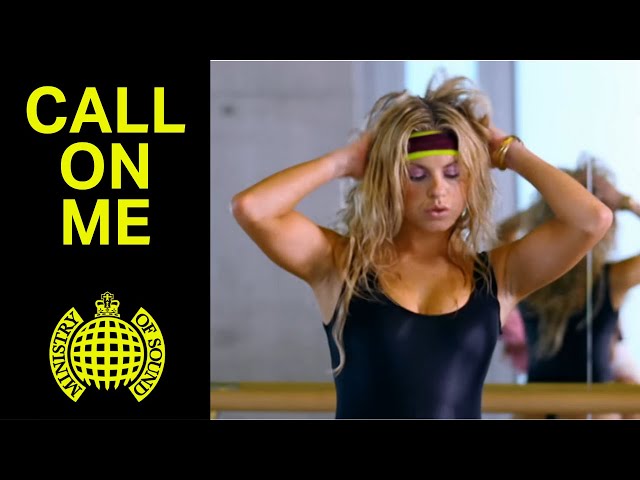
The video, built around an aerobics class concept, became one of the most famous and talked-about dance videos of the 2000s. Its fitness aesthetic, choreography and provocative visual style turned the track into a complete pop culture moment.
At the time, music television still had enormous power. A strong video could transform a club track into a mainstream phenomenon. “Call on Me” benefited from this perfectly.
The video matched the physicality of the song. The track is repetitive, energetic and body-focused, and the video translates that directly into movement. It gave the music a visual identity that people remembered immediately.
Whether seen as iconic, exaggerated, playful or controversial, the video did exactly what it needed to do.
It made the song impossible to ignore.
That visual impact is one of the reasons “Call on Me” became more than a dance record. It became an image, a memory and a cultural reference.
Production Perspective
From a production perspective, “Call on Me” is a lesson in efficiency.
The track does not try to impress through complexity. It succeeds because every element has a clear purpose. The vocal hook is the center. The beat supports it. The bass keeps it moving. The arrangement creates just enough variation to maintain energy without weakening the central idea.
The mix is bright and direct. The vocal cuts through clearly. The drums are clean and functional. The whole track feels polished for maximum commercial impact.
This kind of production can be easy to underestimate because it sounds simple. But making something simple and unforgettable is extremely difficult.
Many producers add layers because they do not fully trust the main idea. “Call on Me” does the opposite. It trusts the hook completely.
That confidence is what makes the record work.
Why the Track Still Works Today
“Call on Me” still works today because it has one of the most valuable qualities in dance music: instant recognition.
The moment the vocal comes in, people know the track. That kind of familiarity gives it lasting power. Even if the production clearly belongs to the early 2000s, the central idea is strong enough to remain effective.
The song also carries nostalgia. It brings back a specific era of dance music, music television, commercial club hits and glossy pop-house production. But it does not survive only because of nostalgia. It survives because the groove still works.
A strong hook over a driving house beat will always have power if the execution is right.
“Call on Me” may not be the deepest track in Eric Prydz’s catalog, but it is one of the most effective. It knows exactly what it wants to do and never loses focus.
That is why people still remember it.
Eric Prydz and the Breakthrough Hit Problem
One of the most interesting parts of the “Call on Me” story is its relationship with Eric Prydz’s later career.
After the success of this track, Prydz went on to build a very different artistic identity. Tracks like “Pjanoo” and “Opus” showed a more expansive, progressive and sophisticated side of his production. His live projects, including EPIC and HOLO, positioned him as one of the most ambitious electronic artists of his generation.
Because of that, “Call on Me” can feel almost like an anomaly.
It is more commercial, more direct and more connected to pop culture than much of his later work. For some artists, a breakthrough hit can become a shadow. It gives visibility, but it can also create expectations that do not fully match the artist’s long-term vision.
Still, viewed from today, “Call on Me” remains an important part of his story. It showed his ability to create a dance track with enormous mainstream impact before he moved into deeper and more ambitious territory.
It may not define Eric Prydz completely.
But it definitely changed his career.
Playlist / Curator Perspective
From a playlist perspective, “Call on Me” remains extremely useful because it brings instant energy.
It works especially well in early 2000s dance playlists, classic house selections, workout playlists, party throwbacks, nostalgic club edits and commercial dance collections. The track immediately changes the mood of a playlist because it is so recognizable and physically direct.

It is not background music.
It is a moment.
For curators, this is valuable. Some songs maintain flow. Others create peaks. “Call on Me” is a peak track. It lifts the energy quickly and gives listeners a hook they can connect with immediately.
Its association with fitness culture through the video also makes it perfect for workout and high-energy contexts. Few dance tracks are so naturally connected to movement, repetition and body energy.
That is why it remains playlist-friendly even decades after its release.
Why It Became a Dance Classic
“Call on Me” became a dance classic because it combined the right elements at the right time.
It had a recognizable sample.
It had a simple but effective house groove.
It had a music video that made it unforgettable.
It had radio accessibility and club energy.
It arrived during an era when dance music could still explode through music television and physical singles.
Most importantly, it understood the power of simplicity.
The track does not try to say too much. It does not try to be dramatic. It does not try to reinvent the structure of house music. It simply takes one hook and turns it into a full-body experience.
That is why it worked.
And that is why it still works.
Final Thoughts
Eric Prydz’s “Call on Me” remains one of the most recognizable dance tracks of the 2000s because it captures the power of repetition, groove and visual identity.
It is not the most complex song in dance music history, but it is one of the most efficient. It takes a single vocal idea and builds an entire world around it. The result is a track that became a club hit, a radio hit, a video phenomenon and a lasting cultural reference.
More than twenty years later, “Call on Me” still feels alive because it was never trying to be subtle.
It was trying to be impossible to forget.
And in that, it completely succeeded.
Sound Breakdown Rating
Hook: 10/10
Sample Use: 9.5/10
Production: 8.8/10
Club Energy: 9.4/10
Pop Culture Impact: 9.7/10
Replay Value: 9.2/10
Overall Rating: 9.4/10