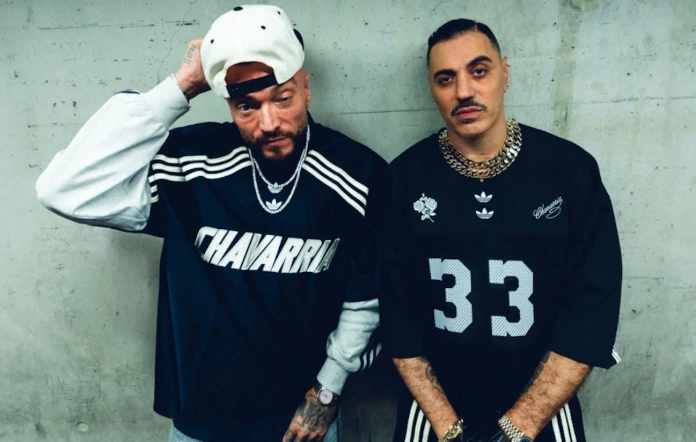
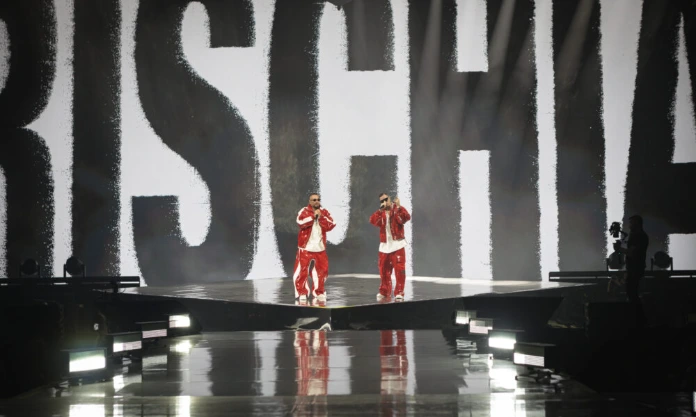
Ten years after the release of Santeria, Marracash and Guè reunited in front of the crowd at Milan’s Ippodromo SNAI San Siro to celebrate one of the most important albums of their careers and, more broadly, a defining record in the recent history of Italian rap. Victor Bendo Selections was there with music reporter Micaela Villani, who experienced the show directly from the crowd.
Some albums remain tied to a very specific moment in time. Others, as the years pass, stop belonging only to the artists who created them and become part of the collective memory of the people who grew up listening to them. Santeria belongs to the second category.
On Saturday, September 12, 2026, Marracash and Guè returned to the stage together at Milan’s Ippodromo SNAI San Siro, ten years after the release of their joint album, bringing back a project that still carries enormous weight within Italian rap. This was not simply an anniversary concert or an exercise in nostalgia. What unfolded in Milan was the story of an artistic and personal relationship that has stretched across three decades of friendship, twenty years of shared history in music and a significant part of the evolution of Italian hip-hop itself.
The announcement had arrived on March 23, following weeks of cryptic hints across social media, altered profiles and repeated references to June 24, 2016, the original release date of the album. From that moment, it was clear that Marracash and Guè were preparing something special, but until the night of the show, it was difficult to imagine just how far they would take the anniversary and turn it into a full-scale retelling of their story.
In this article:
- Milan Steps Back Inside “Santeria”
- Ten Years Later, the Chemistry Is Still There
- “Santeria” Returns Live, but Not Like It Did in 2016
- The Battle Becomes One of the Night’s Highlights
- No Need to Fill the Stage
- From the Past to the Present
- “Nulla Accade” Brings Everything Full Circle
- Why “Santeria” Still Matters
- The Full September 12, 2026 Setlist
Milan Steps Back Inside “Santeria”
From the queues forming early in the afternoon to the black, white and gold visuals, the entire production pulled the audience back into the world of the 2016 album.
The atmosphere around the Ippodromo had already started building long before the gates opened. By early afternoon, long queues had formed along Via Diomede, with fans arriving from Milan and cities across Italy. The crowd brought together those who had experienced Santeria when it first came out and others who had discovered the record only in the years that followed.
Once inside, the visual impact immediately established the identity of the show. The enormous stage was built around a structure resembling a cross, clearly recalling the imagery associated with the album. The visuals moved between black, white and gold, featuring statues, religious symbolism and direct references to the aesthetic of the 2016 cover, without ever feeling like a simple attempt to recreate the past.
Even the pre-show had been designed as an essential part of the experience. Before Marracash and Guè appeared on stage, several producers who helped shape the sound of Santeria, including Marz, Dele and Zef, took over the decks for a warm-up built around the album’s instrumentals. At several points, the crowd was already rapping the lyrics over the beats, showing just how recognisable those productions have become in their own right.
It was probably the first real indication of what would happen throughout the rest of the night: Santeria did not need to be rediscovered, because for a large part of the audience, it had never really disappeared.
Ten Years Later, the Chemistry Is Still There
Marracash and Guè have both changed, but the contrast between their personalities remains the driving force behind the project.
When Santeria was released on June 24, 2016, Marracash and Guè were already two central figures in Italian rap. Guè carried with him the history of Club Dogo and an established solo career, while Marracash had spent years developing a powerful artistic identity, becoming one of the scene’s most distinctive voices through his writing, vision and ability to portray Milan.
The strength of the project came precisely from the fact that neither of them needed the other in order to establish himself. Santeria worked because it brought together two fully formed and very different personalities, allowing those differences to become part of the album itself.
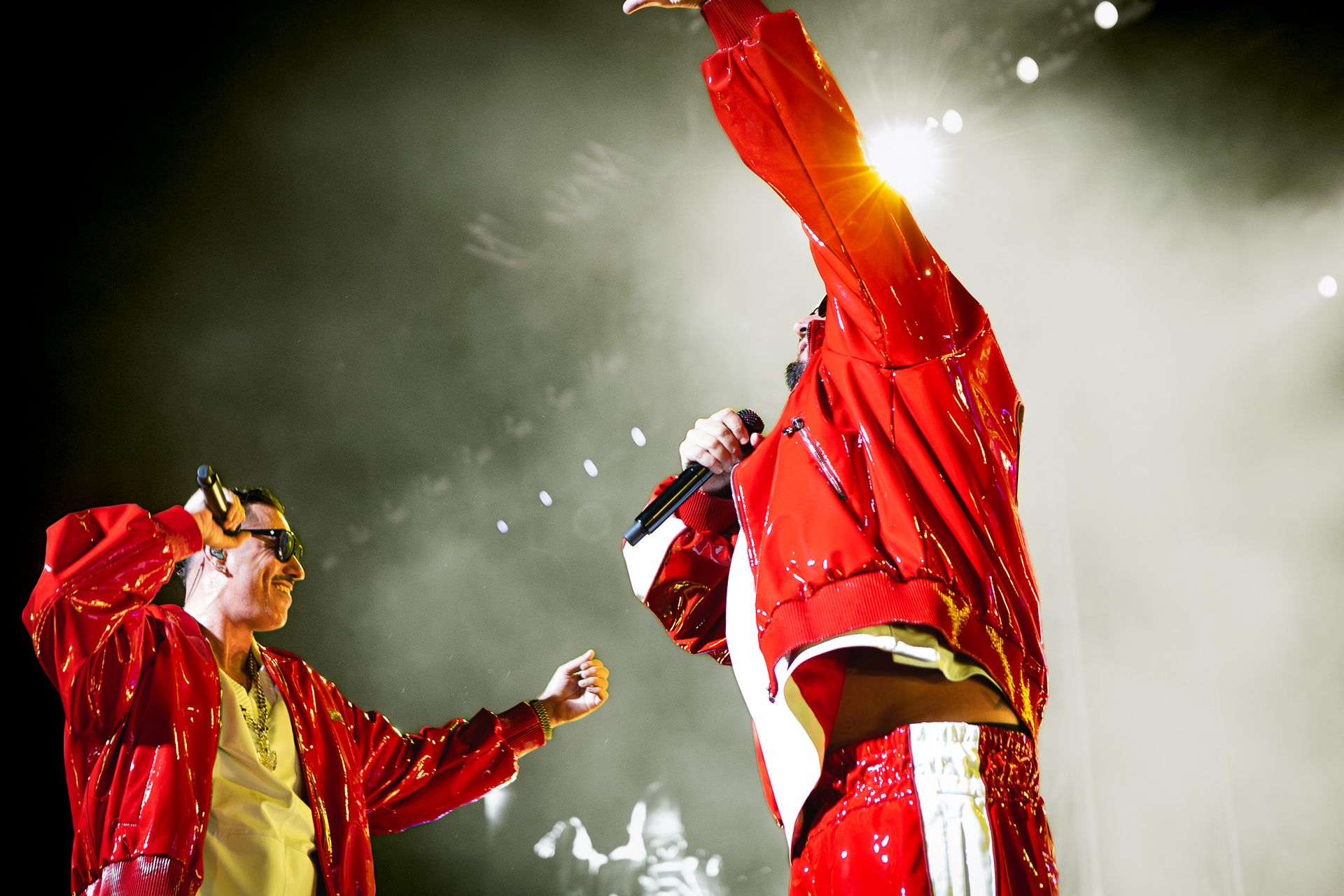
Ten years later, that dynamic remains almost untouched. On stage, Guè still carries the technical ease, irony and provocative attitude that have always defined his approach to rap, while Marracash moves between introspection, intensity and complete control of the stage. Watching them together does not feel like seeing two artists trying to recreate something from the past. Instead, they look like two rappers who know each other’s timing, strengths and weaknesses perfectly and who still enjoy playing with that contrast.
Much of the concert lives through that relationship. There are glances, jokes, moments of friendly competition and constant references to their shared history. At times, it almost feels as though the audience is watching a conversation between the two of them rather than a show designed for tens of thousands of people.
“Santeria” Returns Live, but Not Like It Did in 2016
The album is performed in full, but the setlist is rebuilt as a narrative, moving between songs from the record, scene changes and key moments from their individual careers.
One of the most successful aspects of the show was the way Santeria was brought back to the stage without being treated like a museum piece.
Marracash and Guè had promised that they would perform the album in full, and they kept that promise, but the setlist did not simply follow the original track order. Instead, the songs were rearranged within a more cinematic structure, designed to move between harder moments, more personal passages, shifts in atmosphere and sections dedicated to their respective careers.
Following the intro, “Salvador Dalì” immediately ignited the Ippodromo. From there came “Money”, “Senza Dio”, “Daytona”, “Ca$hmere”, “Relax”, “Ninja”, “Cosa Mia” and “Scooteroni”, forming a fast-moving opening section with very few breaks and a crowd capable of following virtually every bar.
This is probably one of the details that is hardest to understand through videos recorded on a phone: the sheer level of collective participation. It was not only about the biggest choruses. Entire verses, less obvious sections and songs released ten years ago were being rapped almost word for word by thousands of people.
At that point, it became clear just how deeply these songs have entered the language of a generation.
The Battle Becomes One of the Night’s Highlights
Their two catalogues collide in a sequence designed like a video game, turning the concert into a playful confrontation between two friends and two careers.
After the first section centred on the album and a series of stage transitions, the show suddenly shifted tone.
Marracash and Guè transformed part of the concert into a genuine battle between their respective catalogues, accompanied by visuals inspired by fighting games. The two artists alternated some of the most recognisable tracks from their solo careers, with each song appearing to answer the one that came before it.
“Sport” was matched against “Lamborghini”, “Body Parts” against “Ti Levo le Collane”, “Badabum Cha Cha” against “Mollami”, and “Cookies ’N’ Cream” against “King del Rap”, before reaching combinations such as “Ragazzo d’Oro” versus “64 Bars”.
What made the section work was that it never really felt as though the aim was to establish a winner. Instead, it became a way of showing how different, yet deeply connected, their careers have been.
They provoked each other, laughed, gave each other space and appeared genuinely entertained by the opportunity to revisit songs from different periods of their history. In the middle of such a large-scale production, this was ironically one of the most spontaneous moments of the entire concert.
No Need to Fill the Stage
There was no parade of guest appearances: to celebrate Santeria, Marracash, Guè and the relationship that created the album were enough.
Another interesting choice was the decision not to build the anniversary around a long list of guest appearances.
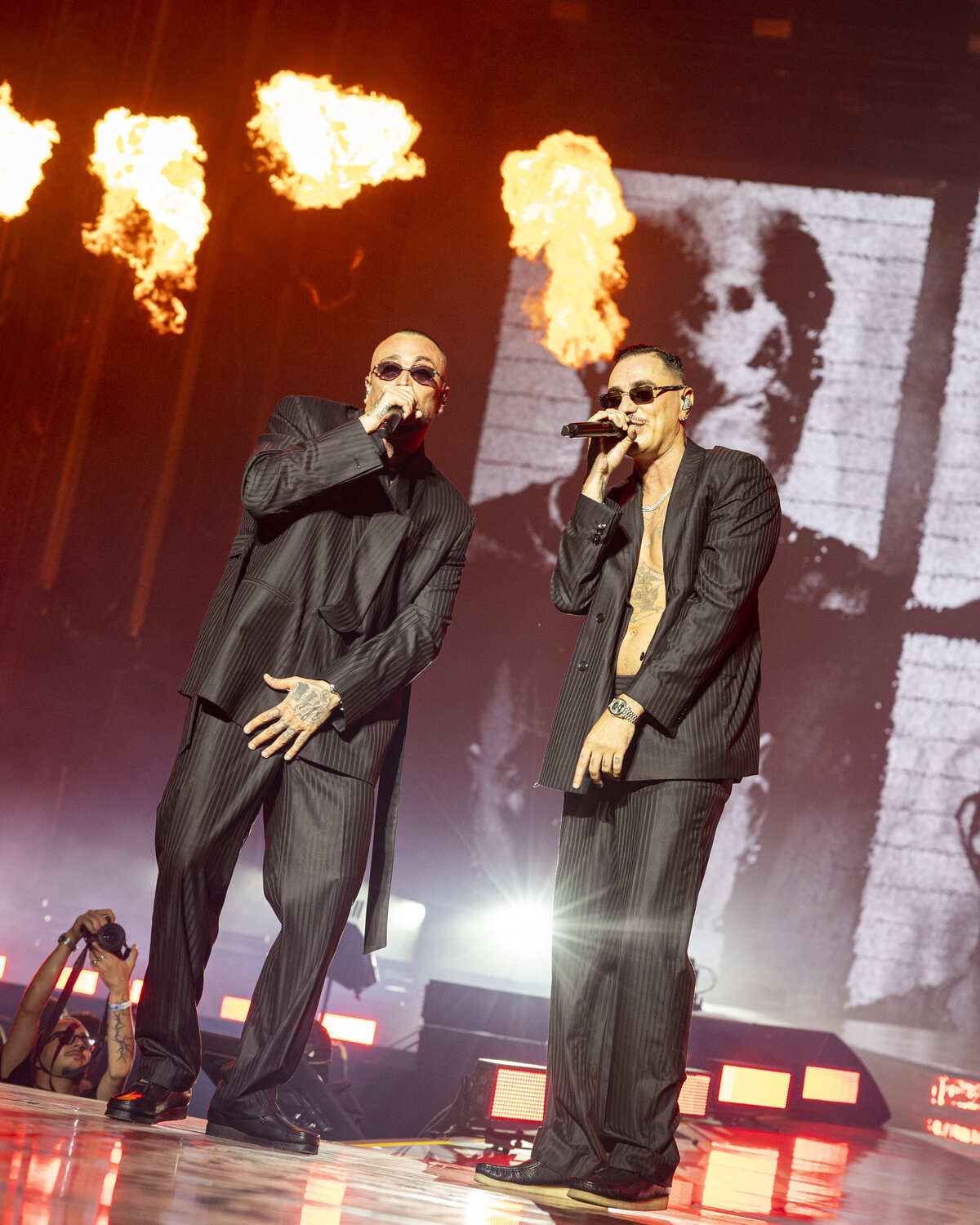
Considering the number of collaborations Marracash and Guè have accumulated over the years, it would have been relatively easy to turn the show into a showcase of major names from the Italian rap scene. Instead, the concert remained almost entirely focused on the two of them.
It was a decision that made perfect sense within the nature of Santeria. From the beginning, the project was born from the meeting of two very specific personalities, and the live show respected that same logic. Other names could remain offstage because, in order to tell the story of this album, nothing else was really necessary.
That simplicity also made the relationship between Marracash and Guè even more visible, reinforcing it as the true thread running through the entire show.
From the Past to the Present
The final part of the concert moves beyond the boundaries of the album, placing the Santeria of 2016 in conversation with the artists Marracash and Guè have become ten years later.
The final section of the show gradually expanded the story beyond Santeria.
Tracks such as “Purdi”, “Film Senza Volume”, “Qualcosa in cui credere” and, above all, “Brivido” arrived, with the latter remaining one of the songs that best represents the artistic connection between Marracash and Guè even before the joint album existed.
Then came “∞ Love” and “Casini”, the new single released to mark their reunion.
Including a brand-new track within a concert built around a ten-year-old album was a significant choice because it prevented the show from becoming completely trapped in the past.
Marracash and Guè have both become even bigger artists since 2016, but they have done so by following very different paths. Marracash has developed an increasingly conceptual, personal and introspective discography, while Guè has achieved a level of longevity that remains rare in Italian rap, moving through different generations, trends and sounds without losing his identity.
Seeing them together again therefore also means recognising the distance both of them have travelled.
The concert works not only because it brings an important album back to life, but because it shows what the relationship behind that album has become ten years later.
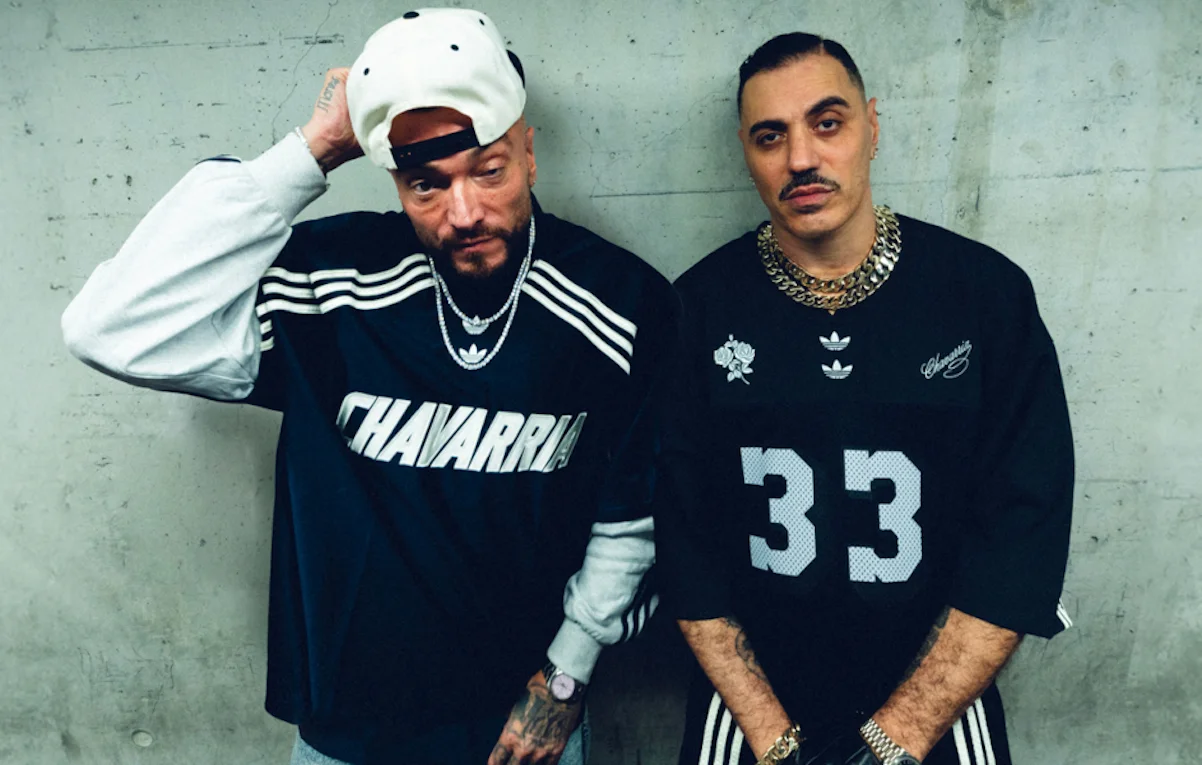
“Nulla Accade” Brings Everything Full Circle
During the most personal moment of the night, the concert briefly stops being only about music and returns to the friendship from which everything began.
Towards the end of the evening comes the most personal moment of the show.
Before “Nulla Accade”, Marracash pauses to speak openly about his relationship with Guè. He reflects on a friendship stretching back roughly thirty years, careers that have overlapped for much of their lives and the role that meeting Guè played in his own journey.
For a few minutes, the scale of the production fades into the background. They are no longer simply two rappers celebrating a successful album, but two people becoming aware of how much time has passed and how deeply their personal history has become intertwined with the history of Italian music.
Then “Nulla Accade” begins, and the entire Ippodromo sings with them.
It is difficult to imagine a more fitting ending.
Why “Santeria” Still Matters
Ten years later, the importance of the album is measured not only through certifications, but through its ability to continue connecting different audiences and generations.
When Santeria was released in 2016, Italian rap was entering a period of enormous transformation. Streaming was changing the way music was consumed, trap was about to become dominant and an entirely new generation of artists was beginning to emerge.
Yet Marracash and Guè managed to create an album that sounded international without losing its identity. Milan was present in every corner of the project: in its references, its ambition, its luxury, its contradictions, its paranoia and its street-level perspective.
Ten years later, hearing those same songs in the same urban context inevitably means looking at everything that has happened since. Italian rap has become fully mainstream, both artists have continued to evolve and their audience has grown alongside them.
And perhaps the most significant detail of the night is exactly that: in front of the stage were people who had already experienced Santeria in 2016 alongside others who probably discovered the record several years later.
They were singing together, with no real distinction between them.
More than streaming numbers or certifications, this is what explains what Santeria represents today.
It is no longer simply an important album in the discographies of Marracash and Guè. It has become part of the collective memory of Italian rap.
And when the concert ends, after more than thirty songs and an evening constantly moving between past and present, the feeling is that the tenth anniversary has celebrated something larger than the album itself: a friendship, a city, a unique chapter in Italian music and an audience that, ten years later, still knows every word.
Report from the September 12, 2026 concert | Micaela Villani
for Victor Bendo Selections.