Ten years can be an eternity in rap. Sounds change, scenes rebuild themselves, new generations arrive and albums that once seemed tied to a specific moment either disappear with it or gradually become part of the language that follows.
Santeria belongs firmly to the second category.
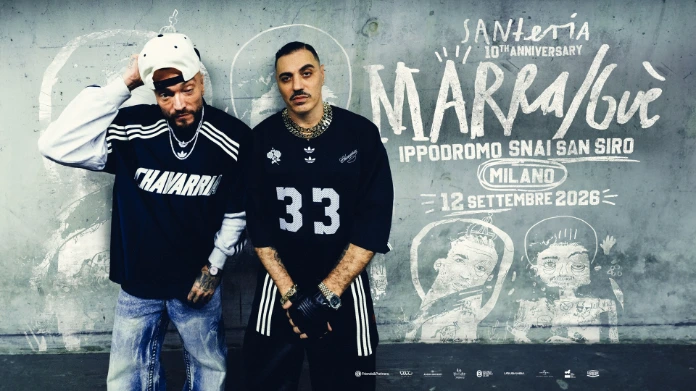
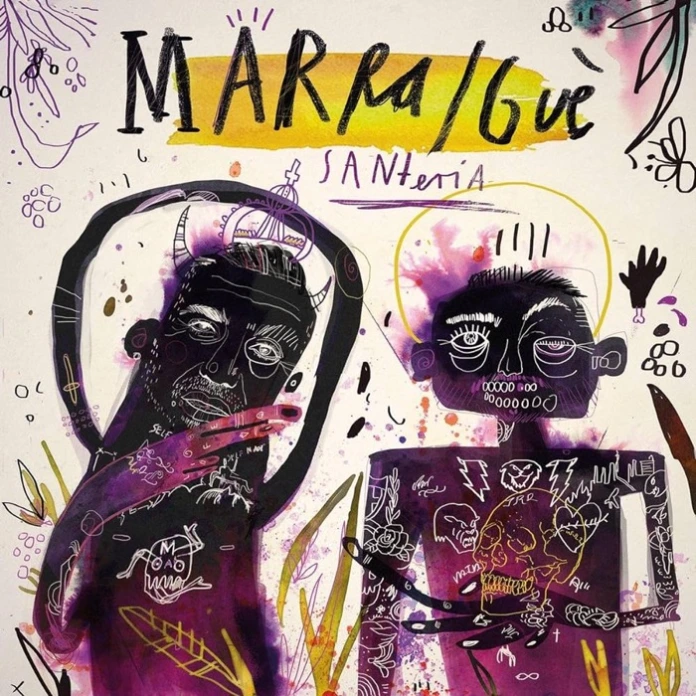
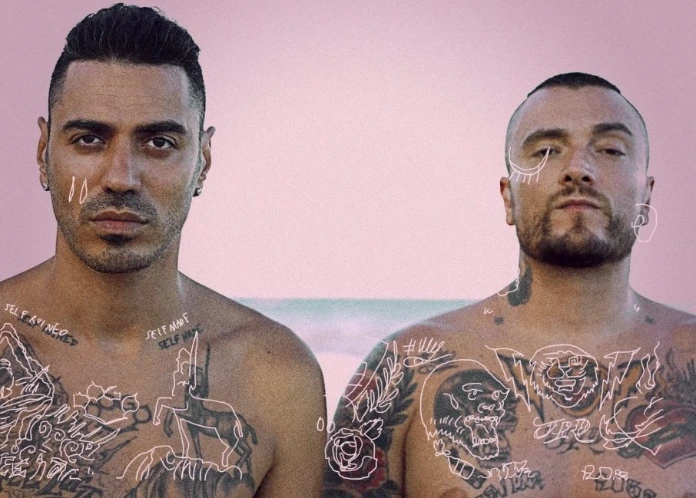
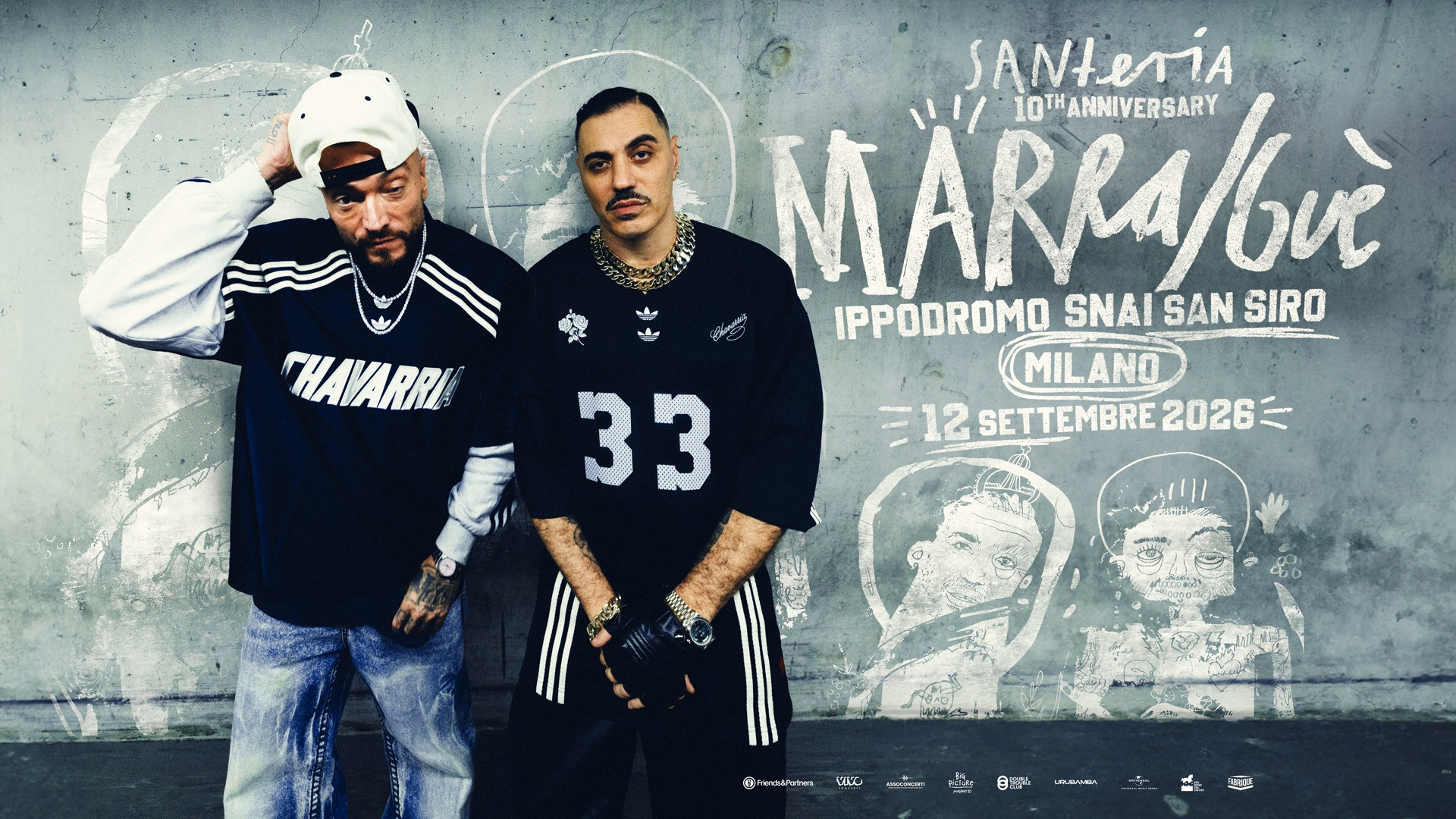
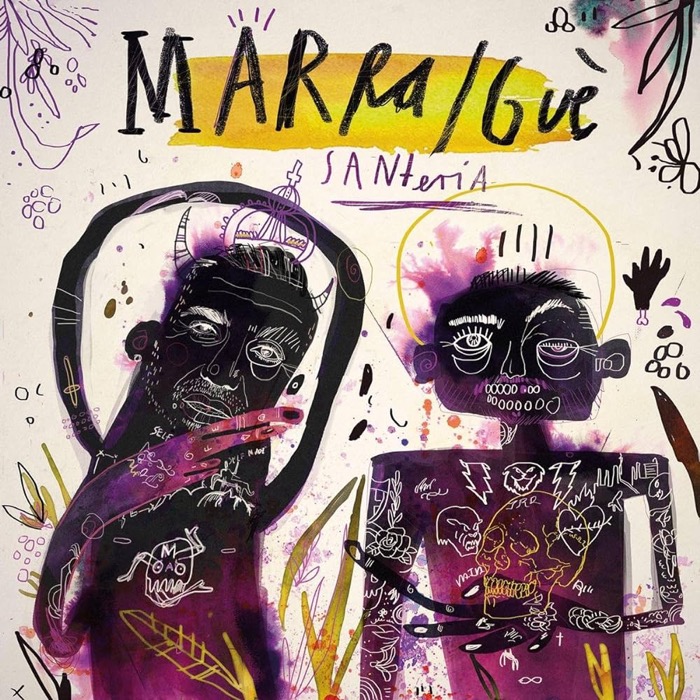
On Saturday 12 and Sunday 13 September 2026, Marracash and Guè will reunite at Milan’s Ippodromo SNAI San Siro for Santeria 10th Anniversary, two shows conceived around an album that did far more than bring together two of Italy’s most important rappers. Released in 2016, Santeria became one of the defining collaborative projects in modern Italian hip-hop, bringing together luxury, paranoia, ambition, street imagery, dark humour and technical rap at a moment when the country’s urban scene was entering a completely new phase.
The response to the anniversary announcement immediately made clear how much that record still means. The first Milan date sold all 33,000 tickets, prompting promoters to add a second and final concert for 13 September; as the weekend approaches, only the final tickets for Sunday remain available. Both shows begin at 9 PM, with organisers recommending that the audience arrive by 8:30 PM.
And rather than treating the anniversary as a conventional greatest-hits reunion, Marracash and Guè are going back directly to the source: the entire Santeria album is set to be performed live, surrounded by songs created together across roughly two decades of careers that have repeatedly crossed without ever becoming interchangeable.
This is not simply nostalgia.
It is one of Italian rap’s most important partnerships returning to the city that shaped it.
In this article:
- Ten Years of “Santeria”
- “Casini”: The Reunion Is Already Moving Forward
- Marracash Returns to Santeria at the Peak of Another Era
- Guè and the Art of Remaining Guè
- A Milan Rap Event, Not Just an Anniversary Concert
- Santeria 10th Anniversary: The Full Tracklist
- Ten Years Later, Nobody Knows What Comes Next
- Our Music Reporter Micaela Will Be Inside the Crowd
Ten Years of “Santeria”
When Santeria arrived on 24 June 2016, Marracash and Guè were hardly newcomers needing a collaborative album to establish themselves. Both already occupied central positions within Italian rap, but the project captured something that neither artist could have created in exactly the same way alone.
Their chemistry came from contrast.
Marracash brought a writing style increasingly interested in contradictions, identity, status and psychological tension, while Guè approached rap with the instinct of someone whose vocabulary had been shaped equally by street rap, luxury imagery, American hip-hop and the technical pleasure of the punchline. Put together, those perspectives created a record that sounded excessive, cynical and sophisticated at the same time, with neither artist reducing his personality to accommodate the other.
Tracks such as “Nulla Accade”, “Insta Lova”, “Salvador Dalì”, “Scooteroni” and “Tony” helped turn the project into something larger than a one-off collaboration. The record gradually became a reference point for a generation of Italian listeners and artists, and its commercial life has continued long after its original release: FIMI now lists Santeria as five-times platinum, with the fifth certification arriving in 2026, perfectly coinciding with its tenth anniversary.
Its influence is difficult to explain purely through numbers, however, because much of what made Santeria important lies in the way it anticipated where Italian rap was heading. It arrived just before streaming, trap and a new generation of urban artists completely reshaped the Italian market, yet the album never sounded like two veterans trying to chase what was coming next. Instead, Marracash and Guè used their own history to create something contemporary enough to survive the transition.
A decade later, performing the project from beginning to end is therefore more than an anniversary exercise. It is an opportunity to hear a record originally created inside one version of Italian rap being performed in front of an audience that now includes people who discovered it years after its release.
“Casini”: The Reunion Is Already Moving Forward
If the two Milan concerts had been built entirely around Santeria, the anniversary alone would have been enough to make the weekend one of the most significant Italian rap events of 2026.
Marracash and Guè have instead chosen to complicate the idea of a reunion.
At 1 AM on 9 September, only 2 days before the first Ippodromo show, they released “Casini”, a completely new collaboration produced by Marz and built around a sample of Coolio’s 1995 classic “Gangsta’s Paradise.” The release has been presented as another chapter in a relationship that now spans around 30 years of friendship, 20 years of working alongside one another and a decade since Santeria.
That timing feels deliberate.
Anniversary concerts usually encourage artists to look backwards, reconstructing the imagery and music of a specific period before returning to their separate careers when the lights go down. Releasing “Casini” immediately before these shows changes that narrative because it suggests that Marracash and Guè are not simply recreating something that ended in 2016.
They are making music together again in 2026.
The use of “Gangsta’s Paradise” is also an immediately recognisable choice, but the production does not exist simply to create nostalgia around another era. Instead, Marz provides a familiar reference point around which both rappers can return to what has always made their partnership work: bars, flow, punchlines, competitive energy and the impression that each verse is constantly provoking a response from the other.
Whether “Casini” remains an isolated anniversary release or eventually becomes the beginning of something larger is currently unknown.
That uncertainty is precisely what makes its arrival interesting.
Marracash Returns to Santeria at the Peak of Another Era
The timing of this reunion is particularly significant for Marracash because his career since Santeria has undergone an extraordinary second transformation.
Rather than remaining identified primarily with the generation that established itself during the 2000s and early 2010s, he entered another creative period through Persona, followed by Noi, loro, gli altri and È finita la pace, a sequence of records that turned introspection, identity and social observation into increasingly ambitious conceptual projects.
By 2026, Persona had reached Diamond certification, representing 500,000 equivalent units, an achievement Marracash chose to celebrate not through an industry ceremony but by returning to Milan’s Barona, the neighbourhood where his story began. That connection later expanded into the Marra Block Party on 18 April 2026, an event built around the neighbourhood itself and conceived as both a concert and an act of cultural restitution.
There is something fitting about moving from Barona back to Santeria within the same year.
One event looked directly at Marracash’s origins, while the other returns to a project created during a crucial middle chapter of his career. Yet neither feels disconnected from the artist he has become, particularly because the increasingly introspective writing of his later albums has made some of Santeria’s tensions feel more revealing in retrospect.
The person returning to those songs in 2026 is not the same rapper who recorded them in 2016.
That is exactly why hearing them again matters.
Guè and the Art of Remaining Guè
Guè’s trajectory has developed according to a different logic.
Where Marracash increasingly built albums around large conceptual frameworks, Guè has spent much of his career demonstrating how far a deeply recognisable rap identity can evolve without fundamentally abandoning itself. From the Club Dogo years through his solo catalogue, mixtapes and collaborations, his musical world has consistently revolved around an encyclopaedic knowledge of hip-hop combined with an instinct for contemporary production.
Recent projects including Tropico del Capricorno and the continuing Fastlife series have reinforced that position, allowing Guè to work with newer generations of producers and rappers without sounding like a veteran attempting to imitate them.
That distinction becomes particularly important inside Santeria.
The album works because Marracash and Guè never sound like two versions of the same artist. Their approaches intersect, but the differences remain visible enough to create tension, humour and competition throughout the record. What one rapper leaves open, the other frequently fills; where one becomes analytical, the other can become more instinctive, and when both decide simply to rap, the project becomes a showcase for two technically distinct approaches occupying the same space.
Ten years later, those differences have only become more pronounced.
Which should make the reunion considerably more interesting.
A Milan Rap Event, Not Just an Anniversary Concert
The choice of the Ippodromo SNAI San Siro gives the anniversary a scale that would have been difficult to imagine when Marracash and Guè first began working together.
The venue has increasingly become one of Milan’s major destinations for large outdoor shows, and 33,000 tickets disappearing for the first date transformed what initially looked like a special anniversary performance into a genuine two-night event.
More importantly, there is something culturally appropriate about these shows happening in Milan.
Both artists have histories deeply intertwined with the city and with different stages of its rap culture, from the scene that grew around crews, clubs and street-level networks to the moment when Italian hip-hop became one of the dominant forces in the national music industry.
Santeria exists somewhere between those two worlds.
It came from artists who had already spent years inside rap culture, but it arrived at the exact moment the commercial possibilities surrounding Italian urban music were expanding dramatically. Its mixture of expensive imagery, neighbourhood references, paranoia, humour and ambition captured a city,and a scene, increasingly fascinated by the tension between where it came from and where it wanted to go.
Now that record returns to Milan at stadium-scale volume.
Santeria 10th Anniversary: The Full Tracklist
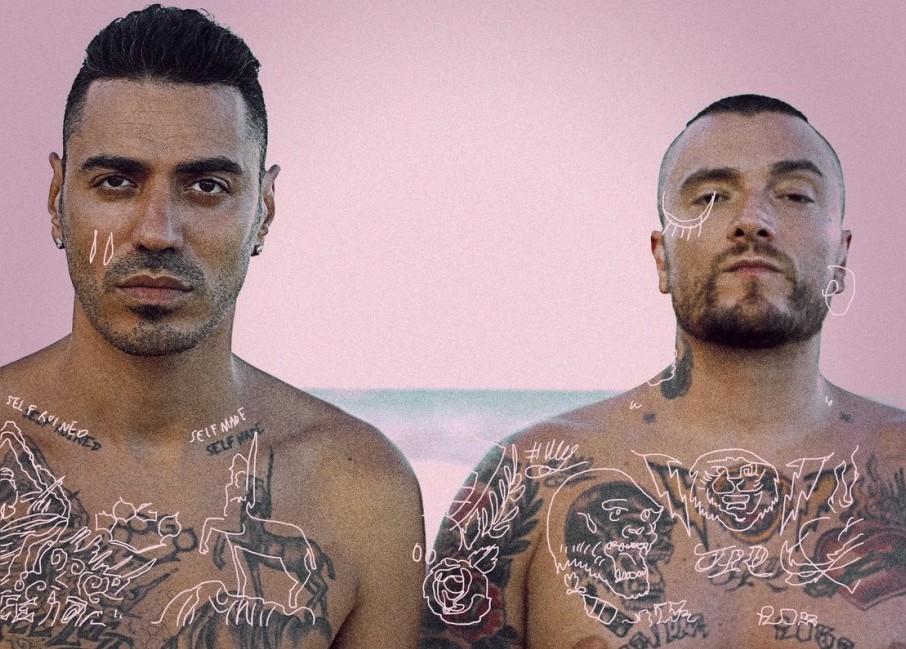
The core of the Milan shows is already clear: Marracash and Guè are bringing Santeria back to the stage in its entirety, meaning that all 15 tracks from the original 2016 album are expected to form the backbone of the anniversary concert.
The full Santeria tracklist is:
- Santeria
- Money
- Nulla Accade
- Senza Dio
- Salvador Dalì
- Cosa Mia
- Purdi
- Cantante Italiana
- Insta Lova
- Maledetto Me
- Scooteroni
- Tony
- Quasi Amici
- Film Senza Volume
- Erba & WiFi
Together, these tracks make up the complete original version of the album released on 24 June 2016, running for almost 56 minutes and capturing the chemistry between Marracash and Guè at one of the defining moments of modern Italian rap.
And then there is “Casini.”
Released only days before the anniversary shows, the new Marracash and Guè collaboration immediately becomes one of the most anticipated possible additions to the live set. Its presence on stage has not yet been officially confirmed, but considering the timing of the release, a first live performance in front of the Milan crowd would be one of the most natural surprises of the weekend.
Beyond the complete Santeria tracklist, the remaining part of the show is still open to speculation, leaving room for other collaborations from the pair’s long history and potentially some unexpected moments created specifically for the tenth-anniversary celebration.
Ten Years Later, Nobody Knows What Comes Next
Perhaps the most intriguing aspect of Santeria 10th Anniversary is what happens after Sunday night.
A new joint album has not been announced. Neither has a full Marracash and Guè tour.
For now, there are two Milan concerts and a new single.
Yet “Casini” inevitably creates questions that an anniversary show alone would not have generated. If the chemistry still works in the studio, and if 33,000 tickets can disappear almost immediately for a reunion concert, the possibility of another collaborative chapter no longer feels completely abstract.
Whether anything develops from it is another matter.
Trying to predict Marracash and Guè has never been particularly useful, and transforming these concerts into the beginning of a larger campaign purely because fans want it would undermine some of what makes the reunion significant.
Maybe Santeria returns for two nights and then goes back into history.
Maybe “Casini” is simply the perfect epilogue ten years later, or perhaps it is the first indication that the story is not finished.
What is already certain is that Milan has one of its defining rap events of the year.
Our Music Reporter Micaela Will Be Inside the Crowd
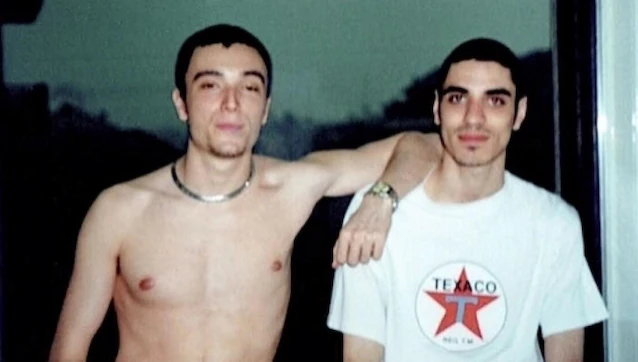
On Saturday 12 September, our Music Reporter & Journalist Micaela will come from inside the Ippodromo through Rap District, experiencing the show from the lawn and among the 33,000 people who made the first date sell out rather than observing it from the distance of a traditional press area.
That perspective feels particularly appropriate for this concert because Santeria is one of those albums whose importance has always depended as much on the people who lived with it as on the statistics surrounding it.
It arrived in 2016.
Ten years later, those songs are returning to Milan with the same two voices but an audience carrying an entire decade of memories with them.
This weekend is therefore not simply about Marracash and Guè performing an old record again. It is about seeing what happens when an album that helped define an era finally meets the people who grew up alongside it.
Ten years after Santeria, the circle is about to close at San Siro.
And we’ll be there when it does.