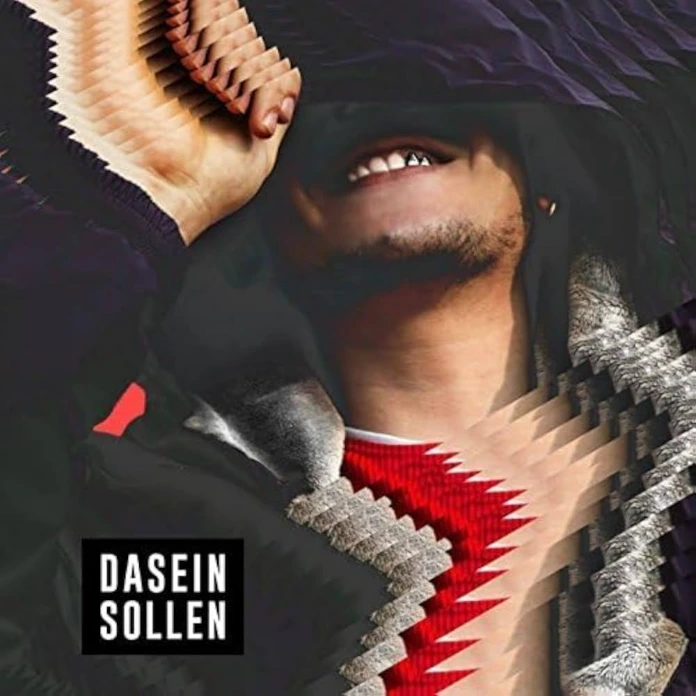
Ten years after Dasein Sollen introduced one of the most distinctive voices of Italy’s new rap generation, Rkomi is returning to Milan with A Milano, an eight-track EP that looks back without sounding nostalgic. Out October 9, the project reconnects Mirko Martorana with Calvairate, with the music that first shaped him and with a city that has followed every transformation of his career.
In this article:
Before Rkomi, There Was Mirko from Calvairate
Dasein Sollen and the First Real Turning Point
From Io in Terra to a New Kind of Italian Rap
Taxi Driver Changed Everything
Decrescendo and the Decision to Slow Down
A Milano: Returning Without Repeating the Past
Five Nights at Fabrique
Why Rkomi Still Feels Different
A Milano – Live: The Milan Dates
Before Rkomi, There Was Mirko from Calvairate
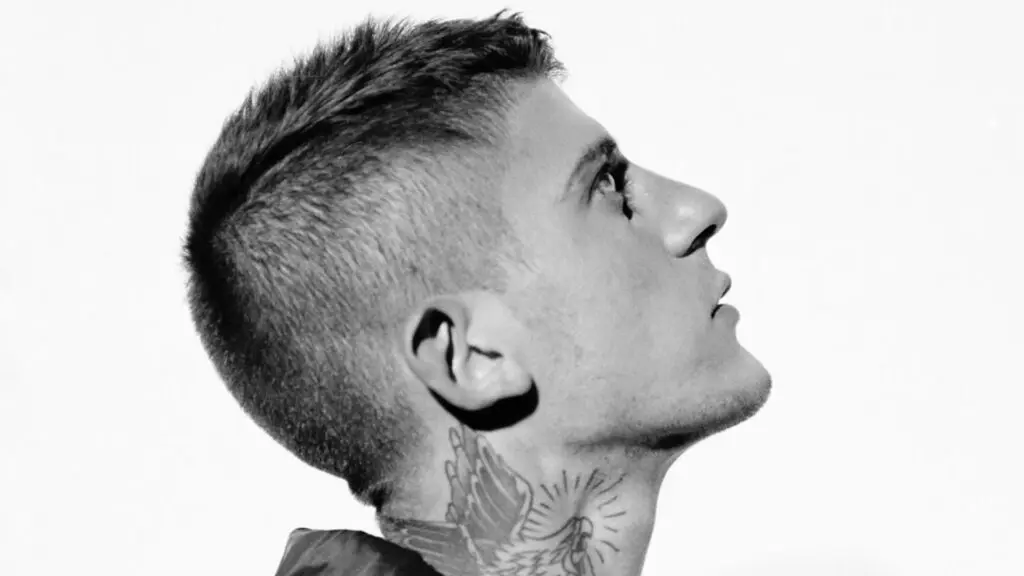
Before Taxi Driver, before Sanremo and long before television made his face familiar outside rap, there was simply Mirko Martorana, born in Milan in 1994 and raised in Calvairate, on the eastern edge of the city.
His early life never followed a neat route toward music. He left school at seventeen, moved between jobs as a bartender, construction worker and dishwasher, and spent years trying to understand what place music could realistically have in his life. Tedua, who was also his flatmate for a period, became one of the people who pushed him to take rapping seriously at a moment when Mirko was still imagining himself behind the scenes rather than in front of a microphone.
Even the name Rkomi came out of something instinctive and almost accidental, a rearrangement of Mirko that sounded right and eventually became part of his identity.
From the beginning, his influences were broader than the scene he came from. Marracash, Guè and Noyz Narcos gave him a vocabulary rooted in Italian rap, but he was equally interested in artists such as Gorillaz, Twenty One Pilots and Kendrick Lamar. That mixture would become important later, because Rkomi never really developed by choosing one world over another. His entire career has been built around the tension between them.
Dasein Sollen and the First Real Turning Point
The first projects arrived quietly.
There was Keep Calm Mixtape in 2012, then Cugini Bella Vita, and in 2014 the Calvairate Mixtape, a small project that already placed his neighbourhood at the centre of the writing. Tedua and Izi were there too, years before that generation would fully reshape Italian rap.
Then Rkomi disappeared for almost two years.
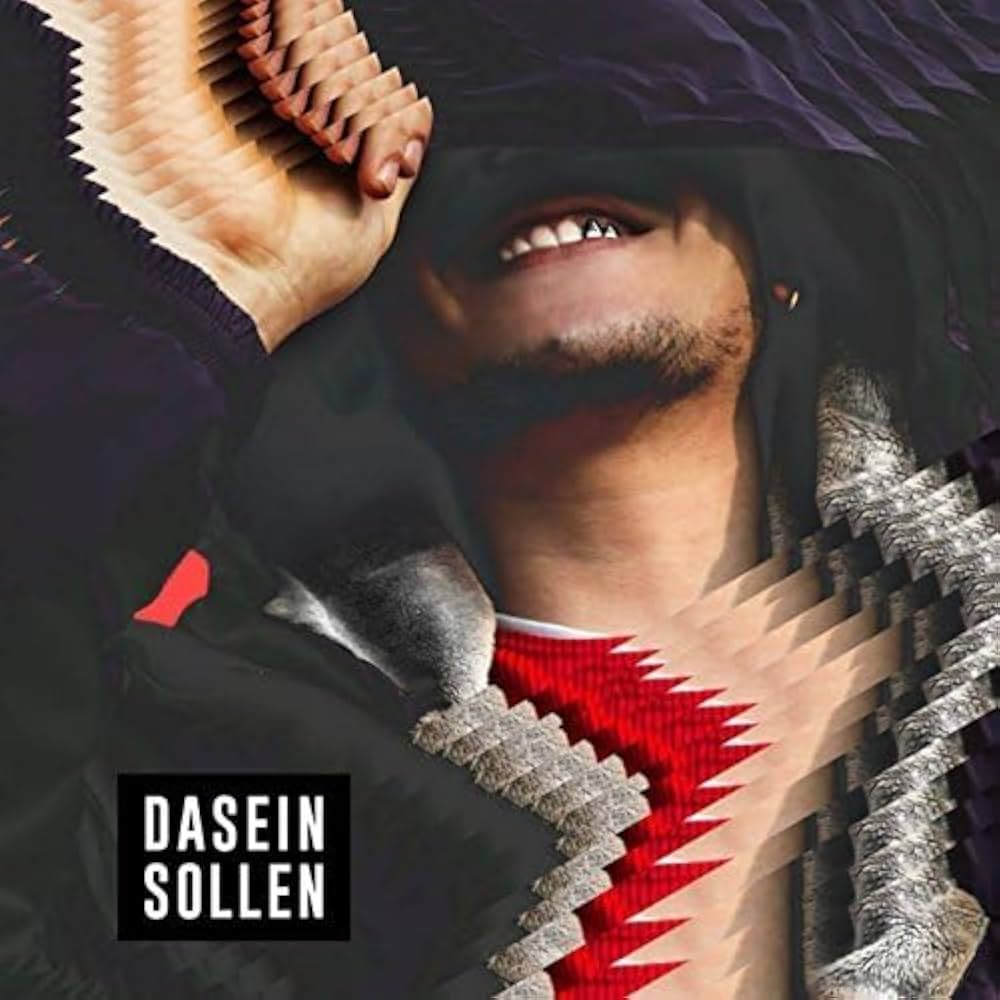
When he returned in 2016 with Dasein Sollen, the change was obvious. Even the title felt unusual. Borrowed from Heidegger and connected to the idea of “being there”, it sounded almost too academic for a street-rap project, yet the music itself never felt intellectual for the sake of it. The songs were still about the same things that had always surrounded him: anxiety, relationships, the city, the pressure of growing up without really knowing where you are headed.
That contrast was exactly what made the EP work.
Tracks such as “Aeroplanini di Carta” with Izi, “180” and “Sissignore” carried the rawness of his early music, but there was already something more melodic and introspective underneath. “Aeroplanini di Carta”, produced by Shablo, became one of the first songs to show how naturally Rkomi could move between rap and something closer to songwriting.
That period also opened the next door. Calcutta noticed him and invited him to open his shows, while Roccia Music brought him closer to Marracash and Shablo, two figures who understood that his value was not in sounding like everyone else, the path was beginning to change.
From Io in Terra to a New Kind of Italian Rap
When Io in Terra arrived in 2017, Rkomi still belonged to rap, but it was already becoming difficult to describe him only through that word.
The album was intimate, restless and often melancholic, with production from names including Shablo, Carl Brave, Fritz Da Cat and Zef. Songs such as “Solo”, “Apnea” and “Mai Più” showed a writer increasingly interested in atmosphere and images rather than punchlines or pure technique.
What made Rkomi interesting at that stage was not just that he could sing more than before, but that he was changing the structure of his songs. His writing became less linear, more visual, sometimes almost fragmented. He could move from street detail to emotional confusion within a few bars, and he rarely sounded interested in explaining everything.
That instinct became even clearer on Dove gli occhi non arrivano in 2019.
The guest list had expanded dramatically, Jovanotti, Elisa, Sfera Ebbasta, Ghali, Carl Brave, Tedua and others, but the important shift was not the names around him. It was the way Rkomi had started treating rap as a language flexible enough to absorb pop, indie, live instrumentation and traditional Italian songwriting without losing its identity.
By then, people had started calling him a kind of urban singer-songwriter, the label was imperfect, but it made sense.
Taxi Driver Changed Everything
Then came Taxi Driver, released in 2021, the album changed the scale of Rkomi’s career almost instantly. It became the best-selling album in Italy that year and turned songs such as “Partire da Te”, “Nuovo Range” and “La Coda del Diavolo” into huge mainstream records.
What had once been an unusual balance between rap, melody and rock suddenly became mass pop.
The interesting thing is that Taxi Driver did not sound like Rkomi giving up the complexity of his earlier work. If anything, it showed how much of that complexity could survive inside a much bigger format. There were guitars, pop hooks, funk, alternative textures and rap verses all living on the same record without feeling completely disconnected.
For many artists, that level of success would have become a formula.
Rkomi could have spent the next decade recreating some variation of Taxi Driver: big collaborations, radio-friendly choruses, arena tours and a sound polished enough to work everywhere.
Instead, he began moving in the opposite direction.
His Sanremo debut in 2022 with “Insuperabile” brought him even deeper into the mainstream, and later that year his role as a judge on X Factor made him even more visible. From the outside, everything seemed to be expanding.
Internally, however, the next phase of his music was already beginning to contract.
Decrescendo and the Decision to Slow Down
That contraction eventually became Decrescendo.
Released in 2025 after his return to Sanremo with “Il ritmo delle cose”, the album felt like a deliberate attempt to step away from the constant need for scale, the title said almost everything.
After years of acceleration, Rkomi chose to slow the music down and write more openly about family, relationships, his childhood, his body and his own contradictions. The production became less obsessed with impact, the voice was often left more exposed and the songs allowed imperfections to stay inside the frame.
The live project Mirko nei Teatri pushed the idea even further.
Instead of barriers, festival crowds and oversized staging, there were seats, lower lights, actors, musicians and long stretches of silence. The songs were given room to breathe and, perhaps more importantly, so was he.
That move mattered because it showed that Decrescendo was not simply a stylistic detour, it was a decision.
Rkomi had reached the point where he could fill large venues and continue making accessible records, yet chose instead to reduce the noise around himself and return to something more personal, that is what makes the arrival of A Milano feel so coherent.
A Milano: Returning Without Repeating the Past
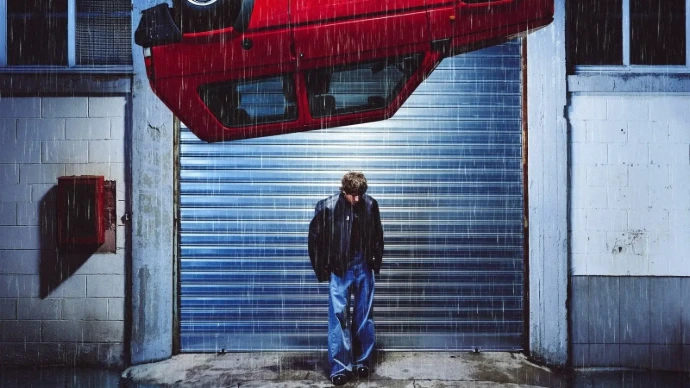
On October 9, 2026, Rkomi will release A Milano, an eight-track EP arriving ten years after Dasein Sollen.
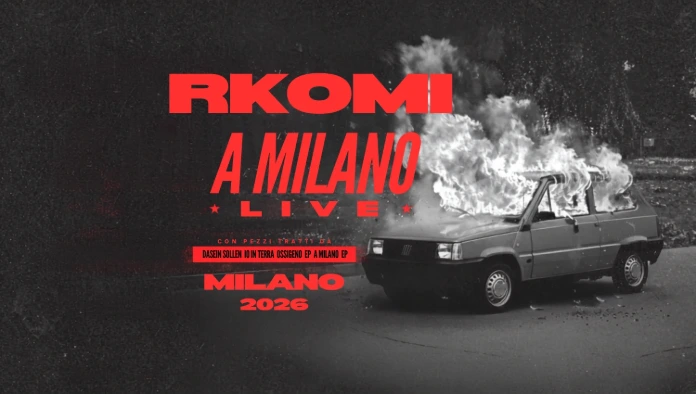
The connection is deliberate, the visual language recalls that earlier era, with red posters appearing around Milan and an aesthetic that immediately points back to 2016. The title track, released in June, stretches to around eight minutes and already suggested that this would not be a conventional return.
The easy word would be nostalgia, but A Milano does not feel like a project about trying to become twenty-two again.
Rkomi is now thirty-two, and everything that happened between Dasein Sollen and today has changed the meaning of returning. He is not going back to Calvairate as an artist who still needs to prove that he exists. He is going back after platinum records, Sanremo, television, major tours, huge commercial success and a period in which he deliberately questioned what that success was doing to him.
That makes the project more interesting, returning to the beginning after nothing happened would be simple, returning after everything happened is different, the city becomes a mirror.
Five Nights at Fabrique
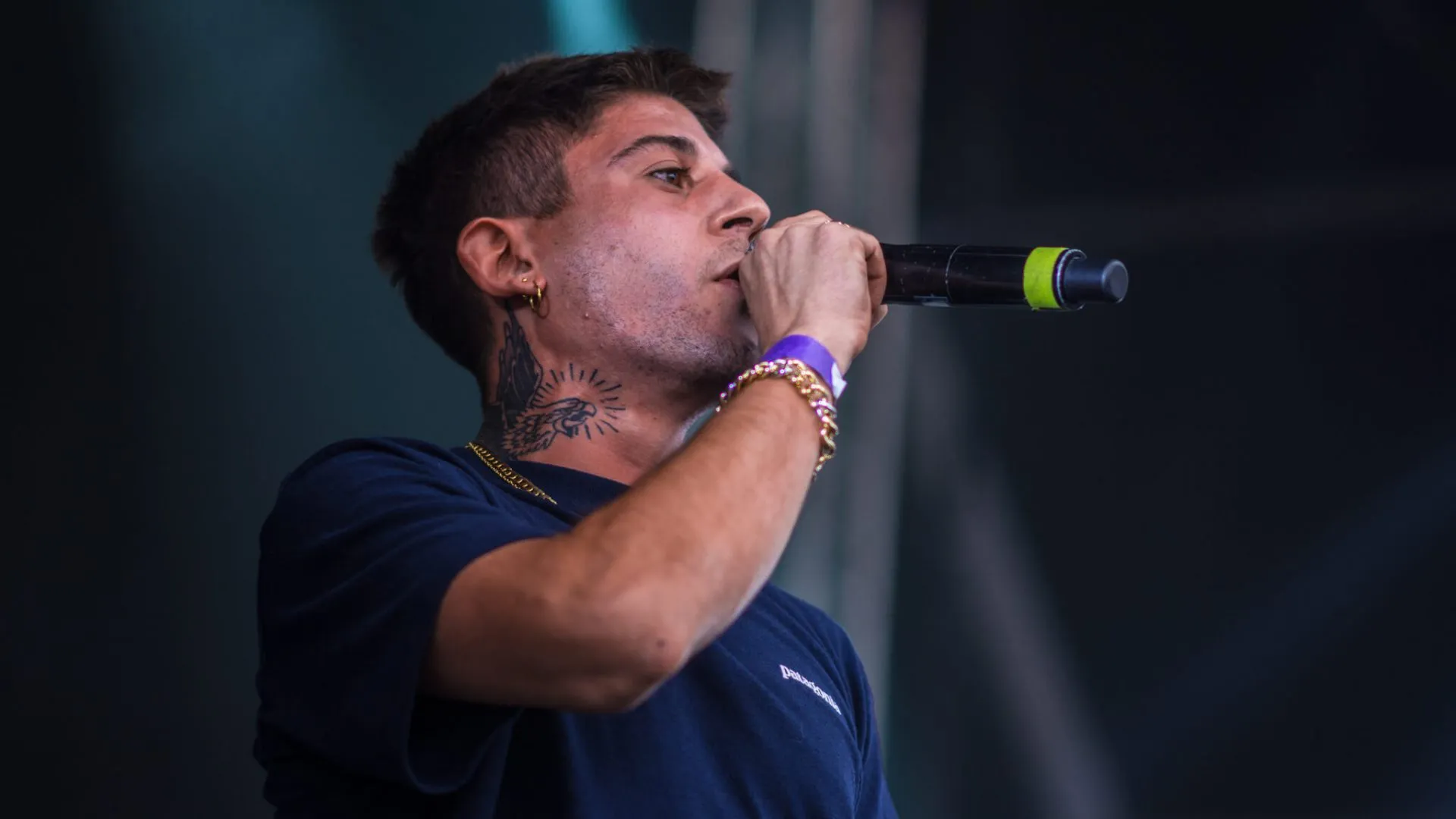
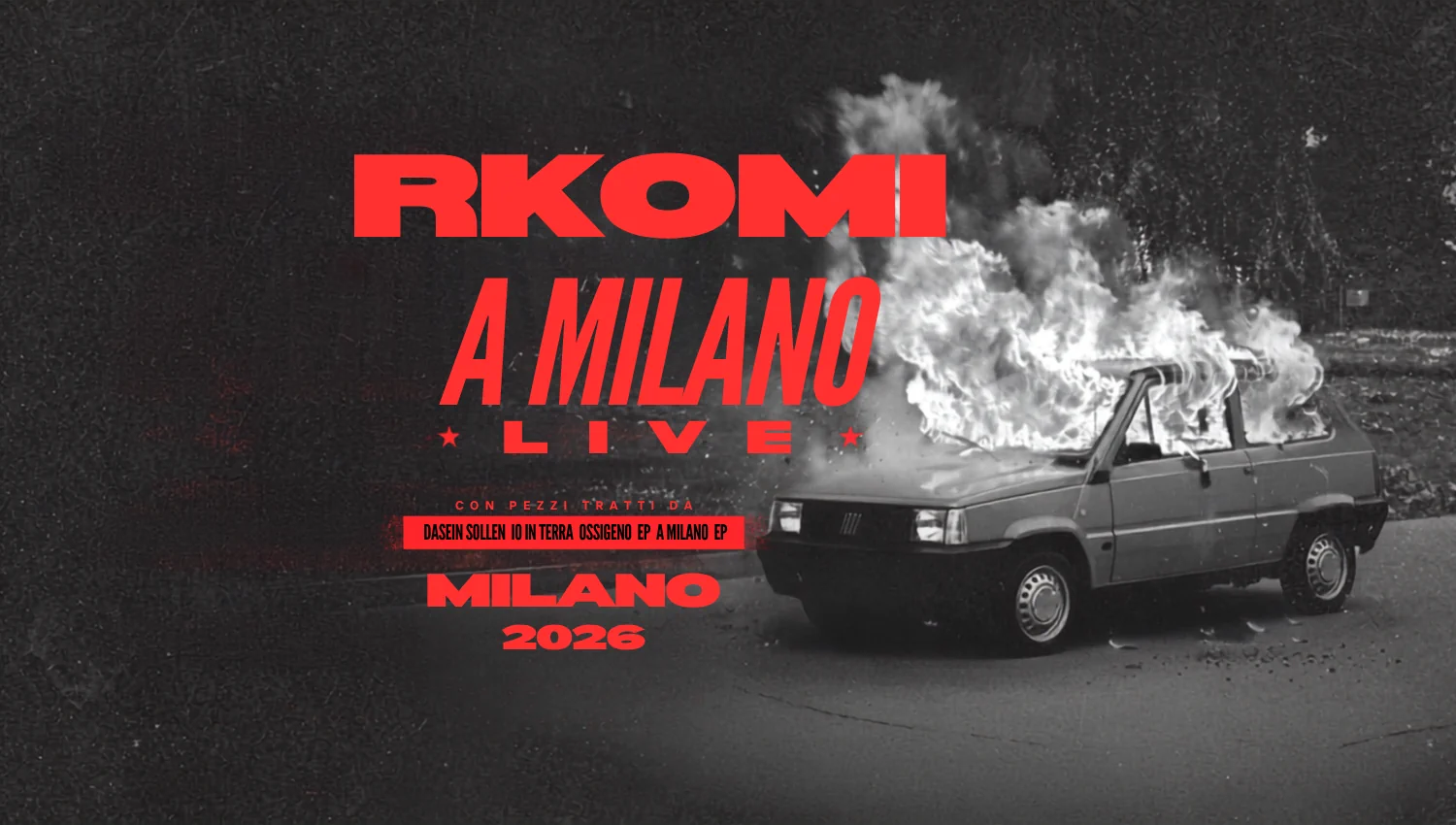
That idea will continue live in November, when Rkomi brings the project to Fabrique in Milan for five special dates.
The shows are built around material from Dasein Sollen, Io in Terra, Ossigeno and the new A Milano EP, a choice that immediately separates them from a traditional greatest-hits run.
There is no need to make Taxi Driver the centre of the storym instead, the concerts go back to the part of his catalogue that explains how he became the artist capable of making Taxi Driver in the first place.
The dates on November 3, 4, 11 and 13 are already sold out, with a final night scheduled for November 24.
Fabrique also feels like the right setting, Rkomi could easily have turned the anniversary into a much larger event, but these shows are built around proximity rather than spectacle. They are about hearing songs from a very specific period of Milanese rap in a room where the audience is close enough to feel every pause and every shift in tone.
For a project so closely tied to memory and place, bigger would probably have meant less.
Why Rkomi Still Feels Different
Rkomi has always been difficult to place neatly inside Italian rap, and that may be the reason his career has lasted through so many changes.
He never had the loudest delivery, the most aggressive image or the most obvious relationship with technical rap. His voice often sits low, almost conversationally, while his writing relies on images, fragments and emotional details that do not always resolve themselves neatly.
Over time, that language expanded, rap became songwriting. Songwriting became rock. Rock became pop. Then rap came back into the picture without ever fully leaving.
The important thing is that the movement never felt like escape, rkomi did not need to abandon rap in order to become more musical. He simply kept stretching the space around it, that is why the references to Calvairate still matter.
You can still hear the neighbourhood in his work, but now it sits beside guitars, synths, live instruments and the kind of silence that would have felt impossible in his earliest music, the story is no longer about a young rapper trying to get out of his neighbourhood, it is about an artist realising that he never really left it behind.
A Milano – Live: The Milan Dates
3 November 2026 — Fabrique, Milan — SOLD OUT
4 November 2026 — Fabrique, Milan — SOLD OUT
11 November 2026 — Fabrique, Milan — SOLD OUT
13 November 2026 — Fabrique, Milan — SOLD OUT
24 November 2026 — Fabrique, Milan
Ten years after Dasein Sollen, Rkomi could have celebrated by simply replaying the songs that made people notice him, instead, A Milano seems interested in something harder: understanding what those songs mean now.
At thirty-two, Mirko Martorana is no longer the kid from Calvairate trying to make the city hear him. He is an artist who has already reached the centre of Italian pop culture, stepped away from it when it became too loud and is now returning to the place where everything started with a very different perspective.
Perhaps that is the real meaning of his last few years, not decline, not retreat and not nostalgia, just the decision to slow down enough to recognise yourself again.